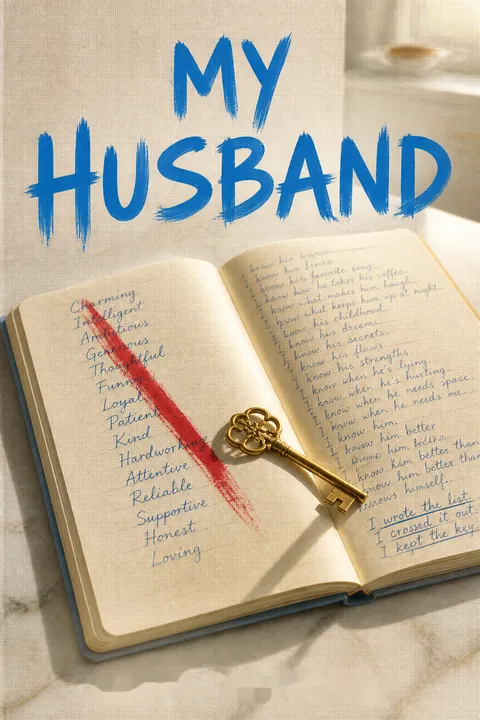

Plot Summary
Sunlit Kitchen, Ominous Words
The novel opens in a sun-drenched kitchen, where the narrator, a beautiful, obsessive wife, basks in the domestic rituals of her family. Her husband, the center of her universe, leans in and whispers, "We need to find a moment to talk. It's important." The words freeze her, signaling an impending doom. This moment, seemingly mundane, is loaded with existential dread and sets the tone for the week that unfolds—a week in which the narrator's anxieties, obsessions, and rituals will spiral as she tries to maintain control over her marriage, her husband, and her own sense of self. The kitchen, filled with the scent of coffee and the sound of children, becomes the stage for a psychological drama about love, power, and the terror of loss.
Obsessive Love, Monday Blues
The narrator confesses her all-consuming, undiminished passion for her husband, a love that has not mellowed with time or children. She is both proud and tormented by her inability to "love less." Her identity is entwined with being "his wife," a title she wields with pride and possessiveness. Monday, her favorite day, represents beginnings and order, but also the start of her weekly rituals of control—teaching, translating, and orchestrating the household. Even the color blue, which she associates with Monday, is a symbol of her need for structure. Yet beneath the surface, she is haunted by the void that remains despite having everything she ever wanted, and by the fear that her love is too much, too intense, and ultimately, unreciprocated.
Rituals, Power, and Possession
The narrator's life is a series of rituals and small acts of control: the cleaning lady's visits, the arrangement of flowers, the abundance of groceries, the careful curation of the home. Each detail is a measure of her husband's love and her own worth. She keeps secrets—an old engagement ring, a hidden mailbox key—believing that mystery is essential to a lasting marriage. Her past, including a brief return to an ex-lover, is compartmentalized and hidden. The narrator's sense of security is fragile, dependent on these rituals and the illusion of control, even as she recognizes the precariousness of her happiness.
Waiting, Perfume, and Control
Evenings are spent in anxious preparation for her husband's return: the right lighting, the perfect outfit, the subtle perfume. She waits, heart racing, for the sound of his key in the lock. The act of waiting becomes a performance, a way to maintain desire and prove her devotion. She is acutely aware of every detail—her appearance, the state of the house, the timing of events. Yet, beneath the surface, she is plagued by insecurity and the fear of being ordinary or overlooked. The rituals of waiting and self-presentation are both a shield and a prison, trapping her in a cycle of hope and disappointment.
Dinner with Friends, Fruit Betrayal
A dinner with friends, Nicolas and Louise, becomes a crucible for the narrator's insecurities. She scrutinizes every interaction, comparing her marriage to theirs, envying their apparent balance and chemistry. When her husband assigns her the fruit "clementine" in a party game, she is devastated—interpreting it as a symbol of her ordinariness and his lack of passion. The evening is a cascade of small humiliations: being erased from his stories, feeling less desired than other women, and sensing the distance between them. The clementine becomes a bitter emblem of her perceived inadequacy and the emotional gulf in her marriage.
Tears, Shutters, and Sleeplessness
The aftermath of the dinner leaves the narrator in tears, her body itching with anxiety and rage. The closed bedroom shutters, a long-standing marital compromise, become a symbol of her suppressed desires and the small injustices she endures. She contemplates revenge, even fantasizing about pushing her husband out the window, but ultimately channels her frustration into silent punishments—removing her wedding ring, feigning sleep, and recording grievances in her notebook. Sleep eludes her, and she is left alone with her obsessive thoughts, cataloging every slight and searching for meaning in her suffering.
Translation, Language, and Longing
As an English teacher and translator, the narrator's professional life mirrors her personal one. She is obsessed with words, meanings, and the impossibility of perfect translation—much like her quest for perfect love. Every text, every lesson, becomes a meditation on her marriage. She keeps notebooks of vocabulary, romantic advice, and punishments, seeking to decode the mysteries of desire and fidelity. The act of translation becomes a metaphor for her attempts to interpret her husband's actions and to bridge the gap between longing and reality. Yet, the more she analyzes, the more elusive certainty becomes.
Jealousy, Surveillance, and Notebooks
The narrator's need for control manifests in surveillance—checking her husband's emails, receipts, and messages, recording conversations, and keeping detailed notebooks of his offenses and her corresponding punishments. She orchestrates small acts of sabotage, like hiding his belongings, to create opportunities for connection or to exact retribution. Her jealousy is both a symptom and a tool, fueling her vigilance and her sense of purpose. Yet, this constant monitoring only deepens her anxiety and sense of isolation, as she realizes that her husband is largely oblivious to her machinations and that true intimacy remains out of reach.
Adultery, Punishments, and Games
In response to perceived slights—her husband's indifference, the clementine incident, a retracted declaration of love—the narrator seeks solace in adultery. She meets Maxime, a fellow parent, and later Pierre, her friend's husband, using these affairs as calculated punishments rather than acts of passion. Each encounter is meticulously planned, recorded, and rationalized as a means of restoring balance in her marriage. Yet, the affairs bring her no real satisfaction; instead, they reinforce her dependence on her husband and her inability to love anyone else. The games she plays—both with herself and with others—become increasingly desperate and self-defeating.
Parenting, Motherhood, and Resentment
The narrator's relationship with her children is fraught with ambivalence. She loves them, but resents the way motherhood has diluted her connection with her husband and imposed new constraints on her life. She feels inadequate as a mother, unable to match the devotion or interest of other parents, and is haunted by guilt over her emotional distance. Parenting becomes another arena for comparison, self-critique, and longing for a lost intimacy. The family's rituals—meals, birthdays, bedtime stories—are both comforting and suffocating, highlighting the gap between her ideals and her reality.
Saturday's Red, Social Masks
Saturday, the narrator's least favorite day, is marked by social obligations: tennis with Lucie, her daughter's birthday party, and the constant performance of being a good wife and mother. She is acutely aware of appearances—her own, her husband's, her family's—and the judgments of others. The day is a minefield of small betrayals and humiliations, culminating in a reckless affair with Pierre, witnessed (or imagined) by her husband. The red of Saturday symbolizes both passion and danger, as the narrator's carefully constructed facade begins to crack under the weight of her desires and resentments.
Sunday White, The Reckoning
Sunday, associated with the color white, brings a sense of reckoning and finality. The narrator is convinced that her husband has discovered her notebook of punishments and is about to leave her. She spirals into despair, replaying the week's events and preparing for the end of her marriage. Yet, when her husband finally sits her down for the anticipated "important talk," he proposes having a third child instead of a separation. The revelation is both a relief and a new source of anxiety, as the cycle of obsession, control, and longing is set to begin anew. The white of Sunday is not purity, but the sum of all colors—all the chaos and complexity of their life together.
Epilogue: The Husband's Game
In a chilling epilogue, the husband's perspective is revealed. He is fully aware of his wife's obsessions, punishments, and vulnerabilities, and manipulates her emotions to maintain his own power and satisfaction. He admits to orchestrating moments of distance and reconciliation, knowing that her passion requires constant provocation. Their marriage is exposed as a game of control, dependence, and mutual need—a closed system in which both partners are complicit. The husband's final thoughts underscore the novel's central irony: what appears to be a story of female obsession is, in fact, a dance of two, each sustaining the other's neuroses and desires.
Analysis
Maud Ventura's My Husband is a razor-sharp, darkly comic exploration of obsession, power, and the rituals that sustain (and corrode) modern marriage. Through the lens of a hyper-intelligent, neurotic narrator, the novel dissects the ways in which love can become a compulsion—a system of surveillance, punishment, and self-sabotage. The color-coded days, the notebooks, and the endless self-analysis are both coping mechanisms and symptoms of a deeper malaise: the impossibility of true intimacy in a world obsessed with control and performance. The husband's epilogue reveals the mutual complicity at the heart of the marriage, exposing the power games and emotional sadism that underlie their apparent domestic bliss. Ventura's novel is a cautionary tale about the dangers of loving too much, of seeking certainty in the unpredictable terrain of desire, and of mistaking control for connection. Ultimately, My Husband asks whether it is better to love or to be loved, and whether the rituals we create to protect ourselves from pain might, in fact, be the very things that keep us from experiencing real joy. The novel's brilliance lies in its ability to make the reader complicit in the narrator's obsessions, forcing us to confront the thin line between devotion and madness, and the unsettling truth that every marriage is, in some way, a private game with its own secret rules.
People Also Read










Characters
The Wife (Narrator)
The unnamed narrator is a beautiful, intelligent woman whose life revolves around her husband. Her love is obsessive, bordering on pathological, and she channels her anxieties into rituals of control—meticulous domestic routines, surveillance, and a secret notebook of punishments. She is both self-aware and self-deceiving, recognizing the absurdity of her actions but unable to stop. Her identity is split between roles: wife, mother, teacher, translator, and lover. She is haunted by insecurity, jealousy, and the fear of abandonment, yet also fiercely proud of her devotion. Her psychological complexity is the engine of the novel, as she oscillates between longing for intimacy and sabotaging it through her own compulsions.
The Husband
The husband is the object of the narrator's obsession—a handsome, successful man who is both present and elusive. He is charming, sociable, and admired by others, but emotionally reserved and often inattentive to his wife's needs. In the epilogue, his perspective reveals a calculating side: he is aware of his wife's vulnerabilities and exploits them to maintain control and excitement in the marriage. He alternates between affection and distance, using unpredictability as a tool to keep her off balance. His contradictions—desiring both freedom and family, admiration and detachment—mirror the narrator's own ambivalence, making their relationship a closed loop of mutual dependence and manipulation.
Lucie
Lucie is the narrator's closest friend, though their relationship is marked by distance and unspoken competition. She is practical, opinionated, and emotionally reserved, serving as a foil to the narrator's intensity. Lucie's own marriage is less passionate, and she often expresses envy or skepticism about the narrator's "perfect" husband. Her prudishness and discomfort with emotional topics highlight the narrator's isolation and inability to confide in others. Lucie's presence in the story underscores the social pressures and comparisons that shape the narrator's self-image.
Nicolas
Nicolas, the husband's childhood friend, is married to Louise and represents an alternative model of masculinity and partnership. He is attentive, considerate, and emotionally intelligent, often asking the narrator about her work and interests. His marriage to Louise is depicted as balanced and complementary, in contrast to the narrator's own. Nicolas's presence triggers both admiration and envy in the narrator and her husband, highlighting the theme of social comparison and the elusive nature of happiness.
Louise
Louise, Nicolas's wife, is outgoing, candid, and effortlessly elegant. She is both admired and resented by the narrator, who scrutinizes her appearance, manners, and relationship with Nicolas. Louise's directness and warmth disarm potential offense, but also expose the narrator's insecurities. Her role as a mother and hostess is idealized, yet the narrator is quick to find fault and assert her own superiority. Louise embodies the social ideals the narrator both covets and rejects.
Maxime
Maxime is a fellow parent and the narrator's lover, chosen as a calculated punishment for her husband's perceived neglect. He is attentive, physically affectionate, and eager to please, but ultimately serves as a mirror for the narrator's inability to love anyone but her husband. Their affair is transactional, devoid of real passion or connection, and reinforces the narrator's dependence on her marriage for meaning and identity.
Pierre
Pierre, Lucie's husband, becomes an unwitting participant in the narrator's cycle of jealousy and revenge. Their brief, impulsive sexual encounter is less about desire than about retribution—an attempt to balance the scales after witnessing her husband's flirtation with Lucie. Pierre's passivity and lack of agency highlight the narrator's need for control and the collateral damage of her emotional games.
The Children
The narrator's son and daughter are both loved and resented—symbols of her success and her loss of intimacy with her husband. Their routines, needs, and milestones are meticulously managed, but the narrator struggles to connect with them emotionally. They serve as both a buffer and a barrier in the marriage, embodying the tensions between motherhood, selfhood, and romantic love.
Rosa
Rosa, the cleaning lady, is a minor but significant presence. Her visits unsettle the narrator, who feels both gratitude and discomfort at her own bourgeois status. Rosa's silent rearrangement of the home is a reminder of the narrator's need for control and the fragility of her constructed identity.
Adrien
Adrien, the narrator's ex, represents the path not taken—the comfort of being loved more than loving. Her brief return to him is a moment of clarity about her own desires and the high price she pays for choosing passion over security. Adrien's presence in her memory serves as a counterpoint to her marriage and a reminder of the choices that define her.
Plot Devices
Color-Coded Days and Emotional Weather
The narrator assigns a color to each day of the week, using this synesthetic device to organize her emotional landscape and the narrative itself. Blue Mondays, black Tuesdays, orange Wednesdays, yellow Thursdays, green Fridays, red Saturdays, and white Sundays become shorthand for moods, rituals, and crises. This device structures the novel's progression, mirroring the cyclical nature of obsession and the search for meaning in routine. The color-coding also serves as a metaphor for the narrator's need to impose order on chaos and to find patterns in the unpredictability of love.
Notebooks, Surveillance, and Punishment
The narrator's compulsive note-taking—vocabulary lists, romantic advice, punishments, and surveillance logs—serves as both a coping mechanism and a means of exerting control. The punishment notebook, in particular, is a central plot device: for every perceived offense by her husband, she assigns a corresponding punishment, from silent treatment to infidelity. This systematization of emotion and retribution is both absurd and chilling, highlighting the transactional nature of their marriage and the futility of seeking equilibrium through control.
Unreliable Narration and Shifting Perspectives
The novel is told primarily from the wife's perspective, immersing the reader in her obsessive, anxious inner world. Her narration is self-aware but unreliable, as she oscillates between insight and delusion. The final epilogue, from the husband's point of view, upends the reader's understanding, revealing his own manipulations and the mutual complicity in their dysfunctional dynamic. This shift in perspective exposes the limitations of self-knowledge and the dangers of narrative certainty.
Foreshadowing and Circular Structure
The novel's structure is circular, beginning and ending with the same ominous moment in the kitchen. Throughout, the narrator foreshadows disaster—divorce, abandonment, exposure—only to have her fears subverted or deferred. The repetition of rituals, anxieties, and punishments creates a sense of inevitability, as if the characters are trapped in a loop of their own making. This device underscores the themes of obsession, control, and the impossibility of escape from one's own patterns.
Intertextuality and Literary Allusion
The narrator's life is saturated with references to literature—Marguerite Duras, Racine, Proust, and others—which she uses as both guide and foil. These allusions serve to elevate her experience, provide models (or anti-models) for love, and comment on the limitations of fiction to capture the messiness of real desire. The act of translation, both literal and metaphorical, becomes a recurring motif, highlighting the gaps between language, intention, and understanding.

Download PDF
Download EPUB
.epub digital book format is ideal for reading ebooks on phones, tablets, and e-readers.








































