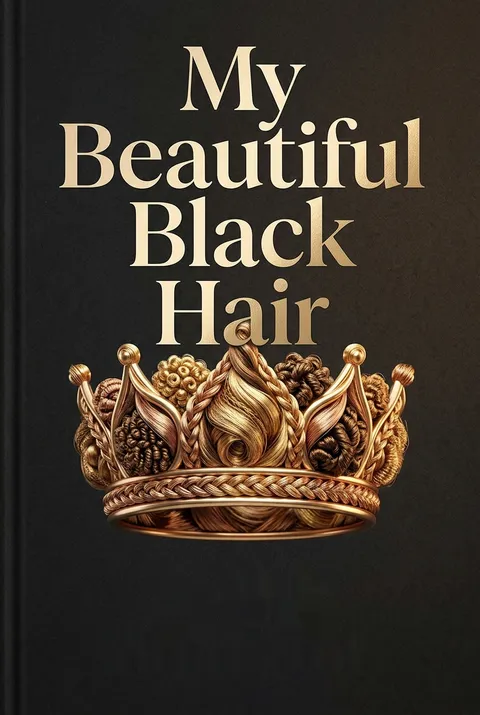

Key Takeaways
1. Embracing Natural Hair: A Transformative Journey
I was born with the hair I was meant to have.
A personal awakening. The author's journey, like many Black women, began with internalizing societal pressures to straighten her hair, leading to years of flat irons and chemical relaxers. It was her younger sister, Khloe, facing similar struggles at a predominantly white school, who ignited the author's mission to celebrate natural Black hair. This personal connection underscores the book's core message: the journey to natural hair is often deeply personal and driven by a desire for authenticity.
The "Big Chop." For many, embracing natural hair involves a significant step known as the "big chop," where chemically damaged hair is cut off to allow natural texture to flourish. This act, while sometimes scary, is frequently described as liberating and a pivotal moment in self-acceptance. Women recount feeling ugly initially, but ultimately finding their "authentic self" and a "reverence for what my hair actually was naturally."
A process of unlearning. Going natural is not just a physical change but a psychological one, requiring individuals to unlearn years of conditioning that labeled Black hair as "bad" or "ugly." It's a journey of patience, nurturing, and rediscovering how to care for hair in its natural state, often leading to a profound sense of self-love and a desire to pass this positivity to future generations.
2. The Deep Roots of Black Hair: History, Identity, and Resilience
The story of Black women and their natural hair begins where everything begins: in Africa.
Ancient crowns. In traditional African societies, hair was a powerful social signifier, communicating vital identity information such as age, religion, wealth, and marital status. Hairstyles were intricate works of art, often taking days to achieve, and the artisans who created them held special prominence. These were truly "African crowns," deeply connected to spiritual and social life.
A wounded history. This rich heritage was brutally disrupted during slavery in the Americas, where enslaved people were denied proper grooming and hair-based caste systems emerged. Straight or loosely curled hair was often favored for house duties, while tightly coiled hair was relegated to field labor. This historical trauma continues to manifest in modern anti-Black hair attitudes, with natural hair still being deemed "unprofessional" or "unkempt" in many settings.
Resilience through generations. Despite centuries of oppression, Black women have consistently found ways to use their hair as a means of freedom and cultural preservation. From ancestors storing grains in their hair for escape to mapping routes with intricate braids, hair has been a symbol of resilience. Relearning traditional hair care and embracing natural textures today is a powerful act of reclaiming this lost knowledge and honoring ancestral heritage.
3. Challenging Eurocentric Beauty Standards
We’ve been so conditioned to think that our natural hair isn’t “right.”
Internalized self-hatred. For generations, Black women have been bombarded with media images and societal messages that equate beauty with straight, Eurocentric hair. This conditioning often leads to internalized self-hatred, where individuals feel their natural hair is "not enough" – not loose enough, not long enough, not straight enough. The desire to fit in often drives the use of relaxers, flat irons, and weaves, sometimes at the expense of hair health.
The illusion of "good hair." The concept of "good hair" is a direct product of Eurocentric beauty standards, valuing straight or loosely curled textures over tightly coiled hair. This creates a false hierarchy within the Black community, where some individuals are shamed for their natural texture. The book highlights how this mindset can lead to a denial of Blackness, with some attempting to "erase the traces of Blackness" by altering their hair.
Redefining beauty. The natural hair movement is a powerful rejection of these imposed standards, asserting that "good hair" is simply healthy hair that grows naturally from one's scalp. It's about expanding the definition of beauty to include the full spectrum of Black hair textures, celebrating its diversity, versatility, and unique qualities. This shift encourages women to find beauty within themselves, rather than seeking external validation.
4. Natural Hair as an Act of Liberation and Protest
We’re out here showing our protest by wearing our natural hair.
A rebellious act. Choosing to wear natural hair, especially in environments that historically or currently penalize it, is a profound act of rebellion and self-assertion. It challenges the status quo and declares an unapologetic embrace of Black identity. This defiance is not just personal; it's a collective statement against systemic anti-Blackness and misogynoir that has long dictated how Black women should present themselves.
Beyond aesthetics. While natural hair is aesthetically beautiful, it also carries significant political weight. The afro, in particular, became a symbol of the Black Power movement in the 1960s, directly linked to the fight for Black rights and humanity. Today, wearing natural hair continues to be a form of protest, forcing society to acknowledge and accept Black beauty on its own terms, rather than conforming to external ideals.
Freedom from restriction. Many women describe feeling "restricted" or "a slave to the heat" when constantly straightening their hair. The decision to go natural is often framed as a "liberation" from these physical and psychological constraints. It's about reclaiming autonomy over one's body and choosing to live authentically, free from the constant worry of rain, sweat, or the need to "tame" one's hair.
5. The Power of Sisterhood and Intergenerational Support
It’s my responsibility to step up on my sister’s behalf when people hit her with rude comments about her hair.
A communal journey. The natural hair journey is rarely undertaken in isolation. The book emphasizes the vital role of sisterhood, family, and community in providing encouragement, education, and emotional support. From friends inspiring "the big chop" to cousins sharing styling tips, these connections foster a sense of belonging and shared experience.
Intergenerational influence. Mothers and grandmothers play a particularly significant role, either by perpetuating cycles of hair alteration or by actively breaking them. Many stories highlight mothers who, after their own struggles, made a conscious choice to raise their daughters to love their natural hair, often by embracing their own natural hair first. This creates a powerful legacy of self-acceptance and pride.
Allyship within the community. The concept of "hair privilege" is also explored, recognizing that not all natural hair journeys are the same. Women with looser curl patterns acknowledge their responsibility to advocate for those with tighter textures (4A-4C) who often face greater challenges and less representation. This internal allyship strengthens the collective movement, ensuring that "every curl and coil has a place in this world."
6. Navigating Discrimination in White Spaces
Your natural hair, according to my white teachers, was an unnatural hairstyle, and therefore it was against dress code.
Everyday microaggressions. Black women frequently encounter discrimination and microaggressions in predominantly white environments, from school to the workplace. These experiences range from classmates throwing paper balls in their hair to supervisors deeming natural styles "untidy" or "unprofessional." Such incidents highlight the ongoing policing of Black bodies and hair.
The "professionalism" paradox. There's a persistent societal expectation for Black women to present themselves in a "put together" or "professional" manner, often implying straightened or "tamed" hair. This creates an unfair burden, as white counterparts can often wear messy buns without judgment. The fear of being reprimanded, denied opportunities, or perceived as "slacking" is a real concern that influences hair choices.
Advocacy and education. While some advise trying not to take offense to curious questions, the book also stresses the importance of setting boundaries, such as telling people "not to touch your hair." The experiences shared underscore the need for greater education and awareness in white spaces, challenging the notion that natural Black hair is "abnormal" or "unnatural." It's a call for society to change, not for Black women to conform.
7. Self-Love: The Ultimate Crown
When you see a woman with a big afro, you know: This woman loves herself.
Beyond external validation. The journey to natural hair is fundamentally a journey of self-love and self-discovery. It involves moving past the need for external validation from men, family, or society, and instead cultivating an unconditional love for oneself. This internal shift allows women to embrace their unique beauty, flaws and all, and to feel confident in their own skin.
Hair as a mirror. For many, hair becomes an extension of their identity, a "crown" that reflects their inner strength, personality, and values. The act of nurturing natural hair becomes a form of self-care, a ritual that allows women to "unplug from the world and plug into yourself." This deep connection transforms hair from a source of insecurity into a source of joy and empowerment.
Indestructible confidence. The book repeatedly emphasizes that loving one's natural hair builds an "unshakeable" foundation of confidence. It's about realizing that one's hair is "beautiful, and it’s exactly what it’s supposed to look like," a gift from ancestors. This profound self-acceptance makes women feel "indestructible," capable of facing challenges and radiating love to others.
8. The CROWN Act: A Legal Fight for Hair Freedom
The good news is that Black women have shaped an antidiscrimation narrative into the CROWN Act, the first legislation in this country’s history to make it illegal for schools and employers to discriminate against Black people’s natural hair and hairstyles.
Addressing systemic discrimination. The CROWN Act (Creating a Respectful and Open World for Natural Hair) is a landmark legislative effort born from the ongoing discrimination faced by Black individuals. It directly confronts the historical and systemic biases that have led to Black people being denied educational and employment opportunities based on their natural hair. This act is a crucial step towards legal protection and equity.
A necessary paradigm shift. The existence of the CROWN Act highlights the deep-seated need for a "paradigm shift to decolonize one of our most sacred spaces: our crowns." It acknowledges that anti-Black hair attitudes are not merely social preferences but are backed by legal systems that have historically penalized natural Black hair in public spaces. The act aims to dismantle these discriminatory practices.
Beyond legislation. While the CROWN Act provides legal recourse, the book's narratives demonstrate that the fight for hair freedom extends beyond legislation. It requires a cultural transformation where natural hair is universally celebrated and understood. The act empowers individuals to wear their hair authentically without fear of professional or educational repercussions, fostering a more inclusive and equitable society.
Review Summary
My Beautiful Black Hair is a powerful and inspiring collection of stories and photographs celebrating natural Black hair. Reviewers praise the book's stunning visuals, diverse representation, and emotional impact. Many readers found it deeply relatable and empowering, highlighting its importance for Black women and girls in embracing their natural beauty. The book is lauded for challenging Eurocentric beauty standards and promoting self-love. Readers appreciate its vulnerability, wisdom, and healing message, describing it as a must-read for everyone, especially Black women seeking affirmation and acceptance.
People Also Read


Download PDF
Download EPUB
.epub digital book format is ideal for reading ebooks on phones, tablets, and e-readers.








































