
Plot Summary
Birth Amidst Siege
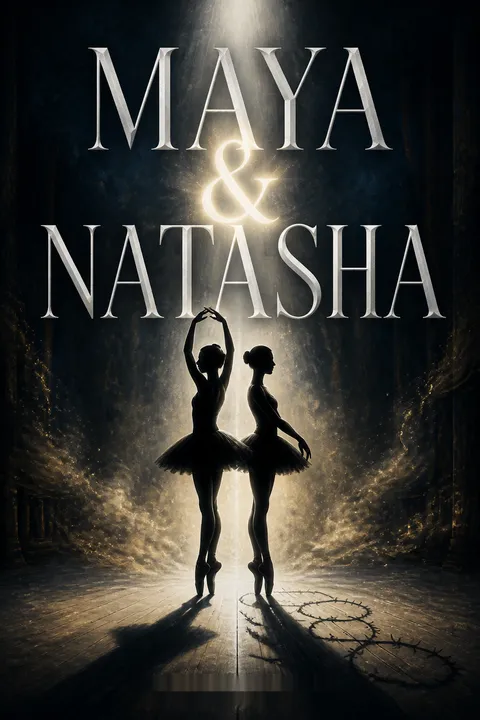
In 1941 Leningrad, as German forces encircle the city, Elizaveta, a gifted ballerina, gives birth to twin daughters, Maya and Natasha, in a communal apartment. The city is gripped by fear and deprivation, and Elizaveta, abandoned and isolated, succumbs to despair after the birth, taking her own life. Her friend Katusha, driven by love and duty, rescues the newborns and flees with the ballet company's evacuation. The twins' first breaths are marked by loss, survival, and the indelible trauma of war. Their lives begin not with celebration, but with the weight of a mother's absence and a city's suffering, setting the stage for a lifelong search for belonging and meaning.
Orphaned by War's End
Katusha raises Maya and Natasha among the exiled ballet company, who become their surrogate family. The girls grow up in the shadow of their mother's legend, surrounded by artists and survivors, absorbing both the discipline of ballet and the scars of war. When the siege ends, they return to a battered Leningrad, where the Kirov Theatre is restored as a symbol of hope. The twins' first glimpse of ballet's grandeur ignites their shared dream, but also plants the seeds of rivalry. The state, eager to showcase its cultural superiority, nurtures them as future ambassadors, while the memory of Elizaveta's fate haunts their every step.
Twin Shadows, Diverging Dreams
As teenagers at the Vaganova Ballet Academy, Maya and Natasha are inseparable yet fundamentally different. Maya is introspective, diligent, and plagued by self-doubt; Natasha is charismatic, ambitious, and hungry for adoration. Their bond is both a source of strength and a site of tension, especially as Natasha's talent and presence begin to eclipse Maya's. The sisters navigate the pressures of Soviet expectations, the allure of the Kirov, and the first stirrings of love and jealousy. Their closeness is tested by secrets, competition, and the unspoken fear that only one can truly succeed.
Rivalry at the Barre
The final year at the Academy brings the looming audition for the Kirov, where only a few will be chosen. A new law forbids siblings from touring abroad together, forcing Maya and Natasha into direct competition for a single coveted spot. The ballet world's harsh hierarchies and the state's demands intensify their rivalry. Maya, always in Natasha's shadow, struggles with insecurity and the sense that her fate is predetermined. Natasha, driven by the memory of their mother's thwarted dreams, is willing to do whatever it takes to win. Their friendship with classmates, first loves, and the ever-present specter of defection all swirl around the barre, where every plié is a test of loyalty and ambition.
The Kirov's Cruel Choice
The Kirov's selection process is merciless. Natasha's star quality dazzles, while Maya's quiet artistry is overlooked. When Maya's chance at the company is threatened, she faces a devastating choice: accept her place in the background or fight for her own future. The sisters' relationship fractures under the strain, as old wounds and new betrayals come to the surface. The state's need for perfect ballerinas, the lure of Western freedom, and the memory of their mother's sacrifice all converge, forcing Maya and Natasha to confront what they are willing to risk for a life on stage.
Betrayal in the Spotlight
In a moment of desperation, Maya betrays Natasha, exposing her to scandal and injury that ends Natasha's dancing career. The act is both calculated and impulsive, born of years of resentment and longing. Natasha's fall from grace is public and brutal, leaving her physically broken and emotionally adrift. Maya, wracked with guilt yet propelled by the momentum of her own ascent, joins the Kirov and embarks on a tour that takes her far from home. The sisters' bond, once unbreakable, is shattered, and both are left to reckon with the cost of their choices.
Exile and Ascent
Natasha, unable to dance, is cast adrift in postwar Leningrad, searching for purpose and identity. She finds unexpected opportunity in film, landing the role of Natasha Rostova in a grand Soviet adaptation of War and Peace. Her beauty and vulnerability captivate the nation, but her success is haunted by loss and the compromises demanded by the state. Meanwhile, Maya tours the West with the Kirov, experiencing both the glamour and the alienation of exile. She finds creative fulfillment as a choreographer, but her achievements are shadowed by loneliness, homesickness, and the secret of her betrayal.
Love, Loss, and Defection
Both sisters seek solace in love: Natasha with Lev, her co-star, whose steadiness offers a new kind of partnership; Maya with Olaf, a fellow dancer whose devotion is steadfast but complicated by her own emotional wounds. The Cold War's tensions intrude, as defection becomes both a temptation and a threat. Maya, blacklisted after being denounced for "obscenity" in her choreography, flees to the West, leaving behind her homeland and any hope of reconciliation. Natasha, now a mother, finds her own freedom circumscribed by the very system that once celebrated her.
Natasha's New Stage
Natasha's film triumph brings her international acclaim, culminating in an Oscar for War and Peace. Yet the privileges of stardom are precarious, and her personal life is marked by compromise. Her marriage to Lev is loving but constrained by the ever-watchful state. Motherhood brings both joy and a new vulnerability, as the regime uses her daughter to ensure her loyalty. Natasha's longing for her sister and for a life unconstrained by politics and fear grows, even as she becomes a symbol of Soviet achievement.
Maya's American Awakening
In the West, Maya reinvents herself as a teacher and choreographer, but the trauma of her past and the loss of her child with Olaf haunt her. She struggles with the meaning of freedom, the loneliness of exile, and the impossibility of returning home. Her marriage to Olaf, once a partnership of hope, becomes a quiet sorrow. Maya's artistry flourishes, but she is haunted by the knowledge that her greatest success came at the expense of her sister's happiness. The American dream is both a refuge and a reminder of all she has lost.
The Price of Ambition
Both sisters are forced to confront the moral cost of their ambition. Natasha, manipulated by the regime, betrays Maya in turn, ensuring her permanent exile. Maya, isolated and grieving, must accept that her pursuit of greatness has left her rootless. The state's power to shape and destroy lives is ever-present, and the sisters' story becomes a microcosm of a generation's struggle between personal desire and collective duty. Love, art, and family are all tested by the relentless machinery of history.
Reunion and Reckoning
Years later, fate brings Maya and Natasha to the same city—New York—on the night of Natasha's Oscar triumph. Both are older, changed by time and loss, but the longing for reconciliation endures. Through secret messages and the help of old friends, they arrange a clandestine meeting at a ballet performance. In the darkness of the theater, surrounded by the music and movement that once bound them, the sisters reach for each other, seeking forgiveness and the possibility of healing. Their story, marked by betrayal and sacrifice, ends not with resolution, but with the fragile hope of love restored.
Forgiveness in the Dark
In the final moments, Maya and Natasha sit side by side in the theater, hands entwined, as the curtain rises on a new generation of dancers. The past cannot be undone, and the scars of their choices remain, but in the shared silence, there is a glimmer of peace. The ballet's beauty offers a kind of absolution, a reminder that art endures even when lives are broken. The sisters' journey—from war-torn Leningrad to the heights of fame and the depths of exile—culminates not in triumph or tragedy, but in the quiet, redemptive act of forgiveness.
Analysis
Maya & Natasha is a sweeping, emotionally resonant exploration of sisterhood, ambition, and the costs of survival in a world shaped by war, ideology, and the relentless pursuit of perfection. Through the intertwined lives of its twin heroines, the novel interrogates the ways in which love and rivalry, art and politics, nurture and betrayal are inseparable in both personal and historical experience. The story is as much about the making and unmaking of selves as it is about the making of art; it asks what we owe to those we love, and what we are willing to sacrifice for our dreams. The ballet world, with its beauty and brutality, becomes a microcosm of the Soviet century—discipline, conformity, and the ever-present threat of erasure. Yet the novel resists despair, insisting on the redemptive power of forgiveness, the possibility of transformation, and the enduring grace of human connection. In the end, Maya and Natasha's story is not just about what is lost, but about what can be reclaimed: the fragile, persistent hope that love—like art—can survive even the darkest times.
Review Summary
Maya & Natasha by Elyse Durham follows twin ballerinas in Soviet Russia during the Cold War, trained at the prestigious Vaganova Academy and competing for a spot in the Kirov Ballet. When a Kremlin law prohibits siblings from traveling abroad together, only one sister can tour America, leading to devastating betrayal. Reviews are polarized: praised for vivid historical detail, authentic depictions of ballet life, and compelling family drama, but criticized for underdeveloped characters, flat prose, cultural stereotypes, and political bias. Many appreciated the unique setting and emotional depth, while others found characters one-dimensional and lacking growth.
People Also Read









Characters
Maya
Maya is the introspective, diligent twin, forever living in the shadow of her mother's legend and her sister's charisma. Sensitive and self-critical, she is driven by a longing for approval and a fear of abandonment. Her love for Natasha is both sustaining and suffocating, as she sacrifices her own desires to maintain their bond. When forced into competition, Maya's suppressed ambition erupts in a moment of betrayal that changes both sisters' lives. In exile, she becomes a celebrated choreographer and teacher, but her achievements are tinged with regret and loneliness. Maya's journey is one of self-discovery, as she learns to accept her flaws, seek forgiveness, and find meaning beyond the stage.
Natasha
Natasha is the magnetic, ambitious twin, blessed with beauty, talent, and an insatiable hunger for life. She craves adoration and fears mediocrity, often at the expense of those closest to her. Her rise is meteoric, but her fall—engineered by Maya's betrayal—is devastating. Forced to reinvent herself as an actress, Natasha becomes a symbol of Soviet achievement, yet her personal life is marked by loss, compromise, and the ever-present threat of the state. Motherhood brings both fulfillment and vulnerability, as her daughter becomes a pawn in political games. Natasha's arc is one of resilience, as she grapples with the cost of ambition and the possibility of forgiveness.
Katusha
Katusha is the twins' adoptive mother, a figure of unwavering devotion and practicality. Having lost her own family to war and hardship, she pours her love into Maya and Natasha, guiding them through the traumas of orphanhood and the rigors of ballet. Katusha's sacrifices are often invisible, but her presence is the bedrock of the sisters' survival. She embodies the resilience of ordinary women in extraordinary times, offering comfort, wisdom, and a sense of home even as the world changes around her.
Elizaveta
Elizaveta is the twins' biological mother, a brilliant ballerina whose life is cut short by war, abandonment, and despair. Her death casts a long shadow over Maya and Natasha, shaping their identities and ambitions. Elizaveta's story is a cautionary tale about the costs of artistic obsession and the vulnerability of women in a world that demands perfection. Her absence is both a wound and a source of inspiration, as her daughters strive to fulfill the dreams she could not.
Olaf
Olaf is Maya's devoted friend and eventual husband, a fellow dancer marked by social awkwardness and deep sensitivity. Often overlooked and underestimated, he finds purpose and confidence in his partnership with Maya, both on and off the stage. Olaf's love is steadfast, but complicated by Maya's emotional distance and the traumas they both carry. His defection to the West is an act of both self-preservation and longing, and his journey reflects the challenges of exile, belonging, and the search for connection.
Ivan
Ivan is Natasha's first great love and Maya's eventual confidant, a talented dancer shaped by abandonment and the need to keep the peace. His relationship with the twins is fraught with passion, jealousy, and guilt, culminating in his role in Natasha's career-ending injury. Ivan's choices are driven by fear and the desire for redemption, and his life is marked by the consequences of love gone wrong. He represents the vulnerability of men in a world that demands strength and stoicism.
Lev
Lev is Natasha's co-star and eventual husband, a quiet, principled man who offers stability and kindness in a world of chaos. His love for Natasha is patient and enduring, providing a counterpoint to the volatility of her relationship with Maya. Lev's own compromises—navigating the demands of the state, protecting his family—mirror the broader struggles of Soviet artists. He is both a refuge and a reminder of the limits of personal freedom.
Yekaterina Furtseva
Furtseva is the formidable Minister of Culture, a woman who wields immense influence over the arts and the lives of the protagonists. Ambitious, shrewd, and often ruthless, she embodies the contradictions of Soviet power: a champion of culture who is also its censor and manipulator. Furtseva's interventions shape the fates of Maya and Natasha, offering opportunity and exacting loyalty. Her own vulnerabilities—loneliness, the need for recognition—are glimpsed beneath her iron exterior.
Sergei Bondarchuk
Bondarchuk is the director of War and Peace, a man of grand ambitions and deep insecurities. His relationship with Natasha is complex, blending admiration, possessiveness, and the pressures of artistic creation. Bondarchuk's pursuit of perfection is both inspiring and destructive, and his interactions with the sisters reveal the power dynamics at play in the world of Soviet art. He is a symbol of both the possibilities and the perils of genius.
George Balanchine
Balanchine is the legendary choreographer whose life and work haunt the narrative. A figure of mythic stature, he represents both the allure and the cost of artistic greatness. His encounters with Maya and Natasha are brief but transformative, offering glimpses of wisdom, regret, and the enduring power of beauty. Balanchine's own exile and longing for home mirror the sisters' journeys, and his legacy is both a beacon and a warning.
Plot Devices
Mirror Twins, Mirror Fates
The novel's central device is the use of Maya and Natasha as mirror images—alike in origin, yet fundamentally different in temperament, desire, and destiny. Their relationship is a living metaphor for the dualities of Soviet life: conformity and rebellion, sacrifice and ambition, love and rivalry. The narrative structure alternates perspectives, allowing the reader to inhabit both sisters' inner worlds and to see how their choices echo and distort each other. This mirroring is reinforced by recurring motifs—dancing in unison, competing for the same roles, longing for the same love—that underscore the impossibility of true separation.
The Stage as Battleground
Ballet and performance are not just backdrops, but active forces shaping the characters' lives. The stage is a site of both transcendence and violence, where beauty is forged through pain and competition. The discipline of dance becomes a metaphor for the demands of the state, the sacrifices of women, and the struggle for selfhood. The novel uses rehearsal, performance, and the rituals of the theater as structural anchors, marking the passage of time and the evolution of relationships.
Betrayal and Reversal
The plot is driven by acts of betrayal—Maya's sabotage of Natasha, Natasha's denunciation of Maya—that are both personal and political. These reversals of fortune are foreshadowed through subtle hints (broken shoes, missed cues, whispered warnings) and are mirrored in the larger historical context of shifting allegiances and state violence. The narrative explores the psychological toll of guilt, the longing for forgiveness, and the difficulty of breaking free from cycles of harm.
Exile and Homecoming
Both literal and emotional exile are central to the story. The sisters' journeys—from Leningrad to Moscow, Paris, London, and New York—reflect the broader dislocations of the twentieth century. The longing for home, the pain of rootlessness, and the search for belonging are recurring themes. The novel uses letters, memories, and chance encounters to bridge distances, and the final reunion is both a literal and symbolic homecoming.
The State as Parent and Predator
The Soviet state is personified as both a nurturing and devouring force, offering protection and opportunity while demanding loyalty and sacrifice. The characters' fates are shaped by laws, policies, and the whims of powerful figures like Furtseva. The narrative structure interweaves personal and political histories, showing how individual lives are caught in the machinery of history. Foreshadowing is used to heighten tension—rumors of defection, warnings about the consequences of ambition, the ever-present threat of surveillance.
Forgiveness and Redemption
The novel's emotional arc is structured around the question of whether forgiveness is possible after profound harm. The sisters' reunion is foreshadowed by small acts of grace—shared memories, gestures of care, the enduring power of art. The final scenes use the ballet performance as a metaphor for reconciliation, suggesting that beauty and love can endure even when lives are broken. The open-ended conclusion invites the reader to imagine the future, leaving space for hope and healing.
Download PDF
Download EPUB
.epub digital book format is ideal for reading ebooks on phones, tablets, and e-readers.








































