
Plot Summary
Moon and Sea Collide
Nerida, a precocious twelve-year-old, and Aslan, a sixteen-year-old Turkish refugee, are brought together by the sea and the moon. Nerida's family, marine biologists living on the Australian coast, rescue Aslan from a shipwreck. Their meeting is framed as destiny, a collision of two worlds—one of innocence and hope, the other of trauma and loss. The moon and sea become symbols of their connection, foreshadowing the entwined fates and the emotional tides that will define their lives. The story's tone is set: a blend of mythic romance and raw reality, where love and pain are inseparable, and every beginning is haunted by the threat of loss.
Shipwrecked and Rescued
Aslan's world is shattered by a violent storm that claims his family, leaving him adrift and alone. Nerida's family, guided by a pod of dolphins, finds him clinging to life. The rescue is both literal and symbolic: Aslan is pulled from the brink of death, but also from the wreckage of his past. The Taylors offer him shelter, kindness, and a fragile sense of safety. Aslan's grief is overwhelming, but Nerida's compassion becomes an anchor. Their bond is immediate, forged in crisis, and marked by the unspoken promise that they will save each other in ways neither can yet imagine.
Strangers Become Family
The Taylors take Aslan in, risking legal consequences to protect him. Aslan, haunted by survivor's guilt and the trauma of displacement, struggles to accept their generosity. Nerida, wise beyond her years, insists on his belonging. The family's warmth is a balm, but also a source of tension—Aslan fears he will never truly be one of them. The chapter explores the slow, painful process of healing: shared meals, laughter, and the tentative steps toward trust. The sea remains both a threat and a comfort, a reminder of what's been lost and what might be found.
Healing and Haunting
Aslan's nightmares and flashbacks reveal the depth of his trauma. Nerida becomes his confidante, offering solace but also challenging him to confront his pain. Their friendship deepens, marked by moments of joy and the ever-present shadow of sorrow. The Taylors' home is a sanctuary, but Aslan's illegal status and the secrets he keeps threaten to unravel everything. The chapter is suffused with longing—for family, for safety, for a future that feels impossible. Healing is slow, uneven, and always haunted by the ghosts of the past.
Forbidden Attachments
As Aslan and Nerida grow older, their connection intensifies. What began as gratitude and friendship becomes something more dangerous: longing, desire, and the first stirrings of love. The age gap, cultural differences, and the ever-watchful eyes of Nerida's parents create a web of tension. Aslan is tormented by guilt and fear—of betraying the Taylors' trust, of endangering Nerida, of losing the only home he's ever known. Nerida, bold and unafraid, pushes against the boundaries, convinced that their love is fated. The threat of exposure looms, and every touch is fraught with risk.
Growing Up Together
Time passes, and Aslan becomes indispensable to the Taylors, working alongside them as a deckhand and assistant. Nerida matures into a passionate, driven young woman, determined to follow in her parents' footsteps as a marine biologist. Their lives are intertwined—work, study, and stolen moments of intimacy. The outside world encroaches: the risk of deportation, the judgment of others, and the relentless pressure to conform. Together, they dream of a future beneath the waves, but the realities of adulthood—responsibility, sacrifice, and the cost of secrets—begin to weigh heavily.
Secrets and Survival
Aslan's illegal status becomes an ever-present threat. The Taylors' decision to harbor him is both an act of love and a source of constant anxiety. Aslan's past is a labyrinth of secrets—his true identity, the reasons for his family's flight, and the dangers that still pursue him. Nerida's loyalty is unwavering, but the burden of secrecy isolates them both. The chapter explores the tension between survival and honesty, the compromises required to stay together, and the ways in which love can both save and endanger.
Love's First Awakening
The simmering tension between Aslan and Nerida erupts into passion. Their first kiss is a moment of both ecstasy and terror—a crossing of lines that cannot be uncrossed. The physical consummation of their love is fraught with guilt, fear, and overwhelming need. They are both healed and wounded by their union, bound together by a secret that could destroy them. The chapter is electric with longing, tenderness, and the ache of forbidden love. Every touch is a rebellion, every embrace a risk.
Tides of Desire
Aslan and Nerida's relationship becomes an all-consuming force. They steal moments whenever they can, unable to resist the pull between them. Their love is both sanctuary and addiction—a way to escape the pain of the past and the uncertainty of the future. The secrecy required to sustain their affair becomes a source of strain, as does the knowledge that their happiness is built on a foundation of lies. The chapter pulses with desire, but also with the fear that their love will be discovered and destroyed.
Shadows Beneath the Surface
The aftermath of Nerida's sexual assault by a stranger at a party shatters the fragile peace they've built. Aslan's rage is volcanic, leading him to exact brutal revenge. Nerida, traumatized and ashamed, withdraws into herself, unable to process what's happened. Their relationship is tested as never before—love becomes both a lifeline and a source of pain. The chapter explores the limits of what love can heal, the dangers of repression, and the ways in which trauma can echo through every aspect of life.
Breaking and Belonging
Aslan's act of vengeance—maiming and possibly killing Nerida's rapist—marks a point of no return. The violence he's capable of both terrifies and reassures Nerida. Their bond is cemented in blood, but the cost is immense: guilt, fear, and the knowledge that they are now complicit in each other's darkness. The need to confess, to seek absolution, and to find a way back to the light becomes urgent. The chapter is a crucible, burning away illusions and forcing both characters to confront who they truly are.
The Night Everything Changed
A moment of recklessness leads to discovery: Nerida's father finds them together, misinterprets the scene, and violence erupts. The police are called, and Aslan's carefully constructed life unravels in an instant. The sanctuary of the Taylors' home is shattered, replaced by chaos, accusation, and the threat of deportation. Nerida's desperate attempt to protect Aslan only deepens the crisis. The chapter is a maelstrom of emotion—betrayal, heartbreak, and the terror of losing everything.
Aftermath and Unraveling
Aslan is forced to run, leaving Nerida behind to face the consequences. Their final moments together are a tangle of love, regret, and impossible choices. The cost of survival is revealed: to save each other, they must let go. The chapter is suffused with grief—the loss of home, family, and the future they dreamed of. Yet even in separation, their bond endures, a thread of hope in the darkness.
Rage and Revenge
Aslan's capacity for violence is both a weapon and a curse. His revenge against Nerida's attacker is brutal, blurring the line between justice and savagery. The act is both a gift and a burden—Nerida is freed from her tormentor, but Aslan is haunted by what he's done. The chapter explores the seductive power of rage, the cost of vengeance, and the ways in which trauma can breed further violence.
Healing or Hiding
Nerida's attempts to heal are complicated by her refusal to confront her trauma. She seeks solace in Aslan's arms, using sex as a way to reclaim her body and silence her pain. Aslan, desperate to help, is torn between enabling her denial and forcing her to face the truth. Their love becomes a battleground—a place of both comfort and conflict. The chapter is a meditation on the limits of love, the dangers of repression, and the necessity of facing one's demons.
The Cost of Silence
Nerida's pain manifests in self-harm, a desperate attempt to make her invisible wounds visible. Aslan, wracked by guilt and helplessness, is pushed to the edge. Their relationship teeters on the brink, threatened by the very secrets meant to protect them. The chapter is raw and unflinching, a portrait of suffering that cannot be contained. The cost of silence is revealed: isolation, despair, and the risk of losing everything.
Shattered Trust
A confrontation with Nerida's father leads to violence and betrayal. Aslan is accused of the very crime he sought to avenge, and the fragile trust between families is destroyed. The police are called, and the threat of deportation becomes a reality. The chapter is a crucible of pain—innocence lost, trust shattered, and the world turned upside down. The consequences of love, secrecy, and violence come crashing down, leaving only wreckage in their wake.
Run or Remain
Aslan is forced to flee, leaving Nerida to face the aftermath alone. Their final moments are a testament to the depth of their love and the impossibility of their situation. The story ends on a note of heartbreak and hope—a promise that, no matter the distance or the darkness, their souls will always call to each other. The future is uncertain, but the bond they share endures, a beacon in the night.
Analysis
Lunamare is a sweeping, emotionally charged exploration of love, trauma, and the search for belonging. At its core, the novel asks whether two broken people can heal each other, or whether their wounds will only deepen in the attempt. The story is unflinching in its portrayal of pain—physical, emotional, and existential—but it is also deeply romantic, insisting that even in the darkest moments, connection is possible. The moon and sea serve as both literal and metaphorical anchors, grounding the characters in a world that is both beautiful and brutal. The novel's greatest strength lies in its refusal to offer easy resolutions: healing is messy, love is dangerous, and the past is never truly past. Yet, through all the suffering, there is a persistent hope—a belief that, by facing the truth and refusing to let go, even the most shattered souls can find their way home. The lessons are clear: love is both salvation and risk, silence is deadly, and the only way out is through. In a world where so many are adrift, Lunamare is a testament to the power of rescue—by others, by the sea, and, ultimately, by oneself.
Review Summary
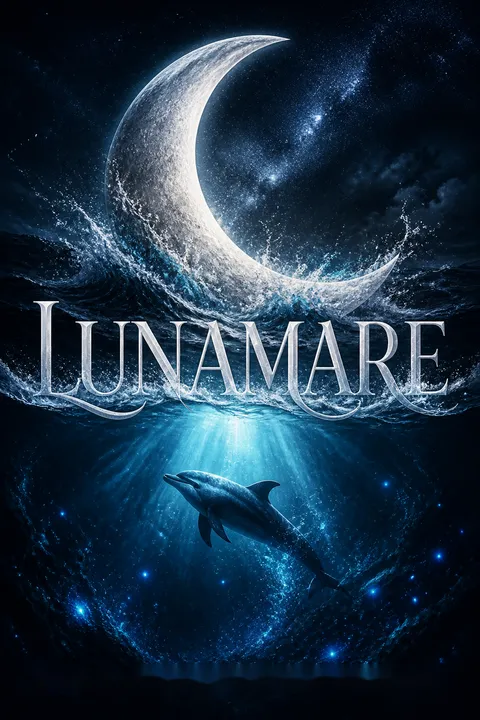
Lunamare by Pepper Winters is a highly anticipated coming-of-age romance that has garnered mostly positive reviews. Readers praise the author's masterful storytelling, character development, and emotional depth. The book follows the forbidden love story of Aslan and Nerida, with themes of soulmates and destiny. While some found the pacing slow and the content potentially triggering, many lauded the immersive writing and intense emotions. The cliffhanger ending has left readers eagerly anticipating the sequel, though a few felt the book was overly long or melodramatic.
People Also Read








Characters
Aslan Avci (Kara)
Aslan is a young Turkish refugee whose life is defined by trauma, loss, and the relentless search for belonging. Shipwrecked and orphaned, he is taken in by the Taylors, who become his surrogate family. Aslan is fiercely intelligent, sensitive, and burdened by guilt—not only for surviving when his family did not, but for the secrets he carries about his true parentage and the dangers that still pursue him. His love for Nerida is both salvation and curse, healing his wounds while exposing new vulnerabilities. Aslan's journey is one of transformation: from broken boy to passionate lover, from victim to avenger. His capacity for violence is matched only by his capacity for tenderness, and his greatest fear is that the darkness within him will destroy the ones he loves. His relationship with Nerida is the axis of his existence, a bond that both redeems and damns him.
Nerida Taylor
Nerida is a force of nature—curious, compassionate, and unafraid to challenge the world. From the moment she rescues Aslan, she is convinced they are fated, their lives entwined by the moon and sea. Nerida's journey is one of coming of age: from precocious child to passionate woman, from innocent to survivor. Her love for Aslan is unwavering, but she is not immune to pain. The trauma of sexual assault shatters her sense of self, leading to cycles of denial, self-harm, and desperate attempts to reclaim her body and agency. Nerida's resilience is both her strength and her vulnerability—she is determined to heal, but often at the cost of honesty and connection. Her relationship with Aslan is the anchor of her life, a love that is both mythic and painfully real.
Jack Taylor
Jack is Nerida's father and a marine biologist whose life is defined by love for his family and the sea. He is generous, principled, and fiercely protective—qualities that make him both a savior and, at times, an obstacle. Jack's willingness to take in Aslan is an act of profound compassion, but his strict boundaries and expectations create tension as Aslan and Nerida's relationship deepens. Jack's inability to see the truth beneath the surface—both in Aslan's trauma and Nerida's pain—leads to moments of misunderstanding and violence. His love is unwavering, but his trust is fragile, and the shattering of that trust is one of the story's most devastating moments.
Anna Taylor
Anna is Nerida's mother, a marine biologist and the emotional heart of the family. She is intuitive, empathetic, and deeply committed to the well-being of those she loves. Anna's relationship with Aslan is maternal, offering him the acceptance and care he so desperately needs. She is often the bridge between Jack's rigidity and Nerida's wildness, providing a safe space for healing and honesty. Anna's wisdom is hard-won, and her ability to see beneath the surface is both a gift and a burden.
Ethan
Ethan is the stranger who assaults Nerida, shattering her sense of safety and triggering the story's darkest arc. He is manipulative, remorseless, and ultimately destroyed by Aslan's vengeance. Ethan's presence lingers long after his physical departure, haunting Nerida's dreams and shaping the choices she makes. He is both a symbol of the world's cruelty and a catalyst for the transformation of both main characters.
Melike
Melike is Aslan's younger sister, lost in the shipwreck that begins the story. Her memory is a constant presence in Aslan's life, a source of both pain and motivation. Melike represents the innocence that is stolen by tragedy, the family that can never be replaced, and the wound that never fully heals.
Afet
Afet is Aslan's cousin, whose actions inadvertently expose the family to danger. Her struggles with belonging and her own trauma mirror Aslan's, and her fate is a reminder of the precariousness of survival. Afet's choices set in motion the events that lead to the family's flight and ultimate destruction.
Sapphire
Sapphire is the leader of the dolphin pod that guides the Taylors to Aslan. More than an animal, Sapphire is a symbol of the magic and mystery of the sea—a force that brings people together, heals wounds, and offers the possibility of redemption. Sapphire's presence recurs throughout the story, a reminder of the interconnectedness of all life.
Honey
Honey is a brief but significant presence—a friend who appears at a moment of crisis, offering Nerida the possibility of connection and understanding. Her intuition and warmth are a lifeline, a reminder that healing often requires the support of others. Honey's role is to nudge Nerida toward honesty and self-acceptance.
Cem Kara
Cem Kara is Aslan's biological father, a crime lord whose legacy haunts the story. Though he never appears directly, his influence is felt in every secret, every act of violence, and every moment of fear. Cem represents the darkness that Aslan must both escape and confront—the inheritance of pain, power, and the possibility of becoming what one most dreads.
Plot Devices
Dual Narrative and Time Jumps
The novel employs a dual narrative structure, alternating between Nerida's retrospective account and Aslan's immediate experiences. This allows for a layering of memory and emotion, as the story unfolds both in real time and through the lens of reflection. Time jumps are used to compress years of growth, trauma, and healing, creating a sense of inevitability and fate. The structure mirrors the characters' psychological journeys—fragmented, recursive, and always haunted by what has come before.
Symbolism of Moon and Sea
The moon and sea are recurring symbols, representing both the forces that bring Aslan and Nerida together and the tides of emotion that shape their lives. The sea is both a place of death and rebirth, trauma and healing. The moon is a witness, a guide, and a reminder of the cycles of loss and renewal. These symbols are woven into the narrative as vows, omens, and sources of both comfort and danger.
Foreshadowing and Echoes
The story is rich with foreshadowing—early references to loss, violence, and the impossibility of safety echo throughout the narrative. The repetition of certain phrases, images, and motifs (such as the shell, the dolphin pod, and the act of rescue) creates a sense of destiny and recurrence. The characters' attempts to escape their pasts are constantly undermined by the return of old wounds, suggesting that healing is never linear.
Thematic Use of Language and Culture
Language is a key plot device, both as a barrier and a bridge. Aslan's Turkish heritage and the Taylors' Australian identity create moments of misunderstanding, connection, and growth. The use of endearments, curses, and shared vocabulary becomes a way for characters to claim and redefine their identities. Cultural differences are both sources of conflict and opportunities for deeper intimacy.
Trauma as Catalyst and Obstacle
Trauma is not just a backdrop but a driving force in the narrative. The characters' attempts to repress, deny, or escape their pain only lead to further suffering. Healing requires confrontation, honesty, and the willingness to be vulnerable. The story refuses easy answers, insisting that love is both a balm and a source of new wounds.
About the Author
Other books by Pepper Winters








Download PDF
Download EPUB
.epub digital book format is ideal for reading ebooks on phones, tablets, and e-readers.








































