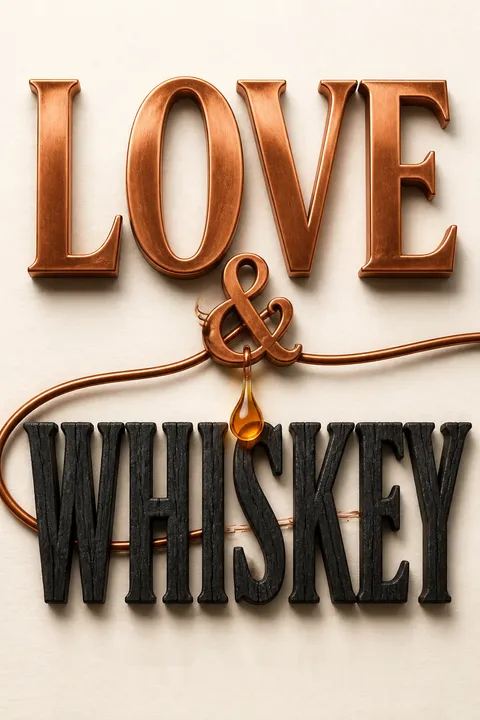

Key Takeaways
1. Uncovering Nearest Green's Erased Legacy
For decades, scholars have been trying to piece together African Americans’ many unacknowledged contributions to US foodways—a difficult task considering that, for three centuries, records of Black people in America were erased, lost, or never collected in the first place.
A hidden history. Fawn Weaver's journey began in 2016 with a New York Times article revealing Nearest Green, an enslaved man, taught Jack Daniel to distill whiskey. This discovery highlighted the systemic erasure of Black contributions to American history, particularly in the spirits industry, where white males historically dominated 100% of recognized brands despite Black people comprising 30% of the population. Nearest, the world's first known African American master distiller, was largely unknown outside Lynchburg, Tennessee, due to his inability to read or write and the lack of official records.
The keepers of the story. Nearest's story survived through five "keepers":
- Jack Daniel himself, who worked with Nearest and his sons.
- Journalist Ben A. Green, whose 1967 biography of Jack Daniel detailed the relationship.
- Nearest's granddaughter, Annie Bell Green Eady, who proudly shared the story with her family.
- New York Times journalist Clay Risen, who brought the story to the 21st century.
- Fawn Weaver, who felt compelled to amplify and preserve this legacy.
A monumental coincidence. Weaver discovered that all five keepers, including herself and traditionally Jack Daniel, shared the same birthday: September 5. This felt like a profound, almost divine, confirmation of her mission to tell Nearest's story, transforming it from a mere historical anecdote into a deeply personal calling.
2. The Unlikely Bond: Nearest Green and Jack Daniel
“Unless you guys tell me otherwise, I’ll be writing a story of love and honor between Jack and Nearest during a time in the South when that did not exist between Blacks and whites,” I said.
A unique relationship. Weaver's research, particularly through Ben A. Green's Jack Daniel's Legacy, revealed a relationship between Nearest Green and Jack Daniel built on mutual respect and mentorship, defying the racial norms of the post-slavery South. Nearest, a highly skilled distiller, taught young Jack his trade, and they worked together for years, even after Emancipation, with Nearest as a paid employee and head distiller.
Beyond the still. Their bond extended beyond work; Nearest played his fiddle while Jack danced, and Jack later employed Nearest's sons, George and Eli, who were known for their strength and continued the distilling tradition. Jack Daniel's philanthropy, including forgiving thousands of loans and providing elaborate funerals for Black community members, further underscored his character and respect for his Black neighbors and employees.
An enduring connection. The intertwined lives of the Daniel and Green families persisted for generations. Lem Motlow, Jack's nephew, deeded land to Nearest's descendants, and their children played together. This deep, familial connection, often overlooked by outsiders, was a testament to a unique social fabric in Lynchburg, where personal relationships sometimes transcended the era's pervasive racial prejudice.
3. Fawn Weaver's Transformative Calling
I’ve always said one of my superpowers is that, when I’m gripped by an idea, I find other people who are passionate about it and create a passionate community.
A life of true stories. Fawn Weaver, a high school dropout and former homeless teenager, built a successful career in PR, real estate, and as a bestselling author. Her life was shaped by listening to others' stories and seeking truth, a foundation laid by her Motown-hitmaker-turned-minister father, who taught her to see the world through "grace rather than the prejudice of race."
A personal turning point. The sudden death of her niece, Brittany, in 2016, just weeks after reading the New York Times article about Nearest, plunged Weaver into profound grief. She channeled this grief into relentless work, devouring Jack Daniel's Legacy and feeling a deep connection to Nearest's story. This period of intense personal loss and historical discovery became a divine appointment, a new calling that transformed her life's trajectory.
An audacious commitment. Despite her parents being teetotalers and her lack of experience in the spirits industry, Weaver felt an undeniable pull to honor Nearest. This commitment led her to make bold decisions:
- Trademarking Nearest Green's name for spirits, restaurants, and clothing.
- Committing to buy the historic Dan Call Farm, where Nearest and Jack worked.
- Promising Nearest's descendants she would launch a whiskey brand in his name.
4. Lynchburg's Nuanced Racial Dynamics
“In Lynchburg, there was no difference between races,” Jo Anne shared when I asked about their collective upbringing among a community in which there were far more whites than Blacks.
A unique social fabric. Lynchburg, Tennessee, presented a complex picture of race relations, often defying the stark segregation prevalent in other Southern towns. While public spaces like courthouses had "white only" signs, and Black patrons entered cafes through back doors, personal interactions often reflected a deeper, more harmonious community. Black and white children played together, and intermingling at funerals was common.
Defying Jim Crow. Weaver's interviews with Black elders revealed surprising anecdotes:
- Miss Dot, a Black teacher, described school integration in 1965 as a "nonissue," as children already played together.
- Miss Helen, Nearest's descendant, claimed she "never went through the back" at the Coffee Cup, getting her ice cream at the front counter like anyone else.
- Mickey Murphy, another descendant, recalled being initially told he couldn't sit at a pharmacy counter, only for a white man to intervene, saying, "That's a Green boy," after which he was served.
Community resilience. The town demonstrated a remarkable commitment to justice, as seen in its response to the 1903 lynching of Allen Small. Lynchburg officials and citizens actively fought against an outside mob to protect Small, contrasting sharply with the unpunished lynching of the Waggoner family on Jack Daniel's land a decade prior, which occurred while Jack was incapacitated. This suggested a community that, while not perfect, often resisted external racist pressures and valued its internal relationships.
5. Reclaiming History: The Dan Call Farm
This discovery changed everything. Old No. 7 had started on our grounds, just behind the house where Jack had grown up.
The original Distillery No. 7. Weaver's relentless research led to a groundbreaking discovery: Jack Daniel had leased Dan Call's distillery, two acres, and the spring in 1877, renaming it "Jack Daniel Distillery." This meant the Call Farm, not the current Cave Spring Hollow, was the original site of Distillery No. 7, and Nearest Green was its first master distiller. This revelation transformed the farm from merely Jack's childhood home into a pivotal historical monument.
A serendipitous acquisition. The Call Farm, on the market for $1.4 million, became a "no-brainer" purchase for Fawn and Keith, despite financial constraints. They felt a profound connection to the land, envisioning it as the heart of Nearest's story. The property, with its original gristmill ruins, spring, and the house where Jack lived, became a tangible link to the past.
Preservation and revelation. The renovation of the Call Farm uncovered hidden historical details:
- Hand-painted floral wallpaper and 1898 newspapers used as insulation.
- Barrel-head stenciling on the walls, possibly Jack's practice work.
- The original stone chimney, meticulously dismantled and rebuilt.
- Archaeological evidence suggesting three slave cabins on the property.
The farm became a living research room, filled with artifacts and documents, a testament to the intertwined lives of Nearest and Jack, and a physical space to tell their story.
6. Launching Uncle Nearest: Disrupting an Industry
I knew that I wanted to build a different kind of company. I didn’t want us to be bought out by Brown-Forman or any other spirits conglomerate.
A bold new venture. The family's desire for Nearest's name on a bottle, coupled with Jack Daniel's reluctance to fully embrace his legacy, spurred Weaver to launch Uncle Nearest Premium Whiskey. This was a monumental undertaking, requiring millions in capital and entry into an industry notoriously difficult for independent brands, especially those led by women or people of color.
Navigating a "boys' club." The spirits industry, dominated by middle-aged white men, initially ignored Weaver and her team. Calls to bottlers and distillers went unanswered until her husband, Keith, stepped in, receiving immediate responses and invitations to golf. This experience solidified Weaver's resolve to disrupt the industry's norms and build a company that reflected America's diversity.
The "Tasmanian devil" strategy. To overcome the industry's inherent resistance, Uncle Nearest adopted an aggressive, multi-pronged approach:
- Rapid market entry: Launching nationally within two years, rather than starting locally.
- Intensive marketing: Millions spent on billboards, digital ads, and consistent earned media.
- Direct storytelling: Emphasizing Nearest's true story to create emotional connections with consumers.
This strategy aimed to create unstoppable momentum, making the brand too fast and widespread for established players to suppress.
7. Strategic Growth and Overcoming Resistance
I knew people would try to pick this story apart left and right. It had to be flawless. There could be no holes.
The coexistence challenge. Brown-Forman, Jack Daniel's parent company, initially sought a "coexistence agreement" that would have allowed them to use Nearest's name, potentially stifling Uncle Nearest's growth. Weaver and her husband, Keith, recognized this as a "nonexistence agreement" and strategically resisted, with Keith's patient negotiation skills proving crucial.
Underestimated and scrutinized. Uncle Nearest faced constant scrutiny and subtle sabotage:
- Jack Daniel's employees tested Uncle Nearest products for regulatory compliance mistakes.
- Distributors were reportedly encouraged to push other brands instead of Uncle Nearest.
- A military broker was pressured by Brown-Forman to drop Uncle Nearest.
Weaver's unwavering commitment and transparent communication, coupled with Keith's strategic defense, allowed the brand to withstand these challenges.
Decentralizing power. To counter the distributors' influence, Uncle Nearest built a network of seventeen different distributors across states, rather than relying on one or two. This "Nobody Puts Baby in a Corner" strategy ensured no single entity could control their market access, allowing them to compare sales and hold distributors accountable. This innovative approach led to rapid growth, with Kentucky, for example, becoming a top-eight state after switching to a more supportive regional distributor.
8. Cementing Legacy: Philanthropy and Community
The foundation and scholarship would open doors that would help each forthcoming generation of Green descendants find opportunities to carry their family legacy forward.
A commitment to education. Recognizing the Green family's emphasis on education and the historical denial of opportunities, Weaver established the Nearest Green Foundation. Its core mission was to provide full college scholarships to every blood descendant of Nearest Green, aiming to build generational wealth and opportunity.
Honoring the past. Beyond scholarships, the foundation undertook significant projects in Lynchburg:
- Nearest Green Memorial Park: A four-acre parcel in the heart of town, featuring an art installation by high-profile Black artists.
- Highview Cemetery: Improvements and maintenance for the historic Black cemetery, including a monument to Nearest and Harriet.
- Annie Bell Green Eady's house: Preservation of Mammie's porch, where Nearest's story was kept alive.
A monument to Nearest. The dedication of Nearest and Harriet's monument at Highview Cemetery in 2017 was a deeply emotional event, uniting five generations of Green descendants. The monument, with its urn for sugar maple charcoal, honored Nearest's contributions to the Lincoln County Process and served as a visible testament to his legacy, visible even from Jack Daniel's grave.
9. The Nearest & Jack Advancement Initiative
The Leadership Acceleration program creates advanced industry apprenticeships for people of color already in the spirits industry who aspire to leadership roles like head distiller or production manager.
A collaborative vision. In 2020, Uncle Nearest and Jack Daniel's launched the Nearest & Jack Advancement Initiative, a not-for-profit alliance aimed at diversifying the spirits industry. This collaboration, born from years of complex interactions and mutual respect, marked a significant shift from competition to shared purpose.
Three pillars of advancement: The initiative focuses on:
- Leadership Acceleration: Apprenticeships for people of color to achieve leadership roles in the spirits industry.
- Business Incubation: Support and resources for BIPOC entrepreneurs in the spirits industry, exemplified by helping Chris Montana of Du Nord Craft Spirits rebuild after a fire.
- Nearest Green Academy of Distilling: An associate's degree program at Motlow State College, the first of its kind, to provide formal education in distilling.
A new era of coexistence. Jack Daniel's, under Mark McCallum's leadership, began to fully integrate Nearest's story into their tours and materials, dedicating Barrel House 114 as the George Green Barrel House and hosting Green family reunions. This demonstrated a genuine commitment to acknowledging their shared history and fostering a more inclusive industry.
10. A Vision for Perpetual Ownership and Impact
I believe there must be a generation of Black founders who decide to pass our businesses down. So far, even the greatest Black entrepreneurs have been unable to establish a company so lasting that it exists for their children’s children’s children.
Beyond financial gain. Weaver's ultimate vision for Uncle Nearest transcends personal wealth. She is committed to ensuring the company benefits Nearest Green's descendants in perpetuity, creating a model for generational Black ownership and wealth. This commitment, initially a closely guarded secret, was revealed in 2024, solidifying Uncle Nearest as a "redemption story for the Greens."
A blueprint for the future. Weaver's succession plan dictates that non-investor shares of the company will be turned over to the Greens, with future CEOs needing to embody the vision of what this means for generations to come. This pioneering purpose trust structure aims to build a true family business, with many roles filled by Nearest's descendants, ensuring his legacy endures.
Inspiring a movement. Uncle Nearest, the world's first major spirits brand led by a Black woman and the fastest-growing independent whiskey brand in US history, serves as a powerful symbol. Weaver actively advocates for minority founders to bypass traditional funding models, work with individual investors who support their vision, and build lasting companies. Her goal is to transform the spirits industry into a viable path to generational wealth for women and people of color, measuring success not by monetary value, but by the number of diverse business owners thriving in the industry.
People Also Read





Download PDF
Download EPUB
.epub digital book format is ideal for reading ebooks on phones, tablets, and e-readers.








































