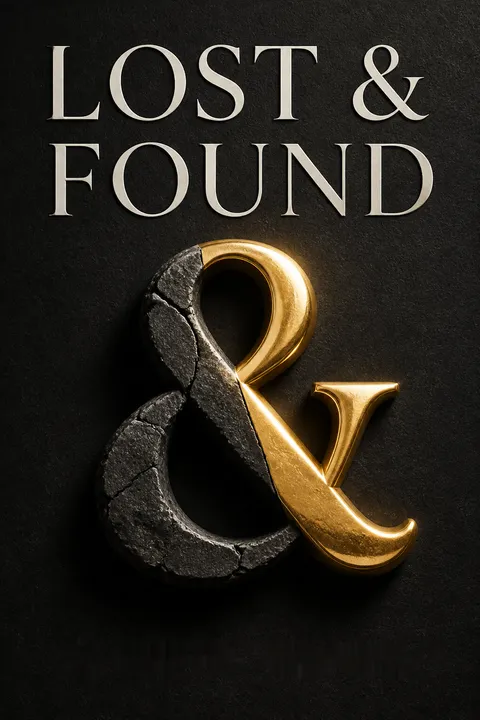

Key Takeaways
1. Loss is a Universal, Multifaceted Human Condition
This is the essential, avaricious nature of loss: it encompasses, without distinction, the trivial and the consequential, the abstract and the concrete, the merely misplaced and the permanently gone.
The pervasive nature of loss. The experience of losing her father prompted a profound reflection on loss itself, revealing its shocking bluntness and pervasive reach. The phrase "I lost my father" felt uniquely apt, rooted in Old English words meaning "to perish" or "to separate," predating the modern sense of misplacing an object. This personal grief illuminated how loss constantly expands its terrain, touching every aspect of human existence.
Beyond the obvious. Loss extends far beyond death or misplacing keys; it includes losing:
- Self-consciousness or fear (positive losses)
- Credit cards, jobs, life savings
- Faith, hope, custody of children
- Relationships, cherished visions of the future
- Physical abilities, fundamental parts of identity
- Collective tragedies like war, famine, and pandemics
A harsh corrective. Loss, whether trivial or catastrophic, forces us to confront the limits of our minds, our will, and existence itself. It corrects our sense of scale, making us realize the world is enormous and complex, and nothing is too large or too small to be lost. This humbling act reveals the universal impermanence of almost everything.
2. Grief is a Wild, Unpredictable, and Often Tedious Journey
Like anything that goes on for too long, grief is (I don’t know why people don’t talk about this aspect of it more often) unbelievably boring.
Grief's true nature. Contrary to popular belief, grief is not a linear process of stages like denial or acceptance, nor is it solely sadness. It is a private, unconstrained experience that can be volatile, chaotic, and surprisingly tedious. The author found herself feeling exhausted, irritable, anxious, or blank, with pure sadness being an intermittent visitor.
Beyond sadness. Grief manifests in a myriad of ways, often obscuring the underlying sorrow:
- Anxiety: A constant, undirected dread, as if waiting for something that has already happened.
- Irritability: Minor frustrations trigger disproportionate anger, a "lackluster cousin" to rage.
- Lassitude: A profound lack of motivation, a desire to do nothing, feeling "at a loss."
- Physical ailments: Uncharacteristic clumsiness, illness, and injury, as if the body mirrors emotional pain.
A seductive pain. Grief can be seductive because it offers an ongoing, emotionally potent connection to the dead, making us fear its eventual easing. However, this "circular mourning" is misguided; grief, no matter how intense, cannot preserve the person mourned. It is a force that moves through us, wild and beyond our control, eventually fading, though its absences remain.
3. The Human Mind Creates Meaning from Absence
The things we lose are distinguished by their lack of any known location; how clever, how obviously gratifying, to grant them one.
The Valley of Lost Things. Humans have a long-standing habit of inventing fantastical destinations for lost objects, from L. Frank Baum's "Valley of Lost Things" to Ludovico Ariosto's moon, where lost fortunes and minds reside. This imaginary geography reflects our desire to make sense of disappearance and to believe that missing things, like souls, find a place.
Searching for the dead. The bereaved often engage in "searching behavior," seeking the presence of lost loved ones. The author experienced "bereavement hallucinations"—hearing her great-grandmother's voice or seeing her friend in a plastic bag—which, while not altering her understanding of death, felt like an earthly form of love's enduring presence.
The paradox of absence. The absence left by death is not a neutral blankness; it is a constant presence. The author describes it as "the place in the tree where the owl is not." This "negative space" becomes a map of where the loved one is missing, transforming everyday objects and places into poignant memorials, making the world feel less incomplete.
4. Finding is a Blend of Serendipity and Deliberate Search
What an astonishing thing it is to find something.
The joy of discovery. Finding, whether recovery or discovery, is inherently pleasurable, from spotting a penny to unearthing a lost Caravaggio. This intrinsic value of finding is so profound that it's a primary way we entertain children, through games like Hide-and-Seek or the treasure of a four-leaf clover. It makes us feel fortunate, even when the object itself is worthless.
Luck and labor. Finding often combines pure chance with deliberate effort. Billy, the boy who found a meteorite, was lucky to be present when it fell, but he spent hours searching the fields to locate it. This interplay between serendipity and systematic search is common in many discoveries, from the Terra-Cotta Army to personal breakthroughs.
The will of the world. Finding something by chance evokes feelings of fate, karma, or divine intervention, especially when the discovery is astonishingly improbable. This contrasts with intentional searches, which make us feel in control. Ultimately, both methods reveal the governing forces of the universe, whether they are stochastic or benevolent.
5. Love Appears Suddenly, Yet Requires Deep Discovery
Incipit vita nova, he wrote, of the moment of finding love: a new life begins.
The enigma of love's arrival. For many, finding love feels like a fraught, unbounded search, akin to Meno's paradox: how do you look for something you don't know, and how do you recognize it if you find it? The author, after years of unsuccessful active searching, found love with C. by pure chance, illustrating love's unpredictable nature.
Love at first sight. While often dismissed as a shallow fiction, the author argues that love can materialize incredibly quickly, as Dante described with Beatrice. This isn't just physical attraction but a swift, profound recognition by the "vital spirit," a hallmark of human cognition to draw sweeping conclusions from limited data.
A yearning for knowledge. The initial "flash" of love, like a new planet swimming into ken, rearranges one's understanding of the universe. It sparks an intense yearning for information, a comprehensive and intimate study of the beloved—their body, mind, heart, habits, and history. This thirst for knowledge, for "more," defines the early stages of love, transforming life with incredible speed and thoroughness.
6. True Intimacy Flourishes Across Differences, Not Just Similarities
The point of the beloved, the whole reason that you are in love with her, is that she is like no one else on earth. That includes you: your beloved is not like you.
The "and" of connection. While similarities (shared love of country music, flannel shirts) can be delightful "shibboleths" in a relationship, profound intimacy often thrives on differences. The author and C. had significant contrasts: age, background (moneyed Midwest vs. working-class Eastern Shore), and especially religion (atheist Jew vs. devout Lutheran).
Cherishing contraries. These differences, initially a source of potential friction, became a cherished aspect of their bond. The author found C.'s convictions moving and illuminating, and C. never sought to change the author's atheism. Their minds turned naturally to the same fundamental questions, even if they arrived at different answers, allowing them to "go by contraries" like Robert Frost's west-running brook.
Expanding one's world. Loving across difference means seeing the beloved most clearly in those parts least like oneself, and through them, one's own world expands. The author's initial self-consciousness about her hometown vanished as she realized C. understood the feeling of fitting incompletely into one's own life, having navigated her own journey from rural Maryland to Harvard and Oxford.
7. Relationships are Forged Through Conflict and Commitment
That realization acted much as wedding vows are meant to do, shifting something fundamental between us.
The inevitability of conflict. Even in loving relationships, conflict is unavoidable, often triggered by seemingly idiotic things like a disagreement about bears. These arguments often stem from deeper, invisible issues, such as differing temperaments in handling conflict. The author's need to resolve immediately clashed with C.'s stoic tendency to retreat.
The fear of loss. Many early relationship fights are fueled by an underlying fear of losing each other. C.'s withdrawal was partly a rehearsal for life without the author, while the author's urgency stemmed from an inability to imagine being fine without C. This panic turned ordinary misunderstandings into unnecessary crises.
Commitment as a foundation. A particularly bad fight, which almost ended their relationship, led to a profound realization: "no one was leaving." This absolute certainty, like wedding vows, shifted something fundamental. The panic dissipated, allowing for levity and more sane, quicker resolutions. True commitment allows couples to navigate differences without the existential threat of separation.
8. Love is an Ongoing Act of Finding and Re-finding
Requited lovers don’t suffer from a lack of desire, only from a fundamental change in its form. We do not desire the new, that default yearning of contemporary culture. We desire only more of the same.
The continuous discovery. Love, unlike a static "happily ever after," is an ongoing process of finding. The initial thrill of recognition replicates itself through daily discoveries—from mundane habits to profound insights. The author found life with C. "unusually detailed, unusually distinct," filled with a constant yearning for more information and shared experiences.
Desire for the familiar. In requited love, desire transforms from a longing for something new to a longing for "more of the same." It's the wish for what one already has to continue, to deepen, to endure. This is the essence of devotion: "Counting an endless repetition," as Robert Frost wrote, finding infinite richness in the familiar.
Building a shared life. This ongoing finding extends to building a life together—creating homes, sharing routines, navigating challenges, and integrating families. The author's nomadic life with C., traveling between various temporary homes, became a journey that brought them "ever closer to each other," culminating in the decision to consolidate their lives into one shared home.
9. Life is an "And" Machine: A Constant Amalgamation of Contraries
Life is and. He meant that we do not live, for the most part, in a world of either/or. We live with both at once, with many things at once—everything connected to its opposite, everything connected to everything.
The linguistic superglue. The word "and," once the 27th character of the English alphabet, is a fundamental linguistic tool that binds together almost anything without specifying the relationship between them. It reflects an existential truth: our lives are a "teeming multiplicity of objects and relations," a constant "and" machine.
Beyond either/or. We seldom experience emotions or situations in isolation. Joy coexists with grief, happiness with irritation, love with annoyance. This "patchwork" reality means we are all "simul justus et peccator"—at once righteous and sinning. Life is not either/or; it is "both at once, with many things at once."
The power of conjunction. The ability to perceive connections among seemingly dissimilar things is a distinctive feature of the human mind, essential for thought and morality. It allows us to wrest order from confusion, transforming life's boundless list into meaningful stories. This intellectual and moral power comes from asserting connections that were previously invisible or overlooked.
10. Joy and Grief are Inseparable, Defining Our Human Condition
Of every kind of “and” that we experience, I find this one the most acute—the awareness that our love, in all its many forms, is bound inseparably to our grief.
The mingled emotions of life. Emotions are rarely undiluted; joy and grief, like all sentiments, constantly intermingle. The author's father's memorial reception, despite its somber occasion, was "incredibly fun," a testament to finding gladness even in the midst of sorrow. Conversely, a wedding photo, meant to capture joy, could evoke "excruciating double anguish" for her father's absence.
The completeness of conflict. This constant amalgamation of feelings—love and annoyance, gratitude and regret—is not an impurity but the "real thing" of human experience. To be conflicted is not to be adulterated; it is to be complete. Life is "by turns crushing and restorative, busy and boring, awful and absurd and comic and uplifting."
Love's inherent vulnerability. The profound joy of finding love is inextricably bound to the terrifying awareness of its fragility and the inevitability of loss. This "anticipatory grief," a bittersweet blend of gratitude and longing, is a constant companion to love. The ultimate problem of love, and of life, is learning how to live with the fact that we will eventually lose everything we hold dear.
Review Summary
Lost & Found receives mostly positive reviews (4.11/5 stars), praised for its beautiful, cerebral exploration of grief and love. Readers appreciate Schulz's profound insights on losing her father and finding her partner, noting her lyrical prose and philosophical depth. Many highlight the memoir's emotional impact and intellectual complexity. Common criticisms include excessive tangential content, rambling style, and overly idealized portrayals. Some found it boring or unrelatable depending on their own grief experiences. The audiobook, narrated by Schulz herself, is highly recommended. Overall, readers value its thought-provoking meditation on loss and discovery.
People Also Read





Download PDF
Download EPUB
.epub digital book format is ideal for reading ebooks on phones, tablets, and e-readers.








































