
Key Takeaways
1. A Childhood of Contradictions: Privilege Amidst Racial Strife
“The word Negro,” said the speaker, “carries with it a stigma that can never gather valuable meaning to those who live under the American flag. The terms Negro life, Negro religion, Negro education, Negro society, carry with them the inferiority-laden slave tradition. Our survival impinges definitely upon our whole-hearted adoption of the American way of life in all its aspects.”
Born into affluence, Lorraine Hansberry's early life in Chicago's Bronzeville was marked by the stark contrast between her family's upper-middle-class status and the pervasive racial discrimination of the era. Her father, Carl Augustus Hansberry, a successful real estate speculator dubbed "the King of the Kitchenettes," amassed wealth by subdividing apartments for black migrants, often in deteriorating conditions. This entrepreneurial success, however, was intertwined with the systemic exploitation of the very community he served, creating a complex legacy of both uplift and slumlord practices.
Family's fight for rights was exemplified by the landmark Hansberry v. Lee Supreme Court case in 1940. After facing violence and hostility for moving into an all-white neighborhood, the Hansberrys successfully challenged restrictive covenants, opening a "chink in the delicately woven chain of armor" of segregation. This victory, while celebrated, also fueled white flight and the further decline of black neighborhoods, highlighting the paradox of individual success within a racially unjust system.
Early experiences with racism deeply affected young Lorraine, despite her privileged upbringing. From being mocked at school for her "uppity airs" and ermine coat to witnessing her mother defend their home with a pistol against a white mob, she developed a keen awareness of injustice. These formative encounters instilled in her a lifelong commitment to fighting unfairness, even as she grappled with the inherent contradictions of her family's wealth and its impact on the black community.
2. Political Awakening: From Family Republicanism to Radical Leftism
“I was, being May-born,” she wrote, “literally an ‘infant of the spring.’”
A shift in ideology marked Hansberry's transition from her family's conservative Republicanism to a fervent embrace of progressive and socialist ideals during her college years. At the University of Wisconsin–Madison, she joined the Young Progressives of America (YPA) and actively campaigned for Henry A. Wallace's Progressive Party, which advocated for world peace, social equality, and racial justice. This political engagement, despite her parents' disapproval and fears of her associating with Communists, signaled her growing commitment to radical change.
Disillusionment with mainstream institutions and the pervasive nature of racism solidified her leftist leanings. She found the university's liberalism superficial and its art scene elitist, preferring the "intellectually involuntary, the unbridled, the freely formed" expression of folk art. Her independent reading of W. E. B. Du Bois and her burgeoning interest in African history further shaped her worldview, leading her to see the interconnectedness of racial and class oppression.
Embracing Marxism provided Hansberry with a framework for understanding societal injustices and a sense of belonging to a global movement for human liberation. She believed that capitalism fostered selfishness and that only through dismantling class distinctions could true equality be achieved. This conviction, born from her personal experiences and intellectual exploration, laid the groundwork for her future as a socially conscious writer and activist.
3. The Crucible of Harlem: Forging a Voice for Freedom
“The work of the Negro artist is cut out for him: the vast task of cultural and historical reclamation—to reclaim the past if we would claim the future.”
Seeking a new identity, Hansberry moved to New York City in 1950, drawn by the promise of Harlem's vibrant intellectual and artistic scene. Initially, she found Harlem "cold" and "frightening," struggling to reconcile her romanticized notions with the harsh realities of overcrowding and poverty. However, her work at Freedom, Paul Robeson's monthly newspaper, quickly immersed her in the heart of black activism and intellectual discourse.
Mentorship and radicalization came through figures like Claudia Jones, a brilliant black Communist who became Hansberry's mentor, and Louis E. Burnham, Freedom's editor. These relationships deepened her understanding of systemic injustice, anti-colonialism, and the global struggle for black liberation. She became a prolific writer for Freedom, contributing articles that condemned:
- Racial capitalism
- Police brutality
- Jim Crow laws
- Media stereotypes of black people
International activism further solidified her commitment to global justice. In 1952, she secretly represented Paul Robeson at the Intercontinental Peace Congress in Montevideo, Uruguay, where she passionately denounced American imperialism and advocated for nuclear disarmament. This experience, coupled with her growing disillusionment with the Soviet Union's actions (such as the suppression of the Hungarian uprising), pushed her to forge her own path as a "one-woman literary warrior for change."
4. Unveiling Her True Self: Navigating Love and Identity
“I am angry, disgusted, and a little outraged. But I am glad there is no hurt here, you seem to have lost your ability to do that. Now you simply anger me, beyond telling.”
A complex personal life unfolded as Hansberry navigated her relationships and burgeoning sexual identity. Her engagement to Roosevelt "Rosie" Jackson, a Harlem street speaker and Labor Youth League member, ended abruptly when she discovered he was married with a child and a heroin user. This betrayal, coupled with her family's disapproval of her radical associations, left her feeling "sick" and "suspicious."
Marriage to Robert Nemiroff, a white Jewish graduate student and fellow leftist, in 1953, provided a stable partnership, though their relationship was unconventional. Nemiroff, who shared her political beliefs and intellectual curiosity, became her closest collaborator, manager, and lifelong friend. Their union, however, did not fully address Hansberry's evolving understanding of her own desires.
Exploring lesbian identity became a significant, though private, aspect of her life. Influenced by Simone de Beauvoir's The Second Sex, Hansberry began to question societal norms around gender and sexuality. She corresponded with The Ladder, a lesbian publication, under her initials, advocating for:
- Women's freedom to define their own identities
- The interconnectedness of feminist and lesbian liberation
- Rejecting assimilation as a strategy for oppressed groups
Her early plays, The Apples of Autumn and Flowers for the General, explored themes of female desire and the limitations imposed by patriarchal society, reflecting her personal struggles with authenticity and self-acceptance.
5. The Birth of a Masterpiece: Crafting "A Raisin in the Sun"
“I had finished a play; a play I had no reason to think would ever be done; a play that I was sure no one would quite understand.”
A turning point in 1956 saw Hansberry, then a waitress at her in-laws' restaurant, feeling "cold, useless, frustrated, helpless, disillusioned, and angry and tired." This period of deep depression and professional stagnation was interrupted by the unexpected financial success of "Cindy, Oh Cindy," a folk song co-written by her husband, Bob Nemiroff. The royalties freed her to pursue writing full-time, a pivotal moment that allowed her to focus on her craft.
Inspired by Langston Hughes's poem "Harlem," Hansberry began writing "The Crystal Stair," later retitled A Raisin in the Sun. She aimed to create a drama that authentically portrayed the limited choices and enduring dignity of a black family in mid-20th century America, moving beyond "cardboard characters" and "cute dialect bits." Her goal was to involve the audience with believable human characters before introducing complex social ideas.
Collaboration with Lloyd Richards, a visionary black director, was instrumental in shaping the play. Richards challenged Hansberry to shift the protagonist from Mama Lena Younger to her son, Walter Lee Younger, transforming the play into a coming-of-age story for a black man grappling with his identity and dreams. This intensive revision process, often conducted over the phone during the play's out-of-town tryouts, honed the script into a powerful and resonant work.
6. "A Raisin in the Sun": A Universal Story of Dreams Deferred
“I had always been under the impression that Negroes are people.”
A protest against class oppression, A Raisin in the Sun is a parable that critiques American capitalism and its failure to deliver on the promise of the American Dream for black Americans. Hansberry deliberately chose a working-class black family, the Youngers, to illustrate how economic hardship and systemic racism crush aspirations. The play's central conflict revolves around a $10,000 life insurance check, symbolizing the family's hopes for a better future.
Complex characters and themes resonate universally, despite the specific racial context. Mama Lena Younger, the matriarch, embodies strength and a pragmatic desire for a home with a yard for her grandson. Walter Lee Younger, her son, dreams of entrepreneurial success, believing money is "life." Beneatha, the daughter, seeks self-expression and a humanitarian career, grappling with her "double consciousness" as an American and an African. The play explores:
- The pursuit of dignity
- Generational conflicts
- The corrosive effects of poverty
- The enduring power of family love
Challenging stereotypes, Hansberry presented black characters with depth and complexity, rejecting the "romanticized" and "exotic" portrayals common in media. She insisted that the Youngers were "just as complicated as they are—and just as mixed up—but above all, that we have among our miserable and downtrodden ranks—people who are the very essence of human dignity." This authentic portrayal, rooted in social realism, allowed audiences of all backgrounds to connect with the Youngers' struggles and triumphs.
7. The Price of Fame: Public Persona vs. Private Truths
“I had to choose ‘which of the closets was most important to her.’ And at that point in her life, it was more important for her to be a black woman who had written a great play and book than to come out as a lesbian.”
Instant celebrity followed the Broadway premiere of A Raisin in the Sun in March 1959, transforming Hansberry into a national spokesperson for civil rights and black culture. She was lauded as a groundbreaking black female playwright, receiving the New York Drama Critics' Circle Award for Best Play. This newfound fame brought a deluge of requests for speeches, interviews, and panel discussions, positioning her as a prominent intellectual voice.
Navigating public scrutiny meant carefully managing her image and message. She often downplayed the racial aspects of her play in interviews, insisting it was about "people" rather than "Negroes," a strategy to broaden its appeal but one that drew criticism from some black intellectuals. Her sophisticated background also led to accusations of not being "black enough" or speaking only for the middle class, highlighting the complex expectations placed on black public figures.
Maintaining a private life became a necessity, particularly regarding her sexuality. Despite her growing desire for romantic relationships with women, Hansberry chose to remain closeted, prioritizing her public role as a black female playwright. Her continued cohabitation with Robert Nemiroff, even after their eventual divorce, helped maintain this public facade, allowing her to protect her personal life while focusing on her artistic and activist work.
8. A Legacy Beyond the Stage: Enduring Influence and Unfinished Work
“Only death or infirmity can stop me now. The writing urge is on.”
A prolific, yet curtailed, career saw Hansberry continue to write with fierce dedication, even as her health declined. She moved into her own apartment on Waverly Place, where she began a relationship with her tenant, Dorothy Secules, and later purchased a country home in Croton-on-Hudson, "Chitterlin' Heights," to focus on her work. Despite battling pancreatic cancer, she worked tirelessly on new plays, essays, and a novel, driven by an urgent desire to express her vision for a more just world.
Her final play, The Sign in Sidney Brustein's Window, explored the disillusionment of a Greenwich Village intellectual and his wife, grappling with political and personal failures. Despite a troubled production and mixed reviews, Hansberry fought to keep the play running, seeing it as a testament to the human spirit's refusal to surrender to despair. She continued to write and revise until her death in January 1965, at the age of 34.
An enduring legacy was meticulously preserved and promoted by Robert Nemiroff, her former husband and literary executor. He edited and published her posthumous works, including To Be Young, Gifted and Black and Les Blancs, ensuring her voice continued to resonate. A Raisin in the Sun remains a cornerstone of American theater, influencing generations of black playwrights and artists, and is widely studied globally, affirming Hansberry's belief that "the ultimate destiny and aspirations of the African people and twenty million American Negroes are inextricably and magnificently bound up together forever."
Review Summary
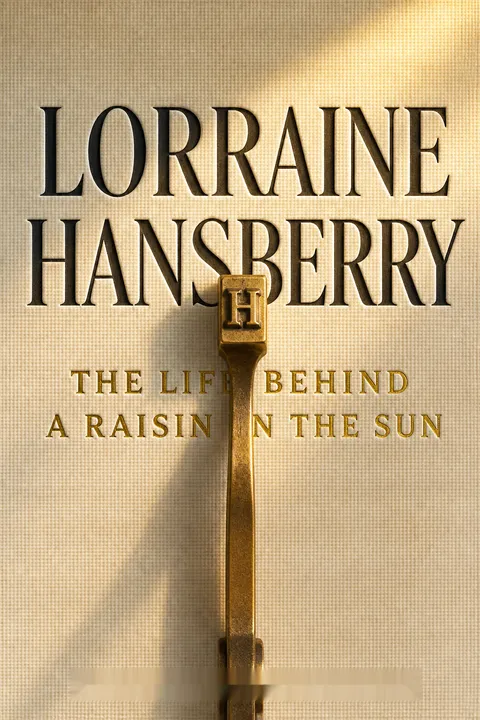
Lorraine Hansberry: The Life Behind A Raisin in the Sun by Charles J. Shields receives generally positive reviews (3.78/5). Readers praise the comprehensive, well-researched biography of the groundbreaking playwright who wrote the iconic Broadway play at age 28 before dying of pancreatic cancer at 34. Most appreciate Shields' thorough exploration of her Chicago upbringing, her father's controversial real estate business, political activism, FBI surveillance, complicated marriage to Robert Nemiroff, and her sexuality. Some criticize the dense writing style or the author's perceived editorial biases, while others find it engrossing and wonderfully readable, illuminating Hansberry's complexities and contradictions.
People Also Read








Download PDF
Download EPUB
.epub digital book format is ideal for reading ebooks on phones, tablets, and e-readers.








































