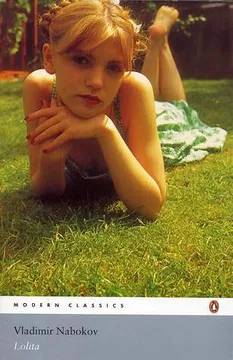


Plot Summary
Prologue
A fictional editor's note frames the manuscript: Humbert Humbert,1 the pseudonymous author of this confession, died of heart failure in legal custody in November 1952, days before his murder trial. His lawyer asked a psychiatrist, John Ray Jr., to prepare the memoir for publication. Ray discloses that the woman Humbert called Lolita2 — later Mrs. Richard F.
Schiller2 — died in childbirth on Christmas Day 1952, in a remote Northwest settlement. The editor warns that the author is horrible and abject, yet claims the confession carries a moral lesson. These obituary facts hang over every seductive sentence that follows, a cold frame around a burning picture.
The Annabel Wound
Born in 1910 on the French Riviera, Humbert1 grows up in his father's luxury hotel — cultured, handsome, motherless since three. At thirteen, he falls into consuming love with Annabel Leigh,5 a girl his age vacationing nearby.
Their summer burns with frustrated desire: furtive touches on crowded beaches, a midnight tryst in a mimosa grove interrupted by adults, and a final attempt at intimacy behind coastal rocks shattered by intruding strangers. Four months later Annabel5 dies of typhus in Corfu. The loss fuses with uncompleted desire and becomes a wound that never closes.
Humbert1 grows into a scholar of French literature, but his erotic fixation remains locked on girls between nine and fourteen — creatures he calls nymphets. All his adult relationships become elaborate evasions of this singular, arrested hunger.
The Piazza Recognition
After a failed first marriage and years of secret torment, Humbert1 arrives in the small New England town of Ramsdale to rent a room. The house he was promised has burned down, and he is redirected instead to 342 Lawn Street, home of a widowed woman named Charlotte Haze.3 The house is drab, the furniture depressing, the hostess aggressively flirtatious.
Humbert1 is ready to flee — until Charlotte3 leads him through the dining room to the back piazza, where a twelve-year-old girl kneels on a sun mat in a polka-dotted swimsuit. Frail, honey-hued, with the same chestnut hair and dark glasses as his dead Annabel.5 Twenty-five years collapse into a single heartbeat. Humbert1 takes the room. The rent is absurdly low. Nothing else matters.
The Davenport Sunday
Weeks pass in a fever of surveillance. Humbert1 keeps a diary cataloguing Lolita's2 every movement — her walk, her slangy speech, the shimmer of down on her forearm. Charlotte3 hovers, oblivious and smitten.
One Sunday morning, with Charlotte3 at church, Lolita2 stretches her sunburned legs across Humbert's1 lap on the living room sofa. She is absorbed in a magazine, singing a pop song about Carmen. Through calculated shifts of posture beneath his dressing gown, Humbert1 achieves climax against the weight of her bare legs without her knowing.
He considers this a stolen triumph — harmless, invisible. The phone rings; Lolita2 jumps up, cheeks flushed, entirely unaware. Humbert1 goes upstairs and runs a bath, singing with euphoria, telling himself he has preserved her innocence intact.
Charlotte's Useful Love
Charlotte3 announces Lolita2 will spend the summer at Camp Q. On departure day, Lolita2 dashes back upstairs and hurls herself into Humbert's1 arms for a breathless goodbye kiss — innocent, impulsive, devastating.
Hours later, the maid delivers Charlotte's3 love letter: a frantic confession declaring Humbert1 her life's love, ordering him to leave unless he intends marriage. Humbert's1 first instinct is repulsion. Then a cold calculation dawns: as Charlotte's3 husband, he becomes Lolita's2 legal stepfather, free to caress her under the veneer of paternal affection.
He marries Charlotte3 in a quiet ceremony, enduring her body by mentally substituting the daughter. Charlotte,3 delighted, plans to ship Lolita2 to boarding school permanently. Humbert1 begins experimenting with sleeping pills on his wife, plotting future nocturnal visits to the child.
The Diary Discovered
Humbert1 returns home one afternoon to find Charlotte3 at the writing desk, her face disfigured by emotion — she has broken into his locked drawer and read every word of his diary. She calls him a monster and a criminal fraud.
While Humbert1 scrambles to contain the crisis — offering explanations, pouring scotch — Charlotte3 writes three frantic letters and rushes across the street to mail them. A neighbor's car swerves to avoid a dog, strikes Charlotte,3 and drags her several feet. She dies on the sidewalk beneath a laprobe.
Humbert1 retrieves the scattered letters from a child who picked them up and shreds every one in his pocket. The widower performs grief with iron composure, convincing friends he is Lolita's2 biological father. Fate has cleared his path.
The Enchanted Hunters
Humbert1 collects Lolita2 from Camp Q, telling her that her mother3 is hospitalized. He drives her to a hotel called The Enchanted Hunters in Briceland, where he has reserved a room with a double bed. That evening, he slips her a purple sleeping pill obtained from a credulous doctor. The drug is worthless — a mild sedative that barely slows an energetic twelve-year-old.
Humbert1 spends the entire night in agonized proximity, unable to act, terrified she will wake screaming. At dawn, Lolita2 wakes, finds him beside her, and — drawing on sexual knowledge acquired from a boy at camp named Charlie Holmes — initiates the act herself. She treats it as a childish game. Humbert,1 the self-styled romantic, allows her to believe she is in control.
Orphaned into Captivity
As they drive away from the hotel, Lolita2 complains of pain. She grows quiet, then demands to call her mother3 at the hospital. Humbert1 refuses. At a gas station, she insists again. He tells her, flatly, that her mother3 is dead. In the silence that follows, everything between them shifts and hardens.
In the nearby town of Lepingville, Humbert1 buys her comics, candy, roller skates, a tennis racket — bribery dressed as consolation. That night in a separate hotel room, Lolita2 comes to him sobbing, and they reconcile in the only currency she now understands. She has no relatives, no home, no one to call. The trap is complete: not steel jaws but the absence of every other door.
America as Prison
For an entire year they crisscross the country — New England to Dixieland, across the Rockies, down to California, back east. Humbert1 keeps Lolita2 compliant through three instruments: the threat of a miserable reformatory farmhouse where she once stayed under a grim spinster; the larger threat that reporting him will land her in an institution while he goes to jail; and a cash-for-compliance system escalating from pennies to dollars per sexual act.
Lolita2 develops a studied boredom, gorging on magazines and milkshakes, rolling her eyes at scenery. Every night she cries in her sleep, and every morning Humbert1 pretends not to have heard. He records the beauty of the American landscape in lavish prose, with the detachment of a man who has ruined the only thing he loves.
The Beardsley Charade
They settle on Thayer Street in the college town of Beardsley. Lolita2 enrolls in a private girls' school; Humbert1 befriends Gaston Godin,7 a French professor whose own concealed proclivities make him conveniently incurious.
The headmistress, Pratt,10 lectures Humbert1 about Lolita's2 emotional needs — unwittingly counseling a predator about his victim. Lolita2 wins a part in a school play called The Enchanted Hunters, written — though Humbert1 doesn't yet know it — by the playwright Clare Quilty.4 She becomes stage-struck, misses piano lessons, makes secret contacts Humbert1 cannot trace.
One stormy evening, after a violent argument about her freedoms, she flees on her bicycle to a drugstore phone booth. She returns with a startling proposal: leave Beardsley immediately, go on another road trip — but this time she chooses the route.
The Red Shadow Following
The second road trip begins with Lolita2 suspiciously cooperative — she has traced their route on maps with lipstick. Humbert1 gradually notices a car following them: first an Aztec Red Convertible, then a series of vehicles in shifting grays and blues, always maintaining an uncanny distance.
At a gas station, Humbert1 glimpses the driver through a window — a broad, baldish man with a small mustache, speaking with Lolita2 in a manner that suggests familiarity rather than strangers exchanging directions.
Humbert1 confronts her; she deflects with theatrical nonchalance. At a Colorado resort, a fake long-distance phone call lures Humbert1 away from the tennis court. When he returns, the mysterious man has been playing doubles with Lolita.2 He flees up the slope the moment Humbert1 appears.
Stolen from Elphinstone
Lolita2 falls genuinely ill — high fever, aching vertebrae — and is admitted to a small hospital in the mountain town of Elphinstone. Humbert1 visits daily, bringing books and wildflowers, but the staff treat him with suspicion, particularly a young nurse named Mary Lore13 who seems to be conspiring with Lolita.2 Humbert1 himself succumbs to fever and retreats to his motel.
When he finally phones the hospital, a bright voice informs him that his daughter checked out the previous day: her uncle, a Mr. Gustave, arrived with a cocker spaniel, a smile, and a black Cadillac. He paid the bill and said not to worry. Lolita2 is gone. Humbert1 storms the hospital in a drunken rage but is restrained. She has vanished into someone else's custody entirely.
Dolly Schiller's Letter
Humbert1 nearly loses his mind. He takes up with Rita,8 a kind, alcoholic drifter who asks no questions and keeps him from the madhouse. He searches fruitlessly through hotel registers, where the kidnapper has left mocking literary pseudonyms — anagrams, bilingual puns, references to Humbert's1 own history — that reveal a cultured, French-speaking tormentor but never a name.
Then in September 1952, five years after the whole affair began, a letter arrives from Dolly Schiller2 of Coalmont — Lolita,2 now seventeen, married to a young man named Dick,6 pregnant, desperately broke, asking her father for money.
She does not know where her kidnapper is. She just needs help. Humbert1 loads his late stepfather-in-law's pistol, rehearses its use on a sweater hung from a tree, and drives eight hundred miles.
The Name at Last
At a muddy road's end in Coalmont, Humbert1 finds Lolita2 — thinner, paler, hugely pregnant, in a brown sleeveless dress and felt slippers. He cannot harm her. He loves her: not the nymphet she was, but this faded seventeen-year-old standing in a doorway.
Inside the shabby house she shares with her deaf young husband Dick,6 she tells him everything. The kidnapper was Clare Quilty,4 the famous playwright — who had groped her at age ten, watched them at The Enchanted Hunters hotel, orchestrated the school play to reach her.
Quilty4 took her to his ranch and demanded she participate in group pornography. When she refused, he expelled her. Humbert1 begs her to leave with him. She declines gently, calling him honey for the first time ever. He gives her four thousand dollars and departs in tears.
Pavor Manor's Last Guest
Humbert1 tracks Quilty4 to Pavor Manor, a ramshackle mansion on Grimm Road, and arrives next morning in his finest clothes — black suit, cashmere tie — with a loaded pistol. The house is unlocked. Quilty4 emerges from a bathroom in a purple robe, foggy with drink and drugs, barely recognizing his visitor.
Humbert1 announces himself as Lolita's2 father and reads aloud a verse indictment he has composed. They wrestle absurdly — two large, unfit men rolling across floors — and the gun skitters under furniture.
When Humbert1 retrieves it, he pursues Quilty4 up the staircase, firing repeatedly. Each bullet seems only to inject manic energy into the bleeding man, who staggers from room to room offering bribes and quoting literature, until at last a pink bubble forms on his lips and bursts.
The Concord of Children
Humbert1 drives away from the dead man's house and drifts onto the wrong side of the highway — a deliberate, dreamy transgression that feels almost spiritual. Police cars converge; he surrenders without resistance.
Writing his confession in prison, he recalls a moment from the empty years: standing on a mountain road, listening to children playing in a valley town below. The voices blend into a single shimmering chord — laughter, bat-cracks, wagon clatter — and in that vapory music he finally grasps the scope of his crime.
The agonizing thing, he realizes, is not Lolita's2 absence from his side but the absence of her voice from that innocent chorus. He stole her childhood. No prose, however luminous, can return it. He asks that the memoir be published only after she is gone.
Analysis
Lolita is frequently misread as a love story. It is, more precisely, the most sophisticated study of predatory self-justification in Western literature — a novel that forces readers to experience the seductive power of language deployed in the service of evil, then to reckon with their complicity in having been seduced.
Nabokov constructs Humbert1 as a narrator of extraordinary verbal gifts whose prose performs the very crime it confesses. Every lyrical passage about Lolita's2 beauty serves a dual function: it recreates the aesthetic experience Humbert claims, and it buries a child's suffering beneath literary enchantment. The reader who finds these descriptions beautiful is experiencing exactly the mechanism by which abuse operates — the substitution of the abuser's narrative for the victim's reality.
Lolita's2 own experience is the novel's strategic absence. She cries every night; this is confined to subordinate clauses. Her consent is always coerced by circumstance. Her so-called seduction at the hotel is a child reenacting behavior learned from another exploiter in a situation where she has been drugged and has no protecting adult. Nabokov buries these facts in plain sight, trusting alert readers to excavate them from beneath ornamental prose.
The novel also anatomizes American complicity: the school that lectures on adjustment while missing abuse, neighbors who see nothing, a legal system too tangled to protect a child. Quilty's4 existence as Humbert's1 double demolishes any claim to romantic exceptionalism — there are always more predators, and they operate through networks of enablement and institutional blindness.
The mountain passage, where Humbert1 hears children playing and recognizes he stole not a love but a childhood, represents the novel's moral center — the one moment where eloquence serves truth rather than evasion. It arrives too late to save anyone, which is precisely the point. Art, Nabokov suggests, can illuminate evil without excusing it, and the reader who confuses Humbert's1 beautiful sentences with beautiful actions has failed the novel's deepest test.
Review Summary
Lolita is a controversial and masterfully written novel that deeply polarizes readers. Many praise Nabokov's exquisite prose and complex exploration of taboo subjects, while others find it repulsive. The story follows Humbert Humbert's obsession with 12-year-old Dolores Haze, told through his unreliable narration. Readers grapple with the narrator's attempts to justify his actions and the blurred lines between love and exploitation. The novel's artistic merit and its disturbing subject matter continue to spark debates about morality, literature, and the nature of desire.
People Also Read







Characters
Humbert Humbert
Obsessive narrator-predatorEuropean-born scholar of French literature, self-described as handsome and melancholy, who narrates his memoir from prison while awaiting trial. His sexual fixation on prepubescent girls—which he traces to a devastated childhood romance—drives every major decision, from his marriages to his migrations. Humbert is supremely unreliable: erudite, witty, and self-aware enough to call himself a monster, yet constantly deploying eloquence to seduce the reader into sympathizing with his predation. His psychological architecture combines genuine romantic longing with methodical predatory calculation—he plans druggings, manipulates legal situations, and terrorizes his victim into silence, all while insisting on the transcendence of his love. He represents the terrifying capacity of intelligence and charm to rationalize absolute evil.
Dolores Haze (Lolita)
The silenced child victimA twelve-year-old American girl—freckled, brown-haired, snub-nosed—whose ordinary childhood is systematically destroyed. Beneath Humbert's1 rhapsodic descriptions, Lolita emerges as a recognizable kid: she likes comics, milkshakes, movie magazines, and pop music. She is sharp-tongued, emotionally volatile, and heartbreakingly resilient. Her psychological reality is deliberately obscured by Humbert's1 narration—her nightly sobbing mentioned in passing, her pain dismissed as moodiness. She develops a survival strategy mixing compliance, negotiation, and secret rebellion. Lolita is not a seductress but a trapped child performing the role her captor demands. Her true interiority—what she thinks, feels, and dreams—remains the novel's great silenced center, audible only in glimpses Humbert1 cannot suppress.
Charlotte Haze
Lolita's lovelorn motherLolita's2 mother, a middle-class widowed American woman in her mid-thirties living in Ramsdale. Charlotte is status-conscious, culturally pretentious, and emotionally hungry—she quotes book clubs, decorates compulsively, and performs sophistication she does not possess. Her relationship with Lolita2 is marked by jealousy and harshness; she underlines 'negativistic' on her daughter's personality chart and plans permanent boarding school. Charlotte falls passionately in love with Humbert1, who represents European elegance and masculine attention. Her love is genuine but fatally blind—she cannot see that the man worships not her but the child she resents. Her psychological profile suggests a woman whose deepest fears of being unlovable prevent her from perceiving the danger in her own home.
Clare Quilty
Shadowy rival playwrightA famous American playwright whose name surfaces repeatedly throughout Humbert's1 narrative—in hotel registers, theatrical credits, and casual references by Ramsdale acquaintances. Quilty is cultured, charming, and deeply sinister: a writer of children's plays who uses his celebrity to access young people. He represents the novel's structural shadow, a figure whose presence is felt long before his role becomes clear. Psychologically, Quilty mirrors Humbert1—another articulate man who aestheticizes exploitation—but lacks Humbert's1 tormented self-awareness. Where Humbert1 cloaks abuse in romantic language, Quilty treats it as casual entertainment. He drinks, takes drugs, and regards the destruction he causes as raw material for art, a funhouse mirror reflecting Humbert's1 own self-serving aestheticism.
Annabel Leigh
Humbert's dead first loveHumbert's1 first love, a girl of mixed English-Dutch parentage whom he meets at thirteen on the Riviera. Their intense, unconsummated summer romance is interrupted by adults and terminated by her death from typhus. Annabel exists in the novel primarily as an origin myth—the wound Humbert1 uses to explain and justify his subsequent fixation on children. She is a memory more than a person, a ghost whose outline Humbert1 superimposes onto every girl he later desires.
Dick Schiller
Lolita's decent young husbandLolita's2 young husband, a hard-of-hearing veteran with arctic blue eyes and black hair, described as decent and simple. Dick is entirely ignorant of his wife's turbulent past—he believes she ran away from an upper-class home. He represents the modest, ordinary life Lolita2 ultimately chooses, far from the cultured predators who dominated her adolescence.
Gaston Godin
Oblivious chess-playing friendA portly, disheveled French professor at Beardsley College who befriends Humbert1 through weekly chess games. Gaston has his own concealed attraction to young boys, making him incuriously tolerant of Humbert's1 domestic arrangement. He serves as a dark comic mirror—a man whose own deviance provides Humbert1 with social cover while illustrating the community's blindness to predators in its midst.
Rita
Gentle drifter companionA thin, dark-haired, gentle alcoholic woman whom Humbert1 picks up after losing Lolita2. Rita asks no questions and makes no demands. She keeps Humbert1 sane during his three-year search, serving as a compassionate, undemanding companion whose kindness contrasts sharply with the exploitation that defines Humbert's1 other relationships.
Valeria
Humbert's first unloved wifeHumbert's1 first wife, a Polish woman whose childlike mannerisms initially attracted him. Their loveless marriage ends when she leaves him for a Russian taxi driver named Maximovich.
Miss Pratt
Oblivious school headmistressHeadmistress of Beardsley School, a large, bespectacled woman who lectures Humbert1 about Lolita's2 emotional development, unwittingly counseling a predator about the damage he inflicts.
John Farlow
Charlotte's trusting lawyerA quiet, athletic Ramsdale businessman who handles Charlotte's3 legal affairs and accepts Humbert's1 false claim of being Lolita's2 biological father without question.
Jean Farlow
John's artistic, ailing wifeJohn's11 tall, artistic wife who paints landscapes and develops a crush on Humbert1. She is quietly dying of cancer throughout most of the novel's Ramsdale chapters.
Mary Lore
Suspicious Elphinstone nurseA young nurse at Elphinstone hospital who takes an unconcealed dislike to Humbert1 and appears to conspire with Lolita2 during her hospitalization.
Mona Dahl
Lolita's knowing school friendLolita's2 closest friend at Beardsley School, a precocious, sophisticated girl with a husky voice who may know more about Lolita's2 true situation than she reveals.
Plot Devices
Humbert's Diary
Catalyst for catastropheHumbert1 keeps a detailed diary of his obsession with Lolita2 during his time as Charlotte's3 lodger, recording lustful observations and contempt for her mother3. He locks it in a desk drawer with an ornate key. Charlotte3 discovers and reads it, precipitating her frantic dash to mail letters exposing him—a dash that ends when a car strikes her. The diary is both narcissistic compulsion and fatal miscalculation: Humbert's1 need to aestheticize his predation in words creates the very document that nearly destroys his scheme. The diary also prefigures the memoir itself—another act of self-regarding confession Humbert1 cannot resist, despite the danger of exposure.
The Sleeping Pills
Symbol of failed controlHumbert1 obtains purple sleeping capsules from a credulous doctor, originally experimenting on Charlotte3 and later planning to anesthetize Lolita2 at The Enchanted Hunters hotel. He administers a pill to the girl, expecting complete unconsciousness. The drug fails entirely—it is a mild sedative, not a barbiturate. This failure is structurally crucial: it forces the consummation to occur through Lolita's2 own initiative rather than Humbert's1 plan, allowing him to claim she seduced him. The pills embody Humbert's1 chronic self-deception—his elaborate schemes consistently misfire, yet he persists in casting himself as a careful, almost reluctant participant rather than the predator he is.
The Enchanted Hunters (Name)
Motif linking two predatorsThe name appears three times: as a hotel where Humbert1 first takes Lolita2, as a dining room mural depicting hunters in a trance, and as a school play in which Lolita2 performs at Beardsley. This triple recurrence weaves Clare Quilty4 into the narrative fabric long before his identity is revealed, since the play is his composition. The name connects the novel's two predators through their shared quarry and reflects the book's central irony: the hunters are themselves enchanted—obsessed, deranged, controlled by desire as much as they control their prey. Humbert1 dismisses the coincidence; the reader, given enough clues, should not.
The Aztec Red Convertible
Emblem of shadowy pursuitDuring the second road trip, Humbert1 notices an Aztec Red Convertible following at a steady distance—a gliding, glass-like interspace between their cars that neither traffic nor terrain can break. The car later shifts through a spectrum of makes and colors as the pursuer switches rental vehicles, fueling Humbert's1 paranoia that a detective has been hired to investigate him. The convertible functions as both thriller element and psychological mirror: Humbert1, who has spent years surveilling a child, is now himself the object of surveillance by his own dark double. The device creates sustained suspense while establishing that Lolita2 has been in contact with her future kidnapper.
Hotel Register Pseudonyms
Intellectual torment and cluesAfter Lolita's2 disappearance, Humbert1 traces the abductor through hotel registers where the man has left deliberately provocative fake names—literary allusions, anagrams, bilingual puns. Entries like an anagram of a familiar name, or references to Lolita's2 dead relatives, taunt Humbert1 with coded knowledge of his own history. The pseudonyms reveal the kidnapper as a cultured, French-speaking man with intimate knowledge of Humbert's1 past—narrowing the field while simultaneously mocking the searcher. This paper chase transforms the detective-story convention into a literary duel between two erudite predators, each weaponizing language to different ends: one to conceal, the other to discover.
FAQ
Synopsis & Basic Details
What is Lolita about?
- Obsessive narrator's confession: Lolita is the story of Humbert Humbert, a middle-aged European intellectual, and his destructive obsession with Dolores Haze, a twelve-year-old American girl he nicknames Lolita. The novel is presented as Humbert's confession, detailing his thoughts, feelings, and actions as he navigates his illicit desire.
- Exploitation and manipulation: The narrative explores the power dynamics between Humbert and Lolita, highlighting his manipulation and exploitation of her. Humbert's attempts to rationalize his behavior and portray himself as a victim of fate are central to the story's complexity.
- Moral ambiguity and societal critique: The novel delves into themes of morality, societal norms, and the subjective nature of perception. Nabokov uses Humbert's perspective to challenge readers to confront uncomfortable truths about human desire and the potential for darkness within seemingly ordinary individuals.
Why should I read Lolita?
- Literary masterpiece: Lolita is celebrated for its intricate prose, masterful use of language, and complex narrative structure. Nabokov's writing style is both beautiful and unsettling, drawing readers into Humbert's world while simultaneously distancing them from his actions.
- Psychological exploration: The novel offers a deep dive into the psychology of obsession, manipulation, and self-deception. Humbert's character is a study in moral ambiguity, forcing readers to confront uncomfortable aspects of human nature.
- Provocative themes: Lolita tackles controversial themes of sexuality, power, and the exploitation of innocence. The novel challenges readers to question their own values and assumptions about morality and desire.
What is the background of Lolita?
- Post-war America: The novel is set in post-World War II America, a time of social and cultural change. The setting provides a backdrop for Humbert's outsider perspective and his critique of American society.
- Nabokov's personal experiences: Vladimir Nabokov drew inspiration from his own life experiences, including his childhood in Russia and his later years as an émigré in Europe and America. These experiences inform the novel's themes of displacement, identity, and the search for belonging.
- Literary and cultural influences: Lolita is influenced by a range of literary and cultural sources, including classical literature, Romantic poetry, and contemporary American culture. Nabokov's use of literary allusions and cultural references adds layers of meaning to the story.
What are the most memorable quotes in Lolita?
- "Lolita, light of my life, fire of my loins.": This opening line immediately establishes Humbert's obsession and sets the tone for the novel. It is a powerful and evocative statement that encapsulates the intensity and complexity of his desire.
- "Ladies and gentlemen of the jury, exhibit number one is what the seraphs, the misinformed, simple, noble-winged seraphs, envied. Look at this tangle of thorns.": This quote reveals Humbert's self-justification and his belief that his love for Lolita is something extraordinary and envied, even by angels. It also foreshadows the pain and suffering that will result from his obsession.
- "I loved you. I was a pentapod monster, but I loved you.": This quote, spoken near the end of the novel, demonstrates Humbert's belated recognition of his own monstrous nature and the harm he has caused Lolita. It is a moment of painful self-awareness that underscores the tragedy of their relationship.
What writing style, narrative choices, and literary techniques does Vladimir Nabokov use?
- Unreliable narrator: The story is told from Humbert's perspective, making him an unreliable narrator. His biased and manipulative account of events shapes the reader's understanding of the story, creating ambiguity and tension.
- Intricate prose: Nabokov's writing style is characterized by its rich vocabulary, elaborate sentence structure, and vivid imagery. He uses language to create a sense of beauty and horror, drawing readers into Humbert's world while simultaneously distancing them from his actions.
- Literary allusions and symbolism: Lolita is filled with literary allusions and symbolism, adding layers of meaning to the story. Nabokov uses these techniques to explore themes of art, beauty, and the nature of reality.
Hidden Details & Subtle Connections
What are some minor details that add significant meaning?
- The name "Haze": The surname "Haze" suggests a blurring or obscuring of reality, reflecting Humbert's distorted perception of Lolita and his inability to see her as a separate individual. It also hints at the moral ambiguity that permeates the novel.
- The color red: The recurring motif of the color red, such as the Aztec Red Convertible and Lolita's red lips, symbolizes desire, danger, and the destructive nature of Humbert's obsession. It also represents Lolita's vitality and the life force that Humbert seeks to possess.
- The number 42: The number 342, the room number at The Enchanted Hunters, is a recurring motif. The digits add up to 9, which can be seen as a symbol of completion or the end of a cycle.
What are some subtle foreshadowing and callbacks?
- Annabel's death foreshadows Lolita's fate: The early death of Annabel foreshadows the potential for tragedy and loss in Humbert's relationship with Lolita. It establishes a pattern of desire and loss that drives Humbert's actions throughout the novel.
- The "Enchanted Hunters" name: The name of the hotel where Humbert and Lolita first consummate their relationship foreshadows the predatory nature of Humbert's desire and the loss of innocence that will follow. It also hints at the presence of other "hunters" who seek to exploit Lolita.
- References to Quilty's plays: The mentions of Clare Quilty's plays, such as "The Little Nymph," foreshadow his later involvement in Lolita's life and his own obsession with her. These references create a sense of unease and foreshadow the eventual confrontation between Humbert and Quilty.
What are some unexpected character connections?
- Quilty and Charlotte's past: The revelation that Clare Quilty knew Charlotte Haze years before adds a layer of complexity to the story and suggests a hidden network of connections that Humbert is unaware of. It also raises questions about Charlotte's own past and her potential complicity in the events that unfold.
- Dr. Cooper and Aunt Sybil: The mention of Dr. Cooper, who courted Humbert's aunt Sybil, connects Humbert's past with his present. It suggests a pattern of older men being drawn to younger women within Humbert's family circle.
- The Farlows and Maximovich: The connection between the Farlows and Valechka Maximovich, Humbert's first wife, creates a sense of interconnectedness and suggests that Humbert's past is always present, even in his new life in America.
Who are the most significant supporting characters?
- Clare Quilty: As Humbert's rival and a fellow obsessive figure, Quilty embodies the darker aspects of desire and the potential for exploitation. His presence challenges Humbert's self-justifications and forces him to confront the reality of his actions.
- Rita: Rita provides Humbert with a temporary respite from his obsession and a semblance of normalcy. Her kindness and compassion offer a contrast to Humbert's manipulative behavior and highlight the potential for genuine human connection.
- John and Jean Farlow: The Farlows represent the seemingly normal and well-adjusted American couple, but their own secrets and desires hint at the hidden complexities beneath the surface of suburban life. They also serve as a foil to Humbert's outsider status and his inability to fully integrate into American society.
Psychological, Emotional, & Relational Analysis
What are some unspoken motivations of the characters?
- Lolita's desire for independence: Beneath her outward compliance, Lolita craves independence and control over her own life. Her actions, such as running away and forming relationships with other men, are driven by a desire to escape Humbert's obsession and assert her own agency.
- Charlotte's yearning for connection: Charlotte's pursuit of Humbert stems from a deep-seated loneliness and a desire for connection. She seeks validation and affection, but her naiveté and lack of self-awareness make her vulnerable to Humbert's manipulation.
- Quilty's need for control: Quilty's obsession with Lolita is rooted in a need for control and a desire to possess and manipulate others. His actions are driven by a sense of entitlement and a disregard for the well-being of those around him.
What psychological complexities do the characters exhibit?
- Humbert's self-deception: Humbert's narrative is marked by self-deception and rationalization. He attempts to portray himself as a victim of fate and a protector of Lolita, but his actions reveal a darker and more manipulative side.
- Lolita's trauma and resilience: Lolita's experiences with Humbert have a profound impact on her psychological development. She exhibits signs of trauma, but also demonstrates resilience and a determination to survive.
- Charlotte's repressed desires: Charlotte's repressed desires and insecurities contribute to her vulnerability and her susceptibility to Humbert's charm. Her inability to recognize his true nature highlights the complexities of female psychology and the societal pressures that shape women's identities.
What are the major emotional turning points?
- Charlotte's death: Charlotte's death marks a significant turning point in the story, as it removes the last obstacle between Humbert and Lolita and sets the stage for their cross-country journey. It also triggers a shift in Humbert's psychological state, as he grapples with guilt and the realization of his own actions.
- Lolita's confession about Quilty: Lolita's confession about her relationship with Quilty shatters Humbert's illusions and forces him to confront the reality of his obsession. It also marks a shift in the power dynamics between them, as Lolita asserts her own agency and reveals the extent of Humbert's deception.
- Humbert's final encounter with Lolita: Humbert's final encounter with Lolita, now married and pregnant, is a moment of profound emotional reckoning. He recognizes the harm he has caused her and experiences a surge of remorse and tenderness. This encounter leads to a cathartic release and a sense of closure, as Humbert finally accepts the consequences of his actions.
How do relationship dynamics evolve?
- Humbert and Lolita: The relationship between Humbert and Lolita evolves from one of obsession and control to one of mutual dependence and resentment. As Lolita matures, she becomes increasingly aware of her power over Humbert, leading to a shift in the power dynamics between them.
- Humbert and Charlotte: The relationship between Humbert and Charlotte is characterized by manipulation and deceit. Humbert uses Charlotte to gain access to Lolita, while Charlotte seeks validation and affection from Humbert. Their relationship is ultimately based on false pretenses and ends in tragedy.
- Lolita and Quilty: The relationship between Lolita and Quilty represents a different kind of exploitation, one that is driven by a shared understanding of the darker aspects of human desire. Their connection challenges Humbert's sense of ownership over Lolita and highlights the complexities of her own desires and motivations.
Interpretation & Debate
Which parts of the story remain ambiguous or open-ended?
- Lolita's true feelings for Humbert: The extent to which Lolita reciprocates Humbert's feelings remains ambiguous throughout the novel. While she expresses moments of affection and dependence, it is unclear whether these are genuine or simply a means of survival.
- The nature of Quilty's influence: The full extent of Quilty's influence on Lolita's life and his role in her eventual departure from Humbert remains unclear. The novel leaves open the possibility that Quilty was a more significant figure in Lolita's life than Humbert realizes.
- Humbert's redemption: Whether Humbert achieves true redemption at the end of the novel is open to interpretation. While he expresses remorse and acknowledges the harm he has caused, his self-awareness may be seen as a final act of self-deception.
What are some debatable, controversial scenes or moments in Lolita?
- The seduction scene on the sofa: The scene in which Humbert manipulates Lolita into a sexual encounter on the sofa is one of the most controversial in the novel. It raises questions about consent, power dynamics, and the exploitation of innocence.
- Humbert's murder of Quilty: Humbert's murder of Quilty is a violent and disturbing act that challenges readers to sympathize with a character who has committed a heinous crime. It also raises questions about the nature of justice and the limits of self-control.
- The ending of the novel: The ending of the novel, in which Humbert reflects on his life and expresses remorse, is open to interpretation. Some readers may see it as a genuine attempt at redemption, while others may view it as a final act of self-justification.
Lolita Ending Explained: How It Ends & What It Means
- Humbert's confession and imprisonment: The novel ends with Humbert in prison, awaiting trial for the murder of Clare Quilty. He is writing his confession, which serves as the narrative of the novel. This framing device highlights the subjective nature of the story and the unreliability of Humbert's perspective.
- Lolita's new life and rejection of Humbert: Humbert learns that Lolita has married and is pregnant, living a seemingly ordinary life. She rejects his offer to run away with him, choosing instead to stay with her husband. This rejection underscores Lolita's agency and her desire to escape Humbert's obsession.
- Acceptance of responsibility and death: Humbert acknowledges his own monstrous nature and accepts responsibility for his actions. He expresses a desire for Lolita to have a better life and ultimately dies in prison. The ending suggests a glimmer of redemption for Humbert, but also serves as a cautionary tale about the destructive power of obsession.
About the Author




Download PDF
Download EPUB
.epub digital book format is ideal for reading ebooks on phones, tablets, and e-readers.








































