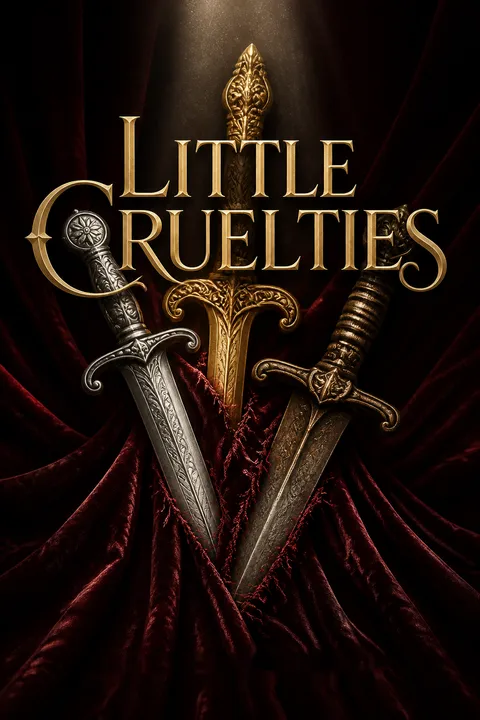

Plot Summary
Funeral of Three Brothers
The novel opens at the funeral of one of the Drumm brothers, with the two survivors standing side by side, their rivalry simmering beneath the surface. The narrative voice is ambiguous—one of the brothers, but which? The funeral is less a moment of grief than a release, a sense of freedom for at least one brother, who feels relief at the death. Their sister Daisy, lost in her own world, is present but disconnected. The family's history of switching alliances and old wounds is palpable, setting the tone for a story of deep-seated resentments, betrayals, and the "little cruelties" that have defined their lives. The funeral is not just an end, but a beginning for the story's excavation of the Drumm family's darkness.
Childhood Rivalries and Wounds
The Drumm brothers—William, Brian, and Luke—grow up in a household where love is unevenly distributed and competition is fierce. Their mother, a fading showband star, and their quiet, steady father shape their world. William, the eldest, is confident and entitled; Brian, the middle child, is overlooked and resentful; Luke, the youngest, is sensitive and often the scapegoat. Early traumas—an attack by a dog, a cousin's death, and the mother's emotional distance—leave scars. The boys learn to survive by forming shifting alliances, but the seeds of lifelong rivalry and mistrust are sown, with each brother internalizing his own version of neglect and injustice.
The Drumm Family Secrets
The Drumm family is haunted by secrets: infidelities, mental illness, and a legacy of shame. Their mother, Melissa, is both glamorous and cruel, burdened by her own traumatic past as an orphan and a rape survivor. She confides in Luke, the most fragile, about her rape, burdening him with adult pain he cannot process. The father's death from cancer further destabilizes the family, leaving the boys to navigate adolescence and adulthood with little guidance. The family's inability to communicate openly about trauma perpetuates cycles of guilt, silence, and emotional damage, shaping the brothers' adult relationships and self-worth.
Mothers, Fathers, and Favors
The Drumm parents' flaws are magnified in their children's memories. Melissa's ambition and self-absorption lead her to favor William, while Luke is left to bear the brunt of her disappointment and Brian is caught in the middle. Their father, though loving, is passive and unable to shield his sons from their mother's moods or the world's cruelties. The brothers' sense of being loved "more" or "less" becomes a lifelong wound, influencing their choices and their capacity for intimacy. The family's dynamic is a web of emotional debts—gifts given and withheld, love measured and rationed.
Luke's Rise and Fall
Luke, once the odd, religious child, becomes a pop star almost by accident. His fragile psyche, however, cannot withstand the pressures of fame, and he cycles through manic highs and devastating lows. His brothers, alternately jealous and dismissive, fail to understand the depth of his suffering. Luke's hallucinations—especially the recurring vision of a tiny, tormented baby—symbolize his unresolved trauma and sense of unworthiness. His career collapses under the weight of addiction and mental illness, and he becomes a figure of pity and scandal, abandoned by the family and the public alike.
Sibling Betrayals Unveiled
As adults, the brothers' relationships are poisoned by envy and betrayal. William, the successful film producer, is unfaithful and self-serving, using his family for personal gain. Brian, the perennial outsider, becomes Luke's manager but exploits his brother's vulnerability, selling his house and stories to the tabloids. Each brother justifies his actions as necessary or deserved, but the cumulative effect is a web of manipulation and hurt. Their betrayals are not grand, but persistent—"little cruelties" that erode trust and love, leaving each man isolated and embittered.
Love, Envy, and Susan
The brothers' rivalry extends to their romantic lives, especially in their relationships with Susan, an American who becomes William's wife. Brian, who loved Susan first, is devastated when she chooses William, and their brief affair before her marriage haunts all three. Susan's marriage to William is marked by infidelity and disappointment, while Brian remains the loyal friend and godfather to their daughter, Daisy. The triangle is a source of ongoing pain, with each brother feeling wronged and misunderstood, and Susan caught between loyalty, desire, and regret.
The Baby and the Witch
Luke's mental illness is personified by his visions of a tiny, suffering baby and the "old woman in the woods"—symbols of his guilt, trauma, and sense of being cursed. These hallucinations are rooted in his mother's confessions and the family's history of abuse and neglect. The baby becomes a metaphor for the wounded child within Luke, and by extension, within the whole family. The inability to "atone" for others' sins or to save those they love becomes a central theme, as each character grapples with the limits of forgiveness and the weight of inherited pain.
Fame, Madness, and Addiction
The Drumm family's dysfunction is played out in the public eye, as Luke's breakdowns and scandals become tabloid fodder—often leaked by Brian. William's own addictions and sexual misconduct come to light, especially in the era of #MeToo. The family's attempts to manage or conceal their shame only deepen their isolation. Daisy, growing up in this environment, is both protected and exploited, her struggles with weight, identity, and mental health mirroring those of her father and uncles. The family's public and private failures become indistinguishable, fueling cycles of blame and self-destruction.
Daisy: Daughter or Pawn?
Daisy, the daughter of Susan and (ostensibly) William, becomes the focal point of the brothers' rivalry and need for redemption. Brian, who may be her biological father, becomes her manager and confidant, while William clings to his role as her father. Daisy's own struggles—with body image, sexuality, and the pressures of fame—are exacerbated by her family's secrets and betrayals. When the truth of her paternity is revealed, Daisy is devastated, feeling used and abandoned by all three men. Her subsequent breakdown and suicide attempt are the tragic culmination of the family's "little cruelties".
The Paris Scandal
Brian's past as a teacher in Paris resurfaces when rumors of an inappropriate relationship with a student threaten to destroy his career. Though the truth is more complicated—a teenage crush, not an affair—the damage is done. The scandal is compounded by revelations of Brian's financial exploitation of Luke and his role in leaking family secrets to the press. The brothers' mutual distrust reaches a breaking point, as each is forced to confront the consequences of their actions and the impossibility of escaping their family's legacy.
The Unraveling of Marriages
The Drumm brothers' marriages and relationships unravel under the weight of secrets and betrayals. William's affair with Kate, who later becomes involved with Luke, leads to a forced abortion and the end of both relationships. Susan, devastated by William's infidelity and Brian's duplicity, turns to Brian for comfort, only to be betrayed again. The family's inability to form healthy, lasting bonds is a testament to the damage wrought by their upbringing and the patterns they cannot break.
The Weight of Inheritance
The deaths of the Drumm parents and, later, Susan, leave the brothers and Daisy adrift. Inheritance—both financial and emotional—becomes a source of conflict and guilt. Luke's will leaves everything to Daisy, a gesture of care that she cannot fully accept. The scattering of ashes, the division of property, and the attempts to "move on" are all haunted by unresolved grief and the knowledge that the family's wounds are too deep to heal. The past is never truly buried, and the dead continue to shape the lives of the living.
The Final Act: Oscar Night
The climax of the novel takes place in Los Angeles, where Luke is nominated for an Oscar and the brothers are reunited. Tensions run high as old wounds are reopened and Luke's mental state deteriorates. In a moment of crisis, Luke stands on the edge of a hotel balcony, hallucinating and desperate. Brian and William, paralyzed by fear and resentment, fail to save him—perhaps even allowing him to fall. Luke's death is ruled a suicide, but the truth is more ambiguous, a final "little cruelty" that the brothers will carry forever.
Aftermath and Ashes
In the aftermath of Luke's death, the family is thrust into the spotlight once more. The media frenzy, the #MeToo revelations, and the exposure of family secrets leave the survivors reeling. Brian and William, stripped of their careers and reputations, retreat from public life. Daisy, now wealthy but broken, withdraws from the world, haunted by guilt and the voice of her own inner "little friend". The scattering of Luke's ashes is both a farewell and an admission that the family's story is one of loss, not redemption.
Daisy's Voice Remains
The novel closes with Daisy, alone and estranged from her fathers, reflecting on the legacy of the Drumm family. She is wealthy but emotionally adrift, her struggles with food and self-worth ongoing. The "little friend" in her head is a reminder that the family's pain is cyclical, passed from one generation to the next. Daisy's voice—once a source of hope and activism—is now turned inward, a testament to the enduring power of "little cruelties" to shape and destroy lives. The story ends not with healing, but with the recognition that some wounds never close.
Analysis
A modern tragedy of family, trauma, and the cost of "little cruelties."Liz Nugent's Little Cruelties is a masterful exploration of the ways in which families can both nurture and destroy, often through the accumulation of small, everyday harms. The Drumm brothers—William, Brian, and Luke—are each shaped by their parents' flaws, their own insecurities, and the relentless competition for love and validation. The novel's nonlinear structure and shifting perspectives invite the reader to question the nature of truth and the reliability of memory, while the recurring motifs of inherited trauma and internalized guilt underscore the difficulty of breaking free from the past. The story's emotional power lies in its refusal to offer easy redemption or closure; instead, it presents a portrait of damage that is cyclical, generational, and, in many ways, ordinary. The lessons of the novel are both cautionary and compassionate: that the wounds we inflict on those closest to us are often the hardest to heal, and that the line between victim and perpetrator is rarely clear. In the end, Little Cruelties is a dark, unflinching meditation on the cost of survival in a world where love is always conditional, and forgiveness is never guaranteed.
Review Summary
Little Cruelties by Liz Nugent follows the dysfunctional Drumm brothers—William, Brian, and Luke—in a psychological family drama. The novel opens at a funeral where one brother lies dead, though his identity remains hidden until the end. Each brother narrates their perspective across non-linear timelines, revealing decades of cruelty, rivalry, and betrayal stemming from their narcissistic mother Melissa's unequal treatment. Reviews are divided: many praise Nugent's masterful character development and shocking finale, while others found the pacing slow and characters too unlikeable, expecting more thriller elements than family drama delivered.
People Also Read



Characters
William Drumm
William, the eldest Drumm brother, is a successful film producer whose confidence masks deep insecurity and entitlement. Favored by his mother, he grows up believing he deserves the best, often at the expense of his siblings. His relationships are transactional—he uses people, including his brothers and wife, to further his own ambitions. William's infidelity and emotional distance contribute to the collapse of his marriage and the alienation of his daughter, Daisy. Despite moments of vulnerability, he is ultimately unable to break free from the patterns of manipulation and self-justification that define his life. His complicity in Luke's death is the final, unspoken betrayal.
Brian Drumm
Brian, the middle brother, is marked by a lifelong sense of being second best. Overshadowed by William and dismissed by his mother, he develops a deep well of resentment and a talent for self-pity. As an adult, Brian becomes Luke's manager, exploiting his brother's vulnerability for financial gain and leaking family secrets to the press. His unrequited love for Susan and ambiguous paternity of Daisy fuel his sense of grievance. Brian's need for validation leads him to betray those closest to him, even as he positions himself as the family's caretaker. His actions are driven by a desperate need to matter, no matter the cost.
Luke Drumm
Luke, the youngest Drumm, is both the family's scapegoat and its most tragic figure. Sensitive and imaginative, he is burdened from childhood by his mother's emotional neglect and confessions of trauma. His brief, meteoric rise to pop stardom is undone by mental illness, addiction, and the relentless pressure of fame. Luke's hallucinations—especially the tiny, suffering baby—are manifestations of his unresolved guilt and longing for love. Despite moments of connection, he is ultimately abandoned by his family, and his death is both a release and a final act of martyrdom. Luke embodies the destructive power of inherited pain and the impossibility of true healing in a family built on secrets.
Melissa Drumm (Mother)
Melissa, the Drumm matriarch, is a former showband star whose need for attention and validation shapes her sons' lives. Her favoritism, cruelty, and confessions of trauma (including rape) burden her children with adult pain and guilt. Melissa's inability to love Luke, in particular, leaves him emotionally crippled. Her own history of abandonment and abuse is both explanation and excuse for her behavior, but she is ultimately unable to break the cycle of harm. Her death brings relief rather than grief, a testament to the damage she has wrought.
Martin Drumm (Father)
Martin, the Drumm father, is a stabilizing presence in the family, providing care and affection in the face of his wife's volatility. His passivity, however, renders him unable to protect his sons from Melissa's emotional abuse or the world's cruelties. His death from cancer is a turning point, leaving the brothers adrift and accelerating the family's unraveling. Martin's love is remembered fondly but is ultimately insufficient to counterbalance the harm done by Melissa.
Susan Drumm
Susan, William's wife and Brian's unrequited love, is an American outsider who becomes both a prize and a pawn in the brothers' rivalry. Her marriage to William is marked by disappointment and betrayal, while her friendship with Brian is a source of comfort and pain. Susan's struggles—with motherhood, infidelity, and her own identity—mirror those of the Drumm family. Her death from cancer and HIV is a final blow to the family's fragile stability, and her absence leaves Daisy and the brothers unmoored.
Daisy Drumm
Daisy, the daughter of Susan and (ostensibly) William, is the focal point of the family's hopes and failures. Raised in a world of secrets and shifting loyalties, she struggles with body image, identity, and the pressures of fame. Daisy's activism and brief stardom are both empowering and destructive, as she is used by her fathers and uncle for their own ends. The revelation of her true paternity and the collapse of her family leave her isolated and broken, her voice—once a source of hope—turned inward. Daisy embodies the cost of "little cruelties" and the difficulty of escaping one's inheritance.
Kate Harris
Kate, a dental hygienist, becomes involved with both William and Luke, her relationships with the brothers leading to heartbreak and a forced abortion. Used and discarded by William, she is briefly a source of hope for Luke, who sees in her the possibility of redemption. Kate's departure and the loss of her child trigger Luke's final breakdown, and her story is a reminder of the collateral damage wrought by the Drumm family's dysfunction.
Mary Cullen
Mary, initially William's assistant and later Luke's partner, is a talented producer who navigates the male-dominated world of film with determination and skill. Her relationship with William is marked by harassment and exploitation, while her partnership with Luke is both a source of healing and a casualty of his illness. Mary's refusal to be defined by victimhood or to enable further abuse is a rare note of agency in a story dominated by cycles of harm.
Brian's "Little Friend" / Daisy's "Little Friend"
The "little friend"—the hallucinated baby for Luke, the voice in Daisy's head—is a symbol of the family's inherited trauma and unresolved pain. It represents the wounded child within each character, the legacy of neglect, abuse, and "little cruelties" that cannot be escaped. The persistence of this voice, even after the deaths of Melissa and Luke, suggests that the family's wounds are generational and ongoing.
Plot Devices
Multiple Perspectives and Unreliable Narrators
The novel is structured through alternating first-person accounts from William, Brian, and Luke, with occasional interludes from Daisy. Each brother's perspective is colored by his own biases, resentments, and justifications, creating a tapestry of subjective truths. The use of unreliable narrators heightens the sense of ambiguity and moral complexity, as the reader is forced to navigate competing versions of events and motivations. This device underscores the theme that families are built on stories—some true, some self-serving, all incomplete.
Nonlinear Chronology and Foreshadowing
The narrative moves fluidly between past and present, childhood and adulthood, revealing key events out of order and layering the story with foreshadowing. The opening funeral scene, for example, casts a shadow over the entire novel, as the reader anticipates the death that will eventually be revealed. The use of flashbacks and fragmented chronology mirrors the characters' inability to escape their pasts and the cyclical nature of their suffering.
Symbolism: The Baby and the Witch
Luke's visions of the tiny, suffering baby and the "old woman in the woods" are recurring symbols of guilt, trauma, and the legacy of abuse. These hallucinations are both personal and collective, representing the wounded child within each family member and the impossibility of atoning for others' sins. The baby's eventual appearance in Daisy's psyche suggests the transmission of pain across generations.
The "Little Cruelties" Motif
The novel's title refers to the everyday betrayals, slights, and manipulations that define the Drumm family. Rather than grand acts of violence, it is the accumulation of "little cruelties"—a withheld kindness, a cutting remark, a moment of neglect—that destroys trust and love. This motif is reinforced through repeated incidents and the characters' own reflections on their actions, inviting the reader to consider the ways in which harm is perpetuated in families and relationships.
Public vs. Private Shame
The Drumm family's scandals—addiction, abuse, infidelity—are played out in both private and public spheres. The leaking of secrets to the press, the #MeToo revelations, and the exposure of family history blur the line between personal and collective shame. The characters' attempts to manage or conceal their failures only deepen their isolation, as the boundaries between self and other, victim and perpetrator, are eroded.

Download PDF
Download EPUB
.epub digital book format is ideal for reading ebooks on phones, tablets, and e-readers.








































