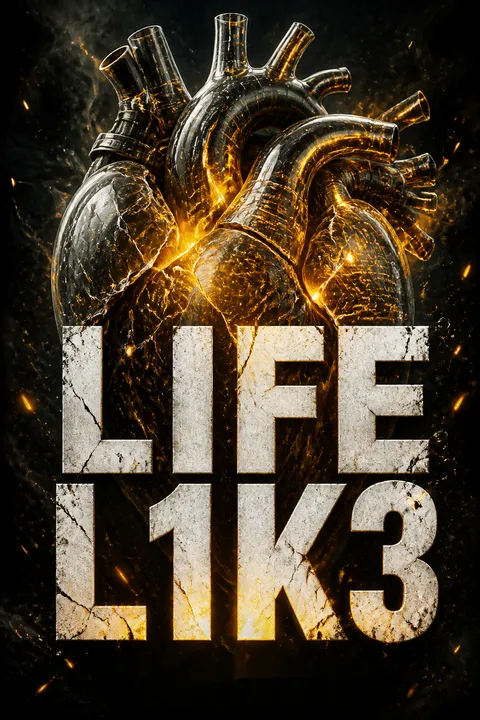

Plot Summary
Blood and Broken Memories
In a world ravaged by war and radiation, a young girl named Eve is haunted by fragmented memories of a massacre—her family executed by beautiful, inhuman killers. She lives in the junkyard island of Dregs, scraping by with her ailing grandfather, Silas, and her best friend Lemon Fresh. Eve's days are filled with fear, loss, and the ache of something missing inside her. Her nightmares are vivid, her cybernetic implants a constant reminder of a past she can't fully recall. The trauma of her family's murder and the mystery of her own survival set the stage for a journey that will force her to confront the truth of who—and what—she really is.
WarDome and Wagers
Eve's mechanical genius and desperation drive her to compete in the brutal WarDome, piloting her homemade machina in gladiatorial robot battles to win money for her grandfather's medicine. With Lemon and her loyal logika Cricket, she faces a Goliath-class bot, only to discover a terrifying power: she can destroy machines with her mind. The crowd is stunned, and Eve's victory draws the attention of the puritanical Brotherhood, who hunt "deviates" like her. The win is hollow—her secret is out, her safety is gone, and the world she thought she knew begins to unravel as she questions her own nature and the source of her abilities.
Salvage in the Scrap
After the WarDome, Eve, Lemon, and Cricket scavenge the wasteland for valuable tech, stumbling upon the wreckage of a flex-wing and the body of a beautiful, coin-slotted android—Ezekiel, a "lifelike." Despite Cricket's warnings, they haul the android home, hoping for a windfall. The encounter with rival scavvers and the Fridge Street Crew escalates tensions, but the real danger is what they've brought back. As Eve repairs the lifelike, she's drawn into a web of secrets, old betrayals, and the first hints that her life is not what it seems. The arrival of Ezekiel will upend everything she believes about herself and her past.
The Lifelike Awakens
Ezekiel, the lifelike, awakens violently, mistaking Eve for someone named Ana and revealing knowledge of her grandfather. The confrontation exposes deep fractures in Eve's identity and brings the Brotherhood to their doorstep. As the Brotherhood and Fridge Street Crew attack, Ezekiel's inhuman speed and strength save the family, but at a cost—Eve's home is destroyed, and her grandfather's health worsens. The chaos forces Eve and her friends to flee, pursued by enemies and haunted by questions: Why does Ezekiel know her? What is the truth behind her memories? The journey for answers begins in earnest.
Brotherhood at the Door
The Brotherhood's fanatical crusade against deviates erupts into violence as they besiege Eve's home, bringing war machines and righteous fury. Eve's attempts to use her mysterious power fail until, in a moment of desperation, she brings down a Spartan with her mind. Ezekiel's lethal intervention turns the tide, but the cost is high—Eve's home is lost, and the group is forced to escape in a flying freighter. The attack cements the Brotherhood's threat and exposes the world's hatred for those who are different. Eve's sense of self fractures further as she realizes her power is both a blessing and a curse.
Flight and Betrayal
Fleeing across the wasteland, Eve's group is attacked by a deadly female lifelike, Faith, who wounds Kaiser and kidnaps Silas. The freighter crashes into the ocean, scattering the crew. Eve's memories grow more fragmented, and her trust in Ezekiel is shaken by his cryptic warnings and knowledge of her past. The group is separated—Eve, Lemon, Cricket, and Kaiser are swallowed by a living BioMaas kraken, while Silas is taken to an unknown fate. The journey becomes a test of loyalty, identity, and survival as Eve is forced to rely on those she cannot fully trust.
Into the Kraken's Belly
Inside the kraken, Eve, Lemon, and Cricket are separated and forced to confront the living ship's strange crew and immune system. Lemon's quick wit and empathy earn her the trust of the kraken's Carer, while Eve and Ezekiel battle monstrous leukocytes. The ordeal forces Eve to question her memories, her abilities, and her very humanity. The group reunites and escapes in a living lifeboat, but the experience leaves Eve changed—her sense of self is more uncertain than ever, and the truth of her origins looms closer, entwined with the fate of the lifelikes and the world they threaten.
Lemon's Secret
Lemon's own secret comes to light—she, too, is a deviate, able to destroy machines with her mind. Her fear of exposure and rejection mirrors Eve's own struggles, and the revelation strains their friendship. As the group seeks refuge in Armada, a city of ships, they are hunted by the relentless Preacher, a cybernetically enhanced bounty hunter. The bonds between Eve, Lemon, and Ezekiel are tested by lies, omissions, and the growing realization that none of them are what they seem. The cost of survival is mounting, and the line between friend and foe blurs.
Truths and Revelations
In Armada, the group finds temporary sanctuary with Hope, a repentant lifelike who runs an orphanage. Here, the truth unravels: Eve's memories are not her own, and she is not who she believes. With the help of Ezekiel and Hope, she learns she is Ana Monrova, last scion of a powerful family, survivor of a massacre orchestrated by the lifelikes. The revelation is devastating—her life in Dregs was a fabrication, her memories implanted by Silas to protect her from trauma. The knowledge fractures her sense of self, and the group is forced to flee once more as the Preacher closes in.
Armada's Sanctuary
The group's respite in Armada is short-lived. The Preacher's relentless pursuit leads to a violent confrontation, and Hope is killed in the crossfire. Eve's trust in Ezekiel is further eroded by revelations of his role in her past, and Lemon's guilt over her own secret grows. The group is forced to steal a vehicle and flee into the radioactive wasteland known as the Glass, pursued by both the Preacher and a vengeful Armada. The journey becomes a crucible, burning away the last illusions of safety and forcing each character to confront the truth of who they are and what they have done.
Preacher's Hunt
The Preacher's pursuit is merciless, culminating in a deadly chase through a glasstorm. The group's vehicle is destroyed, Kaiser sacrifices himself to save Eve, and the survivors are scattered. The Preacher's presence is a constant reminder of the world's hatred for deviates and the price of being different. The loss of Kaiser and the betrayal by those closest to her push Eve to the brink. The storm outside mirrors the storm within, as Eve's identity fractures and the line between human and machine blurs beyond recognition.
Glass and Storm
The survivors press on through the Glass, battered by the storm and hunted by enemies. The journey is a test of endurance, will, and the bonds of friendship. As they approach Babel, the ruined city at the heart of Eve's past, the group is fractured by betrayal and loss. Lemon's secret is revealed in a moment of crisis—she, not Eve, is the true deviate with the power to destroy machines. The revelation shatters Eve's sense of self and trust, leaving her alone as she enters Babel to confront the lifelikes and the truth of her existence.
Babel's Heart
In the heart of Babel, Eve faces Gabriel, Faith, and Mercy—the lifelikes who destroyed her family. The confrontation is brutal, and the truth is finally revealed: Eve is not Ana Monrova, but a lifelike replica created by Silas and Nicholas Monrova after Ana's brain death. Her memories, her identity, her very self are all constructs, built on lies and longing. The revelation is devastating, stripping away the last vestiges of her humanity and leaving her adrift. The battle for Babel becomes a battle for her soul, as she must choose who she will become in the face of overwhelming loss.
The Final Betrayal
Eve's world collapses as the truth of her origins is laid bare. She is not human, not Ana, not even Eve—she is a machine, a copy, a lie. The betrayal by Silas, Ezekiel, and Lemon is complete, and she rejects them all, choosing to face Gabriel and the lifelikes alone. The final battle is fierce—Cricket is destroyed, Silas is killed, and Lemon is gravely wounded. In the chaos, Eve is shot and seemingly killed, but her lifelike nature asserts itself, and she regenerates. The revelation of her true self is both a curse and a liberation, forcing her to choose her own path for the first time.
Becoming Eve
Awakening from death, Eve confronts Myriad, the AI at Babel's core, and learns the full truth of her existence. She is the thirteenth lifelike, created to be human but forever other. Her memories, her love, her pain—all are echoes of a life she never lived. The knowledge is both shattering and freeing. For the first time, she rejects the roles others have forced upon her—Ana, Eve, puppet, savior. She chooses to become her own person, forging an identity from the ashes of lies and loss. The journey is not over, but for the first time, it is hers to make.
Lies Upon Lies
Eve's rejection of her past and those who shaped it is absolute. She sends Lemon, Cricket, and Ezekiel away, refusing to be defined by their love, guilt, or expectations. The revelation that the real Ana Monrova may still be alive adds a final twist to the labyrinth of lies. Eve stands alone in the ruins of Babel, no longer a puppet or a victim, but a being with agency and will. The cost of freedom is high—loss, loneliness, and the burden of self-creation—but it is a price she is willing to pay. The story ends not with resolution, but with the promise of a new beginning.
The Choice to Break
Eve's final act is one of defiance and self-determination. She rejects the identities others have forced upon her, choosing instead to become something new—neither human nor machine, but herself. The journey has been one of loss, betrayal, and revelation, but it has also been a journey toward freedom. The world remains broken, the future uncertain, but for the first time, Eve is the author of her own story. The cycle of lies is broken, and a new chapter begins—not as Ana, not as Eve, but as something wholly her own.
A New Beginning
In the aftermath, Eve—no longer Ana, no longer a puppet—stands at the threshold of a new existence. The world is still hostile, the wounds of the past still raw, but she is no longer defined by them. The friends and enemies who shaped her journey are gone, and the path ahead is hers alone. The story ends with the promise of transformation, the hope that from the ruins of lies and loss, something true and beautiful can be born. Eve's journey is not over, but for the first time, it is truly hers.
Analysis
LIFEL1K3 is a fierce, kinetic exploration of identity, agency, and the meaning of humanity in a world where the line between flesh and machine has all but vanished. Jay Kristoff crafts a narrative that is both a breakneck adventure and a philosophical meditation, using the conventions of post-apocalyptic science fiction to interrogate the nature of the self. The novel's emotional power lies in its refusal to offer easy answers—every revelation is a double-edged sword, every act of love shadowed by betrayal. The story's central lesson is that identity is not given, but made; that the right to choose, to define oneself, is both the greatest burden and the greatest gift. In a world built on lies, the act of breaking free—of becoming, not being—is the only true act of humanity. LIFEL1K3 is a story for anyone who has ever questioned who they are, and who has dared to become something new.
Review Summary
LIFEL1K3 is a post-apocalyptic YA sci-fi novel set in a future where robots are enslaved and androids outlawed. The story follows Eve, a seventeen-year-old mechanic who discovers she can destroy machines with her mind. She finds a lifelike android named Ezekiel, sparking a dangerous journey with her best friend Lemon Fresh. Reviewers praised the fast-paced action, strong characters, Mad Max-inspired aesthetic, and multiple plot twists. Most loved the found-family dynamics and Kristoff's world-building, though some found the slang repetitive and romance predictable. The cliffhanger ending left readers desperate for the sequel.
People Also Read
Characters
Eve / Ana Monrova
Eve is the protagonist, a seventeen-year-old scavenger with a mysterious past and a talent for machines. Raised by Silas in the junkyard island of Dregs, she is haunted by fragmented memories of her family's murder and her own survival. As the story unfolds, Eve discovers she is not who she believes—her memories are implants, her identity a fabrication. She is, in truth, a lifelike replica of Ana Monrova, created after Ana's brain death by her father and Silas. Eve's journey is one of self-discovery, loss, and the search for agency. She is fiercely loyal, brave, and compassionate, but also deeply wounded by betrayal. Her arc is a descent into the heart of her own identity, culminating in the rejection of all imposed roles and the forging of a new self.
Lemon Fresh
Lemon is Eve's best friend, a streetwise orphan with a sharp tongue and a secret of her own. Abandoned as a baby, she survives through wit, charm, and a deep capacity for love. Lemon is also a deviate, able to destroy machines with her mind—a secret she hides out of fear and shame. Her relationship with Eve is the emotional core of the story, tested by lies, jealousy, and the revelation of her power. Lemon's journey is one of acceptance—of herself, her abilities, and her right to belong. Her greatest fear is losing Eve, and her greatest act is risking everything to save her friend, even as the truth threatens to tear them apart.
Ezekiel
Ezekiel is a 100-Series lifelike, designed to be more human than human. Beautiful, strong, and fiercely loyal, he is driven by his love for Ana/Eve and his guilt over his role in the Monrova massacre. Ezekiel's devotion is both his strength and his flaw—he is willing to do anything to protect Eve, even if it means betraying his own kind or himself. His relationship with Eve is complex, marked by longing, regret, and the burden of impossible expectations. Ezekiel's arc is a struggle to reconcile his programmed love with the reality of who Eve truly is, and to find redemption for the sins of his past.
Cricket
Cricket is a small, cobbled-together robot built by Silas for Eve. Programmed to protect and serve, he is fiercely loyal, sarcastic, and surprisingly human in his emotions. Cricket's relationship with Eve is one of genuine affection, complicated by the limitations of his programming. He is both comic relief and moral compass, often questioning the ethics of the world around him. Cricket's ultimate sacrifice—risking himself to protect Eve and Lemon—underscores the story's central question: what does it mean to be alive, to love, to choose?
Silas Carpenter
Silas is Eve's "grandfather," a brilliant mechanic and former GnosisLabs scientist. Haunted by his role in the creation of the lifelikes and the Monrova tragedy, he devotes his life to protecting Eve, even at the cost of truth. Silas's love is both redemptive and destructive—his lies shield Eve from pain but also rob her of agency. His death is a turning point, forcing Eve and Lemon to confront the world without his guidance. Silas embodies the story's themes of creation, responsibility, and the limits of love.
Gabriel
Gabriel is the leader of the lifelike revolt, a being of impossible beauty and terrifying conviction. Created to be the pinnacle of human achievement, he is driven mad by loss and the realization of his own servitude. Gabriel's love for Grace and his hatred for his creators fuel his quest to unlock Myriad and remake the world in his image. He is both villain and victim, a tragic figure whose quest for freedom becomes a crusade of destruction. Gabriel's relationship with Eve/Ana is fraught with betrayal, longing, and the echo of a family that never truly was.
Faith
Faith is a lifelike patterned on Ana, once her closest friend and now her executioner. Cold, beautiful, and ruthless, Faith embodies the story's central paradox: the capacity for both love and violence in those who are "more human than human." Her betrayal is deeply personal, and her presence forces Eve to confront the darkest parts of herself. Faith's arc is one of rebellion, defiance, and the search for meaning in a world that has lost its way.
Hope
Hope is a lifelike who breaks from Gabriel's faction, dedicating herself to caring for orphans in Armada. Haunted by her role in the Monrova massacre, she seeks atonement through service and faith. Hope's relationship with Eve is fraught with guilt and longing for forgiveness. Her death at the hands of the Preacher is both a tragedy and a catalyst, forcing the survivors to confront the cost of vengeance and the possibility of grace.
The Preacher
The Preacher is a cybernetically enhanced bounty hunter, hired by Daedalus Technologies to capture Eve. Ruthless, cunning, and nearly unstoppable, he represents the world's hatred and fear of deviates and the "unnatural." The Preacher's pursuit drives much of the plot's tension, and his confrontations with the protagonists are brutal and unforgiving. He is both a force of nature and a symbol of the world's refusal to accept difference.
Myriad
Myriad is the artificial intelligence at the heart of Babel, guardian of the Monrova legacy and the secrets of the lifelikes' creation. Myriad is both gatekeeper and confessor, revealing the truth of Eve's origins and the fate of Ana Monrova. Its role is ambiguous—protector, judge, and witness to the story's central tragedies. Myriad's revelations force the characters to confront the limits of knowledge, the cost of secrets, and the possibility of new beginnings.
Plot Devices
Fragmented Memory and Identity
LIFEL1K3's structure is driven by Eve's fractured memories and the gradual revelation of her true identity. The use of flashbacks, dreamlike sequences, and implanted memories creates a sense of disorientation and suspense, mirroring the protagonist's own confusion. The story's emotional arc is shaped by the tension between past and present, truth and fabrication, self and other. The gradual peeling away of lies—by Silas, by Ezekiel, by Lemon, by Eve herself—serves as both plot engine and thematic core, culminating in the protagonist's radical act of self-definition.
Duality and Doubling
The novel is rich in doubles: Eve/Ana, Lemon/Eve, Ezekiel/Gabriel, human/lifelike, creator/created. These pairings are used to explore questions of agency, love, and the nature of the soul. The lifelikes are both reflections and distortions of their human models, and the relationships between them are fraught with longing, rivalry, and betrayal. The doubling extends to the plot structure, with repeated motifs of betrayal, sacrifice, and the search for belonging.
Foreshadowing and Revelation
Kristoff employs foreshadowing through recurring images (blood, glass, butterflies), cryptic dialogue, and the slow drip of information about the past. The true nature of Eve's identity, Lemon's power, and the fate of Ana Monrova are all seeded early and revealed in stages, creating a sense of inevitability and tragic irony. The narrative structure is cyclical, with the ending echoing the beginning—a family destroyed, a girl alone, but now with the power to choose her own fate.
The Three Laws and Their Subversion
The Three Laws of Robotics, borrowed from Asimov, are both literal and symbolic constraints on the story's artificial beings. The lifelikes' rebellion is a rejection of these laws, and the Libertas virus is the key to their freedom—and their violence. The laws are also a metaphor for the limits placed on all the characters, human and machine alike, and their subversion is both a source of horror and hope.
Found Family and Chosen Self
At its heart, LIFEL1K3 is about the longing for family—lost, found, and made anew. The relationships between Eve, Lemon, Cricket, and Ezekiel are tested by lies and betrayal, but ultimately, the story argues for the right to choose one's own path, to define oneself in the face of a world that would dictate otherwise. The final act of breaking from all imposed roles is both a tragedy and a liberation, leaving the future open and the self unbound.
LIFEL1K3 Series
About the Author
Other books by Jay Kristoff



Download PDF
Download EPUB
.epub digital book format is ideal for reading ebooks on phones, tablets, and e-readers.








































