
Key Takeaways
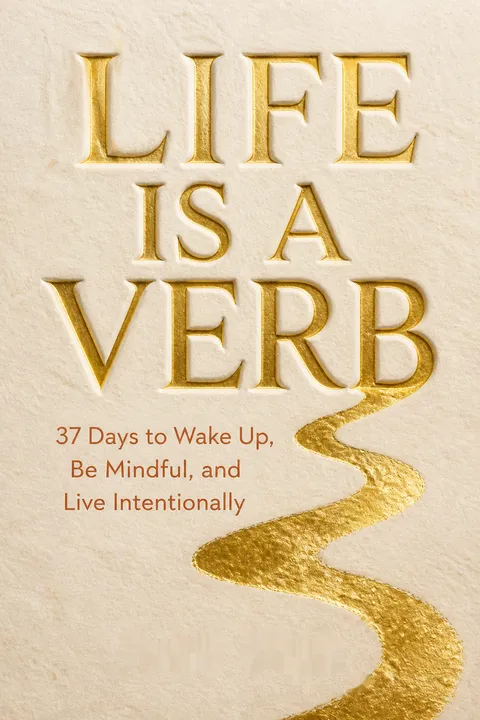
1. Live Your 37 Days Intentionally, Starting Now
What emerged was a commitment to ask myself this question every morning: What would I be doing today if I only had thirty-seven days to live?
Embrace urgency. The author's stepfather's death, just thirty-seven days after a lung cancer diagnosis, became a profound catalyst. This stark reality prompted a daily inquiry: how would one live if time were so acutely limited? It's a powerful reminder that life is finite, urging us to live each day with purpose rather than deferring our true desires.
Question your priorities. Many of us live as if we have infinite time, postponing dreams until "after the kids leave" or "after retirement." This mindset often leads to regret. The 37-day framework challenges us to re-evaluate our daily activities, asking if cleaning the attic, purging files, or attending mundane meetings would truly be how we'd spend our final days.
Commit to action. The answer isn't necessarily a world tour or climbing Mount Everest, but rather living the life we have with more intention. It's about saying yes, being generous, speaking up, loving more, trusting ourselves, and slowing down. This book serves as a guidebook for fully inhabiting our current lives, not creating entirely new ones, but enriching the everyday.
2. Inhabit Your Story and Own Your "I"
In the degree that we remember and retell our stories and create new ones we become the authors, the authorities, of our own lives.
Stories define us. Our memories and narratives are our "private literature," shaping who we are and how we understand the world. The poignant example of Sissy, losing her memory to Alzheimer's, underscores the urgency of "writing to remember" – not just for ourselves, but to leave a legacy for others. Our stories are what we keep in our hearts, making us "us."
Shift from "They" to "I." It's tempting to blame external forces ("They don't recognize my value," "They need to change"). However, this relinquishes personal power. True change, whether societal or individual, often begins at the edges, without official permission. We must stop waiting for "them" to fix things and instead ask: "Why am I not doing more?"
Fund your own revolution. Just as the American Revolution wasn't financed by the Crown, significant personal transformation doesn't wait for external validation or "matching grants." It requires taking charge, putting "arms on your own chair" if necessary, and making the changes you can make. This shift from passive waiting to active agency is fundamental to intentional living.
3. Embrace Wonder and Say a Resounding "Yes" to Life
The moment one gives close attention to anything, even a blade of grass, it becomes a mysterious, awesome, indescribably magnificent world in itself.
Cultivate attentiveness. Life's richness is found in moments of full attention, like seeing zinnias in the sun or a child's shoes in the grass. This "big yes" to life encompasses both joy and challenge. Often, our "stuff" – physical possessions, mental inhibitions, or fear of judgment – prevents us from fully participating and embracing spontaneity.
Dance without reservation. The image of a woman wildly dancing in her car, echoed by her child's shadow, symbolizes unbridled joy and freedom from self-consciousness. We often suppress such expressions due to fear of ridicule or judgment. Letting go of judging others frees us from being judged, allowing us to "dance wildly in your car" and embrace our authentic selves.
Give yourself permission. The story of Madame Xie, a brilliant physicist and university president, choosing practical "old-man glasses" over beautiful pink frames, highlights how we deny ourselves simple joys for the sake of perceived seriousness or appropriateness. Giving yourself permission to "wear pink glasses" means choosing what brings you joy, regardless of external expectations.
4. Cultivate Deep Connection and Radical Generosity
Generosity, it turns out, is a way of being in the world, not a way of giving in the world.
Open your hands. The metaphor of holding sand – clench it tightly and it slips away; hold it open and it remains – illustrates the essence of generosity. It's not just about giving gifts, but about offering space for others to be themselves, especially those we perceive as different. This requires releasing our grip on "rightness" and assumptions.
Redefine "normal." Our perception of "normal" often creates an "us vs. them" mentality, leading to judgment and exclusion. By placing ourselves "off-center" and others in the middle, we open ourselves to understanding diverse realities. Engaging with respectful curiosity, like the author with the "goth" store employee, bridges differences and fosters genuine connection.
Acknowledge shared humanity. The story of Mr. Walker, the homeless man, and Tess's simple wave, reveals the power of basic human recognition. Fear and privilege often lead us to dismiss others as "less than human." Extending a hand of shared humanity, even to strangers, is a profound act of inclusion, reminding us that "people who are homeless are not social inadequates. They are people without homes."
5. Speak Your Truth and Stand for Your Integrity
Choosing with integrity means finding ways to speak up that honor your reality, the reality of others, and your willingness to meet in the center of that large field.
Detach from "rightness." The acupuncturist's wisdom – "attachment to being right is still an attachment. And it is causing you to suffer" – challenges our need to always be correct. True integrity involves speaking up, but also being open to different perspectives, meeting others in the "field somewhere between right and wrong."
Protect your "red books." The anecdote of John refusing to sell his antique science books by the yard, simply for their color, illustrates the importance of protecting what you deeply value. Integrity means not compromising your passions or principles for financial gain or external validation. It's about ensuring your work and life are transformational, not merely transactional.
Embrace ambiguity. The "barn or shed" argument between Emma and Tess highlights how our definitions and perspectives shape our reality. Insisting on one "truth" can create conflict. Integrity allows for different realities to coexist, recognizing that "there are hundreds of paths up the mountain, all leading in the same direction." It's about listening and understanding, not just asserting.
6. Love Fully by Releasing Unreasonable Expectations
The greatest danger for most of us is not that our aim is too high and we miss it, but that it is too low and we reach it.
Burn those jeans. Holding onto outdated goals, like fitting into old jeans, can become an "albatross" that punishes us and delays living. These "unreasonable expectations" divert attention from real, meaningful goals. The lesson is to identify what truly matters behind the symbolic goal and pursue that, rather than clinging to destructive ideals.
Prioritize self-care. The airplane safety instruction, "put your own oxygen mask on first," is a powerful metaphor for self-care. Neglecting our own needs, often out of a fear of being "selfish," ultimately renders us unable to help others effectively. Nurturing oneself first is not selfish, but a necessary act to be present and capable for those we care about.
Purge your portfolio of excuses. We often carry "weak pieces" in our life's portfolio – things we make excuses for, hide, or feel compelled to justify. The advice from the young illustrator to Emma – "if you don't like something, take it out of your portfolio" – applies to life. Eliminate what doesn't serve your authentic self, and be proud of everything you present to the world.
7. Trust Your Intuition and Courageously Take the Leap
When I let go of what I am, I become what I might be.
Let go of the monkey bars. True growth happens in "liminal spaces" – the moments of transition between letting go of one thing and grasping the next. This "leap of faith" requires trusting your intuition, even when there's "nothing to hold on to." It's about embracing vulnerability and the unknown, knowing that "without risk there is no faith."
Choose your seatmates wisely. Life's journey is shared, and the people we surround ourselves with profoundly impact our experience. The harrowing plane incident revealed the importance of choosing "human survival units" – those who offer comfort, support, and shared humanity in moments of crisis. Trust your gut about who truly belongs in your inner circle.
Jump out of your own shadow. We often create our own obstacles, "blocking our own sun" by holding onto beliefs or behaviors that cast shadows on our potential. The realization that the camera's shadow was self-inflicted is a powerful metaphor for self-sabotage. Intuition guides us to "jump anyway," even without all the data, to find the path out of our self-imposed darkness.
8. Slow Down and Deliberately Forge Your Own Path
Do not go where the path may lead, go instead where there is no path and leave a trail.
Follow your desire lines. In parks, "desire lines" are the unofficial dirt paths people create, revealing where they truly want to go, often bypassing prescribed concrete walkways. These lines represent natural human purpose and longing. In life, we must identify our own "desire lines" – the paths we instinctively gravitate towards – and make them our intentional route, leaving our unique trail.
Show up for the "Tiny Ninjas." Life's miracles and profound experiences often require simply "showing up," even when tired, sick, or unmotivated. The story of attending the Tiny Ninja Theater, despite feeling ill, highlights that sometimes the greatest delight comes from embracing unexpected, quirky opportunities. Don't let inertia or discomfort make you miss the show of your life.
Signal your turns. Just as a car's turn signal communicates intent to other drivers, we must clearly communicate our intentions in life. A disconnect between what we think we're signaling and what others perceive can lead to misunderstanding and frustration. Acknowledging our interconnectedness means being transparent about our "lane changes" and directions, fostering smoother interactions.
9. Craft Your Irresistible Obituary, Then Live It
To live in hearts we leave behind is not to die.
Leave stories, not numbers. The stark image of a mental institution graveyard marked only by numbers, not names, prompts a crucial question: are we leaving behind a legacy of anonymous data or rich, meaningful stories? Reading obituaries becomes an exercise in aspiration, asking what words would truly capture our lives and what kindnesses would stand out.
An obituary as an aspiration. Writing your own obituary, from the perspective of family, friends, and community, transforms it into a powerful "aspiration statement." If these are the qualities and memories you want to leave behind, what daily decisions must you make now to ensure that legacy? It's a proactive way to shape your life's narrative.
Cherish the "little things." The story of the dying mother whose children remembered a simple bowl of Cheerios, not grand trips, underscores that life's most profound moments are often found in the small, everyday interactions. Live a life so extraordinary and irresistible that your passing leaves the world a duller place, filled with cherished memories of your unique spirit and presence.
Review Summary
People Also Read



Download PDF
Download EPUB
.epub digital book format is ideal for reading ebooks on phones, tablets, and e-readers.








































