
Key Takeaways
1. US History is Settler Colonialism and Genocide
The history of the United States is a history of settler colonialism—the founding of a state based on the ideology of white supremacy, the widespread practice of African slavery, and a policy of genocide and land theft.
Reframing history. US history is often mischaracterized as merely "racist" or "discriminatory." The author argues it is fundamentally settler colonialism, aiming to replace Indigenous populations to claim land.
Foundational elements. This settler-colonial project was built on white supremacy, African slavery, and systematic genocide. It shaped the nation's core identity and continues to influence its present.
Rejecting redemption. The narrative of US history cannot conclude with redemption or reconciliation without first acknowledging this genocidal foundation. This understanding is crucial for transforming society.
2. The Myth of Empty Land and Manifest Destiny
This test reflects the seeming inevitability of US extent and power, its destiny, with an implication that the continent had previously been terra nullius, a land without people.
Unconscious belief. Many Americans unconsciously believe in "manifest destiny," drawing the US map from coast to coast even for its independence era. This implies the continent was an empty "terra nullius."
Founders' vision. The country's founders intended this expansion, viewing "free" land as a magnet for European settlers, including slave owners. The Northwest Ordinance was a blueprint for seizing Indigenous territory.
Columbus myth. This myth is reinforced by the Columbus narrative and the "Doctrine of Discovery," which claimed European nations acquired title to "discovered" lands, negating Indigenous rights.
3. Pre-Colonial America: A Continent of Civilizations
North America in 1492 was not a virgin wilderness but a network of Indigenous nations, peoples of the corn.
Ancient agriculture. America was an ancient "new world," a birthplace of agriculture. Corn cultivation spread across the hemisphere, supporting dense populations and complex societies.
Thriving societies. Indigenous peoples developed vast trade networks, roads, monumental earthworks, and diverse governments. Cahokia, for instance, was larger than London in the 12th century.
Humanized landscape. European colonists appropriated already cultivated farmland, managed forests, and existing infrastructure. They conquered people, not a pristine wilderness.
4. Europe's Pre-Existing Culture of Conquest
European institutions and the worldview of conquest and colonialism had formed several centuries before that.
Crusades and wealth. The culture of conquest predated Columbus, honed during the Crusades (11th-13th centuries) which generated wealth through looting and justified violence with Christian zeal.
Internal colonization. European states first exploited their own peasantry, forcing them off common lands through "enclosure." Nations like Scotland, Wales, and Ireland were colonized, with methods like scalping perfected there.
White supremacy. The concept of "limpieza de sangre" (cleanliness of blood) from the Spanish Inquisition and Protestant colonization of Ireland laid the groundwork for white supremacy, obscuring class differences and justifying brutality.
5. The "American Way of War": Total Violence Against Civilians
For the first 200 years of our military heritage, then, Americans depended on arts of war that contemporary professional soldiers supposedly abhorred: razing and destroying enemy villages and fields; killing enemy women and children; raiding settlements for captives; intimidating and brutalizing enemy noncombatants; and assassinating enemy leaders.
Irregular warfare. Colonial militias, composed of settlers, developed a brutal "first way of war" against Indigenous communities. This involved unlimited violence, targeting civilians, destroying villages, and food supplies.
Scalp bounties. Scalp hunting became a routine, lucrative practice, blurring distinctions between combatants and non-combatants. The term "redskins" emerged from these mutilated bodies.
Foundational strategy. This genocidal approach, perfected by figures like John Mason and Benjamin Church, became the basis for US military strategy across the continent and later in overseas interventions.
6. Andrew Jackson: Architect of Forced Removal
More than any other president, he used forcible removal to expel the eastern tribes from their land.
Populist imperialism. Andrew Jackson, a wealthy land speculator and Indian killer, personified the "Age of Jacksonian Democracy." He implemented the "final solution" for Indigenous peoples east of the Mississippi.
Muskogee War. Jackson's brutal war against the Muskogee Nation (1813-14) culminated in the Battle of Horseshoe Bend, where 800 Red Sticks were killed. The subsequent Treaty of Fort Jackson seized 23 million acres.
Trail of Tears. As president, Jackson ignored Supreme Court rulings protecting Cherokee sovereignty. The Indian Removal Act (1830) led to the forced march of 70,000 Indigenous people, with thousands perishing on the "Trail of Tears."
7. Continental Expansion as Overseas Imperialism
The US invasion of Mexico has also been characterized as the first US 'foreign' war, but it was not.
Pre-existing empire. By 1846, the US had already invaded and ethnically cleansed dozens of Indigenous nations east of the Mississippi and engaged in overseas interventions like the Barbary Wars.
Mexican-American War. The invasion of Mexico (1846-48) was a continuation of this imperial project, annexing half of Mexico's territory. Figures like Kit Carson and John C. Frémont laid the groundwork.
California genocide. The California Gold Rush (1848) led to the extermination of over 100,000 Native Californians in 25 years, a demographic disaster driven by settler violence and military protection for gold seekers.
8. "Indian Country": A Template for Global Warfare
The legacy of the Indian wars was palpable in the numerous military bases spread across the South, the Middle West, and particularly the Great Plains.
Civil War's impact. During the Civil War, Lincoln's "free soil" policy opened western Indigenous lands to settlers. Volunteer militias, like the Colorado Volunteers at Sand Creek, committed massacres against civilians.
Post-Civil War military. Generals like Sherman and Custer, seasoned Indian killers, applied total war tactics—destroying buffalo, crops, and civilian populations—to crush resistance in the West.
Global application. The term "Indian Country" became a military term for enemy territory, reflecting how US counterinsurgency tactics against Indigenous peoples were later applied in Vietnam, Iraq, and other global conflicts.
9. The Enduring Legal Legacy of the Doctrine of Discovery
Arcane as it may seem, the doctrine remains the basis for federal laws still in effect that control Indigenous peoples’ lives and destinies, even their histories by distorting them.
Papal origins. The Doctrine of Discovery, originating from 15th-century papal bulls, granted European nations title to "discovered" non-Christian lands, diminishing Indigenous sovereignty.
US legal precedent. In 1823, the US Supreme Court's Johnson v. McIntosh decision affirmed this doctrine as US law, declaring Native nations "domestic, dependent nations."
Modern relevance. This doctrine continues to underpin federal laws, as seen in recent Supreme Court cases. Indigenous peoples and religious institutions are actively working to repudiate it and advocate for land restitution.
10. Indigenous Survivance: Resistance and Decolonization
We wish to continue to exist.
Renewed struggle. Despite centuries of oppression, Indigenous peoples have consistently resisted. The 1960s-70s saw a resurgence of self-determination movements, exemplified by the Alcatraz occupation and the 1973 Wounded Knee siege.
Legal and political gains. These movements led to significant victories, like the return of Taos Pueblo's Blue Lake and the Indian Self-Determination Act (1975). The UN Declaration on the Rights of Indigenous Peoples (2007) is a major international milestone.
Nation building. Indigenous nations are actively engaged in nation-building, developing new constitutions and asserting sovereignty. They seek land restitution, not just monetary compensation, to regain social coherence and fulfill cultural responsibilities.
Review Summary
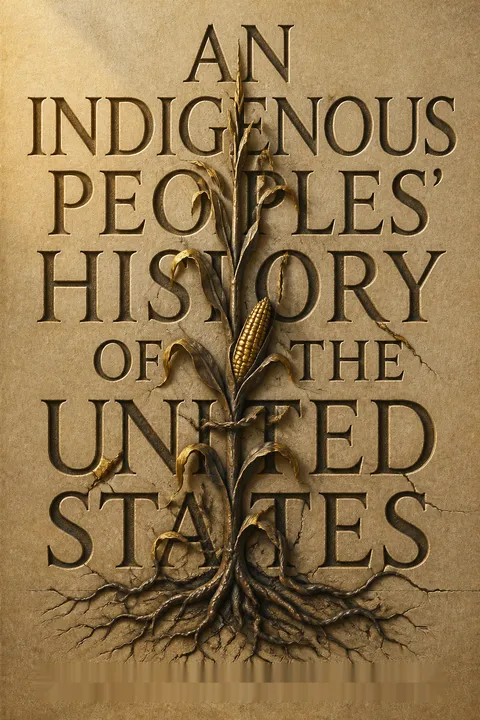
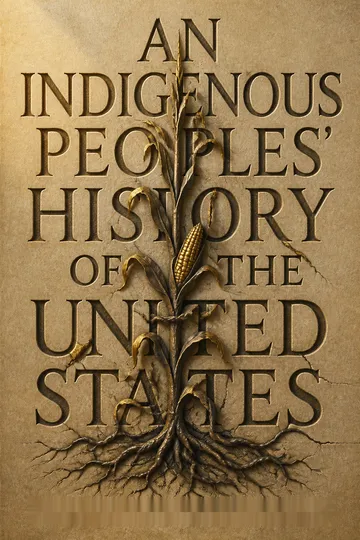
An Indigenous Peoples' History of the United States offers a crucial perspective on American history, challenging traditional narratives and exposing the genocide of Native peoples. Readers praise its eye-opening content and its ability to reshape understanding of US history. Critics note its broad strokes and potential bias. The book is lauded for its thorough research and powerful argument, though some find the writing style challenging. Overall, it's considered an important, if sometimes difficult, read that should be required in history courses.
People Also Read




ReVisioning American History Series Series
About the Author
Other books by Roxanne Dunbar-Ortiz
Download PDF
Download EPUB
.epub digital book format is ideal for reading ebooks on phones, tablets, and e-readers.








































