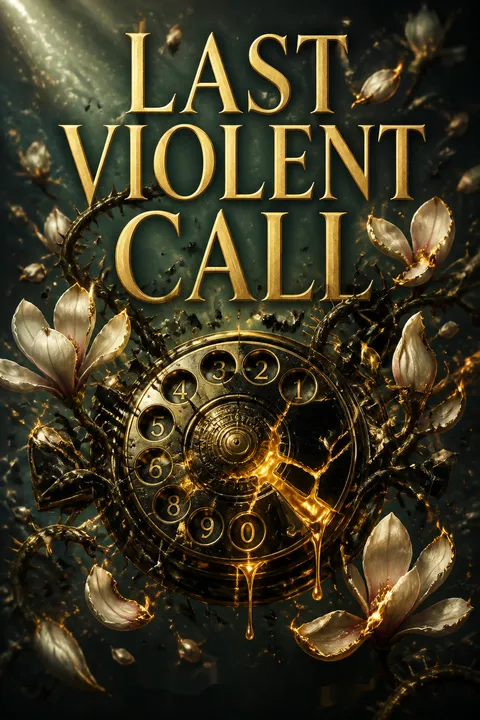

Plot Summary
Quiet Exile, Hidden Knives
Juliette Cai and Roma Montagov, once heirs to rival Shanghai gangs, now live in rural Zhouzhuang under assumed names, running a weapons business. Their marriage is a hard-won peace, but the past lingers in every routine: coded knocks, hidden knives, and the ever-present threat of discovery. Their love is fierce, playful, and deeply scarred by trauma. The couple's banter and domesticity are laced with the knowledge that safety is fragile. Even in moments of joy, like teasing over socks or sharing tea, they remain alert, haunted by memories of violence and loss. Their home, fortified and isolated, is both sanctuary and prison—a place where they can finally be themselves, but never fully escape the shadows of their former lives.
A Stranger's Desperate Plea
A young man named Yulun arrives, desperate for help. He seeks weapons or protection for his fiancée, Mila, who is being hunted by mysterious men from her past. Yulun's story tugs at Roma and Juliette's hearts, especially when Mila's photo reveals an uncanny resemblance to Roma's sister, Alisa. The couple is forced to confront their own limitations: they can no longer wield the power they once had in Shanghai, nor can they risk exposure by intervening too openly. Their refusal is gentle but firm, cloaked in lies to protect their identities. Yet, the encounter stirs guilt and longing in Juliette, who still aches to help the vulnerable, and in Roma, who is reminded of the family he left behind.
Ghosts of Shanghai
Yulun's plea and the evidence he brings—a newspaper clipping commemorating the "star-crossed lovers of Shanghai"—force Roma and Juliette to relive their infamous history. Their carefully constructed new identities are threatened as Yulun recognizes them. The couple's banter and intimacy are a shield against the world, but the outside pressure is mounting. They reflect on the cost of their escape: the loved ones left behind, the constant vigilance, and the ache of not being able to help as they once did. Their love is a lifeline, but also a reminder of all they've sacrificed. The ghosts of Shanghai are never far, and the world they built on secrecy is always at risk of collapse.
The Past Never Sleeps
A frantic call from Yulun shatters the illusion of safety. He reports that Mila's friends—girls who escaped a sinister experiment in Vladivostok—are being murdered one by one. The couple races to Yulun's township, finding it eerily deserted and under the watch of foreign men. They discover Mila under attack, and Juliette's quick, violent intervention saves her. The rescue is messy and traumatic, underscoring that violence is never far from their lives. Mila's story unfolds: she and other girls were experimented on, brainwashed, and now hunted. The couple's home becomes a temporary refuge, but the threat is escalating, and the line between past and present blurs.
A Deadly Experiment
Mila recounts her harrowing past: orphaned, lured into a "health experiment" in Vladivostok, and subjected to chemical brainwashing by scientists Pyotr and Lourens. The experiments left her and four other girls with gaps in memory and a terrifying susceptibility to control. Mila's escape led to years of hiding, but now her friends are dead, and she is next. The couple realizes the threat is not just physical but psychological—a legacy of scientific cruelty that echoes the madness that once plagued Shanghai. The story is personal for Roma and Juliette, who know Lourens and the horrors he's capable of. The past's reach is long, and its wounds are deep.
The Hunters Arrive
As Roma and Juliette train Mila and Yulun in self-defense, a new threat emerges: mercenaries with angel tattoos, remnants of a disbanded group, are sent to retrieve Mila. A confrontation reveals a horrifying truth: the girls have been conditioned to kill themselves if captured, mimicking the madness of Shanghai. The couple's skills and quick thinking save Mila, but the danger is relentless. The hunters are not the true enemy—they are pawns in a larger, more insidious game. The couple must unravel who is pulling the strings and how to break the deadly conditioning before it's too late.
Blood and Brainwashing
Investigating further, Roma and Juliette discover that the facility's board is behind the retrieval attempts, using mercenaries and leveraging the girls' brainwashing as a failsafe. The couple's contacts and underworld savvy help them trace the operation to a local inn and, eventually, to the elusive scientist Pyotr. The investigation is a race against time, complicated by the need to protect their own identities and the lives of those they shelter. The couple's partnership—equal parts love, wit, and ruthlessness—is their greatest weapon, but the stakes are higher than ever.
The Cure and the Cost
Roma and Juliette track down Pyotr, who claims only he can cure Mila. He is arrogant, manipulative, and ultimately unrepentant about the suffering he's caused. When he refuses to help, Juliette kills him without hesitation, retrieving vials from his safe that may hold the cure. The act is both justice and necessity—a reminder that their morality is shaped by survival and love. Returning home, they are ambushed by mercenaries who inject Mila, triggering her self-destructive programming. In a desperate gamble, Juliette administers the cure, saving Mila and breaking the cycle of control. The victory is hard-won, and the emotional toll is immense.
Love in the Crosshairs
With the immediate threat gone, Roma and Juliette reflect on their choices. Their love is a sanctuary, but also a source of vulnerability. They grapple with guilt over those they cannot save, the impossibility of returning to Shanghai, and the ever-present risk of exposure. Their home is filled with small joys—cooking, teasing, quiet moments by the fire—but also with the ache of loss and the knowledge that peace is always temporary. The arrival of news from Shanghai, and the plight of Juliette's cousin Rosalind, reignites their sense of responsibility. They must decide whether to risk everything to help, or to protect the fragile life they've built.
The Train to Vladivostok
Meanwhile, Roma's cousin Benedikt and his husband Marshall embark on a journey from Moscow to Vladivostok, tasked with finding Lourens and bringing him to China. Their relationship is a counterpoint to Roma and Juliette's: playful, loving, and marked by the scars of past violence. The train ride is both a physical journey and a metaphor for the search for closure, justice, and belonging. The couple's banter and devotion are tested by the challenges ahead, as they are drawn into a murder mystery that echoes the dangers of their old lives.
Murder in Motion
A passenger is found dead on the train, a pen stabbed through his throat. Benedikt and Marshall, posing as private investigators, are drawn into the case to prevent the train from stopping and derailing their mission. The investigation is complicated by language barriers, hidden identities, and a cast of suspicious characters. The couple's skills—honed in the underworld—are put to the test as they navigate clues, red herrings, and the ever-present threat of exposure. The murder is a puzzle, but also a reminder that violence and secrets travel with them, no matter how far they run.
The Accidental Death
Through careful deduction, Benedikt and Marshall discover that the death was not murder, but a tragic accident—though the truth is more complicated. Mila, traveling under an alias, is revealed as the true avenger, targeting those who experimented on her. The couple chooses to protect her, understanding the necessity of her actions and the impossibility of justice through official channels. The resolution is bittersweet: the train moves on, but the scars of violence and the need for vengeance remain. The couple's loyalty to each other and to their chosen family is reaffirmed, even as they are forced to confront the limits of forgiveness and the cost of survival.
Justice, Forgiveness, and Home
As the train reaches Vladivostok, Benedikt and Marshall part ways with Mila, who continues her quest for justice. The couple's journey is a testament to resilience, love, and the search for meaning in a world marked by betrayal and loss. They reflect on the choices that brought them here, the people they've saved and lost, and the hope that, despite everything, a better future is possible. Their reunion with Roma and Juliette is imminent, and together, they face the next chapter—one where love, loyalty, and the fight for justice are their only compass.
The Unstoppable Pair
In the end, Roma and Juliette, Benedikt and Marshall, and their found family are united by more than blood or history—they are bound by the refusal to surrender to despair. Their love is both shield and sword, a force that endures even as the world changes around them. The story closes on a note of hope: the past can never be erased, but it can be transformed. In choosing each other, again and again, they carve out a space for joy, forgiveness, and the possibility of peace—even if it is always hard-won.
Analysis
A meditation on love, trauma, and the cost of survivalLast Violent Call is a powerful exploration of what it means to survive in a world shaped by violence, betrayal, and loss. Through its dual narrative and richly drawn characters, the novel interrogates the limits of forgiveness, the burden of memory, and the possibility of redemption. Love is both shield and sword—a force that sustains the characters but also exposes them to new dangers. The story refuses easy answers: justice is messy, peace is fragile, and the past is never truly left behind. Yet, in the end, the novel offers hope—not in the promise of a perfect future, but in the resilience of those who choose each other, again and again, despite the darkness. The lessons are clear: healing is possible, but it requires courage, honesty, and the willingness to risk everything for those we love. In a world where violence is cyclical and safety is never guaranteed, the act of loving—fiercely, imperfectly, and without reservation—is the most radical and redemptive choice of all.
Review Summary
People Also Read









Characters
Juliette Cai (Montagova)
Juliette is the former Scarlet Gang heiress, now living in exile with Roma. Her love for him is both her greatest strength and vulnerability. She is sharp, witty, and unafraid to use violence to protect those she loves, but is deeply haunted by the cost of her choices—family left behind, friends lost, and the impossibility of returning home. Juliette's psychological complexity lies in her struggle to reconcile her desire for peace with her instinct for action. She is fiercely loyal, often masking her pain with humor and bravado. Her development is marked by a growing acceptance of her limitations and a willingness to risk everything for love and justice, even as she fears the consequences.
Roma Montagov
Roma, once heir to the White Flowers, is Juliette's husband and partner in both love and crime. He is introspective, compassionate, and often the moral compass of their relationship. Roma's trauma manifests in nightmares and guilt over those he could not save, especially his sister Alisa. He is deeply protective of Juliette, but struggles with the burden of leadership and the fear of repeating his father's mistakes. Roma's development is a journey from self-doubt to quiet strength, learning to trust his instincts and embrace the life he has chosen. His love for Juliette is unwavering, and together they form a partnership that is both tender and formidable.
Yulun
Yulun is a young man driven by love and fear for his fiancée, Mila. His plea for help draws Roma and Juliette back into the world of violence and intrigue. Yulun is earnest, brave, and somewhat naïve, but his devotion to Mila is unwavering. He represents the hope for a future untainted by the sins of the past, and his vulnerability forces the older characters to confront their own limitations and responsibilities. Yulun's development is shaped by trauma and the need to grow up quickly, but he remains a symbol of innocence and the possibility of redemption.
Milyena (Mila)
Mila is a victim of scientific cruelty, brainwashed and hunted for the secrets in her blood. She is resilient, resourceful, and deeply traumatized by her past. Mila's resemblance to Alisa is a constant reminder of what Roma and Juliette have lost, and her struggle to reclaim agency over her life is central to the story's emotional arc. Mila's journey from victim to avenger is fraught with danger and moral ambiguity; she is forced to become a killer to survive, but never loses her longing for peace and love. Her relationship with Yulun is a fragile hope in a world that has given her little reason to trust.
Pyotr
Pyotr is one of the scientists behind the brainwashing experiments. He is manipulative, self-serving, and ultimately unrepentant about the pain he has caused. Pyotr's belief in his own genius blinds him to the humanity of his victims, and his refusal to help Mila is both a moral and practical failure. His death at Juliette's hands is both justice and necessity, a reminder that some evils cannot be reasoned with. Pyotr embodies the dangers of unchecked ambition and the dehumanizing effects of power.
Lourens Van Dijk
Lourens is the other scientist involved in the experiments, but unlike Pyotr, he is portrayed as more sympathetic—having tried to help Mila and inventing the cure. His disappearance and the ambiguity surrounding his motives add complexity to the story's moral landscape. Lourens represents the possibility of redemption, but also the limits of good intentions in a world shaped by violence and betrayal. His legacy is both a curse and a hope for those he has touched.
Benedikt Montagov
Benedikt, Roma's cousin, is a survivor of the old world, now living in Moscow with his husband Marshall. He is introspective, artistic, and often the voice of reason. Benedikt's trauma is quieter but no less profound; he struggles with guilt, loss, and the search for meaning. His relationship with Marshall is a source of healing and joy, but also a reminder of all they have endured. Benedikt's development is marked by a growing confidence in his own worth and the realization that love can be both a refuge and a responsibility.
Marshall Seo
Marshall is Benedikt's husband and partner in both life and adventure. He is irreverent, quick-witted, and fiercely loyal. Marshall's humor masks deep wounds, but his love for Benedikt is unwavering. He is the emotional anchor of their relationship, always ready to defuse tension with a joke or a gesture of affection. Marshall's development is a journey from self-doubt to self-acceptance, learning to trust in the future they are building together. His resilience and optimism are a counterpoint to the darkness that surrounds them.
Alisa Montagova
Alisa, Roma's sister, is physically absent but emotionally central. Her resemblance to Mila and her fate in Shanghai haunt Roma and Juliette, representing all they have lost and the ties that cannot be severed. Alisa is a symbol of innocence destroyed by violence, and her absence is a constant ache for those who loved her. She embodies the cost of survival and the hope that, one day, reconciliation may be possible.
Celia
Celia is Juliette's cousin and a Communist agent, instrumental in helping Roma and Juliette escape Shanghai. She is pragmatic, loyal, and deeply committed to her cause. Celia's visits are a lifeline for Juliette, a reminder of family and the world they left behind. Her presence is both comfort and risk, as her own safety is always in question. Celia represents the possibility of connection and the enduring bonds of family, even in exile.
Plot Devices
Dual Narrative Structure
The novel employs a dual narrative structure, alternating between Roma and Juliette's life in rural China and Benedikt and Marshall's journey across Russia. This structure allows for a rich exploration of parallel themes: exile, trauma, love, and the search for justice. The two couples mirror and contrast each other, their stories converging around the central mystery of the experiments and the quest for closure. The structure heightens tension, provides multiple perspectives on shared history, and underscores the universality of the struggle for peace in a violent world.
Foreshadowing and Echoes
The story is laced with foreshadowing and echoes: memories of Shanghai's madness, the ever-present threat of discovery, and the recurrence of violence. The experiments on Mila and her friends echo the horrors of the past, while the couple's nightmares and flashbacks remind readers that trauma is never truly left behind. The use of doubles—Mila's resemblance to Alisa, the repetition of coded knocks, and the recurrence of scientific cruelty—creates a sense of inevitability and interconnectedness. The past is never dead; it is always present, shaping every choice and consequence.
Mystery and Investigation
The murder on the train serves as both a literal puzzle and a metaphor for the characters' search for meaning and closure. The investigation is a vehicle for character development, forcing Benedikt and Marshall to confront their own histories and the limits of justice. The eventual revelation—that the death was an accident, and that true justice lies in understanding and forgiveness—subverts genre expectations and reinforces the novel's central themes. The mystery is not just about finding a killer, but about understanding the wounds that drive people to violence.
Symbolism of Home and Exile
Home is both a sanctuary and a prison for the characters. Roma and Juliette's house is fortified and isolated, a place of safety but also of longing and loss. The train is a liminal space, moving between worlds but never truly arriving. Exile is both physical and emotional, and the search for home is a search for belonging, forgiveness, and peace. Love is the only true refuge, but it is always under threat. The story's symbols—knives, coded knocks, hidden scars—reinforce the tension between safety and vulnerability.
Secret Shanghai Series



About the Author


Download PDF
Download EPUB
.epub digital book format is ideal for reading ebooks on phones, tablets, and e-readers.








































