
Plot Summary
Haunted by Lost Timelines
Joan Chang-Hunt is haunted by the knowledge that she alone remembers a timeline where her family died and the boy she loved, Nick, was a monster slayer. In the new reality, Nick doesn't remember her, and her family is alive, but Joan is wracked with guilt and grief. She tries to live a normal life, but the weight of what she's lost—and what she's done to restore her family—never leaves her. The world feels fragile, as if the past could break through at any moment. Joan's sense of self is fractured, caught between the monster world she can't escape and the human life she desperately wants to protect.
The Boy Who Forgot
Nick Ward, once a legendary monster slayer, now lives an ordinary life, unaware of his past or Joan's significance. Joan is drawn to him, unable to let go of the connection they once shared. She watches him from afar, aching for the boy who no longer exists. Their brief, awkward encounters are charged with unspoken history and longing. Joan is torn between the safety of this new world and the pain of knowing what Nick was—and what he could become again. The tension between them is palpable, a reminder of love lost to the shifting sands of time.
Attack at the Bakery
Joan's attempt at normalcy is violently interrupted when monsters attack her at work, killing her friend Margie and targeting Nick. The attack is swift and brutal, forcing Joan and Nick to flee together. Joan's monster heritage is exposed, and Nick is pulled into a world he doesn't understand. The trauma of Margie's death and the danger they face bind Joan and Nick together, even as the truth threatens to tear them apart. Joan's guilt deepens—her presence endangers everyone she cares about, and the past she tried to bury resurfaces with deadly consequences.
Chased Through Time
Joan and Nick are pursued by time-traveling monsters and Court Guards, forced to leap into the future to escape. They land years ahead, discovering that they've been missing for six years. The world has changed, and their absence has left scars—Nick's family has moved on, and Joan's father is grieving. The sense of displacement is overwhelming. Joan and Nick must navigate a world that no longer remembers them, all while evading relentless pursuers. Their bond deepens under pressure, but the secrets between them grow heavier with each passing day.
A Future Unwritten
Joan seeks refuge with her monster family, the Hunts, but finds no safety. The monster world is fractured, full of shifting alliances and old grudges. Joan's forbidden power—her ability to unmake and revert—is both a blessing and a curse, drawing the attention of powerful enemies. She learns that the timeline is unstable, riddled with holes and fluctuations. The past, present, and future bleed together, and Joan realizes that her actions have consequences far beyond her own life. The search for answers leads only to more questions, and the threat of annihilation looms.
Monster Truths Revealed
Joan is forced to confront the reality of what monsters are: beings who steal human life to fuel their time travel. The revelation horrifies Nick, who struggles to reconcile his feelings for Joan with the truth of her nature. Joan's guilt is overwhelming—she has benefited from the suffering of others, and her family's survival has come at a terrible price. The monster world is seductive and beautiful, but beneath the surface lies a history of violence and exploitation. Joan must decide where her loyalties lie, even as the line between monster and human blurs.
Allies and Enemies Gather
Joan and Nick find allies in Jamie Liu, Tom Hathaway, and Ruth Hunt, but trust is fragile. The monster families are divided, and the Court's reach is long. Aaron Oliver, once Joan's friend and now her captor, is a wild card—torn between loyalty and conscience. The group is hunted not only by the Court but by bounty hunters and rival families. Secrets and betrayals abound, and Joan must navigate a web of intrigue to survive. The stakes are raised as Eleanor, a powerful member of the Curia Monstrorum, sets her sights on Joan and Nick.
The Forbidden Power
Joan's unique power—to unmake, revert, and erase—is revealed to be the lost power of the thirteenth monster family, the Graves. This ability is both coveted and feared, marking Joan for death by the Court. Eleanor seeks to use Joan's power for her own ends, while others want to destroy her to prevent catastrophe. Joan's struggle to control her power mirrors her internal conflict—she is both savior and destroyer, capable of remaking the world or tearing it apart. The burden of this power isolates her, even from those she loves.
Holes in the Timeline
The timeline is breaking down, riddled with holes and tears where reality itself is thin. Joan and her allies witness visions of other worlds—some better, some far worse. The fabric of time is fragile, and every use of forbidden power threatens to unravel it further. The group learns that the King once erased the Graves from history, and that Eleanor seeks to reverse this erasure by creating a new timeline. The cost of such a change is unimaginable—lives lost, histories rewritten, and the risk of total annihilation.
The Hero Unmade
The truth of Joan's past is revealed: she unmade Nick, erasing his life as the hero and dooming countless humans he would have saved. The revelation devastates Nick, who must grapple with the knowledge that his existence has been manipulated and that Joan chose monsters over humanity. Their relationship is shattered by betrayal and regret. Joan is forced to confront the consequences of her actions—not just for herself and Nick, but for the entire world. The possibility of redemption seems distant, and the future is more uncertain than ever.
The King's Erasure
The King, a being of immense power, once erased the Graves from the timeline as punishment for seeking peace between monsters and humans. Eleanor, Joan's forgotten sister, survived the erasure and has spent centuries plotting revenge. The King's control over the timeline is absolute—until Eleanor's machinations and Nick's unique status as a weak point threaten to undo everything. The revelation of Joan's true heritage and the King's crimes reframes the conflict: this is not just a battle for survival, but for the soul of the world itself.
The Sister's Betrayal
Eleanor's plan is revealed: she will use Nick, the unmoored hero, to kill the King and seize control of the timeline. Her motivation is both personal and cosmic—she wants to restore the Graves and ensure that no one can ever hurt her family again. Joan is horrified to learn that she and Eleanor are sisters, and that their destinies are intertwined. The betrayal cuts deep, and Joan must decide whether to fight for the world as it is, or risk everything to bring back a lost family she cannot remember.
The World Remade
Eleanor succeeds in killing the King, seizing his power, and remaking the world. The new timeline is a nightmare: monsters rule openly, humans live in fear, and the cost of time travel is paid in blood. Joan and her friends survive only by chance, shielded from the worst of the changes. The world is wrong, and the sense of loss is overwhelming. Joan realizes that the fight is not over—she must find a way to restore what was lost, even if it means sacrificing everything she has gained.
The Cost of Time
The journey through time has left scars on everyone. Joan and Nick must pay with years of their own lives to travel, and the knowledge of what that cost means is ever-present. The monster world's beauty is built on suffering, and every act of survival is tinged with guilt. Joan's power is both a weapon and a curse, and the choices she makes have consequences that ripple through history. The cost of time is not just measured in years, but in love, trust, and the hope for a better future.
The Monster Court's Judgment
The Monster Court is revealed as a place of both justice and cruelty, where power is everything and mercy is rare. Joan and her allies must navigate its dangers, seeking allies and avoiding enemies. The Court's judgment is final, and the threat of execution hangs over Joan's head. The struggle for control of the timeline becomes a battle of wills, with Joan, Eleanor, and the King each vying for supremacy. The choices made here will determine the fate of monsters and humans alike.
The End of Ages
As Eleanor tears open the timeline, reality itself begins to unravel. The End of Ages—the destruction of all that is—looms. Joan's power is both the cause and the potential solution, but using it risks everything. The group is fractured by loss and betrayal, and the hope of victory fades. The only way forward is to confront the past, accept the cost of change, and fight for a future that may never come. The end is both inevitable and uncertain, a paradox that only Joan can resolve.
Choosing Sides
Joan, Nick, Aaron, and their friends must choose where their loyalties lie. The lines between monster and human, friend and enemy, are blurred beyond recognition. Trust is hard-won and easily lost. The final confrontation with Eleanor and the forces of the Monster Court will require sacrifice, courage, and the willingness to forgive. Joan must decide whether to fight for the world as it is, or risk everything for the chance to make it better. The choices made now will echo through eternity.
The New Timeline
The story ends in a world remade by Eleanor's will—a world where monsters rule and humans live in fear. Joan and her friends are alive, but everything they knew is gone. The fight is not over; the hope for redemption remains. Joan must find a way to restore what was lost, to heal the wounds she and Eleanor have caused, and to forge a new path forward. The cost of time is high, but the possibility of a better world endures.
Analysis
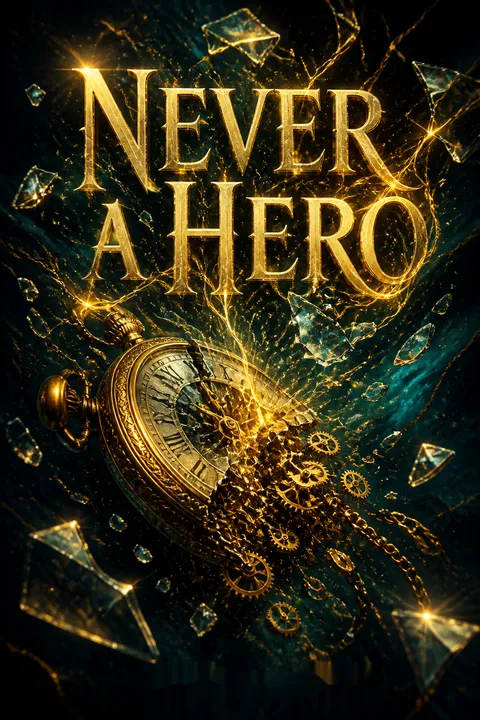
Never a Hero is a profound meditation on memory, identity, and the cost of survival in a world where power is built on the suffering of others. Vanessa Len weaves a narrative that is both thrilling and deeply philosophical, using the devices of time travel and forbidden magic to explore the ethical dilemmas at the heart of love, loyalty, and change. The novel interrogates the nature of monstrosity—not as a matter of birth, but of choice and consequence. Joan's journey is a mirror for anyone who has ever wished to undo the past, only to discover that every act of restoration comes with a price. The story's emotional core is the relationship between Joan and Nick, a love story doomed by betrayal, manipulation, and the inexorable pull of history. The revelation that Joan and Eleanor are sisters, and that their destinies are intertwined, reframes the conflict as both personal and cosmic. The novel's ending—set in a monstrous new world—serves as both warning and hope: that even in the darkest timeline, the possibility of redemption endures, but only if we are willing to face the truth of what we have done and fight for a better future.
Review Summary
Never a Hero received mixed reviews, with an overall positive reception. Many readers praised the exciting plot twists, world-building, and character development. However, some felt the pacing was slow and repetitive, particularly in the first half. The love triangle between Joan, Nick, and Aaron sparked passionate debates among fans, with many expressing a preference for Aaron. Readers appreciated the exploration of time travel and moral dilemmas but criticized the excessive focus on Nick. Despite some disappointments, most fans eagerly anticipate the final book in the trilogy.
People Also Read
Characters
Joan Chang-Hunt
Joan is a half-human, half-monster girl torn between worlds. Her defining trait is guilt—over the family she lost, the friend she unmade, and the lives stolen to fuel her survival. Joan's forbidden power to unmake and revert marks her as both a savior and a threat, isolating her even from those she loves. Her relationships are fraught: she loves Nick but is responsible for his erasure; she clings to her family but is not truly one of them. Joan's journey is one of self-discovery, as she learns the cost of her choices and the weight of her heritage as the last of the Graves. Her arc is a struggle for redemption, identity, and the hope of peace between monsters and humans.
Nick Ward
Nick is the legendary monster slayer, remade as an ordinary boy with no memory of his past. His essence is goodness—he is brave, loyal, and self-sacrificing, always striving to protect others. Yet he is also a victim, manipulated by Eleanor and Joan, forced into roles he never chose. Nick's relationship with Joan is central: he loves her, but her betrayal and the truth of monsters shatter his trust. As he regains his abilities, Nick must confront the horror of what he was and what he could become. His arc is a tragic one—he is both weapon and casualty, a symbol of the cost of power and the possibility of forgiveness.
Eleanor Grave
Eleanor is the driving force behind the novel's central conflict. Her defining trait is grief—she is consumed by the loss of her family, erased by the King for seeking peace with humans. Eleanor's brilliance and cruelty are matched only by her pain. She manipulates Nick into becoming the hero, orchestrates the destruction of timelines, and ultimately seizes the King's power to remake the world. Her relationship with Joan is complex: she is both sister and nemesis, bound by blood and divided by ideology. Eleanor's arc is a cautionary tale of vengeance, the dangers of unchecked power, and the tragedy of being unable to let go.
Aaron Oliver
Aaron is a scion of the powerful Oliver family, marked by the true Oliver power to differentiate families. His defining trait is loyalty—he is bound by duty to the Court, yet his conscience leads him to protect Joan and question the monster world's morality. Aaron's past is haunted by the execution of his mother, a Nightingale, for sheltering a Grave. He is both hunter and protector, friend and betrayer. His relationship with Joan is one of mutual recognition and loss—they are both outcasts, both searching for belonging. Aaron's arc is one of self-forgiveness, the struggle to reconcile duty and compassion, and the hope of a better world.
Ruth Hunt
Ruth is Joan's cousin and closest link to the Hunt family. Her defining trait is loyalty—she is practical, protective, and unafraid to challenge Joan or anyone else. Ruth's relationship with Joan is both grounding and fraught; she is the voice of reason, but also a reminder of what Joan has lost and what she risks. Ruth's arc is one of acceptance—of Joan's true nature, of the cost of being a monster, and of the need to fight for those you love, even when the odds are impossible.
Jamie Liu
Jamie is a Liu, blessed and cursed with perfect memory and the ability to recall fragments of lost timelines. His defining trait is empathy—he is gentle, wise, and deeply affected by the suffering of others. Jamie's past is marked by trauma; he was once the Royal Archive, imprisoned and tortured by the Court. His relationship with Tom is a source of strength, and his friendship with Joan is built on shared pain and hope. Jamie's arc is one of healing, the burden of memory, and the quiet courage to keep fighting for a better future.
Tom Hathaway
Tom is a Hathaway, physically imposing but emotionally sensitive. His defining trait is protectiveness—he will do anything to keep Jamie and his friends safe. Tom's past is shaped by loss and survival, and his relationship with Jamie is a rare source of happiness. Tom is wary of Nick, understanding the threat he poses, but is willing to work with him for the greater good. Tom's arc is one of sacrifice, the limits of strength, and the pain of losing those you love.
The King
The King is the ultimate authority in the monster world, a being of immense power who erased the Graves from existence. His defining trait is control—he is both the timeline's master and its prisoner, leashing reality to his will. The King is both terrifying and capricious, capable of mercy and cruelty in equal measure. His relationship with Eleanor and Joan is that of executioner and victim, creator and destroyer. The King's arc is a warning about the dangers of absolute power and the impossibility of erasing the past.
Owen Argent
Owen is a member of the Argent family, wielding the power to compel and control others. His defining trait is arrogance—he is fascinated by his own abilities and unafraid to use them. Owen's relationship with Joan and Nick is adversarial; he is both captor and tool, a reminder of the dangers of mind control and the loss of agency. Owen's arc is a minor but crucial one, representing the ethical dilemmas at the heart of the monster world.
Margie
Margie is Joan's human friend, killed in the opening attack. Her defining trait is kindness—she is a reminder of the world Joan is trying to protect. Margie's death is the catalyst for Joan's journey, a symbol of the cost of being a monster and the impossibility of escaping the past. Her presence lingers as a ghost, haunting Joan's choices and the world she is fighting to save.
Plot Devices
Time Travel and Timeline Manipulation
The novel's central device is time travel, powered by the theft of human life. The timeline is a living force, resistant to change but vulnerable to weak points—people like Nick, or powers like Joan's. The manipulation of timelines is both a blessing and a curse, allowing for the restoration of lost loved ones but at the cost of countless lives and the risk of total collapse. The narrative structure is nonlinear, with memories, visions, and alternate realities bleeding into the present. Foreshadowing is used extensively—visions of other worlds, the recurring motif of holes in the timeline, and the sense that the past is never truly gone. The story explores the ethical and emotional consequences of changing history, the burden of memory, and the impossibility of undoing all harm.
Forbidden Power and Identity
Joan's forbidden power is both a plot device and a metaphor for otherness. It marks her as a target, isolates her from her family, and makes her both savior and destroyer. The revelation that she is a Grave reframes the entire narrative, connecting her to Eleanor and the lost thirteenth family. The device of hidden heritage, secret abilities, and the search for identity drives the story's emotional arc. The use of mind control (Argent power), memory manipulation, and the erasure of history all serve to question the nature of self and the ethics of power.
The Hero's Journey and Unmaking
Nick's arc is a subversion of the classic hero's journey—he is made into a hero against his will, unmade by the one he loves, and forced to confront the consequences of his existence. The device of unmaking—erasing a person's life and impact—serves as both a literal and metaphorical exploration of loss, regret, and the impossibility of returning to innocence. The story uses parallel timelines, mirrored relationships, and the motif of the "true timeline" to explore the idea that some wounds can never be healed, and that every choice has a cost.
Monsters Series
Download PDF
Download EPUB
.epub digital book format is ideal for reading ebooks on phones, tablets, and e-readers.








































