
Key Takeaways
1. Leopold's Grand Deception: A Philanthropic Facade for Personal Empire
Need I say that in bringing you to Brussels I was guided by no egotism? No, gentlemen, Belgium may be a small country, but she is happy and satisfied with her fate; I have no other ambition than to serve her well.
Colonial ambition. King Leopold II, a monarch of a small, newly independent Belgium, harbored an obsessive desire for a vast overseas empire, viewing his own country as too insignificant. He meticulously studied the colonial profits of other nations, particularly Spain's exploitation of the Americas and Holland's forced labor system in Java, seeking a territory to enrich himself and elevate Belgium's global standing. His early attempts to purchase colonies proved fruitless, leading him to a more cunning strategy.
Humanitarian front. To circumvent international scrutiny and Belgian public disinterest, Leopold masterfully crafted a philanthropic facade for his African ambitions. In 1876, he convened the Brussels Geographical Conference, inviting eminent explorers and geographers to discuss "opening to civilization the only part of our globe which it has not yet penetrated," framing his venture as a noble crusade against darkness and slavery. This led to the formation of the International African Association, ostensibly a charitable body, which he secretly controlled.
Strategic maneuvering. Leopold's diplomatic genius was evident in his ability to secure international recognition for his personal claim over the Congo. Through shrewd lobbying in the United States, leveraging figures like General Henry Shelton Sanford and Senator John Tyler Morgan, he gained the first official recognition. The subsequent Berlin Conference (1884-1885) further legitimized his control over the vast Congo basin, with European powers believing they were endorsing a free-trade zone under a benevolent international association, rather than a private, exploitative empire.
2. Stanley's Brutal Expeditions: Paving the Way for Exploitation
When mud and wet sapped the physical energy of the lazily-inclined, a dog-whip became their backs, restoring them to a sound—sometimes to an extravagant—activity.
Self-made explorer. Henry Morton Stanley, born John Rowlands, an illegitimate Welsh orphan, reinvented himself as an American journalist and explorer, driven by a lifelong quest for fame and acceptance. His dramatic search for Livingstone catapulted him to international celebrity, but his methods were notoriously brutal, viewing Africans as obstacles or tools for his grand ambitions. He saw Africa as "unpeopled country," ripe for European settlement and exploitation.
Charting the Congo. Stanley's epic trans-African journey (1874-1877) solved the mystery of the Congo River's course, revealing its immense size and thousands of miles of navigable waterways. This discovery was a "grand highway of commerce" in his eyes, a ready-made transportation network for future exploitation. His expedition, however, was marked by relentless combat, leaving a trail of death and destruction, with Stanley himself boasting of destroying dozens of villages.
Leopold's instrument. Recognizing Stanley's unique skills and his lack of British or American patronage for his Congo ambitions, Leopold shrewdly recruited him. Stanley, under the guise of the "Committee for Studies of the Upper Congo," was tasked with building a road around the impassable rapids and establishing a chain of trading stations. He secured vast tracts of land through fraudulent treaties with local chiefs, exchanging sovereignty for trinkets and gin, effectively laying the groundwork for Leopold's personal empire.
3. The Rubber Terror: A System of Unimaginable Atrocities
All the blacks saw this man as the Devil of the Equator…. From all the bodies killed in the field, you had to cut off the hands. He wanted to see the number of hands cut off by each soldier, who had to bring them in baskets…. Rubber caused these torments; that’s why we no longer want to hear its name spoken.
Rubber boom's curse. The global demand for wild rubber in the 1890s, fueled by the invention of the pneumatic tire and industrial expansion, transformed Leopold's Congo into a vast, brutal labor camp. The Landolphia rubber vine, abundant in the Congo's rainforests, required arduous and dangerous collection, often deep in swamps and high in trees. This lucrative commodity became the primary driver of the regime's escalating atrocities.
Forced labor and quotas. Leopold's "vacant land" decree claimed all natural resources, including rubber, as state property. Africans were forced to meet impossible rubber quotas, enforced by the Force Publique and company militias. Failure to comply resulted in horrific punishments, including:
- The chicotte: a brutal hippopotamus-hide whip.
- Hostage-taking: women, children, or elders imprisoned and starved until quotas were met.
- Village destruction: entire communities burned, crops destroyed, leading to widespread famine.
Severed hands. The most infamous symbol of the rubber terror was the severing of hands. Soldiers were often required to present a severed right hand for each bullet used, to prove they hadn't wasted ammunition on hunting or rebellion. This led to the mutilation of living people and corpses, creating a ghastly tally of human suffering. Eyewitness accounts, like William Sheppard's discovery of 81 smoked hands, brought this horror to international attention.
4. George Washington Williams: The First Voice of Conscience
Your Majesty’s Government is engaged in the slave-trade, wholesale and retail. It buys and sells and steals slaves.
Unlikely critic. George Washington Williams, a black American Civil War veteran, historian, and politician, arrived in the Congo in 1890, initially believing in Leopold's benevolent mission. However, his six-month investigation profoundly disillusioned him, making him the first comprehensive and systematic critic of the Congo Free State's human rights abuses. His unique perspective as a black man allowed him to empathize with the Congolese in a way most white Europeans could not.
"Open Letter" indictment. Williams penned a scathing "Open Letter to His Serene Majesty Leopold II," accusing the king's government of "crimes against humanity." His charges, meticulously documented, included:
- Fraudulent treaties obtained through trickery (e.g., electric batteries, magnifying glasses).
- Stanley's tyranny and broken promises.
- Military posts causing death and destruction.
- Cruel imprisonment and torture of prisoners.
- Kidnapping of women as concubines.
- Murder of villagers for sport or intimidation.
- Direct involvement of the state in the slave trade.
Suppressed truth. Despite the explosive nature of his revelations, Williams's work was largely ignored or dismissed by Leopold's propaganda machine, which attacked his credibility and racial identity. His early death in 1891, at age 41, silenced a formidable opponent. However, his "Open Letter" laid the groundwork for future reform movements, anticipating almost all the major accusations that would later be made against Leopold's regime.
5. Joseph Conrad's "Heart of Darkness": A Literary Mirror to the Horror
Going up that river was like travelling back to the earliest beginnings of the world, when vegetation rioted on the earth and the big trees were kings.
Personal disillusionment. Joseph Conrad, then Konrad Korzeniowski, spent six months in the Congo in 1890 as a steamboat captain, witnessing firsthand the brutal realities of Leopold's rule. This experience profoundly altered his worldview, transforming his romanticized childhood dreams of Africa into a horrifying encounter with human depravity. His observations formed the basis for "Heart of Darkness," a searing indictment of imperialism.
Fictionalized reality. The novel's narrator, Marlow, recounts a journey up an unnamed river, mirroring Conrad's own, where he encounters the devastating effects of forced labor: chained porters, starving railway workers, and abandoned villages. The "precious trickle of ivory" flowing out in exchange for "rubbishy cottons, beads, and brass-wire" starkly illustrates the exploitative economy. Conrad's detailed descriptions of the landscape and the suffering reflect his own diary entries from the time.
Mr. Kurtz's horror. The enigmatic figure of Mr. Kurtz, the brilliant but savage ivory agent, embodies the moral decay of colonialism. His palisade of severed African heads, his intellectual pretensions masking a genocidal impulse ("Exterminate all the brutes!"), and his final whispered words, "The horror! The horror!" are chillingly drawn from real-life figures like Léon Rom, a Force Publique officer known for his own collection of heads and gallows. Conrad's work, though sometimes criticized for its racial portrayals, remains a powerful and accurate literary record of the Congo's atrocities.
6. E.D. Morel's Crusade: Unmasking the "Secret Society of Murderers"
I had stumbled upon a secret society of murderers with a King for a croniman.
Accidental discovery. Edmund Dene Morel, a young, bilingual shipping clerk for Elder Dempster, stumbled upon the truth of Leopold's Congo while supervising cargo in Antwerp. He noticed that ships arrived full of valuable rubber and ivory but returned to the Congo laden almost exclusively with arms, ammunition, and military officers, with little to no trade goods. This stark imbalance led him to the inescapable conclusion: the Congo's wealth was acquired through slave labor.
Relentless campaigner. Morel, driven by an innate sense of justice, quit his promising career to dedicate his life to exposing Leopold's regime. He founded The West African Mail and the Congo Reform Association (C.R.A.), becoming the era's most formidable investigative journalist. His meticulous research, combining leaked documents, missionary reports, and trade statistics, provided irrefutable evidence of the "System" of forced labor and land confiscation.
Mobilizing public opinion. Morel's campaign was a masterclass in public relations, leveraging every available medium:
- Publications: Books ("Red Rubber"), hundreds of articles, pamphlets.
- Public meetings: Thousands attended, featuring powerful speakers and graphic slide shows of mutilated Africans.
- Alliances: He garnered support from British Parliamentarians, clergy, businessmen (like William Cadbury), and international figures like Mark Twain and Arthur Conan Doyle.
His efforts transformed the "Congo Question" into a major international human rights movement, putting immense pressure on governments to act.
7. Roger Casement's Eyewitness Report: Breaking into the "Thieves' Kitchen"
That system, Monsieur le Gouverneur-Général, is wrong—hopelessly and entirely wrong…. Instead of lifting up the native populations submitted to and suffering from it, it can, if persisted in, lead only to their final extinction and the universal condemnation of civilized mankind.
Consular investigation. Roger Casement, a British consul with two decades of experience in Africa and a keen eye for injustice, was dispatched by the Foreign Office in 1903 to investigate conditions in the Congo. His three-and-a-half-month journey into the interior, undertaken independently of state authorities, revealed the full horror of the rubber regime. He meticulously documented widespread atrocities, including hostage-taking, depopulation, and the severing of hands and genitals.
Detailed documentation. Casement's official report, though censored by the British government to remove names and soften impact, provided authoritative, firsthand evidence of Leopold's crimes. His diary entries, more raw and emotional, reveal his personal anguish: "Infamous. Infamous, shameful system." His findings corroborated Morel's deductions, providing the crucial eyewitness accounts that fueled the burgeoning reform movement.
Catalyst for reform. Casement's report and his subsequent meeting with Morel were pivotal. Their shared outrage and complementary evidence led to the formation of the Congo Reform Association, with Casement providing the moral authority and Morel the organizational drive. Casement's willingness to challenge the colonial establishment, despite the personal risks (including his hidden homosexuality), made him a powerful, if often silent, partner in the crusade.
8. The Human Cost: A Holocaust of Ten Million Lives
Between 1880 and 1920, the population of the Congo was cut “by at least a half.”
Massive depopulation. The human toll in Leopold's Congo was catastrophic, estimated at approximately ten million lives lost between 1880 and 1920, representing a reduction of at least half the population. This staggering figure, derived from demographic studies and eyewitness accounts, makes it one of the most murderous episodes in modern history, comparable to the Holocaust or the Soviet Gulag.
Fourfold causes of death:
- Murder: Direct killings by Force Publique soldiers and company militias for failing to meet rubber quotas or resisting the regime. Accounts detail massacres, beheadings, and the infamous severed hands.
- Starvation, exhaustion, and exposure: Widespread famine resulted from villagers fleeing into the rainforest, crops being burned, and men being forced into labor, leaving no one to tend fields. Hostages in stockades often starved.
- Disease: New diseases introduced by Europeans (smallpox) and old ones (sleeping sickness) spread rapidly due to forced population movements, malnutrition, and trauma, decimating communities lacking immunity.
- Plummeting birth rate: The constant terror, separation of families, and physical debilitation led to a drastic reduction in births, with women actively avoiding pregnancy due to the impossibility of raising children in such conditions.
Irrational brutality. The scale of the killing often transcended mere economic efficiency, becoming a self-perpetuating cycle of terror and sadism. Agents like René de Permentier and Léon Fiévez engaged in gratuitous violence, demonstrating how absolute power could lead to an almost sporting enjoyment of cruelty, further devastating the population and undermining the very labor force it sought to exploit.
9. Leopold's Propaganda Machine: A Masterclass in Deception
In these twenty years I have spent millions to keep the Press of the two hemispheres quiet, and still these leaks keep occurring.
Sophisticated counter-campaign. Faced with mounting international criticism, Leopold II launched an elaborate and costly propaganda campaign, demonstrating a modern understanding of public relations. He established a secret Press Bureau, operating through innocuous front organizations, to disseminate pro-Congo narratives and discredit his critics. His efforts were designed to control perception and maintain his image as a benevolent ruler.
Bribery and influence. The king's agents systematically bribed journalists, editors, and politicians across Europe and the United States. He distributed free pro-Congo magazines like "The Truth about the Congo" on luxury trains and paid for favorable articles in major newspapers. He also sponsored books and lectures that painted a rosy picture of the Congo, often by travelers whose trips were fully funded and carefully managed by state officials.
Targeting critics. Leopold actively sought to neutralize his opponents. He attempted to bribe Morel, harassed missionaries, and used legal means to silence figures like William Sheppard. He also exploited racial prejudices, portraying black critics like George Washington Williams as "unbalanced negroes" and "meddlesome missionary spies." His most spectacular failure, however, was hiring the flamboyant American lawyer Henry Kowalsky, whose subsequent exposé in the Hearst press revealed the full extent of Leopold's bribery network.
10. The Great Forgetting: Erasing History for National Image
I will give them my Congo, but they have no right to know what I did there.
Systematic destruction of evidence. In August 1908, just before officially ceding the Congo to Belgium, Leopold ordered the systematic destruction of the Congo Free State's archives. Furnaces burned for eight days in Brussels, turning most incriminating records to ash, a deliberate act to erase the historical truth of his regime. This unprecedented effort at historical revisionism aimed to prevent future generations from uncovering the scale of his atrocities.
Sanitized memory. The subsequent Belgian colonial administration continued this "politics of forgetting." Textbooks for Congolese Africans praised Leopold as a humanitarian liberator, while museums like the Royal Museum for Central Africa in Tervuren presented a sanitized version of history, devoid of any mention of the millions who died. The opulent public buildings and monuments in Brussels, financed by Congo profits, stand as silent testaments to a hidden past.
Wartime irony. The outbreak of World War I provided an unexpected boost to this forgetting. German atrocities in "brave little Belgium," including false reports of severed hands and crucified babies, ironically mirrored the very crimes Leopold's regime had committed in the Congo. This created a powerful incentive for Allied nations to suppress any memory of the Congo horrors, lest it undermine their moral high ground against Germany.
11. A Lingering Legacy: From Colonialism to Neocolonialism
Those who are conquered always want to imitate the conqueror in his main characteristics—in his clothing, his crafts, and in all his distinctive traits and customs.
Enduring exploitation. While the Congo Reform Association achieved a "partial victory" by forcing Leopold to cede the Congo to Belgium in 1908, the fundamental "System" of forced labor and resource extraction persisted. The new Belgian colonial administration continued to exploit the territory, particularly for mining and agriculture, with brutal labor practices, albeit with less overt mutilation. World War I further intensified forced conscription and labor, leading to renewed famines and deaths.
Mobutu's echo. The post-independence era saw the rise of Joseph Désiré Mobutu, whose three-decade dictatorship (1965-1997) eerily mirrored Leopold's rule. Mobutu's one-man control, vast personal wealth extracted from the country's resources (copper, diamonds, coltan), and appropriation of state assets for personal luxury, including a yacht and Riviera villas, directly echoed Leopold's methods. His regime, supported by Western powers for its anti-Communist stance, left the Congo in a state of profound dysfunction.
Unresolved trauma. The Congo's history of plunder and authoritarian rule, from Leopold to Mobutu and beyond, has left an indelible mark. The country's immense mineral wealth continues to fuel conflict and exploitation, with multinational corporations and neighboring states vying for control. The "politics of forgetting" has hindered genuine reconciliation and development, leaving the Congolese people to grapple with a legacy of violence, poverty, and a fractured civil society, making the path to a just and democratic future exceptionally difficult.
Review Summary
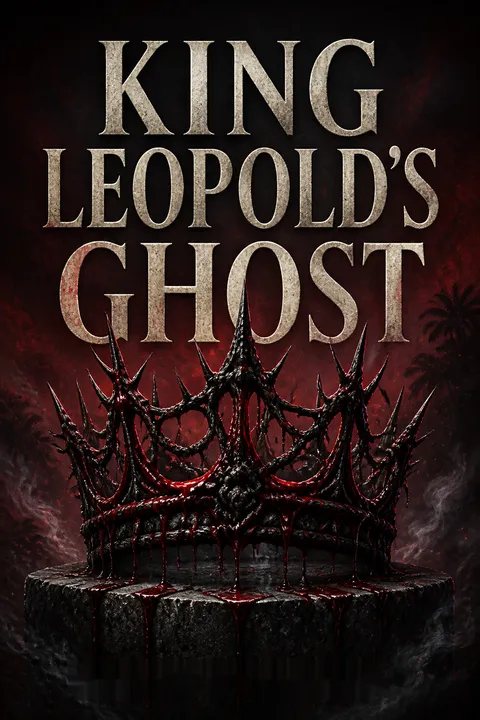
King Leopold's Ghost is a powerful and disturbing account of Belgian colonialism in the Congo. Hochschild exposes King Leopold II's brutal exploitation, resulting in millions of deaths. The book is praised for its engaging narrative style, meticulous research, and ability to bring forgotten history to light. Readers find it eye-opening and important, despite its difficult subject matter. Some criticize Hochschild's occasional editorializing and lack of African voices, but most consider it a compelling and necessary read that illuminates the long-lasting impacts of colonialism.
People Also Read




About the Author

Download PDF
Download EPUB
.epub digital book format is ideal for reading ebooks on phones, tablets, and e-readers.








































