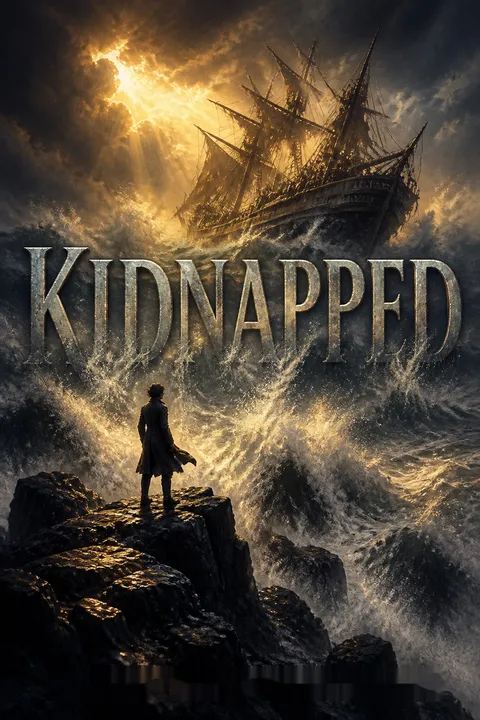

Summary Temporarily Unavailable
This summary is temporarily unavailable and is currently being updated. You can still explore the FAQs and other metadata below.
Plot Summary
Orphan's Journey Begins
Young David Balfour, newly orphaned, sets out from his quiet village of Essendean, Scotland, with a letter from his late father and the blessing of the kindly minister, Mr. Campbell. He is to seek his inheritance at the mysterious House of Shaws, home to his estranged uncle, Ebenezer Balfour. David's heart is a mix of hope and anxiety, as he dreams of kinship and fortune but is warned by villagers of the Shaws' ill reputation. The journey is both literal and symbolic—a step from innocence into a world of secrets, danger, and the unknown. The Scottish landscape, beautiful yet foreboding, mirrors David's uncertainty as he approaches the crumbling, isolated mansion that will change his life forever.
The House of Shadows
At the House of Shaws, David is greeted not with warmth but suspicion and hostility. Ebenezer Balfour, his uncle, is a miserly, secretive old man, living alone in a half-ruined estate. The house is cold, dark, and filled with an atmosphere of dread. David quickly realizes that his uncle is hiding something—his manner is evasive, his questions probing, and his actions tinged with paranoia. The relationship between the two is fraught with tension, as David tries to uncover the truth about his family and inheritance. The house itself becomes a character, embodying the decay and moral rot at the heart of the Balfour legacy, and David's hopes for a new life begin to unravel.
Treachery at Queen's Ferry
Ebenezer, feigning concern for David's future, lures him to the port town of Queen's Ferry under the pretense of arranging legal matters. There, David is introduced to Captain Hoseason of the brig Covenant. Unbeknownst to David, his uncle has struck a deal to have him kidnapped and shipped off to the American colonies as an indentured servant. The betrayal is swift and brutal: David is tricked aboard the ship, struck down, and awakens to find himself a prisoner. The world he thought he knew collapses, replaced by the harsh reality of treachery and greed. This pivotal moment marks the end of David's innocence and the beginning of his struggle for survival.
Kidnapped and Bound for Sea
Aboard the Covenant, David is thrust into a world of violence, cruelty, and fear. The crew is a rough, lawless lot, and the ship's officers are brutal and self-serving. David's status as a kidnapped "passenger" makes him a target for abuse and exploitation. He endures physical hardship, seasickness, and the constant threat of being sold into slavery. The ship's journey is plagued by storms and misfortune, mirroring David's inner turmoil. Isolated and powerless, he clings to hope and memories of home, even as the prospect of rescue grows dim. The sea becomes both prison and crucible, forging David's resilience and determination.
The Covenant's Dark Voyage
The monotony of shipboard misery is shattered when the Covenant collides with a small boat in the fog, bringing aboard a mysterious Highlander, Alan Breck Stewart. Alan is a fugitive Jacobite with a belt full of gold, and his arrival upsets the balance of power on the ship. Captain Hoseason and his officers plot to murder Alan for his money, but David, recognizing a fellow victim, warns him. Together, they barricade themselves in the round-house, fending off a violent assault by the crew. In the heat of battle, a bond is forged between the two—David's loyalty and Alan's courage become their mutual salvation. The ship, battered and bloodied, is now a powder keg of suspicion and revenge.
Alan Breck's Arrival
Alan Breck Stewart, charismatic, proud, and fiercely loyal to his clan, becomes David's unlikely ally. Their backgrounds could not be more different—David, a Lowland Whig; Alan, a Highland Jacobite outlaw—but necessity and shared danger draw them together. Alan's quick wit and martial skill save them both, but his presence also brings new peril, as the crew's hatred intensifies. The two men, trapped in the round-house, share stories, songs, and dreams, discovering respect and affection beneath their differences. Their friendship, tested by adversity, becomes the emotional heart of the tale, offering hope amid chaos.
Siege in the Round-house
The round-house becomes a fortress as David and Alan withstand repeated attacks from the mutinous crew. The siege is brutal—gunfire, swordplay, and desperate courage define the night. Alan's swordsmanship and David's resolve turn the tide, but not without cost: lives are lost, and the ship is left in disarray. The aftermath is tense, as alliances shift and the threat of betrayal looms. Eventually, the battered Covenant is driven by storms toward the treacherous coast of western Scotland. In the chaos of shipwreck, David and Alan are separated, each cast adrift in a hostile, unfamiliar land, their fates uncertain but their bond unbroken.
Shipwreck and Desolation
David survives the wreck of the Covenant, washing ashore on the tidal islet of Earraid. Isolated, starving, and ill, he endures days of misery, sustained only by the hope of rescue. The landscape is bleak and unforgiving, mirroring his despair. David's ordeal is both physical and spiritual—a test of endurance that strips him to his core. He learns to survive on shellfish and rainwater, his thoughts haunted by memories of betrayal and the uncertain fate of Alan. When at last he discovers the islet is accessible at low tide, he escapes, reborn in hardship and determined to find his friend and reclaim his life.
Stranded on Earraid
Alone on Earraid, David faces hunger, exposure, and the gnawing fear of abandonment. His struggle to survive is marked by moments of despair and flashes of ingenuity. He scavenges for food, battles illness, and endures the indifference of passing fishermen. The experience is transformative—David's youthful illusions are burned away, replaced by a hard-won resilience. When he finally escapes the islet, he is changed: no longer a naïve boy, but a survivor, ready to face the dangers of the Highlands and the complexities of loyalty, justice, and revenge.
Across the Wild Highlands
David's trek across the Highlands is a journey through a land scarred by rebellion and repression. He encounters poverty, suspicion, and the remnants of clan loyalties. Guided by Alan's silver button, he navigates a world of secret codes, shifting allegiances, and ever-present danger from redcoat soldiers and hostile Campbells. Along the way, he reunites with Alan, and together they traverse mountains, moors, and glens, evading capture and seeking refuge among friends and outlaws. The landscape is both beautiful and treacherous, a character in its own right, shaping the destinies of those who cross it.
The Red Fox Falls
In the woods of Appin, David and Alan become unwitting witnesses to the assassination of Colin Campbell, the "Red Fox," King's Factor and enemy of the Stewarts. The killing plunges the region into chaos, and suspicion falls on Alan, already a wanted man. David, by chance and circumstance, is implicated as an accomplice. The two are forced into desperate flight, hunted by soldiers and informers. The murder is both a political act and a personal tragedy, exposing the deep wounds of clan rivalry and the harsh realities of justice in a divided Scotland.
Flight and Friendship Tested
The flight across the heather is a crucible for David and Alan's friendship. Exhaustion, hunger, and constant danger strain their bond to the breaking point. Differences in temperament and background flare into quarrels, culminating in a bitter argument that nearly ends their alliance. Yet, in the face of adversity, forgiveness and loyalty prevail. Their journey is marked by moments of humor, courage, and mutual sacrifice, as they evade capture and seek sanctuary. The ordeal tests their character, forging a friendship that transcends politics and prejudice.
Cluny's Cage and Temptations
Seeking shelter, David and Alan find refuge with Cluny Macpherson, a fugitive Highland chief living in a hidden "cage" on Ben Alder. The respite is brief but fraught with temptation—Alan succumbs to gambling, losing their precious money and straining David's trust. The episode highlights the seductive dangers of idleness and the fragility of virtue under pressure. Cluny's hospitality is generous but tinged with the melancholy of exile and defeat. The stay in the cage is a microcosm of the larger struggle between honor and survival, loyalty and self-interest.
Quarrels and Reconciliation
As they continue their flight, the tensions between David and Alan erupt into open conflict. Harsh words and wounded pride threaten to sever their friendship forever. Yet, when David falls ill and collapses from exhaustion, Alan's compassion and remorse bring about a heartfelt reconciliation. The episode is a turning point, deepening their bond and reaffirming the values of forgiveness, humility, and mutual dependence. Together, they press on, their friendship tempered by hardship and renewed by grace.
The Long Road Home
With the worst behind them, David and Alan make their way south, crossing the Forth and nearing the end of their ordeal. The journey is marked by moments of hope and anxiety, as they navigate the dangers of capture and the uncertainties of the future. David's thoughts turn to justice and restitution, while Alan dreams of escape to France. Their partnership, forged in adversity, is now tested by the prospect of parting. The landscape shifts from wild Highlands to the settled Lowlands, symbolizing the transition from chaos to order, exile to homecoming.
Justice at the House of Shaws
With the help of the shrewd lawyer Mr. Rankeillor, David confronts his uncle at the House of Shaws. Through a clever ruse, Ebenezer's guilt in the kidnapping is exposed, and David's rightful claim to the estate is secured. The confrontation is both dramatic and cathartic, bringing closure to the long saga of betrayal and injustice. David's journey from orphan to heir is complete, but not without cost—innocence lost, friendships tested, and a deeper understanding of the complexities of justice and family. The House of Shaws, once a place of fear, becomes a symbol of restoration and new beginnings.
Farewell to Alan
With his inheritance secured, David turns his attention to helping Alan escape Scotland and to seeking justice for those falsely accused of the Red Fox's murder. The parting between David and Alan is bittersweet—marked by gratitude, affection, and the unspoken sorrow of separation. Their friendship, forged in adversity, endures beyond words and distance. David steps into his new life with humility and resolve, carrying with him the lessons of loyalty, courage, and compassion. The story ends not with triumph, but with the quiet dignity of a young man who has come of age through suffering and friendship.
Analysis
Kidnapped endures as a classic not only for its thrilling adventure but for its nuanced exploration of loyalty, justice, and the forging of identity in a fractured world. Stevenson's Scotland is a land divided—by clan, by politics, by language—and his characters must navigate these divisions with courage and compassion. The novel's emotional power lies in its depiction of friendship across boundaries: David and Alan, opposites in background and belief, find common ground in shared adversity. Their journey is both a literal flight and a metaphorical passage from innocence to experience, from isolation to connection. Stevenson resists simplistic moral judgments, instead presenting a world where right and wrong are often blurred by circumstance and necessity. The landscape itself becomes a crucible, testing and refining the characters' values. Ultimately, Kidnapped is a story about the search for home—not just a place, but a sense of belonging and purpose. Its lessons resonate today: that justice requires both courage and mercy, that loyalty is forged in hardship, and that true maturity comes from embracing complexity with humility and hope.
Last updated:
Report IssueReview Summary
Kidnapped is praised as an exciting adventure novel set in 18th century Scotland. Readers appreciate Stevenson's vivid characters, historical setting, and themes of friendship and morality. Many find the Scottish dialect challenging but authentic. The story's pacing is generally lauded, though some feel the second half drags. Critics note its exploration of Scottish culture and politics. While some modern readers struggle with the language, most agree it's a classic adventure tale that holds up well, particularly for its depiction of Scottish history and landscapes.
People Also Read


Characters
David Balfour
David Balfour is the protagonist, a seventeen-year-old orphan whose journey from naïve boy to mature young man forms the emotional core of the novel. Initially trusting and idealistic, David is thrust into a world of betrayal, violence, and moral ambiguity. His relationship with his uncle Ebenezer exposes him to the darker side of human nature, while his friendship with Alan Breck Stewart challenges his prejudices and expands his understanding of loyalty and honor. David's psychological arc is one of growth through suffering—he learns resilience, self-reliance, and the value of forgiveness. His sense of justice and compassion guide his actions, even when faced with personal danger or ethical dilemmas. By the end, David emerges as a figure of integrity, shaped by hardship but not hardened, capable of both leadership and empathy.
Alan Breck Stewart
Alan Breck Stewart is a Highland Jacobite fugitive, proud, quick-witted, and fiercely loyal to his clan and cause. He is both a romantic hero and a flawed human being—brave, resourceful, and generous, yet also vain, impulsive, and sometimes reckless. Alan's relationship with David is complex: he is at once protector, mentor, and equal, challenging David's assumptions and drawing out his courage. Alan's sense of honor is rooted in clan loyalty and personal pride, but his friendship with David reveals a capacity for self-sacrifice and growth. Psychologically, Alan is driven by a need for recognition and belonging, haunted by exile and the loss of his homeland. His journey is one of survival and adaptation, and his bond with David becomes a lifeline in a hostile world.
Ebenezer Balfour
Ebenezer Balfour is David's uncle and the antagonist of the early chapters. Paranoid, miserly, and morally bankrupt, he represents the corrosive effects of isolation and avarice. His willingness to betray his own nephew for financial gain is both shocking and pitiable. Ebenezer's psychological makeup is shaped by past disappointments and a deep-seated fear of loss—of wealth, reputation, and control. His interactions with David are marked by manipulation, deception, and ultimately, cowardice. Ebenezer's downfall is a cautionary tale about the dangers of selfishness and the inability to trust or love.
Captain Elias Hoseason
Captain Hoseason is the master of the Covenant, a man hardened by years at sea and accustomed to violence and treachery. He is both villain and victim—complicit in David's kidnapping, yet also subject to the whims of fortune and the dangers of mutiny. Hoseason's primary motivation is profit, but he is not without a certain rough code of conduct. His interactions with David and Alan reveal a capacity for calculation and adaptability, but also a fundamental moral emptiness. Psychologically, Hoseason is a survivor, shaped by a world where might makes right and loyalty is a commodity.
Mr. Rankeillor
Mr. Rankeillor is the Edinburgh lawyer who helps David reclaim his inheritance. Wise, perceptive, and compassionate, he serves as a stabilizing force in the narrative, guiding David through the complexities of law and justice. Rankeillor's role is that of mentor and facilitator, using his intellect and experience to expose Ebenezer's crimes and secure a fair outcome. Psychologically, he represents the values of rationality, fairness, and social order, providing a counterpoint to the chaos and violence of the Highlands.
Cluny Macpherson
Cluny Macpherson is a Highland chief living in hiding after the Jacobite rebellion. His "cage" on Ben Alder is both refuge and prison, a testament to the resilience and tragedy of the defeated clans. Cluny is generous and dignified, but also marked by melancholy and the temptations of idleness and gambling. His interactions with David and Alan highlight the complexities of loyalty, pride, and survival in a world turned upside down. Psychologically, Cluny embodies the tension between tradition and adaptation, honor and necessity.
James of the Glens
James Stewart, known as James of the Glens, is Alan's kinsman and a central figure in the aftermath of the Red Fox's murder. Loyal, resourceful, and burdened by responsibility, he becomes a scapegoat for the crime, reflecting the injustices of the time. James's psychological struggle is one of duty versus self-preservation, as he balances the needs of his family and clan against the demands of the law. His fate underscores the novel's themes of sacrifice, injustice, and the costs of loyalty.
Mr. Campbell
Mr. Campbell is the minister of Essendean and a surrogate father to David. Compassionate, wise, and principled, he provides the moral foundation for David's journey. His guidance and support are a source of strength, reminding David of the values of faith, charity, and perseverance. Psychologically, Mr. Campbell represents the voice of conscience and the enduring power of kindness in a harsh world.
Ransome
Ransome is the young cabin-boy on the Covenant, a victim of cruelty and neglect. His tragic fate—beaten and ultimately killed—serves as a stark reminder of the vulnerability of the powerless and the brutality of the world David has entered. Ransome's brief presence in the story is a catalyst for David's empathy and a symbol of innocence destroyed by greed and violence.
Robin Oig Macgregor
Robin Oig, son of Rob Roy, is a Macgregor outlaw whose encounter with Alan and David in Balquhidder is marked by rivalry, pride, and ultimately, reconciliation through music. Robin's character highlights the complexities of clan identity, honor, and the possibility of peace amid conflict. Psychologically, he is driven by a need for respect and recognition, but also capable of generosity and forgiveness.
Plot Devices
Dual Narrative Structure
The novel employs a dual narrative structure, intertwining David's coming-of-age story with Alan's struggle for survival and justice. Their parallel arcs—David's quest for identity and inheritance, Alan's flight from persecution—create a dynamic interplay of themes and perspectives. The structure allows for shifts in tone and setting, from the gothic gloom of the House of Shaws to the wild beauty of the Highlands, and from moments of high adventure to introspective reflection.
Foreshadowing and Suspense
Stevenson uses foreshadowing to build suspense and tension throughout the narrative. Early warnings about the House of Shaws, the ominous behavior of Ebenezer, and the political unrest in the Highlands all signal the dangers to come. The constant threat of capture, betrayal, and violence keeps the reader—and the characters—on edge, driving the story forward and deepening the emotional stakes.
Symbolism of Landscape
The Scottish landscape is more than a backdrop—it is a living, breathing presence that shapes the characters' destinies. The ruined House of Shaws symbolizes decay and hidden secrets; the wild Highlands represent both freedom and peril; the moors and mountains are arenas of trial and transformation. The journey through these landscapes mirrors the internal journeys of the characters, reflecting their fears, hopes, and growth.
Disguise and Deception
Disguise and deception are central to the plot, from Ebenezer's duplicity to Alan's use of false names and secret codes. The characters must navigate a world where appearances are deceiving and trust is hard-won. The use of aliases, hidden messages, and coded signals adds layers of intrigue and complexity, highlighting the themes of identity, loyalty, and the search for truth.
Moral Ambiguity and Ethical Dilemmas
The novel is rich in moral ambiguity, forcing characters to make difficult choices between competing values. David must decide whether to pursue justice or mercy, loyalty to friend or duty to law. Alan grapples with the ethics of violence and revenge. The story resists easy answers, inviting readers to reflect on the complexities of right and wrong in a world marked by conflict and change.
Coming-of-Age Transformation
At its heart, Kidnapped is a coming-of-age story. David's journey from sheltered youth to self-reliant adult is marked by trials, losses, and moments of revelation. The hardships he endures—betrayal, captivity, flight, and illness—strip away his illusions and force him to confront the realities of the world. Through friendship, suffering, and forgiveness, he emerges with a deeper understanding of himself and others.
About the Author
Robert Louis Balfour Stevenson was a Scottish writer renowned for his novels, poetry, and travel writing. He is considered a key figure in English literature, admired by notable authors like Borges, Hemingway, and Nabokov. Despite his popularity, modernist writers initially dismissed Stevenson's work. However, recent critical reevaluation has secured his place in the Western canon. Stevenson's ability to craft compelling adventure stories and vivid characters, particularly in works like Kidnapped and Treasure Island, has ensured his lasting literary legacy. His writing style, which blends historical accuracy with thrilling narratives, continues to captivate readers and scholars alike.

Download PDF
Download EPUB
.epub digital book format is ideal for reading ebooks on phones, tablets, and e-readers.








































