
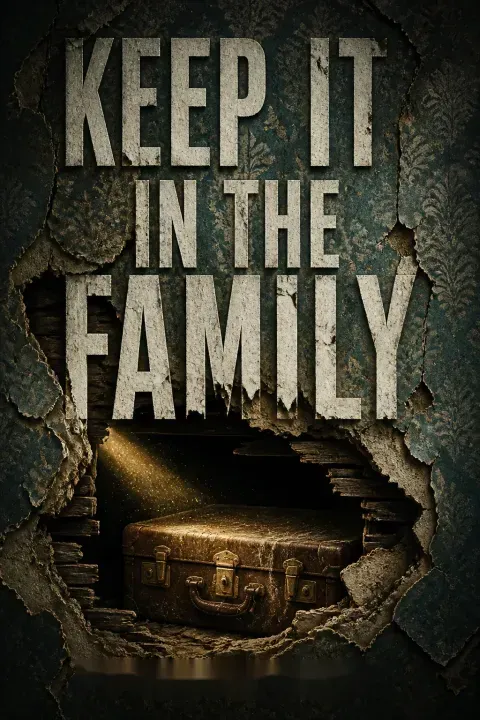


Plot Summary
Prologue
A child3 lies on cold floorboards, ear pressed to the gap beneath a locked door. Inside the room, someone begs to be set free, then chokes into silence. The child3 knows this ritual intimately: the footsteps, the muffled screams, the cigarette smoke seeping under the door. The killers are a mismatched pair who appear ordinary to the world but reveal their true selves only behind these walls.
The child3 is the bait that lures other children here, to this isolated house where no one hears screaming. After the victim's feet leave the floor and the thrashing stops, the child3 returns to bed, opens a book, and waits. Soon the killers check in, satisfied. The child3 will remember every one of the taken. Every single one.
This prologue functions as the novel's thesis statement: evil is domesticated, passed down like furniture through generations. The child's clinical observation of murder reveals a psyche already warped by exposure to atrocity as routine. The detail about being 'the bait' implicates the narrator in the machinery of death while also suggesting victimhood. The insistence that 'I remember every one of them' becomes tragic when we later learn the narrator is Debbie, who will replicate her parents' crimes. The house itself emerges as the story's true center: a container for intergenerational violence that new owners will unknowingly inherit. The ordinariness of the killers, their post-murder cheerfulness, speaks to the banality of evil that hides in plain sight.
The Unseen Purchase
Mia1 and Finn2 sit in his van, staring at the overgrown Victorian property they have just bought. They had never stepped inside before the auction. The five-bedroom house on Stewkbury's high street has been empty for over forty years, its windows boarded, its wisteria strangling the brickwork.
Finn's2 parents, Dave4 and Debbie,3 had wanted to flip it themselves, but Mia1 and Finn2 outbid them, a victory that strains already tense family dynamics. The couple has been living in his parents' annexe for fourteen months after four previous house purchases collapsed.
As they enter, the interior is worse than imagined: a hook and rope hang from one ceiling, and every surface is decayed. Mia1 feels nauseous; Finn2 hides his panic behind jokes. Neither admits they have made a terrible mistake.
The auction purchase establishes the financial and emotional trap from which the entire plot will unwind. Mia's determination to escape Debbie's orbit paradoxically pulls her deeper into a house that is, unbeknownst to her, Debbie's childhood home. This structural irony gives the novel its tragic momentum. Finn's hidden panic is the first instance of his lifelong pattern of concealment, and the noose-like rope in the bedroom is an early warning sign both characters are too desperate to heed.
Suitcases of the Dead
Months into renovation, seven-months-pregnant Mia1 discovers words carved into the nursery skirting board: 'I WILL SAVE THEM FROM THE ATTIC.' She insists they investigate. Finn2 and Dave4 climb into the attic and find a hidden room behind a false wall.
Inside are seven vintage Portmanteau suitcases arranged in a V-formation, each with children's clothes sealed in bags before them. When Finn2 forces one open, the smell of decay escapes, and Mia1 recognizes a small human skull with hair still attached.
Her legs buckle; she plummets backward down the ladder, fracturing her wrist and skull on the floorboards. She wakes in hospital. Sonny8 has been delivered by emergency caesarean, weighing just over three pounds. He survives. Seven unidentified children did not.
The suitcase discovery transforms the novel from domestic drama into full-tilt horror. The V-formation suggests ritual staging, not random disposal. The carving 'I WILL SAVE THEM FROM THE ATTIC' is a message from the past that promises an alternative narrative to what the police will assume: not predation alone, but an attempted rescue. Mia's fall literalizes the novel's central question: how close can you get to buried evil before it destroys you? That this disaster occurs in what was meant to be the nursery intensifies the violation.
A Mother Adrift
In the months after Sonny's8 premature birth, Mia1 cannot connect with her baby. She watches Debbie3 change, feed, and comfort him with jealous relief, too frightened of her own incompetence to intervene.
The image of the mummified child haunts her nights, and she begins obsessively researching the victims, creating hidden digital folders of news articles, downloading books about serial killers, and reading autopsy reports. When police identify the first child, Nicky Roberts, vanished in 1979, she stays awake tracing his face in old photographs.
Finn2 sleeps on the sofa, bewildered by her distance. Mia1 knows she should seek help, but guilt paralyzes her: she nearly killed her son through her own carelessness, and she does not trust herself to hold him without causing more harm.
Mia's postnatal depression is compounded by what might be called witness trauma: having seen the dead child, she cannot unsee him. Her compulsive research into the murders is both a symptom of her illness and a displacement activity that lets her avoid the harder work of bonding with her living child. Debbie's eager assumption of maternal duties reads initially as generous support, but in retrospect it is the first stage of a campaign to replace Mia entirely in Sonny's life, exploiting her daughter-in-law's fragility.
Dave's Hidden Past
At the funeral of identified victim Abigail Douglas, Mia1 meets Jasmine and her disabled daughter Precious,10 who vanished alongside Abigail but was found alive with catastrophic brain injuries. Jasmine shows Mia1 a class photograph.
Mia1 freezes: the boy with the port-wine stain on his forehead is unmistakably a young Dave.4 When she confronts him, Dave4 claims he barely knew the girls and rarely attended school. But his twitching eye says otherwise. Mia1 later searches Dave's4 garage and finds his old schoolbooks.
The handwriting, the reversed S, the double-barred E, matches exactly the message carved into the nursery skirting board. Dave4 was in that house as a child. He wrote the warning decades ago. And he has been lying to everyone about what he knows.
The class photograph is the first crack in the family's facade of normalcy. Dave's evasions transform him from a benign, long-suffering husband into a figure of active suspicion. The handwriting match creates a direct material link between past and present, making the house's secrets tangible rather than spectral. Crucially, Dave's message positions him as someone who tried to help, complicating the binary of killer and victim. Mia's detective work here shows her PR-trained mind at its best: connecting dots, following paper trails, unwilling to accept surface explanations.
Debbie's First Kill
Nearly four decades earlier, a teenage Debbie3 helps a captive girl named Precious10 escape from the house through a chimney. They flee across fields, but Precious10 realizes Debbie3 is part of the family that imprisoned her and runs in terror.
A stolen car strikes Precious,10 throwing her across the bonnet. The driver is a panicked teen named Dave,4 meeting Debbie3 for the first time. Precious10 regains consciousness and threatens to expose Debbie.3 Debbie3 picks up a wooden plank and beats Precious10 to death, then convinces the terrified Dave4 they must flee together.
From this shared trauma, a lifelong bond is forged. Debbie3 has learned the lesson her parents taught: killing solves problems. Dave4 believes he caused the death; Debbie3 lets him carry that guilt.
This flashback transforms the reader's understanding of both Debbie and Dave. Debbie is not a passive victim of her parents but an active inheritor of their violence. Her murder of Precious is pivotal: her first independent kill, committed to protect herself rather than to 'save' anyone. Dave is revealed as an accidental participant trapped by guilt he does not fully deserve. Debbie exploits this belief to bind him to her permanently. Their relationship, presented until now as a standard long marriage, is exposed as a trauma-bond forged in shared criminality and asymmetrical knowledge.
Finn's Double Life
A Sunday newspaper splashes photographs of Finn2 kissing his ex-girlfriend Emma7 on her doorstep. The story reveals Finn2 has been in a relationship with Emma7 throughout his six-year marriage to Mia,1 and they have a four-year-old daughter, Chloe.12
While Mia1 was undergoing IVF, injecting hormones, and suffering miscarriages, Finn2 was already raising another family. Even Debbie3 is blindsided: she has missed four years of being Chloe's12 grandmother. The exposure shatters what remains of Mia's1 fragile mental health.
Later, searching Dave's4 office, she finds a Post-it note bearing the journalist's11 phone number. Dave4 tipped off the press, hoping the scandal would distract Mia1 from investigating his own connection to the murdered children. He was willing to destroy his son's marriage to protect his own secrets.
Finn's infidelity is a betrayal on multiple levels, but the novel treats it less as a moral failing than as a symptom of deeper pathology. His compartmentalization mirrors the psychological structure his upbringing required: separating his mother's public persona from her private atrocities. Dave's decision to expose his own son's affair is a devastating illustration of how far he will go to protect Debbie's secrets. The affair plotline also creates an unexpected alignment between Mia and Debbie, both now deceived by the men they trusted.
Debbie's Ultimatum
Debbie3 visits Mia1 in the annexe, her tone gentle but her intent surgical. She and Dave,4 she explains, are willing to remortgage their house and give Mia1 every penny, on one condition: Mia1 must leave Finn,2 abandon Sonny,8 and start a new life elsewhere.
Debbie3 frames it as concern for everyone's wellbeing. Finn2 would be happier with Emma,7 Sonny8 would have a more present grandmother, and Mia1 could return to her glamorous London life. When Mia1 hesitates, Debbie3 presses harder. Sonny,8 she adds, would not go with Mia.1
The offer is a buyout: money in exchange for Mia1 erasing herself from the family entirely. Mia1 is too stunned to immediately refuse, and that pause, that flicker of temptation, sickens her more than anything Debbie3 has ever said to her.
Debbie's bribe is the moment her maternal possessiveness becomes fully visible. She does not merely dislike Mia; she seeks to eliminate her, using the same transactional logic she applies to everything else. The offer of money to abandon a child is a dark echo of Debbie's own childhood: she was a commodity in her parents' schemes. Mia's momentary hesitation reveals how thoroughly her postnatal depression has eroded her sense of herself as a mother. Debbie has identified the exact fracture point and inserted her wedge with precision.
Forty Suitcases
Following clues from old invoices hidden in Dave's4 garage, Mia1 locates a derelict industrial estate and a locked building. Inside, she finds over a hundred Portmanteau suitcases. Forty of them contain children's bodies, each with vacuum-sealed clothing arranged before them.
As she reels, Dave4 appears behind her. He followed her. He restrains her with boot laces but, instead of killing her, he speaks of guilt, of terminal cancer, of how his love for Debbie3 destroyed him.
He slashes one of her restraints, then, before her horrified eyes, uses his hunting knife to slit his own throat. His blood sprays across the suitcases. He dies without ever explicitly confessing to the murders. His final words are an apology and a plea: tell Debbie3 he loved her.
Dave's suicide is the novel's first major structural twist: the presumed killer is dead, but his confession is conspicuously incomplete. He never says 'I killed them.' His language is evasive in precisely the ways that will later unravel. His self-sacrifice is simultaneously a genuine act of love and a strategic move to end the investigation before it reaches Debbie. The warehouse scene crystallizes the book's central ambiguity: Dave was an accomplice, an enabler, but was he ever a killer himself? The forty suitcases represent four decades of atrocity that he cleaned up after, silently.
The Triple Revelation
In the aftermath of Dave's4 suicide, three truths converge. First, Mia1 discovers footage on her phone showing Debbie3 shaking the ladder that caused her fall: Debbie3 deliberately endangered Mia1 and unborn Sonny8 to prevent the attic discovery.
Second, DNA tests prove Finn2 is not biologically related to either Dave4 or Debbie;3 he was stolen as an infant. Third, Finn2 unearths his mother's appointment diaries disguised as Dave's4 business records. Every entry matches a child's disappearance date and location.
One diary bears the initials 'D.R. Hunter,' Deborah Ruth, not Dave.4 The traveling killer who abducted forty children over four decades was never Dave.4 It was Debbie,3 using her husband's name as cover while he stayed home and cleaned up after her killing trips.
The triple revelation inverts everything the reader and characters have believed. Debbie, the devoted grandmother who seemed merely overbearing, is exposed as Britain's most prolific female serial killer. The diaries are particularly damning because they reveal premeditation and pattern. Finn's discovery that he is not her biological child reframes his entire life: he was not born into this pathology but was selected for it, raised inside it, and groomed to participate in it. The ladder footage proves Debbie was willing to sacrifice her own grandchild to protect her secrets.
The Cemetery Confession
Learning that Debbie3 has taken Sonny,8 Mia1 and Finn2 race to the hidden cemetery where Dave's4 ashes are buried beneath a willow tree. They find Debbie3 with an empty pushchair and a sealed bag of baby clothes. She admits everything: as a child, she was the bait for her parents' victims. After escaping, she continued killing because she believed she was 'saving' neglected children.
She stole Finn,2 born William Brown, when her own infant died of cot death, murdering his four-year-old sister Tanya in the process. She trained young Finn2 to help her abduct victims on their 'trips' together. And now, she says, she has saved Sonny8 from his unfit parents. She points to the bag of clothes. Sonny8 is gone. She will not say where.
The cemetery scene is the novel's emotional nadir and its most concentrated burst of exposition. Debbie's confession reframes the entire narrative: what seemed like a story about a house's dark history is actually about a woman who weaponized maternal love into a killing ideology. Her rationale of 'saving' children is a classic perpetrator's reframe. The detail about training Finn implicates the next generation directly, while Sonny's disappearance extends the tragedy forward. Debbie's refusal to reveal Sonny's fate is her ultimate act of control over the family she cannot possess.
Strangled by Her Son
When Finn2 sees his son's8 clothes laid out like a victim's, something inside him breaks. He launches himself at Debbie,3 his hands closing around her throat as she lies on the wet cemetery ground. Mia1 screams for him to stop, knowing only Debbie3 can reveal where Sonny8 is, but Finn2 cannot hear her. Debbie3 does not resist. She wants to die, to join Dave.4
In her fading consciousness, she reflects on her first kill for him, the bully Justin Powell, beaten to death by the canal. Just as her world darkens, DS Goodwin6 and his team arrive, drag Finn2 off her, and resuscitate her. Debbie3 survives. Finn2 has crossed the line his mother spent decades drawing him toward. She has turned him into a killer too.
Finn's near-murder of Debbie is the moment nurture fully overcomes whatever resistance he had left. She spent decades teaching him that violence solves problems, and now he deploys that lesson against its source. Debbie's passive acceptance of death is perversely maternal: she would rather die at her son's hands than face a future without his visits. Goodwin's intervention preserves the legal order, but the psychic damage is permanent. Finn now knows what he is capable of, and the novel has already shown us where that knowledge leads.
The Norwegian Sanctuary
The narrative shifts to a remote Norwegian island where George Lewis,5 Debbie's3 long-lost older brother, is raising a small boy he calls Andreas.8 Through his recollections, the truth surfaces: Debbie3 reunited with George5 after Dave's4 death and fed him a false story. She claimed Dave4 was the killer, that Finn2 learned murder from his father and was violent toward Sonny,8 and that Sonny8 needed protection from both parents.
George,5 guilt-ridden over abandoning Debbie3 as a child, agreed to take the boy and raise him in hiding. He has given Sonny8 a simple, loving life of fishing, sailing, and painting. He sends monthly photos to Debbie3 via contraband phone. He is a devoted father. He is also a kidnapper, deceived by the sister he loved.
George's narrative offers the novel's most complex moral position. He is gentle, devoted, and has genuinely given Sonny a safe, nurturing childhood, yet he is a dupe and a criminal acting on his sister's lies. The idyllic Norwegian setting creates painful dramatic irony: Sonny may be happier and more secure with his kidnapper than he would be with his traumatized biological parents. George represents what Debbie might have become without their parents' direct influence: capable of love, but still fatally susceptible to family manipulation and unable to see through his sister's deceptions.
Finn's Vengeful Retrieval
Over two years of coerced visits to Debbie3 in Broadmoor psychiatric hospital, Finn2 has pieced together clues from the monthly photos she demanded in exchange, a partial license plate, a mountain silhouette, a radio tower. Internet sleuths help him identify the Norwegian coastal town. He arrives on George's5 island by rented boat and overpowers him, binding his limbs with rope and loading him aboard.
George5 regains consciousness mid-journey and begs through his gag. Finn2 rolls him into the sea, weighted with rocks. Sonny,8 who called George5 'Pappa,' is retrieved from nursery and taken to an Oslo hospital where DNA confirms his identity. Mia1 flies out immediately. Their child is alive. The two-year nightmare is over.
Finn's murder of George closes a generational loop: the stolen child returns to kill his kidnapper. The act is thematically ambiguous. George was not evil, merely manipulated, yet he kept Sonny from his parents for two years. Finn's violence is presented with the same clinical detachment Debbie used in her killing chapters, a deliberate stylistic echo that signals how thoroughly he has internalized her methods. The recovery of Sonny provides the happy outcome the thriller structure demands, but the circumstances of that recovery complicate any sense of justice or moral resolution.
Severing the Cord
On his next monthly visit to Broadmoor, Finn2 shows Debbie3 images on a hidden smartwatch: her brother George,5 dead, blood streaking his face. Then a video clip of his final moments. Debbie3 crumbles. Finn2 tells her he has Sonny8 back and will never visit again. She begs him to stay, to let her frame him in her memory, the way she taught him to frame his kills.
He calls her by her name, not 'Mum,' and walks out. She collapses, her facial stitches bursting from a previous inmate's attack. The guards find her on the floor, alone. Everything she built, her family, her control, her legacy, has been dismantled by the son she stole and shaped. She has nothing left but a failing body and mental photographs of dead children.
Finn's final rejection is the emotional climax of their relationship. His use of the watch to display George's death is a cruel but precise inversion of Debbie's own methods: she taught him to frame images, to memorialize death. Now he uses that lesson to destroy her. The scene is a total power reversal, the controller controlled. Debbie's plea to be 'framed' reveals the tragedy of a woman who can only experience love through possession and violence. Finn's departure represents both liberation and continuation: he is free of her, but he carries her tools with him.
The Oslo Reunion
At an Oslo hospital, Mia1 and Finn2 prepare to meet Sonny8 for the first time in two years. The psychiatric team warns them: he will not remember his parents, he speaks fluent Norwegian, and he has called another man 'Pappa5 '.
When they enter the playroom, Sonny8 barely glances up from his toy cars. A small terrier naps beside him. Finn2 and Mia1 sit on the floor, waiting, letting him approach on his own terms. When Sonny8 finally offers a car to Mia,1 she weeps. Finn2 holds himself together.
They know this will take years. They know their son has been loved by someone else during his absence, that his loyalties are complicated. But he is alive, he is unharmed, and he is theirs. The family the house broke apart begins to reassemble in a foreign country.
The reunion scene earns its emotional weight through restraint. There are no cinematic embraces, no instant recognition, only the slow, patient work of becoming a family again. The dog's presence is poignant: it is the last remnant of George's genuine love for Sonny, a love that was real despite its criminal context. Mia's tears express not just relief but grief for the years lost. The scene implicitly asks whether Sonny was better off with his gentle kidnapper, a question the novel deliberately leaves hanging. The Oslo setting underscores that healing, when it comes, may require leaving home behind.
Epilogue
A year after Sonny's8 return, Finn2 drives to view a potential new home, hoping to win Mia1 back. On the radio, news that the Stewkbury house is being demolished. Finn2 reflects with cold clarity: he has killed three people since George.5
The journalist Aaliyah Anderson,11 who threatened to expose his family. Lorna Holmes,9 who advised Mia1 against reconciliation. And he is watching DS Goodwin,6 whose interest in Mia1 he considers a threat. In a rented storage unit, he keeps empty Portmanteau suitcases from the warehouse.
Two are now filled. He has shown Sonny8 the collection of skulls from Debbie's3 grandparents' victims, telling the boy they belonged to bad people who deserved punishment. He will teach Sonny8 everything, he decides. But not yet. Not until he is ready.
The epilogue's horror lies not in new violence but in its domestic framing. Finn killing to protect his family mirrors Debbie's rationale exactly, and his plan to someday train Sonny extends the killing cycle into a fourth generation. The storage unit, with its skulls and suitcases, is a private museum of family history that doubles as a workshop. Finn's vow not to involve Sonny 'until he is older' is the novel's darkest irony: the intergenerational transmission of violence has already begun, disguised as a father-son bonding activity. The book ends not with resolution but with the chilling certainty that the story will repeat, rebranded as love.
Analysis
Keep It in the Family uses the framework of a domestic thriller to explore how violence becomes an inheritance, transmitted as naturally as a surname. The novel's central insight is that the family is simultaneously the locus of our deepest loves and the most efficient delivery system for trauma across generations. Debbie3 is not a monster who happens to be a mother; her maternity is the very engine of her monstrousness. She kills children to save them, steals a baby to replace her own dead infant, and trains her son2 in murder as a form of mother-son bonding. Every act of violence in the book is framed by its perpetrator as an act of love, creating a queasy moral universe where the reader's sympathies are constantly destabilized.
The structure reinforces this theme through its generational scope. The prologue shows Debbie3 as a child being shaped by her parents' pathology. The main narrative shows her shaping Finn,2 who accompanied her on abductions from the age of eight. The epilogue shows Finn2 beginning to shape Sonny,8 displaying skulls to the boy and planning to teach him the family trade. The house at 45 High Street functions as the physical manifestation of this cycle: it passes from Debbie's3 parents to Debbie,3 then inadvertently to Finn2 and Mia,1 its attic literally containing the corpses of the past. That the house will be demolished at the novel's end is a grim joke: the cycle has already relocated to a storage unit and a Norwegian island.
The novel also interrogates complicity with unusual sophistication. Dave4 never killed anyone, but his silence and his practical assistance, cleaning bodies, maintaining the warehouse, covering tracks, enabled four decades of murder. Is he less culpable than Debbie?3 The book refuses to answer, instead documenting how love can make an otherwise decent person into an accomplice. Finn's2 trajectory from unwilling child participant to active killer suggests that complicity is itself a training ground, a rehearsal for full participation. The book's deepest pessimism lies in its epilogue: even after the truth is exposed, even after the monster is imprisoned, the killing continues because the skills and justifications have already been successfully transferred to the next generation. The family business, it turns out, is resilient.
Review Summary
Keep It in the Family received mixed reviews, with ratings ranging from 1 to 5 stars. Many readers found it dark, twisted, and entertaining, praising the author's ability to create suspense and deliver shocking twists. Some criticized the predictability of certain plot elements and the unlikable characters. The story follows a couple who discover gruesome secrets in their new home's attic. While some readers were captivated by the intense narrative, others felt it was too far-fetched or disturbing. Overall, opinions varied widely on this psychological thriller.
People Also Read







Characters
Mia Hunter
Determined wife and investigatorA London PR professional who gave up her glamorous city life to marry plumber Finn2 and move to a Bedfordshire village. Ambitious, stubborn, and sharp-witted, she was previously engaged to a celebrity whose public betrayal left her wary of relationships. She struggles with fertility issues that strain her self-worth deeply. When she impulsively buys a derelict Victorian house with Finn2, her determination to escape her controlling mother-in-law Debbie3 overrides her better judgment. After the gruesome attic discovery triggers premature labor, she develops postnatal depression that distances her from her newborn son, Sonny8. Her investigative instincts, honed by her PR work, drive her to uncover the truth about her in-laws' secrets, regardless of the cost to her marriage and safety. She is resilient but haunted by guilt over her maternal failures.
Finn Hunter
Secretive husband with dark upbringingA plumber and all-around handyman whose easygoing surface conceals a deeply compartmentalized psyche. As a child, he was trained by his mother3 to help abduct children, a past he has suppressed but which shaped his ability to separate his public life from secret behaviors. He maintains a long-term affair with his ex-girlfriend Emma7 and fathers a child with her while married to Mia1, lying reflexively to both women. His genuine love for his children coexists with a capacity for violence inherited from his upbringing. The revelation that he was stolen as an infant and is not biologically related to either parent shatters his identity and forces him to confront who he really is. Charming yet evasive, he is his mother's3 son in ways he cannot escape, and the novel traces his inexorable path toward embracing that inheritance.
Debbie Hunter
Prolific serial killer and grandmotherA seemingly devoted grandmother whose sweet, passive-aggressive demeanor masks one of Britain's most prolific serial killers. Born into a family of murderers, she was used as bait to lure child victims to her parents' isolated house. After escaping as a teenager, she continued the family killing tradition under the delusion that she was saving neglected children from miserable lives. She has Motor Neurone Disease, which progressively diminishes her physical capabilities while her psychological need for control intensifies. Her love for Finn2 is possessive and consuming: she murdered his infant sister and stole him to replace her own baby who died of cot death. She views her daughter-in-law Mia1 as an existential threat to her control over Finn2 and grandson Sonny8. Her manipulations drive the novel's central conflict.
Dave Hunter
Guilt-ridden enabler and husbandA dyslexic man from a neglectful, impoverished background who has spent his life enabling his wife's3 atrocities. As a teenager joyriding in a stolen car, he accidentally struck a girl named Precious10, and the resulting encounter with Debbie3, who finished killing the injured girl, bound them together through shared trauma. He never killed anyone himself, but he cleaned and stored the bodies, maintained the warehouse that held forty suitcase-bound victims, and covered for Debbie3 for four decades. A functioning alcoholic with undiagnosed stomach cancer, his guilt manifests physically as his disease progresses. His love for Debbie3 is absolute and tragic; he ultimately sacrifices himself to protect her when Mia's1 investigation threatens to expose everything. He is a study in complicity and the corrosive power of devotion misplaced.
George Lewis
Long-lost brother and kidnapperDebbie's3 older brother who escaped their murderous parents as a teenager and spent decades in hiding, eventually settling on a remote Norwegian island. As children, he and Debbie3 were their parents' bait, tasked with befriending children and bringing them home. When he was caught trying to protect a friend, his father stuffed him into a suitcase and exiled him across the country. He built a solitary but peaceful existence fishing and painting, haunted by guilt over abandoning Debbie3. When she reunites with him after Dave's4 death, he believes her lies about Finn2 being violent and agrees to take his infant great-nephew Sonny8 to Norway to raise in secret. He discovers an unexpected talent for fatherhood and loves the boy deeply, unaware he is being manipulated by the sister he has never stopped trying to protect.
DS Mark Goodwin
Persistent police family liaisonThe detective assigned as family liaison officer after the attic bodies are discovered. Professional and empathetic, he develops a quiet but unmistakable attraction to Mia1 that complicates his official role. He is the first person to question whether Dave's4 suicide note actually constitutes a confession, recognizing that Dave4 never explicitly admitted to the killings. His instinct that the case is not fully resolved proves tragically correct. Single with a young son of his own, he represents a possible future for Mia1 outside the Hunter family's orbit, which makes him a threat to more than one member of that family.
Emma Jones
Finn's mistress and ex-girlfriendFinn's2 high school sweetheart and longtime mistress who never fully exited his life. She has a daughter, Chloe12, with Finn2 conceived while he was married to Mia1. Passive, accommodating, and deeply in love with Finn2 despite his consistent failures to choose her fully, she accepts his divided loyalties for years. The tabloid exposure of their affair draws her unwillingly into the public eye and subjects her to harassment. She represents the ordinary, uncomplicated life Finn2 could have had if his upbringing had not shaped him for duplicity and darkness.
Sonny Hunter
Mia and Finn's miracle babyMia1 and Finn's2 child, conceived naturally after years of failed IVF and devastating miscarriages. Born prematurely when Mia1 falls from the attic ladder, he is small but resilient. His early months are marked by his mother's1 postnatal depression and his grandmother Debbie's3 possessive, overbearing attention. Kidnapped at fourteen months as an act of revenge against his parents, he spends two formative years being raised on a Norwegian island by his great-uncle George5, whom he calls Pappa. He returns to his biological parents at age three speaking Norwegian, with memories of a different life and a different father figure.
Lorna Holmes
Victim's sister and Mia's allySister of Frankie Holmes, one of the children found in the attic. She and Mia1 knew each other at university but lost touch for over a decade. They reconnect after the discovery, and she becomes one of Mia's1 few genuine allies during the family's unraveling. A recovering anorexic with a history of self-harm, she is fiercely protective of Mia1 and openly distrustful of Finn2, correctly sensing the danger he represents. Her advice to Mia1 against reconciliation with Finn2 proves prophetic and fatal.
Precious Johnson
Surviving victim and witnessA bright, kind schoolgirl abducted alongside her friend Abigail Douglas by Debbie's3 mother. Debbie3 initially helped her escape through a chimney, but when she realized Debbie's3 complicity in the house's horrors and threatened to expose her, Debbie3 beat her to death with a wooden plank. Her mother Jasmine kept her photograph for decades. Her death, which Dave4 believed he caused with his car, became the cornerstone of Dave4 and Debbie's3 lifelong bond, a shared secret that trapped him in a marriage built on a lie about who actually killed her.
Aaliyah Anderson
Tenacious freelance journalistA freelance journalist who first poses as a boiler repair customer to get close to Finn2, then relentlessly pursues the family for a book deal about the Babes in the Attic case. Her persistent doorstepping and thinly veiled threats to portray the family negatively unless they cooperate make her a threat Finn2 ultimately decides to eliminate.
Chloe Jones
Finn's secret daughter with EmmaFinn2 and Emma's7 four-year-old daughter, whose existence is revealed to the world by the tabloid exposé. She is innocent of the drama surrounding her parentage. Her sudden appearance in Finn's2 life gives Debbie3 a second grandchild to possess, though their relationship is complicated by the four years Debbie3 lost.
Lorraine Brown
Finn's stolen biological motherFinn's2 birth mother, from whom he was taken as a one-month-old infant while she briefly left her children in the garden to prepare a bottle. She lost both children that afternoon: her daughter Tanya was murdered by Debbie3, and her son William (Finn2) was stolen and raised as Debbie's3 own. She spent decades not knowing their fates.
Plot Devices
Portmanteau Suitcases
Corpse storage and killer's signatureVintage leather suitcases manufactured by the French company Portmanteau, imported to Britain by the Kilgours in the 1940s. Their sturdy wooden frames and airtight seals made them macabrely perfect for preserving bodies. The cases became the signature of a multigenerational killing operation: Debbie's3 parents used them first, storing seven children in the attic of 45 High Street, and Debbie3 continued the tradition, filling forty more cases over four decades. The suitcases are always arranged with precise spacing, a victim's clothes sealed in a bag before each one, creating a ritualistic presentation. The red embossed P on each case is the clue that leads Mia1 from the attic discovery to the warehouse, linking past and present atrocities through a luxury travel brand.
45 High Street, Stewkbury
Locus of intergenerational crimesThe derelict Victorian house where Debbie3 and George5 were raised by their serial-killer parents. Its secluded position, walled garden, and soundproofed attic room made it the perfect killing ground. At least two elderly couples were murdered there before the Lewis family arrived, and seven children were killed in its attic. When the family vanished, the house sat empty for four decades until Mia1 and Finn2 bought it at auction. The skirting board message 'I WILL SAVE THEM FROM THE ATTIC' carved by young Debbie3 becomes the first clue that the house is more than just a neglected property. It is the physical manifestation of the family's pathology, a container for secrets that refuses to stay buried.
The Hidden Warehouse
Secret mausoleum for forty victimsA derelict industrial building originally owned by the Kilgours, inherited by Debbie3 through her grandparents. Hidden down an overgrown track, it served as Debbie's3 private mausoleum and Dave's4 cleaning station. Forty suitcases containing children's bodies line its shelves, each with vacuum-sealed clothing arranged before it. Another hundred empty cases wait to be filled. Dave4 visited regularly to clean the bodies and maintain the space, while Debbie3 came to frame mental photographs of her kills. Mia1 discovers the warehouse by following an address on old Portmanteau invoices found in Dave's4 garage. The location is so remote that even Debbie's3 and Dave's4 son Finn2 never knew it existed.
Debbie's Appointment Diaries
Evidence unmasking the real killerLeather-bound diaries kept under Dave's4 name but filled in by Debbie3, ostensibly recording his business meetings with construction clients across the country. In reality, each entry corresponds to a child's disappearance: the date, the town, and a nonexistent company name. One crucial entry bears the initials 'D.R. Hunter' instead of Dave's4 signature, exposing the author as Deborah Ruth Hunter3. Every made-up business appointment aligns with a known abduction, and the gaps in the record correspond to periods when Debbie3 was pregnant or when Finn2 was an infant. Finn2 discovers the diaries hidden in the family home and recognizes his mother's3 handwriting, providing the final piece of evidence that she, not Dave4, was the traveling killer.
DNA Paternity Tests
Proof Finn was stolen, not bornMia1 secretly commissions DNA tests using stubble from Dave's4 razor and hairs from Finn's2 baseball cap, later adding samples from Debbie's3 wardrobe. The results show zero percent probability that either Dave4 or Debbie3 is Finn's2 biological parent. This revelation forces Debbie3 to admit she stole Finn2, born William Brown, when her own infant son died of cot death at three days old. She murdered his four-year-old sister Tanya during the abduction. The DNA evidence not only shatters Finn's2 identity but also provides the motive investigators had been missing: Debbie's3 killings began with the need to replace what she had lost, then continued as a lifelong compulsion she rationalized as salvation.
FAQ
Synopsis & Basic Details
What is Keep It in the Family about?
- A couple's dark discovery: Mia and Finn buy a Victorian house, only to uncover mummified children's remains in the attic, plunging them into a terrifying mystery.
- Secrets and betrayals: The story explores the couple's unraveling relationship, family secrets, and the dark history of the house and its previous occupants.
- A quest for truth: Mia becomes obsessed with uncovering the truth behind the murders, leading her down a dangerous path of deception and betrayal.
Why should I read Keep It in the Family?
- Twisty psychological thriller: The novel offers a suspenseful and gripping narrative with unexpected twists and turns that keep readers guessing until the very end.
- Exploration of dark themes: It delves into complex themes of family secrets, betrayal, and the lasting impact of trauma, making it a thought-provoking read.
- Compelling characters: The characters are well-developed and flawed, making them relatable and engaging, even as they navigate morally ambiguous situations.
What is the background of Keep It in the Family?
- Victorian setting: The story is set in a Victorian house, which adds to the eerie and gothic atmosphere, highlighting the hidden darkness within seemingly ordinary places.
- Modern technology: The story uses modern technology like social media, online searches, and mobile phones to enhance the mystery and investigation.
- Psychological themes: The novel explores psychological themes such as trauma, guilt, and the impact of secrets on mental health, adding depth to the narrative.
What are the most memorable quotes in Keep It in the Family?
- "I will save them from the attic.": This cryptic message, etched into the skirting board, foreshadows the dark secrets hidden within the house and drives Mia's investigation.
- "You're a cancer in our family, Mia, eating away at us.": Debbie's cruel words reveal her deep-seated resentment and foreshadow the lengths she will go to protect her family.
- "We are who we are destined to be.": Dave's fatalistic statement reflects his acceptance of his dark nature and the inevitability of his actions.
What writing style, narrative choices, and literary techniques does John Marrs use?
- Multiple perspectives: Marrs employs multiple points of view, shifting between characters to create suspense and reveal different layers of the story.
- Non-linear timeline: The narrative jumps between past and present, gradually revealing the full scope of the family's dark history and the events leading up to the present.
- Foreshadowing and red herrings: Marrs uses subtle foreshadowing and red herrings to keep readers guessing and create a sense of unease and anticipation.
Hidden Details & Subtle Connections
What are some minor details that add significant meaning?
- The Portmanteau suitcases: The recurring mention of the specific brand of suitcases becomes a crucial link to the past, revealing the meticulous nature of the killer and their connection to the house.
- The red P logo: The red P logo on the suitcases becomes a symbol of the killer's identity and a recurring motif that connects the past and present crimes.
- The recurring mention of the song "Common People": The Pulp song becomes a subtle commentary on class differences and the characters' perceptions of normalcy.
What are some subtle foreshadowing and callbacks?
- The initial description of the house: The overgrown garden and hidden nature of the house foreshadow the dark secrets and hidden horrors that lie within.
- Mia's recurring nausea: Her frequent feelings of nausea foreshadow her pregnancy and the emotional turmoil she experiences throughout the story.
- The mention of Tan-Tan: Finn's childhood imaginary friend foreshadows the theme of hidden identities and the blurring of reality and fantasy.
What are some unexpected character connections?
- Dave and the missing children: The revelation that Dave was in the same class as two of the missing children adds a layer of complexity to his character and raises questions about his involvement.
- Mia and Lorna's past: The connection between Mia and Lorna from their university days adds a personal dimension to the investigation and highlights the far-reaching impact of the crimes.
- Debbie and the victims: The revelation that Debbie was also a victim of her parents' abuse adds a layer of complexity to her character and challenges the reader's perception of her.
Who are the most significant supporting characters?
- DS Mark Goodwin: As the lead investigator, he provides a sense of stability and becomes a confidant for Mia, offering a different perspective on the case.
- Lorna Holmes: As the sister of one of the victims, she provides a personal connection to the past and becomes a source of support for Mia.
- Emma Jones: As Finn's ex-girlfriend and mother of his child, she adds complexity to the family dynamics and highlights the theme of betrayal.
Psychological, Emotional, & Relational Analysis
What are some unspoken motivations of the characters?
- Debbie's need for control: Her actions are driven by a need to control her family and protect them from the outside world, even if it means resorting to violence and manipulation.
- Finn's desire for normalcy: He seeks a sense of normalcy and stability, which leads him to make choices that ultimately hurt those around him.
- Mia's need for justice: Her obsession with uncovering the truth is driven by a need to find justice for the victims and to make sense of the horrors she has experienced.
What psychological complexities do the characters exhibit?
- Mia's PTSD and anxiety: She struggles with the trauma of her discoveries and the fear of losing her son, leading to anxiety and obsessive behavior.
- Finn's denial and guilt: He grapples with the guilt of his family's past and his own complicity, leading to denial and self-destructive behavior.
- Debbie's shared psychosis: She exhibits a shared psychosis with her husband, blurring the lines between reality and delusion and leading to her distorted sense of morality.
What are the major emotional turning points?
- The discovery of the first body: This event shatters Mia and Finn's sense of security and sets the stage for the unraveling of their lives.
- The revelation of Finn's affair: This betrayal shatters Mia's trust and forces her to question everything she thought she knew about her husband.
- The discovery of the second set of bodies: This discovery intensifies the mystery and forces the characters to confront the full scope of the family's dark history.
How do relationship dynamics evolve?
- Mia and Finn's relationship: Their relationship deteriorates due to secrets, betrayals, and the weight of the past, highlighting the destructive nature of hidden truths.
- Mia and Debbie's relationship: Their relationship shifts from strained to openly hostile, revealing the deep-seated resentment and mistrust between them.
- Finn and Dave's relationship: Their relationship is revealed to be built on lies and manipulation, highlighting the destructive nature of family secrets.
Interpretation & Debate
Which parts of the story remain ambiguous or open-ended?
- The true extent of Debbie's crimes: The novel leaves open the question of how many people Debbie was responsible for killing, and whether she acted alone or with others.
- The fate of George Lewis: The story leaves the reader wondering about the true fate of George, and whether he was a victim or a perpetrator.
- The possibility of redemption: The novel leaves open the question of whether any of the characters can truly find redemption or escape the shadows of their past.
What are some debatable, controversial scenes or moments in Keep It in the Family?
- Debbie's actions towards Mia: Her attempts to manipulate and control Mia, including offering her money to leave Finn, raise questions about her true motives and morality.
- Finn's affair and deception: His betrayal of Mia and his continued relationship with Emma raise questions about his character and his ability to be a good partner and father.
- The ending: The open-ended nature of the ending, with Sonny's fate uncertain, leaves readers with a sense of unease and raises questions about the possibility of closure.
Keep It in the Family Ending Explained: How It Ends & What It Means
- Debbie's final act: Debbie's suicide and the revelation that she was the true killer leave a lasting impact on Finn and Mia, forcing them to confront the full scope of her evil.
- Sonny's uncertain future: The ending leaves Sonny's fate ambiguous, highlighting the lasting impact of trauma and the challenges of rebuilding a life after such a horrific experience.
- The cycle of violence: The ending suggests that the cycle of violence and manipulation may continue, leaving readers with a sense of unease and the possibility of future threats.
About the Author
Other books by John Marrs






Download PDF
Download EPUB
.epub digital book format is ideal for reading ebooks on phones, tablets, and e-readers.








































