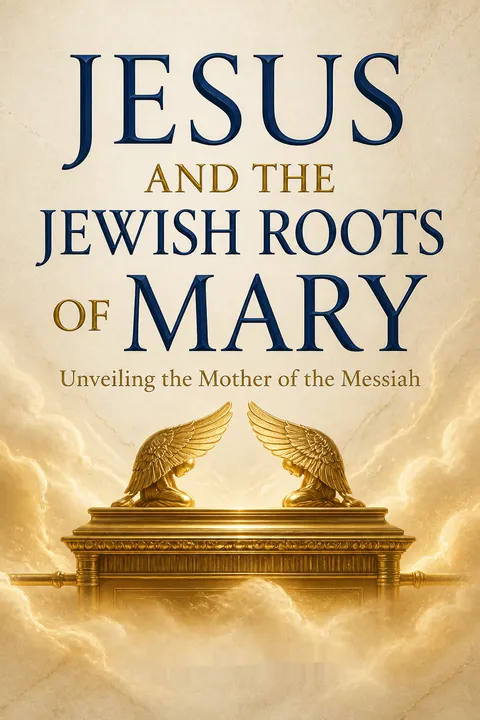

Key Takeaways
1. Understanding Mary Requires Ancient Jewish Eyes
The key to understanding what the Bible teaches about Mary can be found in what is called “typology”: the study of Old Testament prefigurations (or “types”) and their New Testament fulfillments.
A personal struggle. The author, Brant Pitre, recounts his journey from unquestioning Catholic belief in Mary to serious doubt, particularly after a Baptist pastor challenged him on the "Queen of Heaven" and other Marian doctrines as unbiblical. He found himself unable to defend beliefs like the Immaculate Conception, Assumption, or Perpetual Virginity using only the New Testament, which seemed to say little about Mary and even portray Jesus as dismissive of her. This crisis of faith led him to question the very foundations of his childhood beliefs.
The missing piece. Pitre's theological studies at Notre Dame revealed a crucial insight: Catholic beliefs about Mary are deeply rooted in ancient Christianity and flow directly from what early Christians believed about Jesus. Crucially, these beliefs were derived not just from the New Testament, but from interpreting the New Testament in light of the Old Testament through a method called typology. This approach, seeing Mary as a "new Eve" or "new Ark," transformed his understanding.
Jewish context is vital. Many modern interpretations of Mary, especially those critical of Catholic doctrines, often ignore the Old Testament and ancient Jewish traditions. However, just as Jesus can only be fully understood within his first-century Jewish context, so too must Mary be viewed through "ancient Jewish eyes." This book aims to unveil the Jewish roots of Marian doctrines, demonstrating that they are far from unbiblical or pagan, but rather deeply embedded in the rich tapestry of Jewish Scripture and tradition.
2. Mary as the New Eve: Conceived Without Sin
If Eve had this supernatural inward gift given her from the first moment of her personal existence, is it possible to deny that Mary too had this gift from the very first moment of her personal existence?
Eve's original state. The Jewish Bible describes Adam and Eve as created "very good" (Genesis 1:31), meaning they were morally good and without sin, possessing the gift of immortality. They fell together, bringing sin and death into the world, and Eve was prophesied to have offspring who would battle the serpent (Genesis 3:15). Ancient Jewish tradition identified this offspring as the Messiah and affirmed that the Fall affected all humanity.
Jesus, the New Adam. The New Testament consistently presents Jesus as the "last Adam" (1 Corinthians 15:45), whose obedience undoes the disobedience of the first Adam, restoring righteousness and bringing salvation. If Jesus is the new Adam, then Mary, his mother, is depicted as the new Eve, playing an essential role in this new creation.
Mary's immaculate conception. The New Testament subtly links Mary to Eve:
- John's Gospel calls Mary "Woman" at Cana and the crucifixion, echoing Eve's title before the Fall.
- Revelation 12 depicts a "woman clothed with the sun" giving birth to the Messiah, battling the serpent, a clear fulfillment of Genesis 3:15.
Ancient Christians widely recognized Mary as the "Second Eve," leading to the belief that, like the first Eve, she was created without sin—a gift of God's grace, known as the Immaculate Conception, which also preserved her from personal sin throughout her life.
3. Mary as the New Ark: God's Dwelling and Assumption
Mary, in whom the Lord himself has just made his dwelling, is…the ark of the covenant.
The Old Ark's significance. The Ark of the Covenant was the most sacred object in ancient Israel, the dwelling place of God's presence on earth. Made of incorruptible acacia wood and pure gold, it contained the Ten Commandments, manna, and Aaron's staff. The glory cloud of God's presence "overshadowed" the Tabernacle where it resided, leading Israel through the wilderness. The Ark was eventually lost, but Jewish tradition anticipated its return with the Messiah.
Mary, the New Ark. The New Testament draws striking parallels between Mary and the Ark:
- Annunciation: The Holy Spirit "overshadows" Mary (Luke 1:35), echoing the glory cloud overshadowing the Tabernacle (Exodus 40:35 LXX).
- Visitation: Mary "arose and went with haste into the hill country" (Luke 1:39), mirroring David "arose and went" to bring the Ark to Jerusalem (2 Samuel 6:2). Elizabeth's exclamation, "why is this granted me, that the mother of my Lord should come to me?" (Luke 1:43), parallels David's "How can the ark of the LORD come to me?" (2 Samuel 6:9). John the Baptist "leaped in her womb" (Luke 1:41), like David "leaped" before the Ark (2 Samuel 6:16). Mary stayed "about three months" (Luke 1:56), similar to the Ark staying in Obed-edom's house for "three months" (2 Samuel 6:11).
- Revelation: The "ark of his covenant appeared within his temple" immediately followed by the vision of "a woman clothed with the sun" (Revelation 11:19-12:1), implying a deep connection.
Assumption into heaven. If Mary is the new Ark, her body is the dwelling place of God on earth, making it fitting for her to be preserved from corruption and assumed body and soul into heaven. Just as the old Ark was made of incorruptible wood, Mary's body, which housed the Word made flesh, is fittingly preserved. This belief, rooted in ancient Christian tradition, sees Mary's Assumption as a sign of our own future resurrection and ascension into the heavenly Holy of Holies.
4. Mary as the Queen Mother: Royal Intercessor and Mother of God
If anyone does not admit that holy Mary is Mother of God (Theotokos), he is cut off from the Godhead.
The Davidic Queen Mother. In ancient Israel, the queen was not the king's wife, but his mother, known as the gebirah or "queen mother." She held a position of immense honor and authority, second only to the king, often wearing a crown and sitting on a royal throne beside him (1 Kings 2:19-20). Crucially, the queen mother served as a powerful intercessor with the king on behalf of the people (1 Kings 2:17-18).
Mary, the New Queen Mother. The New Testament portrays Jesus as the long-awaited Davidic king, the Messiah. Consequently, Mary is depicted as the new queen mother:
- Matthew's Genealogy: Mary is named in Jesus' royal genealogy (Matthew 1:16), a practice reserved for queen mothers in the Old Testament.
- Annunciation: Gabriel declares Jesus will receive "the throne of his father David" (Luke 1:32), making Mary the mother of the Davidic king.
- Visitation: Elizabeth greets Mary as "the mother of my Lord" (Luke 1:43), a royal title echoing the address to the Davidic king.
- Revelation: The "woman clothed with the sun" wears "a crown of twelve stars" (Revelation 12:1), symbolizing her queenship over the twelve tribes of Israel in the heavenly kingdom.
Mother of God and veneration. Mary's identity as the queen mother provides the biblical foundation for calling her "Mother of God" (Greek Theotokos), a title affirmed by the Council of Ephesus in A.D. 431 to safeguard Jesus' full divinity. This title means she is the mother of the divine Son who became man, not that she is divine herself. The practice of venerating Mary and asking for her intercession is likewise rooted in her role as the heavenly queen mother, distinct from the worship (sacrifice) reserved for God alone, as condemned by early Christians like Epiphanius against the Collyridians.
5. Mary's Perpetual Virginity: A Lifelong Consecration
Already before he was conceived he wished to choose for himself, in order to be born, a virgin who was consecrated to God, as is indicated by the words with which Mary responded to the angel, who was announcing her imminent motherhood: “How shall this be done, because I know not man?”
Mary's vow of virginity. Mary's puzzling question to Gabriel, "How shall this be, since I do not know man?" (Luke 1:34), despite being betrothed to Joseph, suggests she had taken a vow of lifelong virginity. In ancient Judaism, Numbers 30 outlines laws for women taking vows of abstinence, including married women, which would be binding if their husbands consented. Joseph, being a "righteous man" (Matthew 1:19), would have honored such a vow.
Joseph's abstinence. Matthew's Gospel states that Joseph "knew her not until she had borne a son" (Matthew 1:25). The Greek word "until" (heōs) does not imply a change afterward, as seen in other biblical examples (e.g., 2 Samuel 6:23 LXX, Michal had no child until her death). This emphasizes that Jesus' conception was virginal and that Joseph respected Mary's consecrated state, likely due to her vow and the miraculous nature of her pregnancy.
The "brothers" of Jesus. The New Testament mentions Jesus' "brothers" and "sisters" (Mark 6:3), which is often cited against Mary's perpetual virginity. However, a closer look reveals:
- Another Mary: Mark 15:40 identifies "Mary the mother of James the younger and of Joses" at the crucifixion, distinct from Jesus' mother. Matthew 27:56 calls her "Mary the mother of James and Joseph," and "the other Mary" (Matthew 27:61).
- "Brothers" as relatives: In ancient Jewish contexts, the Greek word for "brothers" (adelphoi) could refer to close relatives or cousins (e.g., Genesis 31:37 LXX, Josephus). Jesus himself refers to his "brothers" and "sisters" as "cousins" (syngeneusin) in Mark 6:4.
- Historical evidence: The second-century historian Hegesippus states that James and Simon, two of Jesus' "brothers," were actually his "cousins" (anepsion), sons of Clopas, Joseph's brother.
- Jesus' last will: Jesus entrusted Mary to the Beloved Disciple (John 19:26-27), an act that would be unnecessary if she had other biological children to care for her.
Why it matters. Mary's perpetual virginity underscores the truth of Jesus' unique divine sonship and points to the new creation, where the life of virginity foreshadows the celibate existence in the resurrection. It also symbolizes the Church as both the virgin bride of Christ and the fruitful mother of Christians.
6. The Miraculous Birth of Jesus: Painless at Bethlehem, Anguish at Calvary
Just as she who introduced death into nature by sin was condemned to bear children in suffering and travail (Gen 3:16), it was necessary that the Mother of life, after having conceived in joy, should give birth in joy as well.
Conflicting prophecies. Ancient Jewish Scripture presents two seemingly contradictory prophecies about the Messiah's mother:
- Painless Birth: Isaiah 66:7-8 speaks of a woman giving birth to a son "before her pain came upon her," an unprecedented act of new creation, interpreted in Jewish tradition as the painless birth of the Messiah. This undoes the curse of pain in childbirth from Eve's sin (Genesis 3:16).
- Birth Pangs: Micah 5:2-3 prophesies the Messiah's birth from Bethlehem, preceded by a time when "she who is in labor has brought forth." Jewish tradition understood this as the "birth pangs of the Messiah" (heblo shel mashiah), a period of intense suffering before the age of salvation.
Mary's birth pangs at Calvary. The New Testament reconciles these prophecies by depicting Mary's physical birth of Jesus at Bethlehem as miraculous and painless, fulfilling Isaiah. However, her "birth pangs" are experienced spiritually at Calvary:
- Revelation 12: The "woman clothed with the sun" cries out "in her pangs of birth, in anguish for delivery" (Revelation 12:2). The Greek word for "anguish" (basanizō) typically means "torment" or "torture," not ordinary labor pains. This vision is an apocalyptic depiction of Jesus' death, resurrection, and ascension, and Mary's suffering at the cross.
- John's Gospel: Jesus compares his crucifixion to the "hour" of a "woman" in childbirth, who has "sorrow" that turns to "joy" (John 16:20-22). At the cross, Jesus addresses Mary as "Woman" (John 19:26), making his "hour" of suffering her "hour" of maternal anguish.
Womb and tomb. Ancient Christians, like Ephrem the Syrian, believed that Mary's miraculous, painless birth of Jesus from her sealed womb prefigured Jesus' miraculous exit from the sealed tomb at his resurrection. This paradox highlights Jesus' divinity and the beginning of the new creation, where the effects of sin are undone. Mary, spared the pain of childbirth, instead endured the "sword" piercing her soul (Luke 2:35) at the cross, becoming the "Mother of Sorrows" (Mater Dolorosa).
7. Mary as the New Rachel: Mother of Sorrows and the Church
Rachel is weeping for her children; she refuses to be comforted for her children, because they are not.
Rachel, the sorrowful mother. Rachel, Jacob's beloved wife, was the mother of Joseph and Benjamin. She suffered greatly, including barrenness and dying in childbirth near Bethlehem while giving birth to Benjamin (Genesis 35:16-20). Jeremiah 31:15-17 depicts Rachel weeping from her tomb for her exiled children, acting as a powerful intercessor whose prayers move God to restore Israel. Jewish tradition regarded Rachel as the most effective intercessor for her people.
Mary, the New Rachel. The New Testament draws profound connections between Mary and Rachel:
- Massacre of the Infants: Matthew 2:16-18 explicitly quotes Jeremiah 31:15, linking Herod's slaughter of infants in Bethlehem to Rachel weeping for her children. Mary, as the suffering mother of the persecuted child, is portrayed as a new Rachel, grieving for her son and all the massacred children.
- Revelation 12: The "woman clothed with the sun, with the moon under her feet, and on her head a crown of twelve stars" (Revelation 12:1) alludes to Joseph's dream (Genesis 37:9-11), where the moon symbolizes Rachel. This vision depicts Mary as the heavenly mother exalted above all Israel, including its matriarchs.
- Mother of all offspring: Revelation 12:17 states the dragon makes war on "the rest of her offspring, on those who keep the commandments of God and bear testimony to Jesus." Just as Rachel was the mother of all Israel, Mary becomes the spiritual mother of all God's persecuted children in the New Covenant.
Maternal intercessor. If Mary is the new Rachel, her suffering at the cross makes her the "Mother of Sorrows" (Mater Dolorosa), uniquely able to identify with all who suffer. Her spiritual motherhood, established through Christ's passion, extends to all disciples. Like Rachel, who interceded powerfully for Israel even after death, Mary, now alive in heaven, continues to intercede for her spiritual children on earth, especially in times of trouble and danger.
8. Jesus' Last Words: "Behold, Your Mother" – An Invitation to All
The firstfruits of the Gospels is that according to John, whose meaning no one can understand who has not leaned on Jesus’ breast nor received Mary from Jesus to be his mother also.
A dying testament. Jesus' last words from the cross, "Woman, behold, your son!" and "Behold, your mother!" (John 19:26-27), are not merely a casual request but a formal last will and testament. In the ancient world, a man condemned to death could legally bequeath his possessions. With no material goods left, Jesus' final earthly "possession" was his mother, whom he entrusted to the Beloved Disciple.
Act of adoption. This exchange constitutes a formal act of adoption: Mary becomes John's adoptive mother, and John becomes her adoptive son. The Beloved Disciple's immediate response, taking Mary "to his own" (eis ta idia), signifies that he welcomed her into his family and treated her as his own mother. This act highlights the profound importance Jesus placed on Mary's care in his final moments.
An invitation to all disciples. In John's "spiritual Gospel," the Beloved Disciple is an ideal figure, symbolizing every true disciple. Therefore, Jesus' words from the cross are an invitation to all his followers: "Behold, your mother." This spiritual motherhood of Mary is not biological but is forged through the suffering of Christ's "hour" on the cross, making her the mother of all who are "born...of God" (John 1:12-13).
Beholding Mary, knowing Jesus. To "behold" Mary and take her as one's own mother, as Jesus commanded, is to deepen one's understanding of Jesus himself.
- New Eve: She reveals Jesus as the New Adam, triumphing over sin and death.
- New Ark: She reveals Jesus as the Bread of Life, the New Moses leading to the heavenly promised land.
- Queen Mother: Her queenship and virginal motherhood reveal Jesus as Immanuel, "God with us."
- Mother of Sorrows: She reveals Jesus brings salvation through suffering, the "birth pangs" of resurrection.
- New Rachel: She reveals Jesus' love for us, giving us a maternal intercessor who understands our suffering.
Mary, alive in the heavenly kingdom, is already beholding, praying for, and loving us, waiting for us to respond to Jesus' dying wish and embrace her as our own mother.
Review Summary
Jesus and the Jewish Roots of Mary receives overwhelmingly positive reviews (4.55/5) for its scholarly yet accessible explanation of Catholic Marian doctrines through Old Testament typology and Jewish tradition. Readers appreciate Pitre's use of Scripture, ancient Jewish texts, and Church Fathers to demonstrate biblical foundations for beliefs like Mary's perpetual virginity, Immaculate Conception, and role as Queen Mother. While Catholic readers find it enlightening and faith-deepening, some Protestant reviewers remain unconvinced by the typological arguments, viewing the theological leaps as unsupported despite finding the Jewish context informative and well-presented.
People Also Read
About the Author
Other books by Brant Pitre
Download PDF
Download EPUB
.epub digital book format is ideal for reading ebooks on phones, tablets, and e-readers.








































