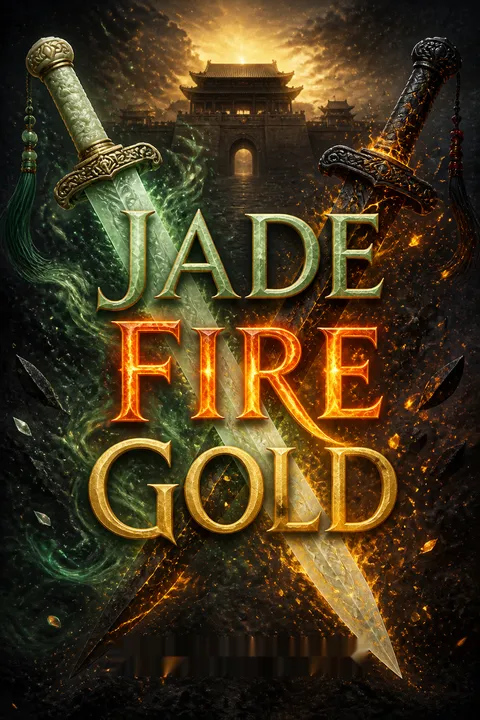

Plot Summary
Orphan and Outcast
Ahn, a poor orphan girl in the desert village of Shahmo, lives with her adoptive grandmother, Ama. She is marked by poverty, a mysterious jade ring, and a secret: she possesses forbidden magic. The Empire, ruled by the Shi dynasty, persecutes those with magic, blaming them for the spreading desert and famine. Ahn's life is a daily battle for food, medicine for her ailing Ama, and safety from the Diyeh priests who hunt magic users. Her only friend, Li Guo, shares her longing for escape, but Ahn's loyalty to Ama keeps her rooted. The world is harsh, and Ahn's magic—ice and something darker—must remain hidden, even as it stirs within her, threatening to change everything.
Prince in Exile
Altan, once a prince of the Shi Empire, is haunted by the massacre of his family and the loss of his twin sister, Sarangerel. Fleeing into the desert after his father's murder and his mother's suicide, Altan is saved by nomads and later raised by Master Sun, a Tiensai cultivator. Scarred inside and out, Altan grows up in exile, consumed by guilt and a burning desire for revenge against his uncle, Emperor Gao Long, and the Diyeh priests. He is trained in magic and martial arts, forging alliances with rebels and assassins. Altan's quest is not just for justice, but to reclaim his birthright and restore balance to a land poisoned by his ancestors' dark magic.
Fateful Bazaar Encounter
At the bustling Shahmo bazaar, Ahn and Altan cross paths in a charged encounter—Ahn, desperate to sell her heirloom ring for medicine, and Altan, searching for clues to the Life Stealer, a legendary magic user. Their brief interaction is electric, marked by mutual suspicion and curiosity. Ahn's theft and Altan's intervention set off a chain of events: Ahn's magic is exposed when she kills two attackers, drawing the attention of the Diyeh priests. Altan, meanwhile, senses a connection to Ahn and the prophecy of the Life Stealer. Their meeting is the spark that entwines their fates, setting them on a path toward the Empire's heart.
Magic Unleashed, Fates Entwined
Ahn's accidental use of her life-stealing magic—an ancient, forbidden power—marks her as the prophesied Life Stealer. The priests capture her, intending to use or destroy her. Altan, learning of the Life Stealer's reemergence, sees her as both a threat and a key to saving the land. In the palace, political intrigue swirls: Premier Zhao Yang, Altan's father's betrayer, seeks to control Ahn's power for his own ends. Ahn is torn between fear of her magic and the hope that it might heal the world. Altan, driven by vengeance and duty, resolves to find and use the Life Stealer—Ahn—before the priests or the palace can.
Captured by Priests
Ahn is taken by the Diyeh priests, enduring a harrowing journey east. She is treated as both a weapon and a monster, her fate uncertain. Along the way, she meets Leiye, a priest with ambiguous loyalties, who hints at her greater destiny and the legend of the twin swords—one of light, one of darkness. Ahn's dreams are haunted by visions of her past and the sword's call. Meanwhile, Altan and his allies, including Tang Wei and Linxi, maneuver through the Empire's shadows, seeking the Life Stealer and the means to overthrow the corrupt regime. Both Ahn and Altan are tested by betrayal, loss, and the growing weight of their interwoven destinies.
Schemes in the Palace
Ahn is brought to the Imperial Palace, where she is unexpectedly reunited with her long-lost father, Premier Zhao Yang. The revelation of her true identity shakes her sense of self. The palace is a nest of spies and schemes: Empress Zhenxi, the priests, and the premier all vie for power, each seeking to use Ahn's magic. Altan, under an assumed identity, infiltrates the capital, forging alliances and plotting rebellion. The two protagonists circle each other, their trust tested by secrets and half-truths. Ahn is trained to control her magic, while Altan seeks the legendary sword that could save or doom the Empire.
The Sword's Shadow
Ahn and Altan, now uneasy allies, embark on a perilous journey to find the White Jade Sword, believed to be the key to healing the land and ending the priests' tyranny. Their path takes them through deserts, mountains, and haunted waters, pursued by enemies and haunted by their own pasts. Along the way, they confront the truth about the sword: it is not merely a weapon, but a vessel for the Life Stealer's power, shaped by the wielder's heart. The journey tests their resolve, their loyalties, and the possibility of love between them. The sword's shadow looms, promising salvation or destruction.
Secrets and Betrayals
As Ahn and Altan draw closer to the sword, secrets unravel. Altan's true identity as the lost prince is revealed, shattering Ahn's trust. Leiye's double-dealings and Empress Zhenxi's machinations come to light. The lines between friend and foe blur as each character's motives are exposed. Ahn grapples with the darkness within her, fearing she will repeat the sins of the past. Altan is forced to confront the legacy of his bloodline and the cost of vengeance. Betrayal cuts deep, but necessity forges new bonds as the threat of war and the priests' army grows ever nearer.
Journey Through Sand and Storm
Ahn, Altan, and their companions endure grueling trials—bandit attacks, magical storms, and the relentless pursuit of the priests. The journey is as much internal as external: Ahn struggles to master her life-stealing magic without losing herself, while Altan battles guilt, grief, and the fear of becoming a monster like his ancestors. Their relationship deepens through hardship, but is strained by secrets and the looming threat of sacrifice. The land itself seems cursed, the desert encroaching, the people suffering. The journey is a crucible, forging heroes or breaking them.
The Life Stealer's Power
At the heart of the Dragon's Triangle, Ahn retrieves the legendary sword—only to discover it is the Obsidian Sword, not the fabled White Jade. The sword amplifies her life-stealing power, and she is confronted by the Soul Beast, who warns of the sword's corrupting influence. Ahn's nightmares intensify, haunted by the souls she has taken. The sword's call is seductive, promising the power to save or destroy. Altan, immune to her magic, becomes both her anchor and her greatest threat. The true test is not of strength, but of will: can Ahn wield her power without succumbing to darkness?
The Army of the Undead
Premier Zhao Yang, revealed as the head of the Diyeh, seizes the sword and Ahn, intent on raising an army of the undead to conquer the Empire's enemies. Ama is taken hostage, and Leiye is tortured. The palace becomes a battlefield as the Lotus Sect and Altan's allies launch a desperate rescue. Ahn is forced to choose: use her power to save her loved ones and doom thousands, or defy her father and risk everything. The cost of magic, legacy, and love comes due as the army of the undead rises, and the fate of the Empire hangs in the balance.
Sacrifice and Salvation
In a final confrontation atop the palace walls, Ahn refuses to be her father's weapon. With Altan's help, she seizes the sword and, realizing the only way to break the curse is through self-sacrifice, turns the blade on herself. Her death transforms the Obsidian Sword into the White Jade Sword, releasing the trapped souls and healing the land. Altan, devastated, is left to mourn—but the Phoenix grants Ahn a wish in the realm between life and death. She chooses the safety of those she loves, and is returned to life. The cycle of vengeance is broken by compassion and selflessness.
A New Dawn
With the priests defeated and the curse lifted, Altan ascends the throne, vowing to rule with justice and humility. The Empire begins to heal, the desert recedes, and old wounds start to close. Ahn, scarred but alive, chooses her own path, seeking answers about her mother and her place in the world. Their love, tested by betrayal and sacrifice, endures. The story ends not with triumph, but with the promise of renewal—a new dawn for a land and its people, born from the ashes of suffering and the courage to choose hope over despair.
Analysis
Jade Fire Gold is a sweeping fantasy that interrogates the nature of power, legacy, and the possibility of redemption in a world scarred by violence and oppression. At its core, the novel is a meditation on cycles—of trauma, vengeance, and hope. Through the dual journeys of Ahn and Altan, June C.L. Tan explores how individuals shaped by loss and fear can choose to break free from the destinies imposed upon them. The story subverts traditional fantasy tropes: the "chosen one" is not a savior by birthright, but by the courage to choose compassion over destruction; the legendary sword is not a panacea, but a mirror of the wielder's soul. The novel's nuanced portrayal of trauma, found family, and the cost of forgiveness resonates with contemporary readers, offering a powerful message: true change is not wrought by violence or magic alone, but by the willingness to confront one's own darkness and to choose, again and again, the difficult path of hope. In a world where history is written by the victors and power is too often abused, Jade Fire Gold insists that agency, empathy, and sacrifice are the keys to a better future.
Review Summary
Jade Fire Gold received mixed reviews, with ratings ranging from 1 to 5 stars. Positive aspects included the Chinese-inspired worldbuilding, engaging characters, and lyrical writing. Critics praised the exploration of themes like family, identity, and the weight of history. However, some readers found the plot predictable, the pacing uneven, and the romance underdeveloped. The book's ending was divisive, with some feeling unsatisfied and others eagerly anticipating a potential sequel. Overall, it was considered a promising debut with room for improvement.
People Also Read




Characters
Ahn
Ahn is a sixteen-year-old orphan, raised in poverty by her adoptive grandmother, Ama, in the desert village of Shahmo. Marked by a mysterious jade ring and a faint scar, she is fiercely loyal, resourceful, and burdened by a secret: she possesses forbidden magic, including the rare and feared life-stealing affinity. Ahn's psyche is shaped by abandonment, trauma, and the constant threat of persecution. She craves belonging but fears her own power, haunted by the possibility of becoming a monster. Her journey is one of self-acceptance, as she learns that her greatest curse may also be her greatest gift. Through love, loss, and sacrifice, Ahn chooses compassion over vengeance, breaking the cycle of violence that has defined her world.
Altan (Jin)
Altan, also known as Jin, is the last surviving heir of the Shi royal line, scarred by the murder of his family and the loss of his twin sister. Raised in exile by Master Sun, he is a skilled warrior and Tiensai, trained in multiple elements but haunted by guilt and rage. Altan's relationships are complex: he is both protector and potential destroyer to Ahn, friend and rival to Leiye and Tai Shun, and a reluctant leader to rebels and outcasts. His psychological arc is defined by the struggle between duty and desire, vengeance and mercy. Ultimately, Altan's willingness to forgive and to love—especially Ahn—redeems him, allowing him to break free from the shadow of his ancestors.
Premier Zhao Yang
Zhao Yang is both the Empire's premier and the secret head of the Diyeh priesthood. Charismatic, brilliant, and ruthless, he is driven by a vision of saving the Empire at any cost—even if it means sacrificing his own daughter. His relationship with Ahn is fraught: he is both her long-lost father and her greatest threat, seeing her as a tool rather than a child. Zhao Yang's psyche is shaped by loss, ambition, and a warped sense of duty. His inability to choose love over power leads to his downfall, making him a tragic figure whose legacy is both destruction and the possibility of redemption through his daughter's choices.
Empress Zhenxi
Zhenxi is the cunning empress dowager, mother to Tai Shun, and a master of palace intrigue. She is both a victim and perpetrator of the Empire's cycles of violence, having orchestrated assassinations and power plays to secure her son's future. Zhenxi's psychoanalysis reveals a woman hardened by necessity, capable of both genuine love and ruthless calculation. Her relationship with Ahn is transactional, seeing her as a means to an end. Zhenxi's ultimate recognition of her own limits and her son's autonomy marks a subtle but significant shift, hinting at the possibility of change even in the most entrenched systems.
Leiye
Leiye is a young Diyeh priest with a hidden agenda, torn between loyalty to the priesthood, his own sense of justice, and his love for Tai Shun and Altan. He is a master of deception, playing multiple sides in the struggle for the Empire's soul. Leiye's psychological complexity lies in his capacity for empathy and his willingness to risk everything for those he cares about. His journey is one of atonement, as he seeks to undo the harm caused by the priests and to protect Ahn and Altan, even at great personal cost.
Tang Wei
Tang Wei is a member of the Lotus Sect, a secret society of female assassins, and Altan's childhood friend. She is bold, witty, and deadly, driven by the trauma of losing her sister to the priests. Tang Wei's relationships are marked by loyalty and a refusal to be a victim. Her romance with Linxi and her protective bond with Ahn and Altan reveal a softer side beneath her hardened exterior. Tang Wei's arc is one of healing, as she learns to trust and to fight for a future beyond vengeance.
Linxi
Linxi is a palace lady-in-waiting, secretly working for the rebels. She is clever, resourceful, and deeply loyal to Tang Wei and Ahn. Linxi's background—marked by the loss of her Tiensai mother and her father's fall from grace—gives her a personal stake in the fight against the priests. Her role as a spy places her in constant danger, but her courage and quick thinking are instrumental in the heroes' survival. Linxi's arc is one of self-assertion, as she claims her agency in a world that seeks to silence her.
Ama (Grandma Jia)
Ama is Ahn's adoptive grandmother, a midwife who saves Ahn as a child and raises her with unconditional love. She is wise, compassionate, and unafraid to challenge the Empire's lies about magic. Ama's presence grounds Ahn, offering her a sense of family and belonging. Her abduction and endangerment become the catalyst for Ahn's final choices. Ama's unwavering belief in Ahn's goodness is a beacon of hope, reminding all characters of the possibility of forgiveness and change.
Tai Shun
Tai Shun is the crown prince, son of Zhenxi, and Altan's cousin. Sensitive, artistic, and more interested in healing than ruling, Tai Shun is ill-suited to the brutal politics of the court. His relationship with Leiye is marked by unspoken love and longing. Tai Shun's arc is one of self-acceptance, as he learns to assert his own will and to support Altan's claim to the throne. His forgiveness and humility are a quiet but powerful counterpoint to the violence around him.
Master Sun Tie Mu
Master Sun is Altan's adoptive father and mentor, a Tiensai cultivator who teaches him magic and compassion. He is a stabilizing force, advocating for balance and forgiveness. Master Sun's death is a pivotal moment, forcing Altan to confront the cost of vengeance and the necessity of hope. His teachings echo throughout the story, shaping the choices of both Ahn and Altan.
Plot Devices
Dual Protagonists and Interwoven Narratives
The novel employs a dual narrative structure, alternating between Ahn and Altan's perspectives. This device allows readers to experience the world through two lenses: the orphaned outcast and the exiled prince. Their stories mirror and contrast each other, exploring themes of loss, identity, and the burden of legacy. The gradual convergence of their paths, both literal and emotional, heightens tension and deepens the impact of their choices. The use of dreams, visions, and flashbacks provides insight into their psyches and foreshadows key revelations.
The Sword as Symbol and Catalyst
The legendary sword—first believed to be the White Jade Sword, later revealed as the Obsidian Sword—serves as both MacGuffin and metaphor. It is the object everyone seeks, the key to healing or destroying the land. The sword's true nature is shaped by the wielder's heart, reflecting the central question: will power be used for domination or salvation? The sword's transformation through sacrifice subverts expectations and underscores the theme that true change comes from within, not from external artifacts.
Life-Stealing Magic and the Cycle of Violence
Ahn's life-stealing affinity is the most feared and misunderstood magic in the Empire, blamed for the land's blight. The narrative uses her power to explore the cycle of violence: how fear breeds persecution, and how trauma is inherited across generations. The magic is both a literal and symbolic inheritance, forcing Ahn to confront the darkness within herself and her world. The breaking of the cycle—through self-sacrifice and compassion—serves as the story's emotional and thematic climax.
Betrayal, Identity, and the Masks We Wear
The plot is driven by secrets: hidden identities, double agents, and the true nature of power. Characters are constantly forced to question whom they can trust, and even their own motives. The motif of masks—literal (Zhao Yang's silver mask) and figurative—recurs throughout, highlighting the tension between appearance and reality. The gradual unmasking of each character's true self is both a source of conflict and the path to healing.
Sacrifice and the Power of Choice
The narrative structure builds toward a series of impossible choices: save one life or many, seek vengeance or forgiveness, wield power or relinquish it. The story subverts the "chosen one" trope by making the ultimate act of heroism not a feat of strength, but an act of self-sacrifice. The use of foreshadowing—prophecies, visions, and the warnings of the Soul Beasts—prepares the reader for the final twist: that the curse can only be broken by choosing love over power.
Download PDF
Download EPUB
.epub digital book format is ideal for reading ebooks on phones, tablets, and e-readers.








































