
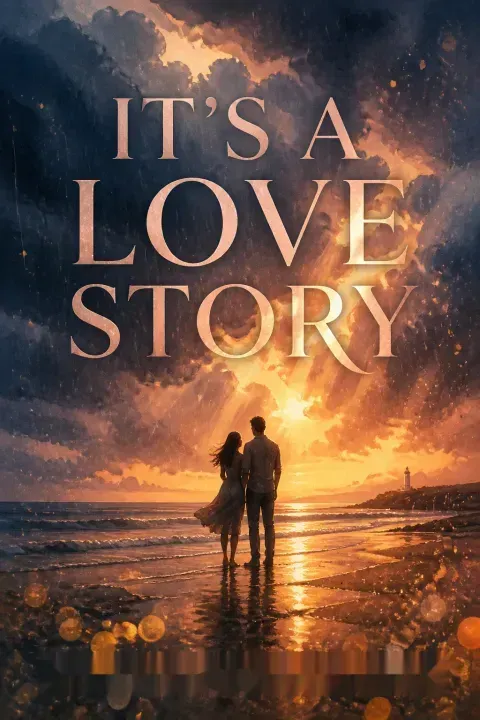


Plot Summary
The Red Dress Lie
Jane Jackson1 arrives at Clearwater Studios wearing a red silk dress she had reserved for a fourth date that never materialized. Her boss Nathan10 deems her beloved script True Story insufficiently commercial.
Desperate, and rattled by the presence of cinematographer Dan Finnegan,2 whose disdain once killed another of her projects, Jane1 blurts out that she knows world-famous pop star Jack Quinlan4 personally and can enlist him to write a soundtrack song. Nathan's10 interest rekindles.
But Jane1 has not spoken to Jack4 since she was fourteen, when she confessed her love and he called her weird and gross. The lie buys her a window, but she has no idea how to turn it into reality. She walks out reeling, the red dress now a costume of false confidence.
Jane's lie emerges from a lifelong terror that she, like the story she champions, lacks inherent appeal. Her red dress is armor, a fourth-date energy transferred to her career, exposing how she conflates professional and romantic validation. Dan's presence re-introduces the antagonist who will become her mirror, challenging her performative identity. The lie sets a clock ticking, forcing Jane toward the shame she has buried since adolescence.
The Enemy Road Trip
From inside her closet, the only place she feels safe, Jane1 phones Dan2 and confesses her falsehood and panic. Dan,2 who loves the script as fiercely as she does, reveals that his brother Finn works at the Oak Shore music festival where Jack4 is performing. There are no hotels, so he offers his family's home. Jane1 buys two plane tickets, despite their mutual animosity.
On the flight, they sit apart; Dan2 watches a black-and-white film, Jane1 spirals. She texts her roommate Clem3 that Dan2 is hot and not the worst, a tiny betrayal of her own walls. By the time they land in New York, Jane1 has no idea she is stepping into the week that will dismantle everything she believes about love and herself.
The reluctant alliance transforms Jane's professional crisis into an intimate journey. Dan, whom she has cast as the villain, becomes her only ally. His willingness to help despite their history hints at a generosity she cannot yet trust. The closet—her literal safe space—underscores how much of her life is spent hiding. The text to Clem is the first hairline fracture in her persona, a private admission that the man she despises is already under her skin.
Five Brothers, One Bedroom
The Finnegan home is a modest shingled house on a potato field, not the estate Jane1 imagined. Dan's2 parents, Reenie5 and Cormack,6 pull her into an immediate embrace. Four brothers, including identical twin Aidan,9 and a swarm of grandchildren engulf her. At dinner, Connor recognizes her as Janey Jakes1 from Pop Rocks, and the whole family begins to sing the show's theme.
Dan2 is stunned to realize who she actually is. Because the house overflows with relatives, Jane1 and Dan2 are assigned a tiny room with bunk beds. Cormack6 scribbles his phone number on a scrap labeled 'Dad' and hands it to her — a gesture that lodges in her chest and will not leave.
The Finnegan clan functions as a full-immersion antidote to Jane's isolated, performance-driven existence. Their chaos, warmth, and refusal to treat her fame as extraordinary begin to dissolve her Hollywood armour. The 'Dad' note pierces her deepest wound: the absence of a father who wanted her. Sharing a room with Dan forces a physical proximity that mirrors the emotional unveiling she has long avoided.
The Tug-of-War Win
Dan2 takes Jane1 to the beach, where they help a boy dig a massive pit, then join a tug-of-war against a pack of small children. When they win and collapse laughing into the sand, Jane1 realizes she never played like this as a kid. On their towels afterward, she tells Dan2 her father died when she was five. Dan's2 quiet empathy feels like an invitation.
Later, at an outdoor art museum, they sit together and paint a watercolor. His forearm rests on her thigh as he adds trees and flowers to her leaky blue pond. She confesses she is not sure who she is under all her costumes. Dan2 says he hopes she figures it out, and that he thinks she needs True Story more than anyone.
The beach day functions as a corrective childhood, gifting Jane the unstructured play she missed while performing on camera. The watercolor becomes their first collaborative act—messy, imperfect, and more beautiful for its blend of individual strokes. Dan's response to her self-doubt is not to dismiss it but to reflect it back with hope, a radical departure from the dismissals she has internalized.
Lobster, Beer, and a First Kiss
At a beachfront lobster boil with Dan's2 high school friends, his ex-girlfriend Brooke appears, effortlessly pretty and clearly still interested. Wine-loosened and annoyed, Jane1 leans into Dan2 and kisses him, telling herself it is only to unnerve Brooke. But the kiss explodes: his hands in her hair, colors behind her eyelids, a current that rearranges her.
When they separate, both breathing jaggedly, he looks at her as if she is a revelation. Later, they sit apart from the crowd, and Dan2 reveals he had planned to take her to a seaside restaurant on the date they never had. Jane1 admits she had selected a special blouse. Their almost-romance suddenly feels inevitable.
This kiss marks Jane's point of no return. A performance meant to manipulate becomes the moment her body betrays her careful control. The presence of Brooke—a woman who sees Dan merely as one interchangeable Finnegan brother—triggers Jane's protectiveness and stake in his individuality. His confession about their planned date reframes his earlier harshness as wounded anticipation rather than casual cruelty.
Lightning and Fogged Windows
Jane's1 attempt to corner Jack4 at the beach fails humiliatingly when she throws a soda at his car. Caught in a thunderstorm, she shelters at a park until Dan2 finds her. In his mother's5 wagon, rain hammering the roof, her white sundress has gone transparent. He watches, breath ragged, as she dries her legs.
When he touches her shoulder strap, she whispers yes before he can ask. They kiss with a desperation that fogs every window. He tells her that her smile does something to his chest, that he just wants her to be happy. Afterward, he pulls his gray hoodie over her head, gently covering her exposed skin, and they buy berries for his mother5 like a family.
The thunderstorm scene strips Jane physically and emotionally. Her see-through dress literalizes the vulnerability she has resisted; Dan's response is not predatory but reverent. His comment about her smile shifts the axis of affection from how she performs to how she feels—a radical proposition for someone who has always been valued for her act.
Let It Go in a Crowded Pub
At the Finnegans' fortieth anniversary party, Dan's2 young niece Ruby7 freezes before her dance. Jane1 grabs the microphone, sings 'Let It Go,' and dances with her until Ruby7 finds her voice to wild applause. That night, Jane1 and Dan2 make love for the first time, an experience so tender it unmakes her.
Afterward, she tells him the truth she has guarded: her father did not die when she was five; he walked out because fatherhood was brutal. She found his letter the same day Jack Quinlan4 rejected her, and has believed ever since that she is fundamentally unworthy of being loved. Dan2 wipes her tears, lists specific things he adores about her, and says she is exceptionally lovable.
The party sequence crystallizes the Finnegan model of love as shared, imperfect, and generative. Jane's spontaneous act of mentorship with Ruby mirrors the bravery she cannot grant herself. Confessing her father's abandonment—the narrative underwriting her entire personality—to the man she loves is the novel's emotional climax. Dan's response counters the wound directly, offering a new story she can carry.
You Are Not Compelling
At the festival, Jane1 finally gets into Jack's4 limousine. He laughs about her teenage love confession and dismisses her desperation. His manager Lyle adds that Hailey Soul was chosen because she was compelling, whereas Jane1 was not. The word hits like a diagnosis. Jane1 walks out numb.
Dan2 tries to hold her, but she turns on him, calling their week a fling and sneering that she does not believe in love. She accuses him of forcing her into this whole mess. By morning she has rebooked an early flight, said terse goodbyes to his parents, and left without seeing him. Dan2 blocks her number.
Jack's cruelty replicates the original trauma: the man whose validation she craved confirms she is forgettable. Her attack on Dan enacts the classic defense mechanism of the abandoned becoming the abandoner. By preemptively destroying the relationship, she seizes control over the rejection she is certain would come anyway. The blocked number crystallizes the finality she engineered.
Blocked and Broken in LA
Jane1 tells Nathan10 the truth: there is no song, no movie. The project dies. She spends days under her desk, eating candy and rereading True Story. She watches Dan's2 indie film Grapevine and weeps at its quiet, true beauty, recognizing the love she shredded. She texts him that she loved it, but the message fails: he has blocked her.
Her roommate Clem3 confronts her. Clem3 says Jane1 holds onto shame like a pet, letting it dictate her life, and insists Jane1 must finally talk to her mother8 about her father. Jane1 lies in bed, watching her ceiling fan fling dust, feeling like the debris of things that were never meant to last.
The aftermath strips Jane of every external validation: job, script, and love. Watching Grapevine forces her to see Dan as the artist of emotional truth she once mocked. The undeliverable text is the concrete consequence of her self-sabotage. Clem's tough love names the pattern Jane has repeated for decades, giving her the final push toward the confrontation she has avoided since age fourteen.
Under the Movie Theater Marquee
On their sacred Friday movie night, Jane1 and her mom8 sit through a loud superhero film. In the dark, she whispers that she wishes she could go back and redo everything. Afterward, on the sidewalk under the marquee, the dam breaks. Jane1 reveals she has known since she was fourteen that her father abandoned them; she found his letter.
Her mother8 admits it is true, that he was young and selfish, but that it was never Jane's1 fault. Sobbing, Jane1 explains how the lie made her feel inherently unwanted, how she has spent her life auditioning for love. They hold each other, agreeing to stop pretending. For the first time, the weight of his departure lifts from her own shoulders.
This scene is the narrative's psychological climax, independent of the romance. Jane names the story she has been living inside, transferring its corrosive power into the open air. Her mother's admission releases them both from the shared fiction. By tracing her dating protocols and career desperation back to this wound, Jane can begin to separate her father's failure from her own worthiness.
Don't Give Up Billboard
Straight from her mother's8 arms, Jane1 drives to Dan's2 West Hollywood apartment and climbs the DON'T GIVE UP billboard, the same one where they first met over a hawk. Passersby gawk until Dan2 texts her. Inside his apartment, she delivers an unscripted, tear-stained apology.
She explains she panicked because she felt too small for him, that being with him was the most beautiful thing she has ever known. She recites the things she loves about him, including the way he follows his heart. Initially guarded, Dan2 weakens when she tells him that only he makes her smile like that. He pulls her into his arms, says he has been crying all week, and tells her he loves her.
The billboard stunt is Jane's final renunciation of her costume-driven identity. She puts her ridiculous, raw love on public display, risking the humiliation she once feared above all else. Her apology is not polished but chaotic and truthful, echoing the watercolor they painted. Dan's forgiveness hinges on her finally showing up as her full, broken self. The mutual declaration of love rewards authenticity over performance.
Epilogue
Eighteen months later, Jane1 is the producer of True Story, a low-budget indie film with Dan2 as cinematographer. They bicker on set and hold hands driving home. Her old NDA expired, so the world now knows she secretly sang the hit Pop Rocks songs. Royalties are paying her bills, and 'Can't Find My You' is climbing the charts again.
Her mom8 now shares honest Friday nights, and Clem3 has a new boyfriend. On the final shoot day at the Santa Monica Pier, Dan2 walks toward her, says 'Perfect,' and kisses her. Jane1 reflects that she used to laugh in her sleep; now she sleeps soundly, because her funny dreams play out in the open where people can see them.
The epilogue rewards the reader with full-circle closure. True Story, the script that inaugurated Jane's journey, becomes the artifact of her transformation. The public revelation of her singing voice symbolizes the integration of her hidden self; she no longer needs to stay in the background. The final image of her sleeping silently—no longer laughing unconscious dreams—suggests that the restless need for external validation has been replaced by internal peace. Her life has become the authentic story she once only read about.
Analysis
It's a Love Story operates as a dual narrative: a surface romantic comedy and a deeper excavation of how childhood shame shapes adult identity. Jane's1 arc is not primarily about finding a partner but about dismantling the story she has told herself since age fourteen — that she is too fundamentally insufficient to be kept. Her father's abandonment, Jack Quinlan's4 casual cruelty, and an entertainment industry that insisted she stay in the background converge into a core wound she masks with costumes, scripts, and a dating protocol designed to eliminate risk.
The Finnegan family functions as the antidote. Their chaotic, unvarnished love models a belonging that does not require performance. Dan's2 particular brand of authenticity — his refusal to blend in, his comfort with quiet, his habit of following his heart — directly challenges Jane's1 survival strategies. He loves her not for her polished persona but for her balled fists, her sleep-laughing, her messy watercolors.
The novel's clever structural move is making True Story, the very movie Jane1 is trying to produce, the vehicle for her transformation. The script's theme — that love demands showing up as your full, broken self — becomes the lesson she must learn. Her arc hinges on two crucial confessions: telling Dan2 the truth about her father, and telling her mother8 she has known the truth all along. Both dramatize the terror and liberation of dropping the mask.
Monaghan writes with a light touch that belies the book's psychological sophistication, balancing genuine hilarity with emotional devastation. The result is a romance that earns its happy ending not through grand gestures alone but through the quiet, daily courage of letting another person see you clearly.
Review Summary
It's a Love Story received mostly positive reviews, with readers praising the relatable characters, witty dialogue, and heartwarming romance. Many enjoyed the enemies-to-lovers trope and the Hollywood setting. Criticisms included the fast-paced romance and some repetitive elements. Readers appreciated the author's writing style and found the book to be a perfect summer read. The story's exploration of self-discovery and family dynamics resonated with many. Overall, it was described as a charming, funny, and emotionally satisfying romance novel.
People Also Read




Characters
Jane Jackson
Former child star turned studio executiveJane is a former child actress who played Janey Jakes, the braces-wearing punchline on the hit TV show Pop Rocks. Now in her early thirties, she works as a creative executive at Clearwater Studios, chasing the Hollywood validation that eluded her as a kid. She is witty, impulsive, and deeply insecure, convinced that her essential self is too unlovable to keep people around. Her father abandoned her as a child, a truth her mother8 buried in a romantic lie. Jane copes by constructing careful personas: the right outfit, the right amount of bored on dates. She believes love is a performance she is destined to flub. Her love for the script True Story cracks open her guarded heart, forcing her to confront whether she can be loved for her messy, unfiltered self.
Dan Finnegan
Gifted cinematographer, quiet dissenterDan is a cinematographer with a singular artistic vision, the quiet outlier in a gregarious Irish-American family of five brothers. He left Long Island for Los Angeles to escape being interchangeable with his identical twin Aidan9 and to protect his own identity. He values authenticity above commercial success, a principle that led him to reject Jane's1 first script as soulless. Beneath his intense, often maddening calm is a man who feels deeply: he mentors a child named Louis at the beach, cries at The Notebook, and wears string bracelets kids make him. He sees through Jane's1 act instantly and challenges her to stop performing. His ability to follow his heart without apology becomes the catalyst for her transformation.
Clem
Jane's best friend and truth-tellerJane's1 roommate and best friend since college, Clem is a nurse and bartender who moved in after a financially devastating divorce. She is pragmatic, wry, and unflinchingly honest. She calls out Jane's1 self-sabotaging patterns and refuses to let her hide. Her own heartbreak gives her the authority to push Jane1 toward the difficult conversations she avoids.
Jack Quinlan
Global pop star, Jane's teenage crushThe world-famous singer who recorded a secret duet with teenage Jane1. His casual cruelty and dismissal of her as not compelling enough serve as the external trigger for Jane's1 deepest shame and the plot's central crisis.
Reenie Finnegan
Dan's warm, unflappable motherThe heart of the Finnegan household, Reenie welcomes Jane1 instantly, teaches her to bake pie, and models a love that has survived forty years of breakfasts and chaos. Her quiet wisdom becomes a lens through which Jane1 begins to understand what authentic partnership looks like.
Cormack Finnegan
Dan's steady, dry-humored fatherDan's2 father, a heating-and-cooling contractor with a dry wit and a deep, steady love for his family. He gives Jane1 a scrap of paper labeled 'Dad' with his phone number, an act of casual inclusion that pierces her. He represents the stable, present father figure she never had.
Ruby
Dan's brave six-year-old nieceDan's2 young niece whose handmade bracelet and stage-frozen dance at the anniversary party unlock Jane's1 protective instincts and her ability to help someone else find their voice.
Jane's mother
Romantic who spun a protective lieJane's1 mom raised her alone, spinning a fairy-tale version of Jane's father dying heroically to shield her from the truth of his abandonment. She is a hopeful romantic who keeps chasing love, often getting hurt. Her eventual honesty with Jane1 allows both of them to heal and forge a genuine relationship.
Aidan Finnegan
Dan's identical twin, easygoing plumberDan's2 identical twin, a plumber with an easy smile. His closeness with Dan2 highlights Dan's2 struggle for individuality, and his quiet support of the Jane1-Dan2 dynamic signals its importance.
Nathan
Jane's commercial-minded bossJane's1 boss at Clearwater, a studio executive focused on commercial viability. His demand for a star attachment inadvertently kicks off Jane's1 journey, and his indifference to the script's heart underscores the industry's superficiality.
Plot Devices
True Story Script
Catalyst for the entire journeyA romantic comedy script Jane1 optioned about two flawed people who keep choosing each other. It represents the authentic, quiet love Jane1 has never believed she could access. Its character-driven interiority contrasts with the noisy blockbusters Clearwater prefers. For Jane1, the script is both a professional gambit and an emotional mirror: she wants to prove it can succeed, but she also needs its message to convince herself and her mother8 that real love is possible. It literally brings her to Dan2, who shares her passion for its subtle heart.
The Watercolor
Symbol of messy collaborationA collaborative painting Jane1 and Dan2 create at an outdoor museum in Oak Shore. Jane1 starts with a leaky blue pond; Dan2 adds trees and poppies, his forearm resting on her thigh. The result is messy and beautiful, blending their separate strokes into something neither could have created alone. It becomes Jane's1 talisman, a symbol of their relationship's imperfect, organic creation. She later brings it to Dan's2 apartment during her apology, using it to explain how he helped her make something true out of her chaos.
DON'T GIVE UP Billboard
Leitmotif of persistenceA billboard in West Hollywood featuring the words DON'T GIVE UP, under which Dan2 photographs a hawk on the day he and Jane1 first meet. The hawk becomes a shared private joke. When Jane1 needs to reach Dan2 after he blocks her, she climbs the billboard, knowing he will look out his window and see her. The billboard functions as a literal and figurative platform for her to refuse defeat, transforming a moment of whimsical connection into a grand romantic gesture.
Jane's Dating Protocol
Externalization of performative identityA self-imposed system Jane1 uses to navigate romance: specific outfits for each date number, a rehearsed persona of being the right amount interested and bored, and a rule against being too funny. Derived from her belief that men do not want humorous women, it reflects her broader strategy of hiding her authentic self. The protocol collapses completely with Dan2, who values her unvarnished humor and mess, forcing her to reckon with the hollowness of her curated approach to love and life.
The Secret Singing and NDA
Hidden talent, hidden selfAs a teen on Pop Rocks, Jane1 secretly recorded the vocals for the show's hit songs, which were lip-synced by the star Hailey Soul. Bound by a non-disclosure agreement, Jane1 never received public credit. The secret isolates a core part of her identity—her genuine singing ability—and reinforces her belief that she belongs in the background. The NDA represents the legal and emotional cage around her true self, a constraint whose removal later becomes pivotal to her full self-reclamation.
FAQ
Synopsis & Basic Details
What is It's a Love Story about?
- Journey to Authenticity: It's a Love Story follows Jane Jackson, a former child star haunted by her past as the awkward Janey Jakes, as she navigates the cutthroat world of Hollywood. She's desperate to get her passion project, a script called True Story, green-lit, believing it's her ticket to being taken seriously.
- Unexpected Connection: Her path crosses with Dan Finnegan, a talented but infuriating cinematographer, who challenges her professional and personal defenses. Their initial rivalry slowly evolves into a deep, unexpected connection that forces Jane to confront her deepest insecurities about love and self-worth.
- Redefining Love: The novel explores Jane's struggle to reconcile her idealized notions of love (influenced by her mother's fairy-tale narratives and Hollywood tropes) with the messy, authentic, and often unglamorous reality of true connection, ultimately leading her to embrace vulnerability and self-acceptance.
Why should I read It's a Love Story?
- Relatable Self-Discovery: Readers will connect with Jane's journey of shedding a carefully constructed persona to find her authentic self, making it a compelling read for anyone who has felt the pressure to "perform" in life. The novel offers a humorous yet poignant exploration of self-worth and the courage to be vulnerable.
- Witty & Emotional Romance: Beyond the charming enemies-to-lovers trope, the book delivers sharp, self-deprecating humor balanced with profound emotional depth, particularly in Jane's internal struggles and her evolving relationship with Dan. It's a romance that feels real, messy, and deeply satisfying.
- Subversion of Tropes: Annabel Monaghan cleverly uses and subverts classic romantic comedy tropes, offering fresh perspectives on love, family dynamics, and career ambition. The story challenges conventional ideas of "happily ever after," celebrating the beauty in imperfection and everyday connection.
What is the background of It's a Love Story?
- Hollywood's Shadow: The novel is set against the backdrop of the entertainment industry in Los Angeles, specifically exploring the lingering effects of child stardom and the pressure to maintain a public image. Jane's past on the fictional sitcom "Pop Rocks" provides a unique lens through which to examine themes of identity and public perception.
- Long Island Contrast: A significant portion of the story takes place on Long Island, New York, introducing a grounded, boisterous family dynamic that starkly contrasts with the often superficial world of Hollywood. This geographical shift allows Jane to experience a different kind of community and love, highlighting the cultural and emotional differences between the two settings.
- Personal Inspiration: As revealed in the acknowledgments, author Annabel Monaghan was inspired by Jennette McCurdy's memoir, I'm Glad My Mom Died, prompting her to explore the lives of child stars and the impact of playing assigned roles. This real-world inspiration adds a layer of authenticity to Jane's struggles with her past persona.
What are the most memorable quotes in It's a Love Story?
- "Fake it till you make it is a philosophy that serves in literally every aspect of life.": This opening line immediately establishes Jane's core coping mechanism and sets the stage for her journey of dismantling pretense. It encapsulates her initial approach to both career and relationships, highlighting her reliance on performance.
- "People want love. They want to feel connected and like they're okay.": Spoken by Dan, this quote articulates the core emotional truth of the script True Story and, by extension, the novel itself. It contrasts with Hollywood's demand for "superheroes" and "explosions," emphasizing the quiet, universal human need for connection that Jane eventually embraces.
- "Love actually happens over breakfast.": This profound statement from Cormack Finnegan, later echoed by Jane's mother, redefines love from grand, cinematic gestures to everyday acts of care and authenticity. It becomes a central theme, guiding Jane's understanding of enduring relationships and her own capacity for genuine connection.
What writing style, narrative choices, and literary techniques does Annabel Monaghan use?
- First-Person, Witty Narration: The novel is told from Jane's first-person perspective, characterized by a highly engaging, self-deprecating, and often humorous internal monologue. This allows readers direct access to her anxieties, observations, and evolving emotional state, making her deeply relatable.
- Conversational & Introspective Tone: Monaghan employs a conversational style, making the reader feel like Jane's confidante. This is interspersed with moments of deep introspection, particularly when Jane grapples with her past traumas and insecurities, creating a balance between lightheartedness and emotional depth.
- Symbolism and Recurring Motifs: The author skillfully weaves in recurring symbols like the "red dress" (representing Jane's performative confidence), the "closet" (her hiding place), and the "watercolor painting" (their messy, collaborative love). These motifs enrich the narrative, providing visual and emotional anchors for Jane's internal journey and the evolving relationship dynamics.
Hidden Details & Subtle Connections
What are some minor details that add significant meaning?
- Jane's "Please" on her desk drawer: This seemingly small detail, where Jane repeatedly writes "please" under her desk, symbolizes her silent, desperate plea for success and validation, contrasting sharply with her outward "showtime" confidence. It highlights the deep-seated anxiety she carries despite her polished exterior, revealing her private vulnerability.
- Dan's transformation of the old swing set into an arbor: This detail about Dan's childhood project reveals his innate artistic sensibility and his ability to find and create beauty in unexpected, humble places. It foreshadows his quiet, authentic nature and his capacity to transform something ordinary into something meaningful, mirroring his impact on Jane's life.
- The specific details of Jane's "dating wardrobe": Jane's meticulous categorization of dresses for "first date," "second date," "third date," and the "deal-closer" "fourth-date dress" subtly underscores her highly controlled, performative approach to relationships. It highlights her attempt to script her romantic life, revealing her fear of spontaneity and genuine connection.
What are some subtle foreshadowing and callbacks?
- Dan's "Don't Give Up" hawk photo: The hawk perched on the billboard with the "DON'T GIVE UP" message, which Dan photographs in their first encounter, directly foreshadows Jane's ultimate grand gesture atop that very billboard. This callback links their initial, seemingly insignificant meeting to her final act of vulnerability and persistence, emphasizing their fated connection.
- Jane's mom's "love happens over breakfast" philosophy: This seemingly casual remark from Jane's mother subtly foreshadows Jane's eventual understanding and embrace of love as an everyday, unglamorous commitment, rather than a Hollywood fairy tale. It sets up the thematic shift in Jane's perception of love, moving from grand gestures to quiet, consistent intimacy.
- Dan's family's teasing about his "stage fright" for the toast: The Finnegan brothers' playful taunts about
About the Author
Other books by Annabel Monaghan


Download PDF
Download EPUB
.epub digital book format is ideal for reading ebooks on phones, tablets, and e-readers.








































