
Plot Summary
Return to the City
Nearly thirty years after leaving Norway, her family, and a life that felt stifling, Johanna returns to Oslo. She is haunted by a nervous anticipation, now living only minutes away from her aging mother and estranged sister. The city is both familiar and changed, but it is the proximity to her mother's silent existence—so close, yet so utterly unreachable—that shadows every decision. This return is not triumph but liminality; she occupies no place and every place, circling the old wounds. Johanna lives as a stranger in her own home, watching the fjord's moods and the autumn unfolding, obsessing over whether her mother knows she's back—and what that knowledge, or indifference, might mean for either of them.
Fingers Dial Old Numbers
Despite vowing never to reach out, Johanna, both longing and dreading connection, calls her mother late one night. The phone rings, goes unanswered, and shame swiftly seizes her—she feels childish and exposed, imagining her mother and sister sharing a cold satisfaction that she broke the vow they never would. Their unwavering resolve contrasts with her own vulnerability, and she interprets her mother's silence as both punishment and protection. The simple act of dialing a number intertwines regret, hope, the sting of exile, and the impossibility of mending their history with words. Her unsuccessful attempt at contact becomes a portal to the deeper, inarticulate breach beneath the family's public narratives.
Memories Across the Water
Johanna's past is marbled with the pain of breakage. Leaving for America with Mark and the pursuit of art shamed her parents, who clung to conventions and law. Letters—her attempts at explanation—yielded only legalistic scolding, reminders of debts and obligations. In response, Johanna withdrew behind neutral greetings and tokens, until even those faded, especially following the scandal of her maternal paintings. She missed her father's death, her family's bitterness calcifying into outright rejection. Yet, her longing never vanishes. The absence echoes across oceans and years, shaping her almost as much as her presence ever did. Only through this silence does she start to question whose pain was greater—or more formative.
Daughter of Her Mother
The struggle between Johanna and her mother is not recent: it is rooted in decades of role-playing, misunderstanding, and emotional transmission. Childhood memories swirl with shame, suspicion, and the sense of being watched and judged—never truly seen. Johanna wonders if her mother ever wanted to be "her mother," or if the role itself was always a weight to be shed. The mirror between mothers and daughters reflects desire, disappointment, and inherited wounds. The ambivalence goes both ways: Johanna cannot reconcile the mother she invents in her mind with the aging woman who now lives, out of reach, across the city. In absence, their mythologies harden, and the hope for genuine contact grows more desperate.
Art and Family Shame
Johanna's paintings—especially the notorious "Child and Mother" series—ruptured the fragile peace with her family. To them, these works were not universal but deeply personal affronts, public betrayals that exposed private failings. The connection between art and family becomes a site of irreconcilable conflict: Johanna paints to survive her own childhood, but her family sees only accusation and vengeance. The personal becomes dangerously public. Her son receives no more birthday cards; silence deepens. Johanna's quest for meaning in art and life is forever complicated by these collisions between her inner necessity and her family's demand for loyalty and obedience.
The Sibling Divide
Ruth, Johanna's younger sister, is both confidante and antagonist—her very presence sharpening the pain of Johanna's difference. Ruth stayed, fulfilled expectations, became the dutiful daughter and caretaker to their widowed mother. The siblings' communications are sparse, functional, and steeped in the unsaid. Each imagines the other's life through veils of resentment and justification. Ruth becomes the gatekeeper, screening calls, gatekeeping access, allying herself with their mother out of duty and perhaps her own lack of freedom. The triangle between mother, Ruth, and Johanna is both alliance and battlefield, and the possibility of reconciliation flickers—then dies—again and again.
Across Closed Doors
Back in Oslo, Johanna haunts the thresholds of her mother's existence—she looks up addresses, imagines daily routines, even engineers accidental encounters that never quite happen. She parks outside her mother's building, watches windows, tries doors, remains invisible yet burning with longing. The city's ordinary rhythms—shopping, haircuts, tram rides—are electric with the chance of collision. Yet the doors never open, whether through pride, fear, or mutual protectiveness. Their estrangement is physicalized in closed corridors and trembling steps, their hearts pounding as if the other were a ghost. This tension feeds both despair and a subtle hope: that presence, even unacknowledged, might register as longing.
Inventing Each Other
Both mother and daughter labor to create versions of the other—villain, victim, lost child, unyielding matriarch. In this invention, the true distance between them grows. They imagine motivations, project emotions, argue with shadows, justify rejections. Johanna's art, her son, every anecdote is filtered through the imagined reaction of her mother and sister. Likewise, she suspects her own legend is used to warn, to shame, to excuse. The true pain is not so much in the past actions as in this mutual unknowing, the impossibility of being seen as one truly is. Myth overtakes memory, and the living are transformed into ghosts to be feared and pitied.
The Ritual of Distance
Johanna observes, then follows, her mother and Ruth as they visit the father's grave—a wordless ritual, repeated without catharsis. The cemetery, like every encounter, is charged with significance and silence, the pain of the missing daughter rendered pure by her very absence. Each act—grave tending, avoidance, hugs, closed doors—reifies the pact between mother and Ruth to exclude Johanna. For Johanna, these rituals underscore her status as outcast and lost child. The routine of grief reveals the everyday ways we live with unspoken pain; the formal patterns of love and loss become both a solace and a prison for all involved.
Child's Eyes, Woman's Hands
Returning to memories of childhood, Johanna unearths the stories she has told—and buried—about her family, through art and through secret rituals of hiding and discovery. She recalls drawing her mother as both guardian and enemy, her hands echoing the need to both please and expose. Objects—drawings, cigar boxes, broken porcelain—become talismans of betrayal and survival. Even as a child, Johanna sensed the divisions and shadows that would shape her adult exile. Yet she continues, compulsively, to try to render her mother with honesty, seeking some reconciliation—or at least understanding—between their divided truths.
Approaching the Past
Johanna's drives and stakeouts around her mother's neighborhood become pilgrimages to a former life. She tracks the ghosts of her childhood: the old house, forbidden drawers, ritual boundaries. The city's geography becomes a map of traumas and failed crossings; every street corner pulses with potential reckoning. She fixates on artifacts and gestures—a table setting, a closed curtain, a trembling hand—as clues to her mother's ongoing existence, and perhaps her suffering. In the end, however, these approaches bring only more anxiety and confirmation of exile. The past is both lock and key, yet no door opens.
The Cigar Box Burial
Compelled by restless longing, Johanna retrieves a tin cigar box she buried as a child—full of secret drawings and diary pages, symbols and encoded pain. This tiny act of archaeology becomes a wrenching confrontation with memory: once, Johanna tried to draw her mother true, to capture both the longing and the dread, the moments of rare warmth and the cold of being misunderstood. Reclaiming these childhood artifacts confirms the persistence of pain and the impossibility of perfect understanding, even across the span of decades. What was buried for safety is exhumed for knowledge—yet offers no clear resolution.
Elk in the Forest
In her rented cabin, Johanna draws solace from the nearby presence of a solitary elk—its movements echoing her own desire for both solitude and recognition. The elk, sometimes violent and wounded, becomes a living metaphor for Johanna's struggle: shedding pain, lashing against confinement, longing for clarity. Her own artistic work stutters and stumbles beneath the weight of unresolved longing. Nature offers both respite and a reminder of wildness, of pain as natural and necessary. The elk is her companion, her double, the only creature to witness her secret mourning and hesitant breakthroughs.
Church Bells and Tears
In a moment of near-surreal witnessing, Johanna secretly attends a church service her mother visits—watching as her mother, usually composed and unreachable, is moved to tears by passages of grief and endurance. The ritualized comfort of faith offers her mother a place to express what cannot be spoken in daily life. Johanna aches at this sight, feeling the gulf between them grow larger even as she's sitting just behind. The grief of the isolated old woman is exposed, yet it exists beyond Johanna's reach. Their suffering is both shared and separate, reinforcing the impossibility of the reconciliation she sought.
Mother's Hidden Scars
The years of avoidance collapse in a single, traumatic confrontation. Johanna finally forces her way into her mother's apartment, desperate to see—literally—the scars upon her arm she suspects were born from decades of hidden pain. This scene is not healing but a mutual wounding played out in real time; accusations, threats, and old grievances fly. Johanna's insistence, her need to witness, is answered with horror. In the end, mother and daughter are left exhausted and broken, their roles reversed—each now revealed as both victim and accused. The hoped-for conversation becomes an enactment of all their failures.
Words That Will Not Bridge
Letters are sent, messages drafted, but there is no reply. Johanna's attempts at reconciliation—by mail, by phone, by art—find no audience. The words themselves become burdens; language circles the wounds but offers no salve. Each attempt is met with silence or threats. The family's pain is inexpressible, inarticulable: their history has become a secret only the suffering themselves can touch, and even then, only to deepen the ache. Words are both lifeline and poison, and even when honest, fail to close the divide.
Goodbye in the Snow
Johanna finally accepts her banishment, as ritual and repetition offer no relief. She observes her mother and Ruth, still locked in their patterns, tending the father's grave, returning home together. The snow falls, seasons turn, ordinary life persists. Johanna's own rituals—digging in the earth, burying objects—mirror her attempts to bury her need for maternal approval. The pain of rejection endures but shares space now with a measure of peace, a softened agony. The city, the cabin, the forest are stages for her long, slow goodbye.
Burying What Remains
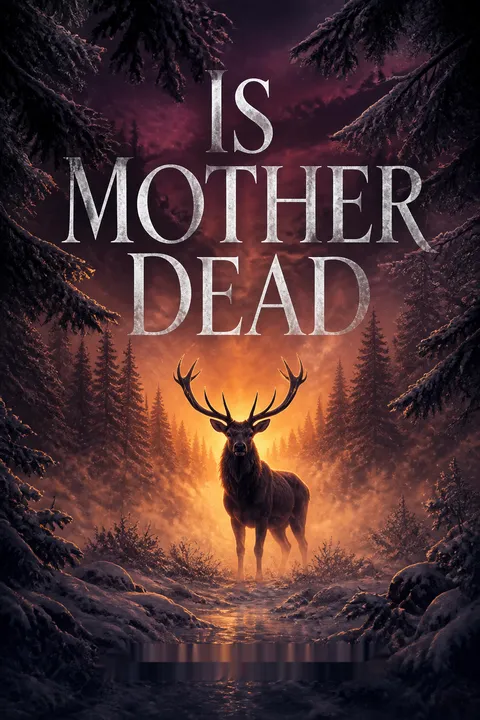
In the aftermath of her last terrible encounter, Johanna leaves Oslo behind. She buries the symbols of her childhood in the Norwegian forest: the cigar box, the lost linens, the broken artwork. She acknowledges the unhealed wound left by her mother, the impossibility of mutual understanding, and the necessity of building a self beyond that void. The elk's antlers are shed; new ones will grow. Mother may be dead—in memory, in role, in psychic presence—yet still she stirs in Johanna's restless dreams. The final lesson is one of survival: letting go of what can never be restored, carrying what must be carried, and walking on, alone but alive.
Analysis
"Is Mother Dead" offers a searing, modern meditation on estrangement, the limitations of language, and the psychic underpinnings of family trauma. More than a story of a daughter's exile and attempted reconciliation, it is an exploration of how our most formative bonds remain unsettled—shaping everything from our creativity to our capacity for attachment and self-understanding. Hjorth's narrative reveals that the inability to articulate pain and nuance across generations perpetuates cycles of longing and resentment, often making the longing for understanding more painful than outright loss. The book's modernity lies in its willingness to dwell in ambiguity: refusing easy redemption, it foregrounds the impossibility of pure knowledge about others—especially one's mother—and the necessity of inventing and inhabiting mythologies just to survive. Ultimately, Hjorth suggests that healing is not achieved through confrontation but through the acceptance of irresolution. Letting go—burying the hope for dialogue, and instead making peace with the silence and the scars—is both the novel's bleak truth and its hard-won liberation. The lesson: survival means carrying one's wounds with dignity, even if reconciliation is never possible.
Review Summary
Is Mother Dead follows Johanna, a successful Norwegian-American painter who returns to Oslo and becomes obsessively preoccupied with reconnecting with her estranged mother after decades of silence. Reviews praise the novel's psychological intensity, sharp prose, and unflinching exploration of toxic mother-daughter dynamics. Many note its repetitive, stream-of-consciousness style as both a strength and weakness. Longlisted for the 2023 International Booker Prize, it draws comparisons to Hjorth's earlier Will and Testament, with readers finding it emotionally claustrophobic yet cathartic, and Charlotte Barslund's translation widely lauded.
People Also Read
Characters
Johanna
Johanna, the protagonist, is a complex blend of emotional hunger and proud independence. Her artistic identity becomes both her salvation and her curse, heightening her estrangement. Psychoanalytically, Johanna is haunted by unresolved childhood wounds—yearning for maternal recognition but endlessly sabotaged by mutual misunderstanding and shame. She is a stranger in her own home, in her family, and in her art, ever suspicious that her creative expressions both expose and betray. Her psychological arc bends from hope for reconnection toward the grim necessity of acceptance and self-forgiveness. Persistent longing toward her mother defines her, even as she tries fiercely to interpret, to create, and finally to bury the maternal image beyond reach. Her relationships to Ruth and her own son, John, echo these cycles of estrangement, ambition, and the ache for acknowledgment.
Mother (Mum)
Mum is a formidable, emotionally complicated figure—by turns wounded, resentful, and evasively light. Her life is defined by her adherence to decorum, her inability to speak the truths that pain her, and her survival instincts rooted in denial. Her identity as a mother is paradoxical: both foundational and something she wishes to transcend. She is at once the victim of inherited sorrows and a participant in passing them on. Mum's voice, rarely direct, rings through ritual, silence, and occasionally outbursts of rage. Psychoanalytically, she reveals the consequences of generational trauma and suppressed autonomy. She clings to Ruth for comfort but is haunted by her absence from Johanna. Her psychological borders are guarded fiercely—her scars, both literal and psychic, evidence a lifelong struggle between endurance, pride, and an inability to reconcile past wounds.
Ruth
Ruth embodies the "good" daughter: steady, pragmatic, ever-present for her mother, yet herself diminished by the family's rigid loyalties. She is both shield and sword—protecting her mother from Johanna, but also from discomfort or ambiguity. Ruth's adult life is circumscribed by duty, guilt, and consolidation of the family's preferred narrative, suppressing any alternate account of blame, pain, or longing. Her psychological health seems more robust, yet it rests on avoidance and denial: she must keep the system running smoothly, even as it slowly buries her true self. Ruth's relationship with Johanna is antagonistic, defined by mutual incomprehension and a proxy battle over their mother's love and memory.
Mark
Mark, the American artist and Johanna's second husband, represents both escape and the price of exile. Though not present in Norway, his presence shadows Johanna's creative life and her departure from her family of origin. Through Mark, Johanna pursued art and difference; his later death plunges her into a new solitude and prompts the return to Norway. Mark is both muse and catalyst—a figure who unlocks growth but whose absence compounds grief.
John
John is Johanna's son, largely offstage yet symbolically central. Contact between them is measured and adult, reflecting Johanna's attempt not to repeat family wounds. He stands as a possible line of renewal, autonomy, and even reconciliation—if not between generations, then within himself. The muted exchanges with John highlight both hope and the limitations of Johanna's struggle.
Father (Dad)
Johanna's father is felt primarily through memory, absence, and influence on his widow. He represents respectability, tradition, and the law—a controlling force that shapes family values and responses to scandal. His death is a turning point that deepens Johanna's estrangement and cements her mother's dependence on Ruth. The father's specter haunts the narrative, both as object of mourning and as an ideal that was never truly attainable.
Rigmor
Rigmor is Mum's contemporary and companion, standing for the world of the elderly as separate from family dramas. Her friendship with Johanna's mother seems easier and lighter—she shares no trauma, only the mutual comfort and fears of aging. Rigmor is also a marker of time's passage and the irrational threat of being left alone.
Pax
Pax is Johanna's confidant, someone who listens without judgment and helps ground her emotionally. His practical wisdom and ability to normalize human frailty offer Johanna a rare port in her emotional storms. He remarks upon the ordinariness of parental misunderstandings, acting as a subtle guide toward self-acceptance.
Mrs Benzen
Mrs Benzen is not a central character but is crucial as the embodiment of fear, scolding, and authority in Johanna's childhood. Her influence lingers as an internalized voice of danger, marking the boundaries of home, shame, and forbidden longing.
The Elk
The recurring elk is both a literal animal observed from the forest cabin and a powerful metaphor for Johanna. Its shedding velvet, solitary wanderings, and occasional violence mirror Johanna's psychic process. The elk's presence links nature, art, trauma, and the cyclical nature of healing and survival.
Plot Devices
Fractured Narrative and Inner Monologue
Hjorth employs an intricate, recursive internal monologue as the foundational plot device. The narrative darts between past and present in a stream-of-consciousness style, propelled by Johanna's efforts to make sense of herself and her family. This approach conveys the psychological messiness of estrangement—obsessions, fantasies, dreams, and half-memories all bleed together. The third-person past is perpetually interrupted by Johanna's immediate anxieties and longings. This fractured timeline is mirrored visually through repeated imagery (the elk, the snow, the broken cup, the church), and symbolically through Johanna's revisiting of physical spaces. The book's power is in what is not said aloud: scenes of confrontation are bracketed by imagined dialogues, drafts of letters, and repeated ritual acts—allowing foreshadowing and ambiguity to leak into every gesture.
Symbolism and Mirroring
Recurring symbols—such as the broken porcelain, the cigar box, the color of hair, the elk's antlers—amplify the emotional stakes, providing echoes and counterpoints to conversations never had. The familial relationships are mirrored in everything: art, rituals, mundane chores, the rhythms of the seasons. The landscapes Johanna moves through—the city, her studio, the family cemetery, the forest—are all extensions of her internal state. Each character plays a symbolic as well as narrative role, with the sibling rivalry and maternal absence mirrored endlessly in objects and nature.
Ritual and Deferral
The family's unresolved grief and rejection are not directly confronted but ritualized: visiting graves, cleaning, making art, walking familiar streets, sending letters never answered. These cyclic actions create the sensation of history endlessly repeating, building tension through deferral. Foreshadowing occurs as Johanna obsesses over imagined encounters, rehearsing confrontations that rarely happen as she hopes.
Art as Metacommentary
Johanna's struggle to create—her painter's block, her compulsion to render childhood pain—mirrors the book's own meditation on representation and truth. Her artistic methodology, involving sketching, erasing, and revision, corresponds to the structure of the novel itself. The act of making art (and fearing its interpretation) is posed as an analogue for living, remembering, and attempting to repair family wounds.
Download PDF
Download EPUB
.epub digital book format is ideal for reading ebooks on phones, tablets, and e-readers.








































