
Plot Summary
1. Beginnings in Darkness and Garden
The story begins with the father—once a gardener, now a garden—arriving, frail and fearful, at his son's door. The narrator, aware that this story will end in death (and not even at the very end), uses the motif of the gardener-garden as both literal and existential. The father's decline becomes inextricable from the cycles of the garden he once tended, and the son seeks solace and meaning through storytelling, imagining corridors where death is deferred. This is not a book about death, but about the keen sorrow for a life ending—a sorrow for what fills and empties the honeycomb of memory. Only stories and gardens remain to challenge oblivion.
2. Sorrow Takes Root
Tracing back to mundane yet fateful conversations, the narrator reconsiders simple requests—"come visit for a bit, so you can rest"—as veiled pleas for company in the face of mortality. The father's October aches, initially dismissed as routine, now gain tragic resonance. Agendas bristling with travel betray a son's distracted priorities. The garden stands as testament to the father's resilience (and fragility) after surviving cancer years before, and now as a stage for his decline. The tragedy of missed words and unheeded warnings echo bitterly as winter approaches.
3. Diagnoses and Farewells
Hospital corridors and medical jargon narrate death's approach: X-rays and scans replace anecdotes and intimacy, while "metabolic activity" becomes a euphemism for cancer metastasis. The cold, bureaucratic rhythm of test results whispers clinical finality. The son, drifting between adult obligations and childlike despair, patrols his grief on deserted streets, searching for privacy in mourning. Even practicalities—counting steps on stairs, interpreting Latin-laden medical records—become rituals of anticipatory loss, dehumanizing both patient and family. Storytelling is the only defiance: keeping the father alive in memory as language makes him an object.
4. The Labyrinth of Memory
The father's impending absence triggers a flood of memory: involuntary and voluntary, selfish and sentimental. The son asks, when the last person who remembers our childhood dies, do we ourselves fade? He recalls primal nightmares of family abandonment—the terror of being left behind—now manifesting for real. The father's presence once anchored not just a person, but the solidity of an entire self. The work of remembering becomes a form of rescue against the void death threatens to leave.
5. Bargaining for Spring
Upon realizing the extent of his illness, the father bargains not for a cure but for time—pleading for one last celebration, hoping to live until St. George's Day so the family can gather. When that proves too ambitious, he scales back his wishes: will he at least hear the cuckoo's song? The seasons and their rituals—Easter, blossoming trees—become milestones by which dying is measured, each festivity a reprieve bartered from fate. Yet, every answer from doctors is fraught with mercy and mercilessness; bargaining with mortality becomes a heartbreaking form of hope.
6. The Weight of Pain
The home becomes a makeshift hospice; the simplest movements transform into ordeals. The father's powerlessness—emblematized by needing help with basic hygiene—underscores the humiliation illness inflicts. Family becomes both caregiver and witness, mired in guilt and helplessness. Pain management takes center stage: prescriptions, dosages, the gradual escalation from pills to fentanyl patches, always chasing after comfort that death seems intent to deny. Each gesture—feeding, shaving, reading aloud—is both loving and futile, a final service in the face of inexorable decline.
7. Final Days, Diminishing Light
The father's agency erodes, marked by failing appetite, speech, and mobility. The son's attempts to salvage dignity—stories, rituals, practical kindness—are pitted against bodily indignity and the impersonality of medical routines. Visits become scenes for last jokes, memories of earlier deaths in the family, and awkward but necessary expressions of regret and longing. The business of dying—preparing ID cards, managing diapers, choosing between dying at home or in a hospital—becomes its own kind of work, consuming all that remains of energy and will.
8. Holding at the Threshold
The narrator stays with his father through the final night, holding his hand, murmuring comfort, and accompanying him as far as possible. There is no dramatic wisdom at the end—only practical requests, pain, and the need for touch. The experience is not gruesome, but intimate: shared breathing, vigil until dawn, the bodily reality of death. After the father's final breath, rituals of closure commence—calls to undertakers, official verifications, the practical bureaucracy of death—underscoring how death is both utterly personal and inexorably procedural.
9. Aftermaths of Death
Grief infuses all: unanswered phones, unneeded possessions, the dog waiting by the gate, household routines left hollow. The garden, simultaneously neglected and preparing to bloom, becomes a living emblem of loss and continuity. Family and friends gather for the funeral, enacting rituals both ancient and modern; stories are traded, objects offered to ease the dead's transition, while the survivors undertake the hard labor of mourning. Yet, even as death closes doors, the garden and family traditions promise renewal. The world is harsh, indifferent, and at the same time quietly suffused with the father's lingering presence.
10. The Everlasting Garden
The father's gardener's notebook, begun with practical intent, emerges as a spiritual text: a record of planting, tending, and hope. Each entry is a tally of seasons, an accounting of life persisting amid anticipation and pain. The garden defies death, sprouting anew each spring, even as its creator passes. The son and brother use the diary to maintain what remains; the garden's cycles illustrate nature's logic—what is sown continues, though wildness waits at the edges. Immortality is hinted in the eternal return of plants: gardening is the purest form of hope.
11. Fragments of Fatherhood
The narrator ponders the mythic and literary figure of the father—always withdrawing, often absent, occasionally remembered for discipline, rarely for softness. Comparison is drawn to biblical Joseph and Laertes, to socialist-era archetypes, to lost photographs and stories. The father, like most, is revealed more in what is withheld than what is given, in the awkwardness of praise or embrace, in stories and failures, and above all, in what is left untaught or unsaid.
12. Stories for Survival
The family tradition of spinning stories—of onions and failed businesses, of camping mishaps and laundry hung in secret—becomes a means of enduring sorrow. The father's self-deprecating humor, his talent for turning defeats into legend, persists beyond his death. The act of storytelling is both tribute and therapy, a "first aid kit" for the soul, soothing pain and ensuring that the dead continue to live in laughter and memory.
13. Childhoods Lost and Inherited
The narrator explores his own childhood, shaped by migrations between homes, poverty, and the subterranean life of socialism, and ponders the inheritance—emotional and psychological—passed from father to child. The family's peculiar archive of photos, official papers, and whispered stories is mapped: the father as shepherd of histories, the son as their archivist. The garden and its notebook stand as emblems of this transmission. The generation's inability to articulate love is counterbalanced by labor and sacrifice, leaving a legacy of gesture and story rather than explicit affection.
14. Orphaned Afternoons
After death, the world rearranges itself into "before" and "after" eras. Grief attacks in unpredictable ways—a tangerine, a crossword puzzle, a forgotten phone call. The absence is sharpest in the repetition of daily routines now robbed of their meaning, in the phone that rings for no one, the garden blooming for an absent gardener, the dog waiting for impossible return. Holidays accentuate loss; personal and generational traditions are quietly, painfully recalibrated.
15. The Archive of Absence
The narrator delves deeper into family roots—naming, oral traditions, exchanged donkeys and cassette players—realizing that the death of the father signals the silent disappearance of entire worlds. The impulse to catalog, to record, to build family trees is not just one of nostalgia but a kind of resistance: a hope that by naming the dead, we keep them near and animate within us. The family's little failures and misadventures—economically and emotionally—are transmuted into survivable meaning.
16. Lessons from Loss
The story weaves through dreams and regrets—grief as an egocentric experience, but also a realization that the dying grieve, too, for the futures they will not live. The narrator confronts his own helplessness, his unasked questions, the stories that will never be retrieved. Through it all, the garden outlasts the gardener; sorrow, like a tree, lays roots in the untraveled years ahead, provoking both fear and gratitude. The customs around mourning offer some armature, but the true struggle is reconciling the voice of the father within with his absence without.
17. Death as Continuation
Sorrow, like spring, returns and persists. The narrator observes the world flourishing—flowers, cherry trees, dogs—and feels both bitterness and relief that life continues. The tasks left behind—pruning, planting, living, loving—remind us that the dead survive in our gesture, action, and memory. To tend a garden is to embody hope; to mourn a parent is to accept that we are both the survivors and custodians of the past.
18. Letting Go, Holding On
As the narrator reflects on the act of writing—begun at the father's bedside, concluded on St. George's Day, a date his father hoped to see—the process itself becomes a ritual of farewell and connection. The mix of sorrow and gratitude, the inability to answer all questions or preserve all stories, underlines the great tenderness at grief's core. Life goes on, unknowing, unready. Yet in stories, gardens, and the imperfect rituals of remembrance, we hold fast to those we love—lost but not entirely gone.
Analysis
A meditation on grief, memory, and the task of living onward, Death and the Gardener offers a profoundly humane answer to death's nihilism
Gospodinov does not flinch before the raw humiliations of dying: pain, medicalization, the indignity of dependence. But he insists, with gentle literary force, that meaning is laboriously cultivated—like a garden, like a story—out of loss. The narrative's structure mimics the workings of memory: circling back, repeating, pausing, detouring, layering anecdote upon confession. Its central wisdom is not transcendence but continuity—the living carry the dead in memory, in habit, in ritual; the garden persists, albeit wild. Fathers and sons stand in a lineage stretching back through myth and history, each bequeathing more questions than answers, more gestures of love than words. The book counsels us: grieve, but remember; tend your stories as you do your gardens. In grief, as in life, nothing is ever entirely lost—so long as we continue, in fraught, fractured afternoons, to plant.
Review Summary
Death and the Gardener has resonated deeply with readers worldwide, earning an impressive 4.44 average rating. Most reviewers praise its poetic, tender prose and emotional honesty in depicting grief, loss, and the father-son relationship. Many readers found personal connections to their own experiences of losing parents. The garden metaphor is widely celebrated as powerful and meaningful. A small number of critics found the narrative fragmented, self-indulgent, or lacking plot structure, but these voices are clearly in the minority among the overwhelmingly moved readership.
Characters
The Father (Dinyo)
The father is the central presence and absence in the narrative—a gardener who survives an earlier cancer, who finds solace and agency in tending fruit and flowers, and who is ultimately consumed by his last illness. Through him, the cycles of nature and mortality are given embodiment. He is a product of postwar Bulgaria: reserved, practical, emotionally inarticulate, but deeply loving in deeds. His pride in his garden and his family stands in for an inability to say "I love you." As he becomes increasingly reliant on his children, his sense of dignity is challenged, humility grows, and old regrets—especially his inability to show tenderness—surface. After death, he continues to shape the world: through his garden, his stories, and the ways those left behind remember and try to emulate him.
The Narrator (Son)
As both author and character, the narrator is shaped by his father's legacy and by a compulsion to rescue meaning from sorrow. Caught between the roles of responsible adult, writer, and the forever-child who fears being left alone, he oscillates between rationality and magical thinking, practical duties and existential reflection. He is driven to record, transform, and transmit family history; to ensure that the father survives in language, memory, and the seasonal cycles of the garden. His psychological arc is one of regret, tenderness, finally acceptance—marked always by the awareness that stories are what persist when people fade.
The Mother (Rada)
Rada represents constancy and endurance: she tends to her husband through illness and, after his death, is herself stricken by catastrophic health events. Her love is expressed in labor and ritual (food, housework), never in words. The experience of spousal and personal frailty throws her into a field-hospital-like home, emphasizing vulnerability and the chaos following loss. She becomes an emblem of the earlier generation's stoicism and the impossibility of genuine rest or care for caretakers themselves.
The Daughter
The daughter, seventeen at the time of the father's death, links generations and models emotional honesty that her elders struggle with. Her keen intuitions suggest a sensitivity to underlying tensions; she names the sadness, worries for her father as he worries for his, and dreams of the grandfather in ways that blend memory and imagination. Her small acts—hugging, naming the family cats, speaking Epicurus—embody continuity, demonstrating how love and inheritance function even as traditions and people disappear.
The Brother
The narrator's brother emerges as the collaborator in care and mourning, sharing both practical burdens and emotional labor. He tends to the posthumous world of the father: the grave, rituals, the maintenance of the garden. He is a means by which family links are sustained after death, and through whom sibling solidarity is reaffirmed.
Jacko the Dog
Jacko, the father's dog, is emblematic of instinctive grief and fidelity. Waiting at the gate, he is the only one to whom the news must be explained in "animal language," as in folk traditions. His presence is a living, poignant reminder of routines death ruptures, and a subtle symbol of unconditional love.
The Mother's Grandfather and Grandmother, Ancestral Figures
Through scattered notebook entries and oral stories, older generations haunt the narrative: as chroniclers, as carriers of naming traditions, as sources of rural wisdom and grief. They serve to provide context for the father's stoicism and the family's relationship with land, hope, and hardship, creating continuity across time.
The Oncologist
The anonymous oncologist is a figure of both false hope and grim finality: doling out prescriptions and bitter truths, he enacts the tension between medical possibility and human limitation. His failure to answer unanswerable questions stands for the inadequacy of science and ritual alike in the face of mortality.
The Village Community
Relatives, neighbors, villagers populate the funerary scenes and fill the interstices of story with folk memory: peasant rituals, epic keening, communal gardens, and political commentary. They embody the forces of continuity and change, providing the narrator and his father a context in which to situate their grief and labor.
Gaustine (and Literary Ghosts)
Gaustine, an allusive, possibly fictional character, delivers aphorisms about time, childhood, and death. Alongside the recurring presence of poets and writers—Epicurus, Seneca, Auden, Montaigne—he helps the narrator situate personal loss in a larger literary-philosophical context, transforming sorrow into insight and aligning the autobiographical with the universal.
Plot Devices
Storytelling as Survival
The book foregrounds storytelling—a patchwork of anecdotes, dreams, memories, and confessions—as both theme and method. The narrative is non-linear, circling around death while detouring through childhood, failed aspirations, gardens, and jokes. Stories serve as emotional and mnemonic first aid, a means by which the narrator (and his father before him) recasts loss as presence. The recursive, digressive structure mimics the way memory and sorrow operate, and even as death is inevitable, stories delay its finality—they "run interference," preserving the dead in narration.
Botanical and Seasonal Imagery
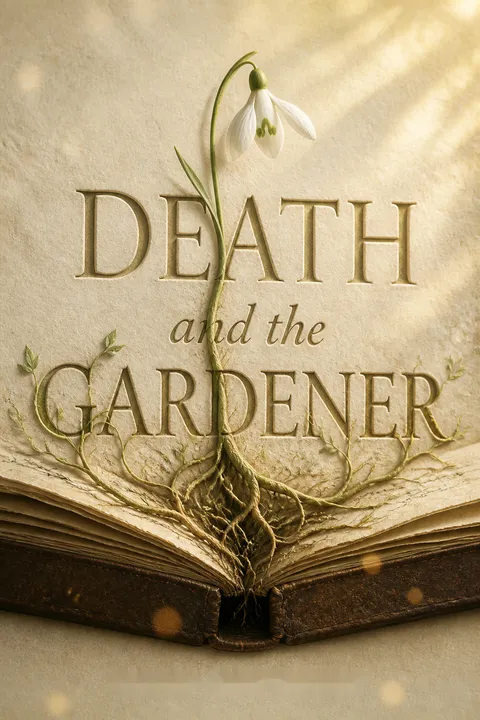
The garden is both factual and metaphorical: a place of labor, love, and continuity; a solace after survival; a fatal partner in the father's death. The cycles of planting, tending, and harvest dictate the rhythm of both the seasons and the narrative. The father's final diary is a gardener's almanac, and the recurring motif of snowdrops signal hope and deferred sorrow (will he survive until they bloom?). The garden outlasts its cultivator, dramatizing mortality and immortality simultaneously.
Medicalization and Language
The incursion of medical terminology, documents, and procedures replaces the unique individual with a patient-object, layering a bureaucratic coldness atop familial sorrow. The shift from personal observation to Latinized diagnoses marks the stripping away of personality and the onset of clinical anonymity, which only story (and the retelling of memory) can redress.
Symbolic Objects and Rituals
Everyday things—walking sticks, razors, cigarettes, crossword puzzles—accumulate symbolic freight, becoming tokens of presence and absence. Funeral rituals, both religious and folk, mix practical distancing with gestures meant to ease passage and comfort survivors. The garden notebook, hand-written diaries, and even decaying onions or flowers serve as mementos and encrypted emotional statements—substitutes for unspoken love.
Mythic and Literary Allusion
Throughout the book, allusions abound: to Homeric grief (Laertes and Odysseus), to Aeneid, Bible, Kafka, and more. These references allow the narrator (and reader) to connect personal grief to archetypal patterns of mourning and survival. Folk and classical motifs blend, with local keening alongside Homeric and literary echoes, reminding us that every individual's story is part of a longer chain of loss and remembrance.
Download PDF
Download EPUB
.epub digital book format is ideal for reading ebooks on phones, tablets, and e-readers.








































