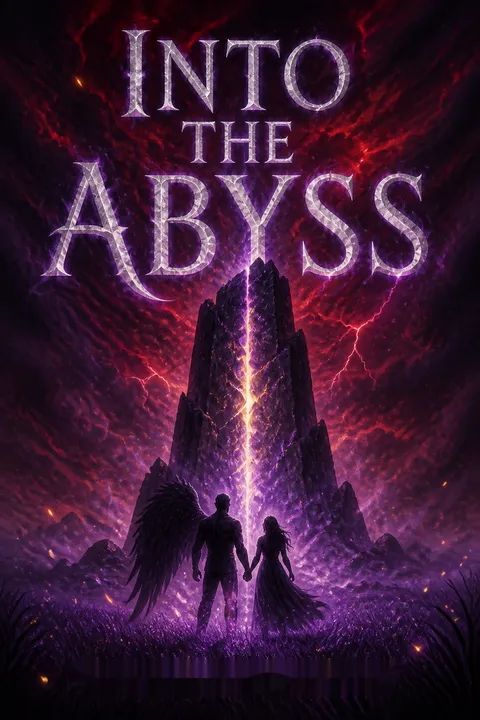

Plot Summary
Shadows Over Fallen Earth
In a world ravaged by the opening of Hell's gateway, demons and humans form uneasy alliances to survive. The land is scarred, cities are lost, and a wall divides the devastated from the less-touched. Amidst this chaos, the palitons—demon followers of King Kobal—lead a camp of survivors, always wary of the threats lurking beyond. The atmosphere is tense, haunted by memories of a world before the invasion, and the hope for peace is a fragile, flickering thing. The story's emotional core is the longing for what was lost and the desperate need to protect what remains, setting the stage for the coming storm.
The Camp Sleeps
Returning from a hunt, Magnus and his companions find their camp in eerie silence. Everyone—demon and human alike—has collapsed into a deep, unnatural sleep, their bodies scattered where they fell. Only Magnus, Corson, Caim, and Raphael remain awake, immune to whatever force has struck. Panic and dread set in as they realize this is a targeted attack, not a random event. The emotional weight is heavy: friends and loved ones are vulnerable, and the threat is unknown. The camp's protectors are forced into the role of detectives, desperate to understand what has happened and how to save those they care for.
The Jinni's Prison
Magnus and his allies capture Amalia, a young jinni, believing her responsible for the camp's plight. Tension crackles as Corson's Chosen, Wren, is among the afflicted. Amalia, empathic and unlike her kin, insists she is not to blame but offers to help. The group's suspicion and grief clash with Amalia's vulnerability and honesty. The emotional arc is fraught: trust is scarce, and the stakes are life and death. Amalia's unique nature—her empathy, her "Fault"—sets her apart, hinting at deeper complexities within the jinn and the possibility of unlikely alliances.
Amalia's Dilemma
Amalia faces suspicion and the threat of violence, but her empathy compels her to help those suffering. She reveals the nature of the Abyss—a mental prison created by the jinn, accessible only through wishes. Only the trapped can free themselves, but Amalia offers to enter the Abyss with Magnus to try to help. The emotional tension is high: Corson's desperation for Wren, Magnus's growing curiosity and attraction to Amalia, and Amalia's own fear and compassion. The chapter is a crucible of trust, as Amalia and Magnus prepare to step into the unknown together.
Into the Abyss
The Abyss is not what they expect: a field of violet grass, a red sky, and a sense of melancholy. Amalia, never having entered before, is both enchanted and unsettled. The landscape is beautiful but tinged with sadness, reflecting the pain of those trapped within. Magnus's skepticism softens as he witnesses Amalia's innocence and wonder. Their connection deepens, but the threat of the jinn and the unknown dangers of the Abyss loom. The emotional core is the tension between beauty and horror, hope and despair, and the fragile trust growing between the two.
The Meadow of Mourning
As they journey deeper, Magnus and Amalia encounter the mental prisons of their friends: endless loops of regret, loss, and longing. Mara relives her lover's death; others are tormented by what might have been. The Abyss feeds on these emotions, and the jinn draw power from the suffering. Amalia's empathy makes her suffer alongside the victims, while Magnus's resolve is tested. The emotional arc is one of helplessness and sorrow, but also determination—not all are lost, and some, like Erin, manage to break free through sheer will.
The Monolith's Secret
At the center lies Absenthees, a towering monolith surrounded by jinn and, later, the horsemen. The monolith is both prison and power source, channeling the life force of those who die in the Abyss. Amalia's fae heritage resonates with the place, and her touch awakens something long dormant. The emotional tension is at its peak: the jinn's cruelty, the horsemen's arrival, and the looming threat to all. The monolith's secret is the key to both the jinn's power and the possibility of restoring the Abyss to what it once was.
Nightmares and Wishes
The jinn's power is rooted in wishes—desperate, all-consuming desires that open the door to the Abyss. Each victim's torment is tailored to their deepest regrets or longings, and only by facing the truth can they escape. Amalia's empathy is both a gift and a curse, as she feels every loss and pain. Magnus's illusions are tested, and together they try to break the cycles of suffering. The emotional arc is one of catharsis: facing the past, letting go, and the hope of redemption.
The Faulted Revealed
Amalia's "Fault"—her empathy and fae blood—is revealed as the legacy of a long-ago union between jinn and fae. The Faulted are empaths, set apart from their kin, and have chosen neutrality. Amalia's struggle is one of identity: torn between her family, her kind, and her conscience. The Faulted refuse to intervene, but Amalia's actions and the suffering she witnesses force her to choose a side. The emotional core is the pain of not belonging, the courage to stand alone, and the hope of forging a new path.
The Horsemen's Bargain
The jinn, seeking vengeance for their long imprisonment, ally with the horsemen—Pride, Lust, and Sloth. The horsemen's powers amplify the suffering in the Abyss, and their presence threatens to tip the balance toward annihilation. Amalia and Magnus are caught in the crossfire, and the cost of vengeance becomes clear. The emotional arc is one of betrayal and the realization that old wounds, if left to fester, can destroy everything. The jinn's choice to side with evil is a turning point, forcing Amalia and the others to fight for the soul of the Abyss.
The Battle for Souls
As the horsemen and jinn close in, Magnus and Amalia are separated and forced to make impossible choices. The camp's survivors, aided by the Faulted and the angels, rally to save their friends. The battle is both physical and spiritual: illusions, empathy, and raw power clash in the heart of the Abyss. The emotional stakes are at their highest—love, loyalty, and sacrifice are tested. The cost is great: lives are lost, bonds are broken, and the future hangs in the balance.
The Awakening of Absenthees
Amalia's fae heritage and her bond with Magnus awaken Absenthees, restoring the Abyss to its original beauty and power. The monolith's light purges the corruption, driving out the horsemen and healing the land. The Faulted and the remaining jinn choose to protect the Abyss, forging a new alliance. The emotional arc is one of renewal: grief and loss give way to hope, and the promise of a better future is born from the ashes of the past.
The Price of Vengeance
The cost of the battle is steep: Amalia's parents are killed, and the jinn are divided. Those who sided with the horsemen are exiled, while the rest vow to defend the restored Abyss. Amalia's grief is profound, but she finds strength in her love for Magnus and her new purpose. The emotional core is the acceptance of loss, the courage to forgive, and the resolve to build something better from tragedy.
The Fae's Legacy
The Abyss was once a sanctuary for the fae, a place of beauty and healing. The jinn's corruption twisted it into a prison, but the fae's legacy endures in Amalia and the Faulted. The restored Abyss is a symbol of what can be reclaimed through empathy, courage, and unity. The emotional arc is one of belonging: Amalia, once an outsider, finds her place as the heart of the Abyss and the bridge between worlds.
The Chosen Bond
Magnus and Amalia's bond—both as Chosen and as lovers—proves stronger than any magic or curse. Their union is the catalyst for the Abyss's rebirth, and their love inspires others to fight for hope. The emotional core is the transformative power of love: it heals, redeems, and gives meaning to suffering. In a world of darkness, their bond is a beacon of light.
The Collapse and the Choice
The last stand against the horsemen and the corrupted jinn is brutal and costly. Amalia must choose between vengeance and mercy, between her past and her future. The survivors—demon, human, and Faulted—forge a new alliance to protect the Abyss and the world beyond. The emotional arc is one of closure: old wounds are acknowledged, and the possibility of peace is embraced.
The Abyss Restored
With the horsemen driven out and the Abyss restored, the survivors bury their dead and vow to defend what they have reclaimed. The land is alive with color, song, and hope. Amalia, Magnus, and their allies look to the future—not as victims of the past, but as creators of a new world. The emotional resolution is bittersweet: grief lingers, but so does the promise of love, belonging, and the chance to chase butterflies in the sun.
Analysis
Brenda K. Davies's Into the Abyss is a dark, emotionally charged fantasy that explores the consequences of trauma, the seductive power of vengeance, and the redemptive potential of empathy and love. Set in a world where Hell has invaded Earth, the novel uses the Abyss—a living, psychic prison—as both a literal battleground and a metaphor for the cycles of regret and suffering that trap individuals and societies. The story's heart is the unlikely bond between Magnus, a hardened demon, and Amalia, an empathic outcast whose fae heritage makes her both vulnerable and uniquely powerful. Their relationship is a microcosm of the book's central message: that healing and hope are possible, but only through the courage to face pain, the willingness to forgive, and the choice to build something new from the ashes of the past. The novel warns against the dangers of unchecked vengeance and the allure of destructive alliances, embodied by the jinn's pact with the horsemen. Ultimately, Into the Abyss is a story about breaking cycles—of violence, of grief, of isolation—and the transformative power of connection. Its lesson is clear: even in a world scarred by loss, the seeds of renewal can take root, and the courage to chase butterflies is an act of defiance against the darkness.
Review Summary
Into the Abyss receives overwhelmingly positive reviews, with readers praising its engaging plot, character development, and steamy romance. Many appreciate the continuation of the Hell on Earth series and the exploration of new supernatural beings like the Jinn. Magnus and Amalia's relationship is well-received, with readers enjoying their chemistry and growth. The book is described as action-packed, magical, and hard to put down. Some readers note it's best to read the previous series for context, while a few find the pacing or character depth slightly lacking compared to earlier works.
People Also Read
Characters
Magnus
Magnus is a demon of illusions, fiercely loyal to his king and friends, but scarred by loss and wary of love. His journey is one from suspicion and isolation to vulnerability and devotion. Initially distrustful of Amalia, he is drawn to her empathy and innocence, and their bond transforms him. Magnus's illusions are both his weapon and his shield, but it is his willingness to risk everything for love that defines his arc. His relationship with Amalia is the catalyst for his growth—from a hardened survivor to a protector and partner, willing to fight for hope in a broken world.
Amalia
Amalia is a young jinni with the "Fault"—the rare gift and curse of empathy, inherited from her fae ancestry. Sensitive, compassionate, and often overwhelmed by the pain of others, she is set apart from her kin. Her struggle is one of identity: torn between loyalty to her family, the cruelty of the jinn, and her own conscience. Amalia's journey is a coming-of-age: she learns to embrace her power, make hard choices, and fight for what she believes in. Her love for Magnus and her role in restoring the Abyss give her purpose and belonging, making her the heart of the story.
Corson
Corson is an adhene demon, second-in-command to King Kobal, known for his humor and ferocity. His devotion to his Chosen, Wren, is absolute, and her endangerment drives much of the early tension. Corson's arc is one of vulnerability: beneath his bravado lies a deep fear of loss. His willingness to trust Amalia and work with unlikely allies marks his growth. Corson embodies the theme of love as both strength and weakness, and his loyalty is a touchstone for the group.
Wren
Wren is Corson's Chosen, a former human transformed into a canagh demon. Her ordeal in the Abyss—trapped in a loop of regret and longing—mirrors the struggles of many. Wren's resilience and clarity help break the cycle for herself and others. Her relationship with Corson is a testament to the power of love to transcend boundaries, and her survival is a beacon for the camp.
Caim
Caim is a fallen angel with a raven's form, both enigmatic and eccentric. His motives are often inscrutable, but he proves a valuable ally, especially to Amalia. Caim's outsider status mirrors Amalia's, and his empathy—rare among the fallen—makes him a bridge between worlds. His loyalty is hard-won but steadfast, and his presence adds both levity and danger to the group.
Raphael
Raphael is a unique angel, marked by his golden wings and emotionless demeanor. He is both healer and judge, reluctant to intervene but ultimately committed to the greater good. Raphael's detachment is a counterpoint to the emotional turmoil of the others, but his actions reveal a deep sense of responsibility. His relationship with Caim is fraught, reflecting the broader conflict between Heaven and the fallen.
Olgon
Olgon is Amalia's uncle and the oldest living jinni, consumed by anger over the jinn's long imprisonment. His leadership is marked by ruthlessness and a willingness to sacrifice even family for vengeance. Olgon's arc is a cautionary tale: his inability to forgive or adapt leads to his downfall and the further fracturing of the jinn.
Rislen
Rislen is the eldest of the Faulted jinn, wise and compassionate but reluctant to intervene in the conflict. Her struggle is one of principle versus action: she wishes for peace but is forced to choose a side. Rislen's eventual decision to fight for the Abyss marks a turning point, and her guidance helps Amalia embrace her role.
Pride, Lust, and Sloth (The Horsemen)
The horsemen are ancient, powerful beings who thrive on suffering and chaos. Pride is arrogant and cruel, Lust seductive and predatory, Sloth insidious and corrupting. Their alliance with the jinn escalates the conflict, and their powers threaten to consume all. They are both external antagonists and symbols of the internal struggles faced by the characters—pride, desire, and despair.
The Faulted
The Faulted are jinn with fae blood, set apart by their empathy and pacifism. They represent the possibility of change and redemption within the jinn. Their neutrality is challenged by the events of the story, and their eventual decision to fight for the Abyss is a testament to the power of conscience and community.
Plot Devices
The Abyss and Absenthees
The Abyss is both a literal and metaphorical prison, created by the jinn to trap the minds of those who make desperate wishes. Absenthees, the monolith at its heart, channels the life force of the dying, feeding the jinn and corrupting the land. The Abyss is a reflection of the characters' inner struggles: regret, longing, and the search for meaning. Its restoration through Amalia's fae heritage and empathy is both a plot resolution and a symbol of healing. The device allows for exploration of memory, trauma, and the possibility of redemption.
The Chosen Bond
The concept of Chosen—soul-bonded pairs whose connection grants strength and vulnerability—is central to the story. The bond between Magnus and Amalia is both a source of power and a target for their enemies. It drives the emotional arc, motivates sacrifice, and ultimately enables the restoration of the Abyss. The Chosen bond is a metaphor for the transformative power of love, and its narrative function is to unite disparate characters and give hope in the face of despair.
Empathy and the Faulted
Amalia's empathy, inherited from the fae, is both her greatest strength and her deepest curse. It allows her to connect with others, break the cycles of suffering in the Abyss, and awaken Absenthees. The Faulted, as a group, represent the possibility of change within a corrupt system. Empathy is both a plot device and a theme: it drives character decisions, enables healing, and challenges the status quo.
Foreshadowing and Cycles
The story is structured around cycles: the jinn's vengeance for past wrongs, the endless loops of suffering in the Abyss, the recurring threat of the horsemen. Foreshadowing is used to hint at the possibility of breaking these cycles—through love, empathy, and the courage to choose a new path. The restoration of the Abyss is both a literal and symbolic breaking of the cycle, offering hope for the future.
The Horsemen and Alliances
The jinn's alliance with the horsemen is a plot device that escalates the conflict and forces characters to choose sides. The horsemen's powers—pride, lust, sloth—are both external threats and internal temptations. The alliances formed and broken throughout the story reflect the broader theme of unity versus division, and the cost of choosing vengeance over healing.
The Road to Hell Series


About the Author
Other books by Brenda K. Davies
Download PDF
Download EPUB
.epub digital book format is ideal for reading ebooks on phones, tablets, and e-readers.








































