
Plot Summary
Mist and Moonlit Vigil
Perched above the fairy capital, Ayna, once human and now the Crow Queen, is cursed to remain a crow. She secretly follows her mate, Myron, the Crow King, as he slips through the city at night, seeking answers and solace in a temple. The city's peace is a stark contrast to Ayna's isolation and the threat gathering beyond its borders. Her only comfort is the silent companionship of Royad, Myron's cousin, who understands her pain. The chapter sets the tone of longing, vigilance, and the heavy burden of leadership in a world on the brink of chaos.
Cursed Wings, Broken Bonds
Each day, Ayna's inability to shift back to her human form deepens her sense of uselessness and separation. Myron, steadfast and loving, tries to reassure her, but the loss of their mate mark and her inability to communicate without intermediaries like Kaira or Tori leaves her feeling more alone. The court trains for war, adapting to new threats, while Ayna's internal struggle mirrors the external dangers. The pain of lost intimacy and the fear of being left behind haunt her, even as she resolves to protect those she loves at any cost.
Shadows in the Arena
Myron and his court, including fairies and Crows, spar and strategize, preparing for battle without the full use of their magic. Ayna, watching from above, feels both pride and despair at her distance from the action. Herinor, a Crow with a complicated past, offers blunt advice, exposing the vulnerabilities and doubts within the group. The chapter explores the dynamics of trust, the weight of past betrayals, and the relentless drive to be useful—even when powerless.
Night's Unraveling Secrets
Restless and desperate for purpose, Ayna ventures beyond the city and stumbles upon a clandestine camp of strangers with ties to Tavras. Eavesdropping, she learns of a plot targeting the palace. Her instincts war with her fading human memories, and when she's captured, her sense of self teeters on the edge. The scene is fraught with fear, confusion, and the ever-present threat of losing herself to the crow's instincts forever.
Disappearances and Desperation
Myron, Royad, and the others realize Ayna is missing and fear the worst—enemy capture or the loss of her humanity. The court's unity is tested as blame and anxiety ripple through the group. Kaira, Ayna's sister, reveals she knows more than she let on, but even her reassurances can't quell Myron's dread. The chapter pulses with urgency, guilt, and the desperate hope that Ayna can be found before it's too late.
Captured by Enemy Fire
Bound and helpless, Ayna is at the mercy of her captors, who debate her fate and speculate about her true nature. Her memories fragment, instincts take over, and the thin thread of her promise to Myron is all that keeps her from vanishing into animal oblivion. The scene is claustrophobic and raw, highlighting the fragility of identity and the power of love to anchor even the most lost.
Bargains in the Dark
Myron, driven by a supernatural pull, finds Ayna just as her captors threaten her life. A brutal confrontation ensues, with Myron unleashing a terrifying new power. The cost of violence and the depth of his love are laid bare as he risks everything to save her. The aftermath is bittersweet—Ayna is safe, but the darkness within Myron grows, and the court is left to reckon with the consequences.
The God of Darkness Answers
Seeking a cure for Ayna's curse, the court turns to Shaelak, the God of Darkness and creator of the Crows. His appearance is awe-inspiring and terrifying, and his answers are as cryptic as they are consequential. He reveals that Ayna's fate is tied to her acceptance of immortality and her true role as his descendant. The price of power, the limits of divine aid, and the burden of destiny weigh heavily on Ayna and her court.
Immortality's Price Revealed
The revelation that her life—and Myron's—is bound to her ability to become truly immortal shakes the court. The solstice ritual, a Flame tradition, offers a possible path, but the cost is steep: Ayna must give up her mortal ties and fully embrace her destiny. The chapter is thick with existential dread, hope, and the bittersweet knowledge that love and sacrifice are inseparable.
The Solstice Ritual Looms
As the solstice approaches, the court prepares for both battle and the ritual that might save Ayna. Training intensifies, alliances are tested, and the looming threat of Erina's armies grows ever closer. Myron and Ayna cling to each other, their love both a source of strength and vulnerability. The tension between personal desire and duty to the court reaches a breaking point.
War on the Horizon
Reports of enemy movement force the court to make hard choices. The rebels, fairies, and Crows must coordinate their defenses, even as trust is frayed by past betrayals. The battle lines are drawn, and the cost of failure is clear: the loss of kingdoms, loved ones, and hope itself. The chapter is a crescendo of strategy, fear, and the determination to fight for a future worth living.
Betrayal in the Ranks
Tata, once a comrade, is revealed as a traitor, her actions orchestrated by Ephegos, the Crow who seeks to destroy Myron and claim Ayna. The revelation is devastating, leading to a brutal ambush and the capture of key members. The court's unity is fractured, and the sense of safety is obliterated. The pain of betrayal is matched only by the resolve to survive and resist.
The Queen's Sacrifice
In a harrowing confrontation, Ayna offers herself to Ephegos in exchange for Myron and Kaira's lives. The magic of bargains binds her, and she is taken away, her fate uncertain. Myron is left shattered, the court leaderless, and the future in jeopardy. The emotional weight of sacrifice, love, and the cost of leadership is at its peak.
The Court Fractures
The aftermath of Ayna's sacrifice is a storm of recrimination and despair. Myron, wracked with guilt, must find a way to lead without his mate. Herinor's past betrayals come to light, and forgiveness is hard-won. The court must decide whether to splinter or unite in the face of overwhelming odds. The chapter is a study in resilience, vulnerability, and the slow work of healing.
Allies and Unlikely Forgiveness
The rebels, fairies, and Crows forge a fragile alliance, united by the need to resist Erina and Ephegos. Herinor, once a traitor, is given a chance at redemption, and Kaira's growing feelings for him offer hope for the future. The court's strength lies in its diversity and its willingness to forgive, even when trust seems impossible.
The Battle for Askarea
War erupts on multiple fronts, with the court deploying the magic-nullifying serum and every ounce of cunning they possess. Losses are heavy, and the outcome is uncertain. Myron's dark power becomes both a weapon and a curse, and the line between hero and monster blurs. The battle is not just for territory, but for the soul of the court and the future of Eherea.
The Bargain's Edge
Held captive by Ephegos, Ayna endures humiliation and fear, but her cunning and the precise wording of her bargain offer a sliver of hope. With Shaelak's cryptic guidance and her own indomitable will, she finds a loophole and makes a daring escape, shifting into her crow form and fleeing into the night. The chapter is a triumph of agency, wit, and the refusal to be defined by others' plans.
Flight Toward Freedom
Exhausted but unbroken, Ayna soars toward her court, her love for Myron and her people burning brighter than ever. The story closes on the promise of reunion, the resilience of found family, and the knowledge that even the darkest bargains can be outwitted by those who refuse to surrender. The emotional arc comes full circle, from isolation and despair to hope and the unbreakable power of love.
Analysis
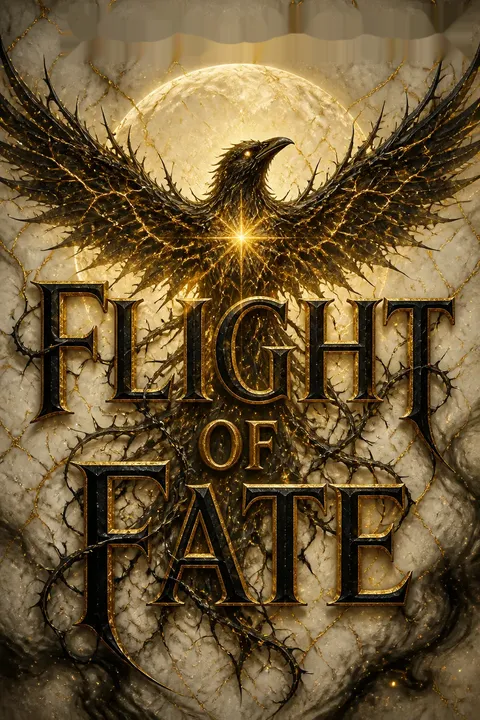
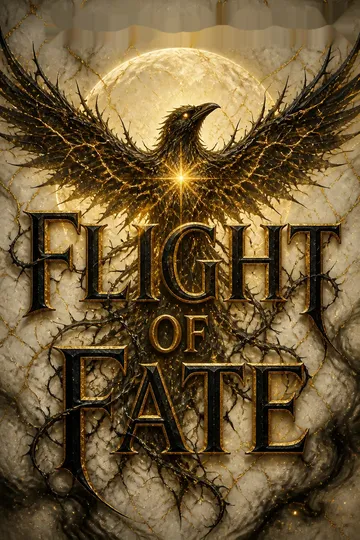
Flight of Fate is a lush, emotionally charged fantasy that explores the interplay of love, power, and destiny in a world where every choice is bound by magic and consequence. At its core, the novel is about the cost of agency: the bargains we strike, the promises we keep, and the sacrifices we make for those we love. Ayna's journey from cursed outcast to immortal queen is both a literal and metaphorical transformation, challenging the notion that power is a gift without price. The story interrogates the nature of leadership, the corrosive effects of vengeance, and the redemptive potential of forgiveness. Through its intricate web of alliances, betrayals, and divine machinations, the book asks what it means to be truly free—and suggests that freedom is found not in the absence of constraints, but in the courage to choose one's own path, even when the odds are impossible. The emotional arc is one of loss, resilience, and the unbreakable power of found family, making Flight of Fate a resonant tale for anyone who has ever struggled to find their place in a world that demands both strength and surrender.
Review Summary
People Also Read
Characters
Ayna (Wolayna Milevishja)
Ayna is the heart of the story—a human-turned-Crow Queen, cursed to remain in bird form unless she embraces her destiny as Shaelak's descendant. Her journey is one of self-sacrifice, resilience, and the struggle to balance personal desire with duty. Her love for Myron is both her greatest strength and vulnerability, driving her to make impossible bargains and endure profound loss. Psychologically, Ayna is marked by trauma, guilt, and a relentless need to protect those she loves, even at the cost of her own happiness. Her arc is one of transformation: from powerless outcast to immortal queen, she learns that true strength lies in accepting both her darkness and her capacity for love.
Myron
Myron is the Crow King, cursed for centuries and now freed by Ayna's love. His devotion to her is absolute, but it comes at the cost of his own peace—he is tormented by guilt, rage, and the growing darkness within him, a power that both protects and threatens to consume. His leadership is tested by betrayal, loss, and the burden of impossible choices. Myron's psychological complexity lies in his struggle to reconcile his monstrous side with his deep capacity for love and loyalty. His arc is one of learning to trust, to forgive, and to wield his power without losing himself.
Kaira
Kaira, Ayna's half-sister, is part-Flame, part-human, and all defiance. Her loyalty to Ayna is unwavering, and her journey is one of self-acceptance and growth. She struggles with feelings of inadequacy, the trauma of her past, and the fear of losing those she loves. Her developing relationship with Herinor offers her a chance at healing and belonging. Kaira's psychological depth comes from her ability to channel her pain into action, her willingness to forgive, and her fierce protectiveness.
Herinor
Herinor is a Crow with a history of betrayal, bound by bargains to Ephegos but desperate to atone. His arc is one of self-loathing, guilt, and the slow, painful work of earning forgiveness. His relationship with Kaira is both a source of hope and a mirror for his own worthiness. Psychologically, Herinor is marked by a deep fear of failure and a longing for acceptance. His journey is about learning that redemption is possible, but only through honesty and vulnerability.
Royad
Royad is Myron's cousin and right hand, a Crow defined by loyalty and quiet competence. He is the glue that holds the court together in times of crisis, offering support without seeking the spotlight. His psychological stability is a counterpoint to the turmoil of the others, and his willingness to forgive and adapt is key to the court's survival.
Silas
Silas is a Crow marked by loss and sarcasm, using humor to mask his pain. His loyalty to Myron and the court is unwavering, and his combat prowess is matched only by his emotional depth. Silas's arc is about learning to open up, to trust again, and to find meaning beyond vengeance.
Clio (Cliophera)
Clio is a fairy princess and a master strategist, her sharp intellect and fighting skills making her indispensable. Her relationship with Tori and her loyalty to Ayna and the court highlight her capacity for both love and ruthlessness. Psychologically, Clio is driven by a need for control and a fear of vulnerability, but her arc is one of learning to rely on others and to embrace the messiness of emotion.
Tori (Astorian)
Tori is the fairy general, a master of logistics and diplomacy. His calm, analytical mind is a stabilizing force, and his relationship with Clio reveals a softer side. Tori's psychological complexity lies in his struggle to balance duty with desire, and his arc is about learning to trust in the unpredictable power of love and friendship.
Ephegos
Ephegos is the story's primary antagonist, a Crow driven by old wounds and a thirst for power. His ability to manipulate, betray, and bargain with gods makes him a formidable foe. Psychologically, Ephegos is a study in obsession, his need for control and revenge blinding him to the cost of his actions. His arc is a cautionary tale about the dangers of unchecked ambition and the corrosive power of hate.
Shaelak
Shaelak is both a source of power and a source of suffering, his cryptic guidance shaping the destinies of Ayna and the Crows. He is a figure of chaos, his motives inscrutable, and his bargains always double-edged. Psychologically, Shaelak represents the unknowable forces that shape fate, the tension between free will and destiny, and the cost of power.
Plot Devices
The Magic of Bargains and Promises
The narrative is structured around the unbreakable power of bargains and promises, both mortal and divine. These magical contracts drive the plot, forcing characters to make impossible choices and live with the consequences. The bargains are literal—enforced by ancient magic that punishes any attempt to break them—and metaphorical, representing the emotional and psychological contracts we make with ourselves and others. This device heightens tension, creates moral dilemmas, and underscores the theme that true freedom comes not from the absence of constraints, but from the courage to choose one's own path within them.
Duality of Form and Identity
The ability (or inability) to shift between human and crow form is both a plot device and a metaphor for transformation, alienation, and the struggle for self-acceptance. Ayna's curse is not just physical but existential, forcing her to confront what it means to be human, fae, queen, and lover. The device is used to explore themes of agency, belonging, and the cost of power.
Divine Intervention and Riddles
Shaelak and Vala's interventions are pivotal, but always come with riddles, conditions, and unforeseen consequences. This device creates a sense of cosmic stakes and highlights the limits of mortal agency. The gods' cryptic guidance forces characters to rely on their own wits, courage, and the strength of their bonds.
War as Catalyst and Mirror
The looming and eventual outbreak of war is both a catalyst for action and a mirror for the characters' internal battles. The strategies, betrayals, and alliances forged in the crucible of war echo the personal sacrifices, losses, and redemptions experienced by the court. The device is used to explore themes of leadership, loyalty, and the price of peace.
Foreshadowing and Narrative Structure
The narrative is rich with foreshadowing—dreams, prophecies, and the repeated motif of bargains gone awry. The structure alternates between intimate, character-driven scenes and sweeping, high-stakes action, creating a rhythm that keeps the reader engaged while deepening emotional investment. The use of multiple points of view allows for a nuanced exploration of events and motivations, building a tapestry of interconnected fates.
Wings of Ink Series
About the Author

Download PDF
Download EPUB
.epub digital book format is ideal for reading ebooks on phones, tablets, and e-readers.








































