
Plot Summary
Shadows of the Past
Gandrett Brayton's memories are a tapestry of pain and fleeting joy, shaped by a childhood torn apart by violence and the machinations of gods and mortals. Her journey from a simple village girl to a warrior is marked by loss, betrayal, and the relentless pursuit of survival. The scars of her past—her mother's death, the cruelty of the Order of Vala, and the manipulations of the Fae—linger in every decision she makes. As the story opens, Gandrett is both a product of her suffering and a beacon of resilience, her heart guarded yet yearning for connection, her destiny entwined with the fate of kingdoms.
Kingdoms on the Brink
Across the fractured continent, kingdoms teeter on the edge of ruin. Sives is leaderless, its heirs lost or corrupted. Phornes and Lapidos brace for war, their rulers beset by internal and external threats. The Fae realm, Ulfray, is riven by ancient curses and the ambitions of its exiled queen, Liri. Amidst this chaos, alliances are fragile, and trust is a rare commodity. The specter of the Dragon King, Raynar Leyon—son of the god Shygon—looms, his return threatening to plunge the world into darkness once more. Every character, from kings to commoners, is forced to choose between loyalty, love, and survival as the drums of war grow louder.
Bonds Forged and Broken
At the heart of the conflict are the bonds that tie Gandrett to Nehelon, rightful King of Ulfray, and to her found family—Drew, Surel, Addie, and others. Mating bonds, both Fae and dragon, become lifelines and shackles, offering strength but also vulnerability. Gandrett and Nehelon's connection is a source of hope and agony, as each is willing to sacrifice everything for the other. Meanwhile, Addie's transformation into a dragon and her complex feelings for Armand and Gordan highlight the pain and beauty of chosen and fated ties. As betrayals unfold and loyalties shift, these bonds are both the world's salvation and its undoing.
The Dragon King's Return
Raynar Leyon, once slain in the Dragon War, is resurrected through blood magic and the machinations of his followers. His return is marked by terror: mind-controlled armies, monstrous Maraoul hybrids, and the corruption of the land itself. Raynar's power is not merely physical but psychological, as he possesses bodies—first Joshua, then Gandrett—turning loved ones into weapons. His vendetta against Nehelon and the world is fueled by divine rage and personal loss, making him a foe who cannot be reasoned with. The heroes must confront not only his armies but the darkness he sows within their own hearts.
Allies and Betrayals
As the threat of Raynar grows, old enemies become uneasy allies. The Fae, once isolationist, march to aid the human kingdoms. The Children of Vala, long persecuted, are called to arms. Even the ghosts of the White Death—ancient dragon-kin—are summoned to defend the living. Yet, betrayal is never far: Liri's schemes, Valyn's shifting allegiances, and the ever-present risk of mind control mean that no alliance is safe. The cost of trust is high, and the line between friend and foe blurs as the final battle approaches.
The Gathering Storm
The continent becomes a chessboard as armies from Sives, Phornes, Lapidos, and Ulfray converge on Ithrylan, the site of ancient tragedy and new hope. Gandrett, now Queen of the Fae, leads a coalition of mortals and immortals, her resolve hardened by suffering. The Phornian army, bolstered by the ghosts and the Children of Vala, marches under new rulers Taghi and Miitra. Lapidos, too, sends its strength, forging bonds of love and politics. As the armies gather, personal stories—of love, loss, and ambition—intertwine with the fate of nations, each character preparing to pay the ultimate price.
Sacrifice and Survival
The siege of Ithrylan is a crucible, testing every character's limits. Gandrett, possessed by Raynar, must fight herself as much as her enemy, ultimately choosing death over being a weapon. Addie, freed from Raynar's leash by Gordan's selfless act, learns the true meaning of sacrifice. Nehelon, Gordan, and their allies are forced to risk everything, knowing that survival may mean losing those they love most. The battle is not only for land but for the soul of Neredyn, as each sacrifice becomes a seed for the world's rebirth.
The Siege of Ithrylan
The armies clash in a maelstrom of magic, steel, and fire. Maraoul and dragons rain death from above and below, while Raynar's mind-controlled soldiers turn friend against friend. The ghosts of the White Death and the Children of Vala unleash ancient powers, but even these may not be enough. Gandrett and Nehelon, separated by fate and war, fight desperately to reunite and turn the tide. The cost is staggering: heroes fall, kingdoms burn, and the very earth is torn asunder. In the heart of the chaos, the true enemy reveals himself—not just Raynar, but the legacy of pain and vengeance he embodies.
The Price of Power
As the battle rages, the limits of power are clear. Gandrett's magic, a fusion of fire and water, is both a weapon and a curse, nearly consuming her in the effort to destroy Raynar. Nehelon's command of nature is pushed to its breaking point, and Gordan's healing comes at the risk of his own life. Addie's dragon tears, a gift of the gods, can heal or resurrect—but only once, and at great personal cost. The price of victory is not only measured in lives lost but in the scars left on those who survive, each act of magic a reminder of the world's fragility.
The Last Stand
In a final confrontation, Gandrett, Nehelon, and their allies face Raynar in his true form. The battle is as much spiritual as physical, with gods and mortals alike watching the outcome. Gandrett, aided by Addie's sacrifice, delivers the killing blow, but not before the world itself is scarred—a fissure opening where Raynar falls, the ghosts and dragons vanishing as Shygon's legacy is erased. The survivors are left to pick up the pieces, mourning the fallen and questioning what kind of peace can be built on so much loss.
Death and Rebirth
The aftermath is a time of mourning and reckoning. Valyn, Nehelon's twin, falls in battle, leaving Surel to grieve a love never fully realized. Gordan and Addie, bound by a bond both chosen and fated, must decide what their future holds. Gandrett, brought back from the brink by Addie's tears and the mercy of the gods, faces the cost of her choices. Across Neredyn, the survivors bury their dead, heal their wounds, and begin to dream of a world without the shadow of the Dragon King.
A New Dawn Rises
With Raynar defeated, the kingdoms of Neredyn must forge a new order. Gandrett and Nehelon return to Ulfray, their rule secured but their hearts marked by all they have lost. Armand is crowned King of Sives, a symbol of unity and hope. Taghi and Miitra, with Mckenzie and Muriel at their sides, lead Phornes and Lapidos into a new era. The Children of Vala and the Fae pledge to protect the peace, even as old wounds linger. The world is changed, its scars a reminder of both the cost and the possibility of redemption.
The Cost of Peace
The survivors must learn to live with their choices. Addie and Gordan, once bound by necessity, release each other to seek their own happiness—Addie with Armand, Gordan with the knowledge that love can be selfless. Surel, now Meister of the Order, dedicates herself to the children left orphaned by war. Gandrett and Nehelon, their bond tested and reforged, find solace in each other and in the hope of a future free from the gods' meddling. The peace is imperfect, but it is theirs to shape.
Crowns and Farewells
Coronations and celebrations mark the end of an age. Armand's ascension to the throne of Sives is a moment of bittersweet triumph, honoring the sacrifices of Joshua and all who fell. Gandrett and Nehelon prepare for their own coronation, their love a symbol of unity between Fae and human. Taghi and Mckenzie, Miitra and Muriel, and the other survivors gather to honor the past and look to the future. Farewells are said, old wounds acknowledged, and the promise of a new era is sealed with laughter, tears, and hope.
Blossoms in the Desert
As the armies return home, they find the Calma Desert transformed—purple blossoms covering the once-barren land, a gift from the gods and a symbol of renewal. The scars of war remain, but so does the promise of healing. The Children of Vala, the Fae, and the mortals of Neredyn begin to rebuild, planting seeds—literal and metaphorical—for a better world. The Fest of Blossoms, once a time of sacrifice, becomes a celebration of life and unity.
The Heirs of Tomorrow
In the final days, the survivors look to the future. Gandrett and Nehelon, Surel, Addie, Armand, and the others reflect on what they have lost and what they have gained. The world they have saved is not perfect, but it is theirs—a world where love, sacrifice, and courage have forged a new path. The heirs of tomorrow are not only those of blood, but of spirit, each character carrying forward the lessons of pain, resilience, and hope. As the sun rises on a new era, the story ends not with an ending, but with the promise of beginnings yet to come.
Analysis
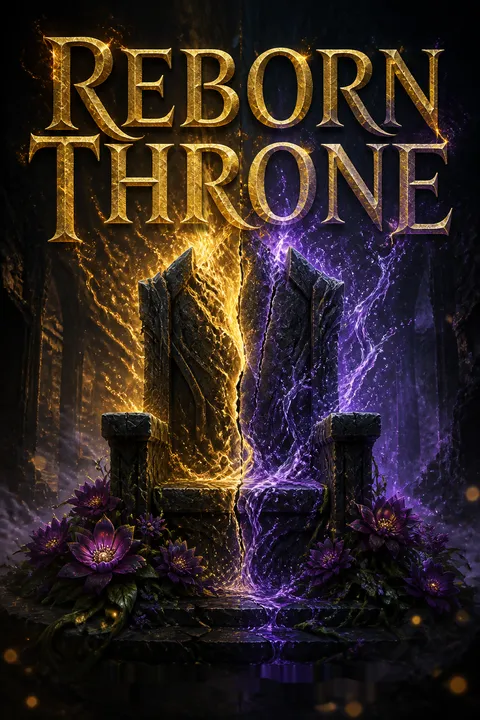
Reborn Throne is a sweeping epic that interrogates the nature of power, the cost of survival, and the possibility of redemption in a world scarred by violence and divine meddling. At its core, the novel is about the struggle to reclaim agency—over one's body, destiny, and heart—in the face of overwhelming odds. The story's emotional arc is defined by sacrifice: every victory is paid for in blood, every act of love is shadowed by loss. Yet, the novel refuses nihilism; instead, it insists on the resilience of hope, the healing power of chosen family, and the necessity of forging new paths from the ashes of the old. The characters' journeys—from Gandrett's transformation into a queen, to Addie's reclamation of her humanity, to the forging of alliances across ancient divides—mirror the world's own struggle to break free from the cycles of pain and vengeance. The novel's ultimate lesson is that peace is not the absence of conflict, but the willingness to face the darkness within and without, to choose love over fear, and to plant blossoms where only death once reigned. In a modern context, Reborn Throne speaks to the enduring relevance of trauma, the complexity of identity, and the hope that even the most broken worlds can be remade.
Review Summary
People Also Read
Characters
Gandrett Brayton
Gandrett's journey is one of transformation—from a traumatized child to a warrior, from a pawn of gods and kings to the Queen of Fae. Her relationships are defined by both love and loss: her bond with Nehelon is passionate and fraught, marked by mutual sacrifice and the willingness to die for each other. Gandrett's psyche is shaped by her early suffering, her time as Vala's Blade, and the trauma of being possessed by Raynar. She is both deeply empathetic and fiercely guarded, her strength lying in her refusal to give up even when hope seems lost. Her development is a testament to resilience, as she learns to accept love, wield power, and ultimately choose her own fate.
Nehelon Idresea
Nehelon is the rightful King of Ulfray, a Fae marked by centuries of pain, betrayal, and the weight of leadership. His relationship with Gandrett is the anchor of his existence, their Mating bond both a source of strength and vulnerability. Nehelon's psyche is defined by his sense of responsibility—for his people, his family, and especially for Gandrett, whom he both adores and fears to lose. His development is a journey from self-loathing and isolation to acceptance and hope, learning to trust others and himself. The loss of his twin, Valyn, and the sacrifices demanded by war deepen his empathy and resolve.
Addie Blackwood
Addie's arc is one of suffering and transformation. Once human, she is forcibly turned into a dragon by Raynar, enduring unspeakable torment and the loss of agency. Her relationships—with Armand, Gordan, and Gandrett—are complex, marked by gratitude, guilt, and the longing for love and belonging. Addie's psyche is fractured by trauma, but her resilience shines as she learns to reclaim her voice, her body, and her future. Her dragon tears, a gift of the gods, symbolize both her pain and her power to heal. Ultimately, Addie chooses her own path, embracing love and freedom on her own terms.
Gordan Sterngrove
Gordan is Nehelon's chosen brother and the general of the Fae armies. His loyalty is unwavering, his courage understated. Gordan's psyche is shaped by loss—of his first Mate, of innocence, and of certainty—but he remains a pillar of support for Gandrett, Nehelon, and Addie. His bond with Addie is both a blessing and a burden, as he learns to love selflessly and to let go. Gordan's development is a study in quiet strength, humility, and the willingness to sacrifice for others without expectation of reward.
Drew Brayton
Gandrett's younger brother, Drew is thrust into a world of magic and war, discovering his own Fae heritage and powers. His journey is one of self-discovery, as he navigates the expectations of family, the dangers of battle, and the complexities of love—especially with Palvin. Drew's psyche is marked by insecurity and the desire to prove himself, but he grows into a capable and compassionate leader. His relationship with Gandrett is both supportive and challenging, as each learns to let the other go.
Palvin of Summer
Palvin is a Fae of Summer, known for his stoicism and skill in battle. Beneath his gruff exterior lies a deep well of care, especially for Drew, with whom he forms a romantic bond. Palvin's psyche is shaped by centuries of war and loss, making him slow to trust and quick to protect. His development is a gradual opening to vulnerability, love, and hope, learning to find joy even in the darkest times.
Surel
Surel is a human blessed by the goddess Vala, her magic a source of healing and power. Her relationship with Valyn is a story of missed chances and unspoken love, her loyalty to Gandrett and the Children of Vala unwavering. Surel's psyche is marked by faith, compassion, and the burden of leadership, especially as she becomes Meister of the Order. Her development is a journey toward self-acceptance and the embrace of her own strength.
Valyn Idresea
Nehelon's twin brother, Valyn is a complex figure—once a rival, then an uneasy ally, and finally a hero. His relationship with Surel is marked by longing and regret, his actions often driven by pride and the desire for love. Valyn's psyche is haunted by past mistakes and the shadow of his mother, Liri. His ultimate sacrifice is both a redemption and a tragedy, leaving those who loved him to mourn what might have been.
Armand Denderlain
Armand's journey is one of loss and responsibility. Once a lord, he becomes King of Sives, carrying the weight of a shattered kingdom and the memory of his cousin Joshua. His relationship with Addie is a source of healing and hope, as both learn to trust and love again. Armand's psyche is marked by survivor's guilt, but also by a deep sense of duty and compassion. His development is a testament to the possibility of renewal after devastation.
Taghi Saza Brina & Mckenzie Brenheran
Taghi, King of Phornes, and Mckenzie, his Sivesian bride, are a study in partnership—both romantic and political. Their relationship is forged in adversity, tested by betrayal, and ultimately triumphant. Taghi's psyche is shaped by the burden of leadership and the fear of loss, while Mckenzie's is marked by resilience and the refusal to be a pawn. Together, they symbolize the hope of a new era, where love and strength are not mutually exclusive.
Plot Devices
Duality of Power and Sacrifice
The narrative structure of Reborn Throne is built on the interplay between power and sacrifice. Magic is both a weapon and a burden, its use exacting a personal and collective toll. The Mating bonds—Fae and dragon—are central plot devices, serving as both sources of strength and vulnerability. The story employs foreshadowing through dreams, visions, and the cyclical nature of history, suggesting that every victory comes at a cost. The use of possession—Raynar inhabiting bodies—serves as a metaphor for the loss of agency and the struggle to reclaim oneself. The convergence of armies and the final battle at Ithrylan are classic epic fantasy devices, but the focus remains on the personal stakes: love, loyalty, and the willingness to pay the ultimate price.
Shifting Alliances and Moral Ambiguity
The plot is driven by shifting alliances—Fae and human, ghosts and dragons, old enemies and new friends. Betrayal and redemption are constant themes, with characters like Valyn, Liri, and Addie embodying the possibility of change. The story uses multiple points of view to explore the inner lives of its characters, revealing that every choice is fraught with ambiguity. The use of letters, visions, and divine intervention adds layers of complexity, blurring the line between fate and free will.
Cyclical History and the Weight of Legacy
The narrative is structured around the repetition of history—the return of the Dragon King, the echoes of the first Dragon War, the scars left by ancient betrayals. Characters are haunted by the choices of their ancestors and must decide whether to repeat or break the cycle. The use of symbols—blossoms in the desert, the fissure in the earth, the crowns of new rulers—serves as both foreshadowing and commentary on the possibility of renewal. The story's resolution is not a simple victory, but a reckoning with the cost of peace and the hope of a better tomorrow.
Shattered Kingdom Series
About the Author
Other books by Angelina J. Steffort

Download PDF
Download EPUB
.epub digital book format is ideal for reading ebooks on phones, tablets, and e-readers.








































