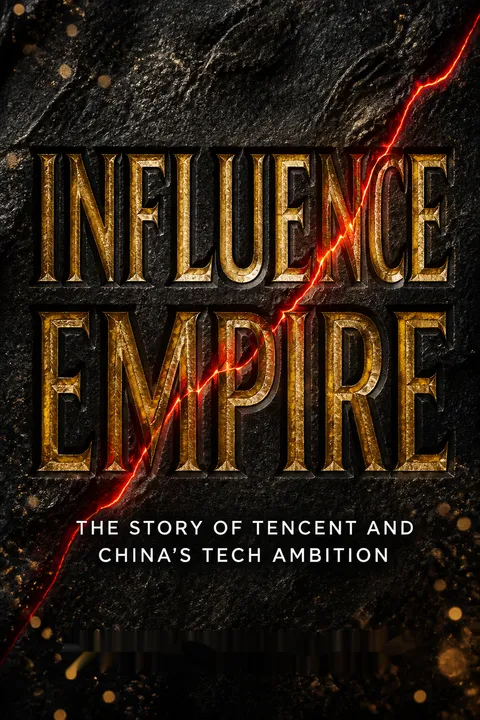

Key Takeaways
1. Tencent's Genesis: Survival Through Adaptation and Copycatting
‘I don’t blindly innovate. Microsoft, Google are both doing what others have been doing. The smartest approach is to learn from the best examples and then try to surpass them.’
Humble beginnings. Tencent, founded by Pony Ma and his friends in 1998, began in a cramped, disco-ball-adorned office in Shenzhen's bustling Hua Qiang Bei electronics bazaar. Their initial product, OICQ, was a direct imitation of the Israeli instant-messaging service ICQ, a common practice in China's nascent internet industry. This early strategy of "copycatting" and micro-innovation, such as allowing offline messaging and smaller download sizes, was crucial for survival in a market with low internet penetration and slow speeds.
Financial struggles. Despite rapid user growth, OICQ struggled to find a viable business model, leading to constant server crashes and near-bankruptcy. Pony Ma even resorted to pretending to be a girl in chat rooms to keep users engaged. A $2.2 million investment from IDG Capital and PCCW provided a temporary lifeline, but the dot-com bubble burst soon after, forcing Tencent to seek further investment and eventually leading to Naspers becoming its largest shareholder.
Monetization breakthroughs. Tencent's first major revenue stream came from partnering with telecom operators to offer mobile alerts for QQ messages, charging users a small monthly fee. This initial success, however, was short-lived as competitors emerged and the company faced pressure to make QQ free again. The introduction of "QQ Show," allowing users to buy virtual avatars and accessories with "Q coins," proved to be a significant monetization breakthrough, tapping into users' desire for online self-expression and laying the groundwork for future in-game purchases.
2. Internal Darwinism: The "Shark Womb" Fuels Innovation
‘Tencent’s culture is like a shark womb,’ said Andy Mok, a senior research fellow at the Center for China and Globalization, alluding to how some unborn sharks cannibalise siblings in the womb to ensure their own survival.
Fierce internal competition. Tencent's unique corporate culture fostered intense internal competition, often pitting multiple teams against each other to develop similar products. This "shark womb" approach, while seemingly inefficient, ensured that only the most robust and user-centric innovations survived. A prime example was the race to develop a mobile messaging app, where three internal teams, including Allen Zhang's, vied to create the next big hit, ultimately leading to WeChat's triumph over QQ's own mobile version.
Self-disruption as survival. Pony Ma famously articulated this philosophy: "You either wait for someone else to kill you, or you kill yourself first." This paranoia about external disruption drove Tencent to constantly innovate and even cannibalize its own successful products. The company's willingness to let WeChat supersede its desktop behemoth QQ demonstrated a radical commitment to staying ahead of market trends, particularly the shift to mobile.
Decentralized innovation. Tencent decentralized its innovation process, moving away from the idea that only the R&D center could generate new ideas. This empowered individual teams and project managers, fostering a culture where proving one's worth through product creation was paramount. This approach, combined with rapid iteration and frequent updates, allowed Tencent to quickly adapt to user feedback and outmaneuver slower, more bureaucratic competitors like Microsoft.
3. Strategic Evolution: From Competitor to Kingmaker Investor
‘There’s a lot of great entrepreneurs outside, and if you turn every single one of them into your enemy, it’s not a good thing. As a company you can’t actually hire these entrepreneurs, so what are you going to do? Investment is actually the best way to get a piece of their action.’
The "killer copycat" reputation. Tencent's aggressive copycatting and market dominance earned it the moniker "killer copycat," culminating in the infamous 3Q battle where it forced users to choose between its QQ service and Qihoo's antivirus software. This public relations disaster and the subsequent "conference of the gods" forced a profound introspection within the company, leading to a strategic re-evaluation.
A paradigm shift. Under the leadership of Martin Lau, Tencent pivoted from a "do everything itself" mentality to becoming an incubator and investor in startups. This new strategy involved taking minority stakes in promising companies, providing capital and leveraging Tencent's vast user base and traffic, rather than directly competing. This shift was exemplified by:
- Sogou acquisition (2013): Tencent invested $448 million in China's third-largest search engine, merging its own search product and outbidding rival Qihoo.
- JD.com investment (2014): Tencent divested its struggling e-commerce unit to JD.com, investing $214 million for a 15% stake, acknowledging its inability to run the business effectively.
Building an ecosystem. This investment-led approach transformed Tencent into one of China's largest investment powerhouses, backing over 800 companies, including more than 120 unicorns and 60 public companies. This ecosystem strategy extended globally, with investments in companies like Spotify, Snap, and Tesla, allowing Tencent to expand its influence without direct operational involvement and fostering goodwill among founders who valued autonomy.
4. WeChat's Reign: China's All-Encompassing Super-App
Despite its name, WeChat is much more than a messaging service.
Ubiquitous digital life. WeChat has transcended its origins as a simple messaging app to become the indispensable "super-app" for over a billion users in China, integrating nearly every aspect of daily online activity. From hailing taxis and ordering food to booking doctor's appointments and playing games, it functions as the de facto operating system for mobile life in the country. Users spend approximately one-fifth of their time on this single platform, making it a central hub for commerce, communication, and entertainment.
Evolution of features. WeChat's continuous evolution, driven by rapid iteration and micro-innovations, has cemented its dominance. Key features include:
- Moments: A social media feed akin to Facebook, allowing users to share photos, videos, and articles.
- Official Accounts: Enabling content creators, businesses, and government agencies to broadcast information and engage with followers.
- Mini Programs: Lightweight apps that run within WeChat, offering a vast array of services without requiring separate downloads, from e-commerce to utility payments.
Privacy vs. convenience. The app's incredible convenience comes at the cost of user privacy, as it collects extensive personal data and is subject to stringent government surveillance and censorship. This trade-off, however, has been largely accepted by Chinese users, making WeChat an invaluable tool for both daily life and state control. Its design, revolving around social connections, constantly pulls users back, creating a powerful, self-reinforcing network effect.
5. Gaming Empire: Tencent's Global Dominance and Content Creation
To understand how big gaming has become, the industry is estimated to have generated revenue of $176 billion in 2021, almost five times the box office of the movie industry.
Gaming as a core pillar. Gaming remains a foundational pillar of Tencent's business, contributing a significant portion of its revenue even as the company diversified. From humble beginnings in casual card games, Tencent strategically expanded into hardcore gaming by licensing titles like CrossFire and Dungeon Fighter, which became massive hits in China. This early success laid the groundwork for its ambition to become a global gaming powerhouse.
Strategic acquisitions. Tencent's most impactful move was its investment in and eventual acquisition of Riot Games, the developer of League of Legends, a pioneering multiplayer online battle arena (MOBA) game. This was followed by a significant stake in Epic Games, creator of the Unreal Engine and the global phenomenon Fortnite. These investments, alongside the acquisition of Supercell (Clash of Clans), transformed Tencent from a mere distributor into a respected publisher and content creator, giving it a formidable portfolio of the world's most popular titles.
E-sports and entertainment. Beyond game development, Tencent has aggressively built an e-sports empire, organizing professional leagues and tournaments for titles like Honour of Kings and League of Legends, attracting millions of viewers. This extends into a broader entertainment strategy, aiming to convert intellectual property from games, anime, and books into movies and other media, akin to Marvel or Disney. Tencent Music Entertainment, a Spotify-like streaming service, further solidifies its position in the digital entertainment landscape.
6. Mobile Payments War: WeChat's Red Packet Disruption
Alipay, which took a decade to establish its dominance in the payments space, branded the event the ‘Pearl Harbor Incident’, underscoring how Tencent had pulled off a deadly – potentially fatal – attack.
The "Pearl Harbor Incident." In 2014, Tencent launched its "Red Packet" promotion during Lunar New Year, allowing WeChat users to send digital cash gifts to friends and family. This seemingly innocuous feature became an overnight sensation, leading millions to link their bank cards to WeChat Pay. This move blindsided Alibaba's Alipay, which had dominated online payments for a decade, and marked a pivotal moment in the mobile payments war.
Proxy battles and ecosystem leverage. Tencent aggressively leveraged its WeChat platform to channel users to its ride-hailing investment, Didi, and its food delivery ally, Meituan. By integrating WeChat Pay into these high-frequency services, Tencent rapidly expanded its mobile payment market share, directly challenging Alipay's dominance. Didi, in particular, innovated by shortening payment lags for drivers, further incentivizing the adoption of WeChat Pay.
Alipay's counter-response. Alibaba responded by pouring billions into its own ride-hailing rival, Kuaidi, and its local services platform, Koubei, integrating them with Alipay. However, Alipay's attempt to replicate WeChat's social media success with "Circles" backfired spectacularly, becoming a public relations fiasco. This forced Alipay to double down on its core payments functionality, adopting QR codes and expanding its merchant network, but the initial disruption by WeChat had already fundamentally reshaped the market.
7. The State's Shadow: Navigating China's Digital Authoritarianism
‘No matter what kind of hotshot you are, we will always have a way of showing you who’s boss,’ the person said, making an off-hand remark about Pony Ma.
Constant government scrutiny. Tencent operates under the constant shadow of China's authoritarian government, which views its vast user data and influence with both appeal and apprehension. From early censorship of QQ to the pervasive surveillance on WeChat, the company has consistently adapted its products to comply with state directives, often leading to self-censorship and the deletion of politically sensitive content. The "internet security police room" within Meituan's headquarters symbolizes this omnipresent state control.
Gaming crackdowns. The gaming industry, a major revenue driver for Tencent, has faced repeated crackdowns. In 2018, regulators froze new game approvals, citing concerns over violence, addiction, and even myopia among youth. Tencent responded by drastically altering games like PUBG, transforming it into "Game for Peace" with patriotic themes and sanitized violence, demonstrating its willingness to align with state ideology for commercial survival.
Global ambitions curtailed. WeChat's global expansion efforts, despite significant investment and celebrity endorsements, largely failed outside Chinese communities due to concerns over censorship and data security. This forced Tencent to focus "deep" on the Chinese market, expanding WeChat's functionality to become an "app for everything" within the country, rather than a global social media giant. The Trump administration's attempted ban on WeChat in the US further highlighted the geopolitical risks inherent in its operations.
8. Beijing's Hammer: The End of China Tech's Golden Era
China was preparing to draw the curtains on the golden age of tech in the world’s largest internet market.
Ant Group's derailment. The unprecedented crackdown on China's tech industry began with the abrupt suspension of Ant Group's $35 billion IPO in late 2020, just days before its listing. Jack Ma's outspoken criticism of financial regulators at the Bund Summit triggered a swift and coordinated response from Beijing, signaling an end to the era of relaxed oversight for fintech giants. This move was a harbinger of broader regulatory tightening across the entire internet sector.
Sweeping industry overhaul. Following Ant's fate, a cascade of regulations targeted monopolistic practices, data security, and predatory pricing across various sectors. Alibaba faced a record $2.8 billion antitrust fine, while online grocery platforms like Meituan and Pinduoduo were scrutinized. The most devastating blow came to the $100 billion after-school tutoring sector, which was ordered to go non-profit and banned from overseas investment, effectively annihilating the industry overnight.
Billionaires silenced. The crackdowns sent chills through China's tech elite, leading many billionaires to step down from leadership roles and make massive charitable donations, signaling their submission to the Party's "common prosperity" agenda. Didi's forced delisting from US exchanges, just months after its IPO, underscored Beijing's resolve to assert control, even at the cost of market value and foreign capital inflow. This marked a fundamental shift from "let a few get rich first" to a more controlled, state-aligned economic model.
9. Beyond Smartphones: Cloud, Metaverse, and the Controlled Future
One of the questions its executives obsess over is what will succeed the smartphone.
Cloud as infrastructure. Tencent Cloud, initially developed to power WeChat and its gaming empire, has grown into a formidable business, operating over a million servers globally. This "C2B2C" strategy connects small businesses with users via WeChat's Mini Programs, offering services like customer relations, HR, and conferences. This approach allows Tencent Cloud to grow as its customers grow, establishing it as a critical internet backbone.
Bets on future tech. Tencent is actively exploring technologies beyond smartphones, including:
- Automobiles: A 5% stake in Tesla aims to integrate Tencent's communication and entertainment apps into driverless cars, creating new user portals.
- Metaverse: Pony Ma's "Quan Zhen internet" vision aligns with the metaverse concept, an immersive virtual reality space. Tencent is the Chinese publisher for Roblox and is investing in VR technology, anticipating a future where gaming, entertainment, and work converge in virtual worlds.
Web3 and state control. The concept of Web3, a decentralized internet built on blockchains, presents a unique challenge in China. While promising to return control to users and content creators, its anti-authoritarian ethos directly contradicts the government's desire for centralized control over information and infrastructure. This tension suggests that China's version of the metaverse or Web3, if allowed to flourish, will likely be a "walled garden," distinct from the global vision, reflecting the ongoing struggle between technological potential and state imperative.
10. Pony Ma's Conundrum: Visionary Entrepreneur Under Party Control
‘Tencent is not an infrastructure-service company and can be replaced at any given moment,’ local media Late Post reported him saying. ‘In the future, when Tencent services the country and society’, the company needs to make sure it ‘doesn’t overstep, be a good assistant’.
The quiet visionary. Pony Ma, an introverted programmer, transformed Tencent from a copycat startup into a global tech giant, demonstrating remarkable strategic foresight and a relentless drive for innovation. His early paranoia about disruption, his embrace of internal competition, and his pivot to an investment-led ecosystem builder were instrumental in Tencent's ascent. He successfully navigated the complexities of China's market, often staying out of the limelight while his company quietly amassed immense power.
Humbled by the state. The sweeping tech crackdown, however, has fundamentally altered Pony's position. From being a "hotshot" who could challenge norms, he and Tencent have been publicly humbled. The company's involvement in politically sensitive data modeling and surveillance, coupled with its sheer scale, underscored its power, prompting Beijing to rein it in. Pony's subsequent public statements, emphasizing Tencent's replaceability and its role as a "good assistant" to the state, reflect a forced submission to the Party's ultimate authority.
A new era of compliance. Tencent is now undergoing a "paradigm shift," divesting assets, restructuring businesses like WeChat Pay into financial holding companies, and facing continuous regulatory scrutiny. The era of reckless expansion and zero-sum competition is over. Pony's legacy, once defined by entrepreneurial audacity and global ambition, is now inextricably linked to his ability to steer Tencent through an increasingly controlled environment, balancing innovation with unwavering loyalty to the Party's vision for a "modernized socialist society."
People Also Read





Download PDF
Download EPUB
.epub digital book format is ideal for reading ebooks on phones, tablets, and e-readers.








































