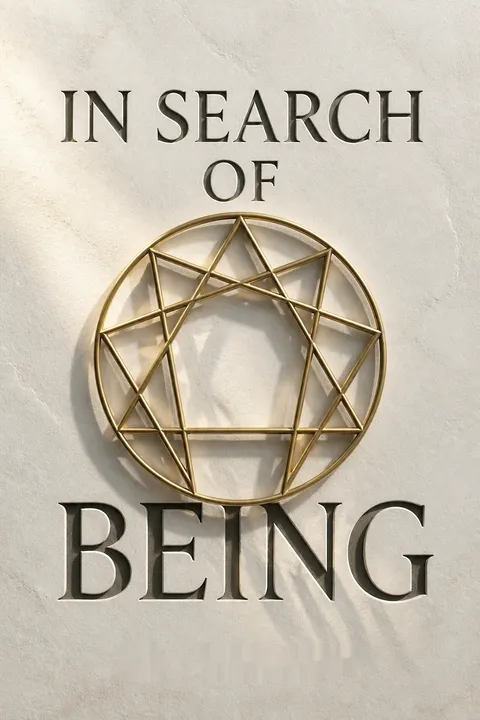

Key Takeaways
1. Man's Mechanical Nature & The Illusion of Waking Life
Man is a machine. Everything we do, all our actions, words, thoughts, feelings, convictions, opinions and habits are brought about by external influences and impressions.
The illusion of agency. Gurdjieff asserts that ordinary humanity is fundamentally mechanical, operating like automatons driven by external influences rather than conscious will. We are born, live, and die in a state of "sleep," unaware of our true nature and the forces that dictate our every action, thought, and feeling. This pervasive unconsciousness means we cannot "do" anything; everything simply "happens" to us.
A dangerous slumber. This state of "clear consciousness" or "waking state" is, in reality, a more dangerous form of sleep than our nightly slumber. While asleep, we are passive, but in our waking sleep, we constantly manifest actions with real-world consequences, yet without self-awareness or control. Wars, societal movements, and individual choices are all products of this collective unconsciousness, leading to destruction and perpetual cycles of suffering.
The path to awakening. Recognizing this hypnotic state is the first, most crucial step towards liberation. The call to "awake," "watch," and "sleep not" found in ancient teachings and religions is not a metaphor but a literal imperative. However, waking up is not a simple act of will; it requires sustained effort against the very forces that maintain this sleep, and often, the help of others who are also striving to awaken.
2. The Fragmented "I" and Absence of True Will
Man has no constant and invariable 'I.' Every thought, every mood, every desire, every sensation says 'I.' And, in each case, we assume that this 'I' speaks for the Whole, the whole person, and that a thought, desire or aversion represents the expression of this Whole.
Legion, not individual. Contrary to our deeply ingrained belief, we possess no single, unified "I" or individuality. Instead, we are a multiplicity of small, often contradictory "I's," each claiming to be the whole person at any given moment. This constant alternation of "I's" is driven by accidental external influences, making our decisions and actions inconsistent and unreliable.
Consequences of fragmentation. This fragmented inner state explains why we frequently make decisions (one "I" decides) but fail to carry them out (another "I" disagrees or is unaware). It also leads to a life where we are constantly paying for the impulsive promises or actions of fleeting "I's." Our perceived "will" is merely the resultant of conflicting desires, not a unified, independent force.
Slavery to the accidental. Without a stable, conscious "I," we remain slaves to external conditions and internal whims. True freedom and the ability to "do" (act consciously) can only emerge from the development of an invariable "I." This requires profound self-knowledge to recognize our inner plurality and begin the arduous work of unifying these disparate parts into a coherent, self-governing entity.
3. The Human Machine: Functions, Centers, and Immaterial Bodies
The human machine has five ordinary functions: Thinking, Feeling, Moving, Instinctive, Sex.
Multiple minds. To understand ourselves, we must recognize that our organism is controlled not by one mind but by several independent "minds" or "centers." These include the thinking, feeling, moving, and instinctive centers, each with its own speed, sphere of action, and characteristics. The sex center is also independent but rarely works autonomously.
Beyond the physical. Ancient doctrine reveals that a fully developed human can possess four bodies, composed of increasingly finer substances. These are:
- The "carnal" or physical body (our ordinary body)
- The "natural" or astral body (for self-consciousness)
- The "spiritual" or mental body (for objective consciousness)
- The "divine" or causal body (for complete control and will)
Ordinary man is born only with the physical body; the higher bodies are not inherent but must be cultivated through conscious effort and inner alchemy.
Inner alchemy. The human organism is a factory designed to transform coarse external "food" (physical food, air, impressions) into finer substances. In ordinary life, this process is inefficient, wasting vital energy. Conscious work involves "separating the fine from the coarse" to accumulate these finer substances, which are essential for the growth of higher bodies and the functioning of higher centers, leading to a higher plane of being and true individuality.
4. Cosmic Laws: The Law of Three and Law of Octaves
All the processes at work in man and the world are governed by a very small number of fundamental laws.
Universal principles. The universe and man are governed by fundamental laws, primarily the Law of Three and the Law of Octaves. The Law of Three states that every phenomenon results from the interaction of three forces: active, passive, and neutralizing. Modern thought often overlooks this crucial third force, leading to incomplete understanding and ineffective action.
Vibrations and discontinuity. The Law of Octaves, or Law of Seven, explains that all vibrations in the universe (light, heat, sound, chemical reactions) develop discontinuously, with periodic accelerations and retardations. This law, represented by the diatonic musical scale, reveals why processes often deviate from their intended direction or come to a halt, especially at "intervals" (mi-fa and si-do) where additional "shocks" are required for continued development.
Man as microcosm. These cosmic laws are mirrored in human life. Our inability to "do" and the frequent failure of our intentions are direct effects of these laws. By understanding the Law of Octaves, we can learn to recognize these "intervals" in our own activities and consciously create the "additional shocks" needed to sustain our efforts, thereby aligning our individual evolution with universal principles and moving from mechanical existence to conscious action.
5. Conscious Evolution: The Path of Knowledge and Being
Right evolution involves a simultaneous development of both lines that is parallel and reciprocal.
Beyond mechanical progress. True human evolution is not an inevitable, mechanical process, nor is it a collective conquest of nature. It is a conscious, individual struggle against mechanical laws, possible only for those who understand their situation and actively strive for inner change. Humanity as a whole does not evolve; what appears as progress is often superficial and easily reversed.
Knowledge and being. Evolution requires the parallel and reciprocal development of "knowledge" and "being." Knowledge without being is theoretical and ineffective, while being without knowledge is aimless. Understanding, the true measure of inner growth, arises from the harmonious relation between these two. Our current state of "sleep" limits both our being and our capacity for genuine knowledge.
The Fourth Way. Traditional spiritual paths (fakir, monk, yogi) demand renunciation of worldly life and focus on one aspect (body, feeling, or mind). The "Fourth Way" offers a unique path that allows individuals to work on all three aspects simultaneously within ordinary life conditions. It emphasizes understanding over blind faith, requiring conscious effort and individualized methods to achieve inner unity and liberation.
6. The Imperative of Self-Observation and Inner Work
Self-study is the work, the way, that will ultimately lead to self-knowledge.
The instrument of change. Self-observation is the primary method for self-study, allowing us to see the mechanical workings of our human machine. Initially, this involves simply "registering" phenomena without analysis, differentiating between thinking, feeling, and moving functions. This objective gaze, like a "ray of light," begins to transform inner processes that previously operated in darkness.
Confronting inner enemies. Self-observation reveals our inner fragmentation, the constant "identification" with fleeting thoughts and emotions, and the pervasive "lying to oneself" through "buffers" that mask contradictions. These buffers, while providing comfort, prevent the necessary "shocks" that lead to awakening. Overcoming these internal obstacles requires merciless honesty and sustained effort.
Starting small, aiming for wholeness. The work begins with small, conscious efforts against mechanical habits, such as controlling the expression of unpleasant emotions or adopting unaccustomed postures. The goal is to "see the whole" of oneself, to recognize the "other person" (personality) that dominates our actions, and to separate "I" (essence) from this mechanical self. This separation is the first step towards mastering oneself and achieving inner freedom.
7. Disillusionment and the Necessity of "Schools"
In order to approach the Fourth Way seriously, we must be disillusioned, first with ourselves—that is, with our abilities—and secondly with all of the old ways.
A necessary disillusionment. A crucial prerequisite for the Fourth Way is profound disillusionment: with one's own abilities, with the fruitlessness of past searches, and with the limitations of conventional science, philosophy, and religion. This isn't a loss of faith or interest, but a recognition that existing methods are insufficient to achieve true knowledge or inner change, prompting a search for a better way.
The need for collective effort. Individual efforts, no matter how sincere, are often insufficient for awakening. The complexity of human nature, our inherent laziness, and the constant pull of mechanical habits necessitate collective work. "Schools" are imperative, providing organized conditions, methodology, and discipline under a knowledgeable leader to guide individuals through the arduous process of self-transformation.
Group dynamics and rules. Work in groups fosters mutual assistance, as members act as "mirrors" for each other's faults. Strict rules, such as not disclosing group discussions and being completely honest with the leader, serve as "alarm clocks" to combat sleep and develop will. This structured environment, though challenging, is designed to create the "super-efforts" necessary for inner growth, which cannot be sustained alone.
8. Liberation Through Voluntary Suffering and Freedom from Influences
Only voluntary suffering has value.
Two rivers of life. Human life flows in two streams: a passive, accidental current of ordinary humanity, and an active, conscious current of individual progression. Liberation means crossing from the first river, where personal fate is accidental, to the second, where individual effort and law govern development. This transition requires a "death" to the old self and its illusions, a profound revaluation of values based on genuine inner need.
The power of conscious friction. True inner change is forged through "voluntary suffering," the conscious struggle against internal contradictions and mechanical reactions. Unlike accidental, unconscious suffering (e.g., hunger), voluntary suffering creates a specific "substance" necessary for inner development. This involves bringing the "Law of Three" within oneself, creating friction between opposing internal forces to produce new, subjective results.
Choosing influences. We are constantly subjected to various influences—chemico-physical (material emanations) and associative (forms, feelings, suggestions). Freedom is not escape from all influences, but the conscious choice of which influences to be subject to. This requires discriminating between them and applying different principles (attraction for chemico-physical, repulsion for associative) to become passive to hindering influences and actively engage with those that foster growth.
9. The True Aim of Religion: "Doing" and Acquiring a Soul
To have a soul is the aim of all religions, of all schools. It is only an aim, a possibility—not a fact.
Beyond superficial belief. Gurdjieff challenges conventional understanding of religion, asserting that its true aim is "doing" and the acquisition of a "soul," not mere belief or adherence to external forms. A "Christian," for example, is one who lives Christ's precepts, not just believes in them. Most modern religions have lost their "how to do" component, becoming incomplete and subjective philosophies.
The soul as a material construct. A soul is not an inherent birthright but a material construct, a "second body" (astral body) composed of very fine matter, which can be acquired only through conscious effort and the accumulation of specific substances. Ordinary man has no soul and no will; he is a machine. The formation of this astral body is the ultimate goal of all true spiritual paths.
Conscious creation. The universe operates by the Law of Three, with the Absolute creating from Himself. Man, created in God's image, can also "create" by consciously absorbing and emanating three substances. This process, when directed inwardly, leads to the crystallization of the soul, allowing for existence after physical death and a higher order of being, free from mechanical influences.
10. Objective Art, Symbols, and the Enneagram as Keys to Knowledge
Pure knowledge cannot be transmitted, but the symbols that express it are like a veil that becomes transparent for those who desire and know how to look.
Art as objective transmission. Unlike subjective modern art, true "objective art" (e.g., the Sphinx, ancient temples) is created with conscious intent to transmit specific ideas and feelings, acting on viewers in a definite way. These works are like "books" that can be "read" not just intellectually, but emotionally, conveying profound cosmic knowledge across millennia to those with developed centers.
Myths and symbols as language. Recognizing the limitations of ordinary language for expressing unity, ancient bearers of objective knowledge encoded fundamental truths into "myths," "symbols," and "verbal formulas." These were designed to bypass the ordinary mind and reach man's higher centers, ensuring accurate transmission of ideas inaccessible to subjective consciousness and preventing misinterpretation.
The Enneagram: A universal hieroglyph. The Enneagram, a circle divided into nine parts with specific internal connections, is a universal symbol synthesizing the Law of Seven and the Law of Three. It represents a "perpetuum mobile" – a machine of eternal movement – and contains all knowledge. Understanding and utilizing the Enneagram, which must be perceived in motion, grants immense power and is a key to objective knowledge and self-perfection, revealing the inner structure of octaves and the unity of all things.
Review Summary
In Search of Being receives a 4.25/5 rating, with readers split on its accessibility. Supporters praise Gurdjieff's method of self-initiation through puzzle-like teachings, calling it brilliant and transformative. Critics warn against it for newcomers, noting the editor's assembly undermines Gurdjieff's pedagogical approach. Reviewers appreciate concepts like humanity's "waking sleep," multiple "I"s, and self-observation, though some find sections tedious or cultlike. The book challenges readers with ideas about consciousness levels, buffers, and negative emotions. Most agree it's demanding but potentially valuable for serious spiritual seekers willing to verify ideas themselves.
People Also Read




About the Author
Other books by G.I. Gurdjieff

Download PDF
Download EPUB
.epub digital book format is ideal for reading ebooks on phones, tablets, and e-readers.








































