
Plot Summary
Shadows and Shattered Memories
Dove Hendry's life is defined by a childhood tragedy: the brutal murder of her parents, a memory so traumatic it's been buried deep within her psyche. Raised in foster care, Dove is plagued by nightmares and the persistent presence of "The Shadow," a figure who stalks her waking and sleeping hours. Despite her beauty and talent as a dancer, she is emotionally scarred, struggling to find her place in a world that feels perpetually unsafe. Her only solace is dance, which becomes both her shield and her means of expression. The chapter sets a tone of loss, resilience, and the ever-present threat of darkness, as Dove's past refuses to let her go, shaping her into a survivor who trusts no one.
The Abduction and the Cell
Dove's fragile stability shatters when she is violently abducted after a shift at the club where she dances. She awakens in a sterile, opulent cell, shackled and surrounded by other terrified girls. The captors are masked, their motives unclear, but their cruelty is unmistakable. Dove endures psychological torment and sexual violence, her sense of self eroding with each passing day. She forms a tentative bond with Rose, another dancer, as they try to make sense of their captivity. The cell becomes a crucible, forging Dove's will to survive even as her hope dims. The trauma is compounded by the sense that her captors know more about her than she does herself.
Escape to Midnight Mayhem
After weeks of captivity, Dove and Rose are abruptly "rescued" by four enigmatic young men—the Brothers of Kiznitch—who whisk them away by helicopter to a sprawling, mysterious estate. The girls are told they are now part of Midnight Mayhem, a traveling show that is neither circus nor carnival, but something far darker. Their freedom is an illusion; they are given no choice but to perform, their lives now bound to the whims of Delila Patrova, the show's chilling matriarch. The estate is a labyrinth of secrets, and the girls are watched, tested, and manipulated at every turn. Dove's sense of agency is further eroded, but a spark of rebellion remains.
The Brothers of Kiznitch
Dove is thrust into the orbit of Kingston (King), Killian, Kyrin, and Keaton—the Brothers of Kiznitch—each with their own brand of menace and allure. King, the brooding leader, is both protector and tormentor, his interest in Dove tinged with something deeper and more dangerous. The Brothers are bound by blood, violence, and secrets, their loyalty to each other absolute. Dove is drawn to King despite herself, their chemistry electric and fraught with peril. The Brothers' world is one of power games, rituals, and performances that blur the line between art and brutality. Dove must navigate their shifting allegiances and her own conflicted desires.
Delila's Sinister Invitation
Delila Patrova, the mastermind behind Midnight Mayhem, offers Dove and Rose a devil's bargain: perform for the show, or face oblivion. Delila's philosophy is simple—she collects the broken and the beautiful, molding them into performers who captivate and disturb. The girls are given new identities, new roles, and new rules. Delila's presence is both maternal and monstrous, her interest in Dove especially intense. The contract is binding, and the threat of violence is ever-present. Dove realizes that her only hope of survival is to excel, to become indispensable, even as she chafes against her captivity.
Training, Rivalries, and Rose
As Dove and Rose begin their training, they encounter the other performers—each with their own traumas and ambitions. Rivalries flare, especially with Val, the reigning queen of the show, who sees Dove as a threat. Rose becomes Dove's confidante, their friendship a rare source of comfort. The training is grueling, blending dance, acrobatics, and psychological manipulation. Dove's natural talent sets her apart, but also makes her a target. The girls are forced to confront their fears and their pasts, their performances becoming both catharsis and spectacle. The bonds they form are tested by jealousy, desire, and the ever-present threat of punishment.
The First Show: Knife and Wheel
Dove's debut in Midnight Mayhem is a trial by fire. She is bound and made the centerpiece of a knife-throwing act, her life literally in the hands of the Brothers. The act is both terrifying and exhilarating, a dance with death that blurs the line between victim and performer. The show's signature act, the Triple Wheel of Death, pushes Dove to her limits, forcing her to trust King even as she fears him. The audience is enthralled, but for Dove, the performance is a crucible—one that reveals both her strength and her vulnerability. The show is a microcosm of the world she now inhabits: beautiful, brutal, and utterly unforgiving.
Games of Power and Seduction
Life with the Brothers is a constant game of seduction and control. Dove is drawn into their rituals—card games that reveal secrets, dares that test boundaries, and performances that demand total surrender. Her relationship with King deepens, their connection both passionate and antagonistic. The Brothers' jealousy and possessiveness create a volatile environment, with Dove caught in the crossfire. Sexual tension simmers, culminating in encounters that are as much about power as pleasure. The games are a way to assert dominance, but also to forge bonds. For Dove, desire becomes both weapon and weakness.
The Shadow's Haunting Return
As Dove settles into her new life, the specter of The Shadow returns—this time with a face. Jack, a seemingly innocuous performer, is revealed as the masked figure who tormented Dove in her cell. His betrayal is a devastating blow, reigniting old traumas and forcing Dove to confront the reality that she is never truly safe. The revelation fractures the fragile trust she has built with the Brothers, especially King, whose own secrets begin to surface. The past and present collide, and Dove is forced to choose between vengeance and survival.
Secrets, Bloodlines, and Betrayals
The web of secrets surrounding Midnight Mayhem begins to unravel. Dove discovers that she is not who she thought she was—her true name is Persephone, and she is the surviving twin, her sister Dove having died years before. The revelation is shattering, calling into question everything she remembers and believes about herself. The Brothers, too, are revealed to be more than performers—they are heirs to a criminal dynasty, their lives shaped by violence and vendetta. The truth about Dove's parentage, her connection to King, and the real reason she was targeted comes to light, forcing her to confront the legacy of blood and betrayal that binds them all.
The Truth of Persephone
With the help of Killian and Keaton, Persephone undergoes hypnosis to recover her lost memories. The process is agonizing, forcing her to relive the murder of her sister and the betrayal of her parents. She learns that her entire life has been a lie, constructed to protect her from the truth of her origins. The revelation is both liberating and devastating, as Persephone must reconcile the girl she was with the woman she has become. Her relationship with King is transformed, their bond deepened by shared pain and the knowledge that they are each other's only salvation.
The Final Act: Love and Vengeance
The climax of the story is a final, explosive performance—a dance of love, vengeance, and self-assertion. Persephone confronts Jack, her tormentor, and with King's help, exacts her revenge. The act is both literal and symbolic, a reclaiming of power and agency. The Brothers rally around her, their loyalty tested and affirmed. The show becomes a battleground, with Persephone at its center, no longer a pawn but a queen. The lines between performance and reality blur, as the characters embrace their roles and their destinies.
Rebirth, Revenge, and Reunion
In the aftermath of the final act, Persephone and King are forced to confront the damage done—to themselves, to each other, and to those they love. Forgiveness is hard-won, and healing is a slow, painful process. The family that has been forged in blood and fire begins to mend, old wounds closing as new bonds are formed. Persephone claims her place in Midnight Mayhem, not as a victim, but as a leader. The cycle of violence is broken, if only for a moment, and the possibility of a new beginning emerges.
The New Family and Forgiveness
Persephone, now fully herself, gathers her own troupe within Midnight Mayhem, recruiting new performers and forging a new identity. The relationships she has built—with Rose, Maya, Val, and the Brothers—become the foundation of a new family, one chosen rather than inherited. The traumas of the past are not forgotten, but they are no longer the sole defining force in her life. Forgiveness, both given and received, becomes the key to moving forward. The show goes on, but with Persephone at its heart, it is transformed.
Dancing with the Devil
The relationship between Persephone and King is the story's emotional core—a love forged in violence, tested by betrayal, and redeemed by vulnerability. Their passion is both destructive and redemptive, a dance with the devil that threatens to consume them both. In the end, it is their willingness to confront their own darkness, to forgive each other and themselves, that allows them to find peace. Theirs is not a fairy-tale romance, but a hard-won partnership built on mutual respect, desire, and the shared scars of survival.
The Next Stage: Mayhem's Future
As the dust settles, Persephone looks to the future—not just for herself, but for Midnight Mayhem. The show is poised to evolve, its legacy now in her hands. The threats of the past linger, but Persephone is no longer afraid. She has claimed her power, her identity, and her place in the world. The story ends with the promise of new beginnings, new challenges, and the unbreakable bonds of a family forged in the crucible of mayhem.
Analysis
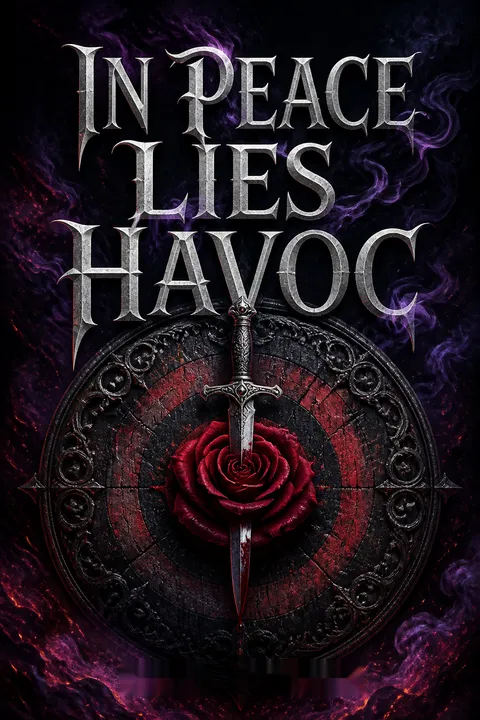
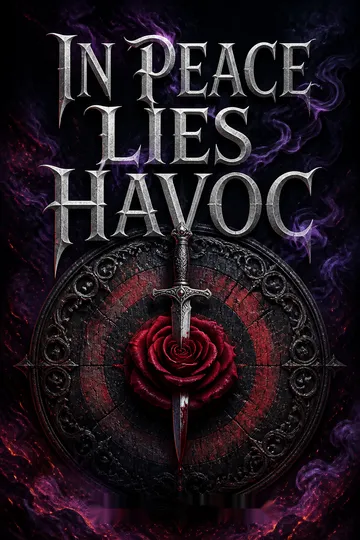
Amo Jones's In Peace Lies Havoc is a dark, hypnotic exploration of trauma, identity, and the search for belonging. At its core, the novel is about the ways in which pain can both destroy and transform, forging bonds that are as much about survival as about love. The world of Midnight Mayhem is a microcosm of a society obsessed with spectacle, power, and the commodification of beauty and suffering. Through the lens of performance—dance, ritual, and violence—Jones interrogates the boundaries between victim and survivor, art and exploitation, love and possession. The novel's greatest strength lies in its refusal to offer easy answers: its characters are flawed, its relationships fraught, and its resolutions hard-won. In a modern context, the book speaks to the enduring power of found family, the necessity of confronting one's own darkness, and the possibility of redemption even in the most broken of places. Ultimately, In Peace Lies Havoc is a story about reclaiming agency, forging identity from the ashes of trauma, and finding peace not in the absence of chaos, but in the heart of mayhem itself.
Review Summary
In Peace Lies Havoc by Amo Jones receives polarizing reviews with a 4.06 rating. Fans praise the dark, twisted romance set in the Midnight Mayhem world—a traveling sexual performance troupe featuring the dangerous Brothers of Kiznitch and heroine Dove. Readers love the intense chemistry, plot twists, and unique circus aesthetic. Critics cite confusion, underdeveloped characters, unrealistic reactions, plot holes, and repetitive cycles. The dark themes include kidnapping, assault, and Stockholm syndrome elements. Many appreciate Jones's creativity and mind-bending storytelling, while others find the execution lacking and characters unrelatable.
People Also Read
Characters
Dove/Persephone Hendry
Persephone, known for much of the story as Dove, is a young woman shaped by trauma, resilience, and a desperate search for identity. Her childhood was shattered by violence, her memories fractured and suppressed. As a dancer, she channels her pain into art, using movement as both escape and expression. Persephone's journey is one of self-discovery—uncovering the truth of her origins, reclaiming her agency, and forging her own destiny. Her relationships—with Rose, the Brothers, and especially King—are fraught with danger and desire. Persephone is both victim and warrior, her strength lying in her refusal to be defined by her past. Her arc is one of transformation: from pawn to queen, from lost girl to leader.
Kingston "King" Axton
King is the enigmatic, tormented leader of the Brothers of Kiznitch. Raised in a world of violence and secrecy, he is both protector and predator, his loyalty to his family absolute. King's relationship with Persephone is the story's emotional core—a love marked by obsession, betrayal, and redemption. He is haunted by his own actions, especially his role as "The Shadow," and struggles to reconcile his duty with his desire. King is a study in contradictions: ruthless yet vulnerable, dominant yet desperate for connection. His arc is one of atonement, as he learns to forgive himself and fight for the woman he loves, even when it means defying his own family.
Killian Cornelii
Killian is the charismatic, mischievous member of the Brothers, known for his quick wit and hypnotic abilities. He serves as both comic relief and emotional anchor, his loyalty to his brothers and to Persephone unwavering. Killian's relationship with Persephone is complex—part friendship, part rivalry, part unspoken longing. He is the first to recognize her true identity and plays a crucial role in helping her recover her memories. Beneath his playful exterior lies a deep well of pain and wisdom, making him one of the most nuanced characters in the story.
Keaton Kournikova
Keaton is the stoic, heavily tattooed Brother, whose quiet strength masks a deep well of emotion. He is revealed to be Persephone's half-brother, a secret that adds layers of complexity to their relationship. Keaton is fiercely protective, his loyalty to his family and to Persephone absolute. He is a man of few words, but his actions speak volumes. Keaton's arc is one of revelation and acceptance, as he comes to terms with his own identity and his place within the fractured family of Midnight Mayhem.
Kyrin Nero
Kyrin is the most enigmatic of the Brothers, his moods shifting from brooding silence to explosive violence. He is both feared and respected, his loyalty to his family unquestioned. Kyrin's relationship with Persephone is marked by tension and mutual wariness, but also by a grudging respect. He is a survivor, shaped by his own traumas, and serves as a reminder of the darkness that lurks beneath the surface of Midnight Mayhem. Kyrin's arc is one of gradual opening, as he learns to trust and to care, even when it goes against his instincts.
Delila Patrova
Delila is the mastermind behind Midnight Mayhem, a woman who collects the broken and the beautiful and molds them into performers. She is both maternal and monstrous, her interest in Persephone especially intense. Delila's motivations are complex—part ambition, part genuine care, part need for control. She is a survivor of her own traumas, her ruthlessness tempered by flashes of vulnerability. Delila's arc is one of power and loss, as she struggles to maintain control over a world that is constantly threatening to unravel.
Rose
Rose is Persephone's first true friend within Midnight Mayhem, a fellow dancer whose warmth and resilience provide a lifeline in a world of danger. She is fiercely loyal, her own traumas mirroring Persephone's in many ways. Rose's arc is one of healing and empowerment, as she learns to trust, to fight, and to claim her own agency. Her friendship with Persephone is a rare source of comfort and hope, a reminder that even in the darkest places, connection is possible.
Val
Val is the reigning star of Midnight Mayhem, a woman whose beauty and talent are matched only by her ambition. She sees Persephone as a threat, and their rivalry is both personal and professional. Val is not a simple villain—her own insecurities and traumas drive her actions, making her both sympathetic and infuriating. Over time, her relationship with Persephone evolves from antagonism to grudging respect, as both women learn the value of solidarity in a world that seeks to pit them against each other.
Jack
Jack is the story's most insidious antagonist—a performer who is revealed to be The Shadow, the masked figure who tormented Persephone in her cell. His betrayal is a devastating blow, reigniting old traumas and forcing Persephone to confront the reality that she is never truly safe. Jack is a cautionary tale, a reminder of the dangers that lurk within even the most seemingly innocuous people. His arc is one of descent and destruction, his fate a warning to others.
Kohen Axton
Kohen is King's twin brother, a man shattered by the loss of Dove and haunted by his own demons. His relationship with Persephone is fraught with longing and regret, as he struggles to reconcile the girl he loved with the woman she has become. Kohen is both rival and ally, his pain a mirror of Persephone's own. His arc is one of mourning and acceptance, as he learns to let go of the past and find a new path forward.
Plot Devices
Duality of Identity and Memory
The novel's central device is the duality of identity—Dove and Persephone, victim and survivor, pawn and queen. The suppression and recovery of memory is both literal and metaphorical, driving the plot and the characters' development. Hypnosis, trauma, and the manipulation of truth are used to explore questions of selfhood, agency, and destiny. The revelation that Persephone is the surviving twin, not Dove, is a masterstroke of narrative misdirection, forcing both character and reader to reevaluate everything that has come before.
Performance as Survival and Power
The world of Midnight Mayhem is one where performance is both survival and spectacle. Dance, acrobatics, and ritualized violence are used to assert power, forge bonds, and process trauma. The acts are both literal and symbolic, serving as crucibles in which characters are tested and transformed. The line between victim and performer is constantly blurred, raising questions about agency, consent, and the cost of survival.
Games, Rituals, and Power Dynamics
The Brothers' world is governed by games—card games, dares, and performances that serve as both bonding rituals and power plays. These games are used to assert dominance, test loyalty, and reveal secrets. The final act, in which love and vengeance are performed for an audience, is the ultimate expression of this dynamic, a moment where the personal and the performative collide.
Foreshadowing and Symbolism
The novel is rich in foreshadowing and symbolism—the ace of spades, the recurring motif of birds, the use of masks and mirrors. These elements serve to hint at deeper truths, to connect past and present, and to underscore the themes of duality, transformation, and rebirth. The use of performance as both mask and revelation is especially potent, inviting the reader to question what is real and what is artifice.
Found Family and Chosen Bonds
The story's emotional heart lies in the creation of a found family—a group of broken, beautiful people who choose each other in the face of violence and betrayal. The bonds forged in Midnight Mayhem are tested by jealousy, desire, and the ever-present threat of death, but they endure. The novel suggests that family is not just a matter of blood, but of choice, loyalty, and shared survival.
Midnight Mayhem Series
About the Author

Download PDF
Download EPUB
.epub digital book format is ideal for reading ebooks on phones, tablets, and e-readers.








































