
Plot Summary
1. The Actress and the Disappearance
Aimee Sinclair, a rising actress in London, returns home after a grueling day on set to find her husband, Ben, missing. Their marriage, already fractured by jealousy, secrets, and emotional violence, is pushed to the brink by his sudden disappearance. Ben's wallet, phone, and keys are left behind, and a bouquet with a cryptic "Sorry" card sits on the table. Aimee's anxiety spirals as she tries to convince herself—and the police—that she's not responsible. The narrative's tension is immediate: Aimee's identity as an actress blurs with her real life, and her ability to lie for a living becomes both her shield and her curse. The sense of dread is palpable, as Aimee's past and present begin to collide, and the reader is left questioning what is real and what is performance.
2. Childhood Lost and Stolen
Flashing back to Galway, 1987, we meet Ciara, a lonely, unwanted child blamed for her mother's death and neglected by her father and brother. Her innocence is shattered by violence and poverty, culminating in her abduction by Maggie, a woman who promises safety but delivers captivity. Maggie renames her Aimee, erasing her Irish identity and forcing her into a new life in England. The psychological scars of this stolen childhood—abuse, manipulation, and the loss of self—become the foundation for Aimee's adult struggles. The narrative's dual timeline reveals how trauma and reinvention are inextricably linked, and how the past refuses to stay buried, haunting every aspect of Aimee's present.
3. Marriage of Lies
Aimee's relationship with Ben is a toxic dance of control, resentment, and mutual suspicion. Ben, threatened by Aimee's success, becomes possessive and emotionally abusive, while Aimee, desperate for love and validation, hides her true self behind the mask of her public persona. Their arguments escalate, culminating in a violent confrontation the night before Ben disappears. The police investigation exposes the cracks in their marriage, and Aimee's unreliable memory—possibly the result of childhood trauma—casts doubt on her innocence. The theme of identity is central: Aimee is never sure who she is, or who Ben really was, and the reader is left to question the nature of truth in a world built on lies.
4. The Stalker's Shadow
As the investigation deepens, Aimee becomes convinced that a stalker—someone who knows her darkest secrets—is orchestrating her downfall. The stalker's calling card, "I know who you are," appears in emails, postcards, and even in person, always just out of reach. The stalker mimics Aimee's appearance, blurring the line between victim and perpetrator. The sense of paranoia intensifies as Aimee's finances are drained, her reputation is attacked, and evidence mounts against her. The stalker's presence is both literal and symbolic: a manifestation of Aimee's guilt, fear, and the unresolved trauma of her past.
5. Money, Memory, and Misdirection
Aimee discovers that her joint bank account has been emptied and closed—apparently by her own hand, though she has no memory of doing so. Surveillance footage and receipts place her at locations she doesn't recall visiting. The police, led by the enigmatic Detective Croft, begin to suspect Aimee of foul play, and her own sense of reality starts to fracture. The narrative plays with the concept of memory: Aimee's childhood diagnosis of amnesia is weaponized against her, and she is forced to question her own sanity. The reader is drawn into a hall of mirrors, unsure what to believe, as Aimee's world becomes increasingly surreal and threatening.
6. The Police and the Past
Detective Croft and her partner Wakely probe Aimee's life, uncovering inconsistencies and hidden connections. They find evidence of violence in the marriage, missing passports, and a history of stalking. Croft's interrogation style is both clinical and personal, forcing Aimee to confront uncomfortable truths about her relationships and her own behavior. The investigation is complicated by Aimee's unreliable narration and the deliberate misdirection of the stalker. The police become both adversaries and potential saviors, as Aimee oscillates between fear of being framed and fear of being found out.
7. Becoming Aimee Sinclair
The narrative delves into Aimee's transformation from Ciara to Aimee Sinclair. Maggie, her captor, systematically erases Ciara's Irishness, teaching her to speak "proper" English, giving her a new birthday, and forcing her to perform for survival. The lessons of acting, deception, and self-preservation become Aimee's tools as an adult, but also her prison. The motif of names—how they can be given, stolen, or erased—underscores the novel's exploration of identity. Aimee's success as an actress is both a triumph and a tragedy: she can become anyone, but she no longer knows who she really is.
8. The Vanishing Husband
As the investigation stalls, Aimee becomes increasingly isolated. The evidence against her mounts: her fingerprints on incriminating objects, surveillance footage of someone who looks like her, and the discovery of lighter gel used to burn a body. The police find a body buried in Aimee's garden, identified as Ben Bailey. But nothing is as it seems. The narrative reveals that Ben was not who he claimed to be, and that his entire identity was a fabrication. The disappearance is not just a crime, but a performance—a final act in a long-running play of deception.
9. The Doppelgänger's Game
The stalker's campaign escalates, using Aimee's own history and vulnerabilities against her. Evidence is planted, alibis are destroyed, and Aimee's sense of self is systematically dismantled. The stalker's obsession is revealed to be deeply personal, rooted in the shared trauma of childhood. The narrative's tension reaches a fever pitch as Aimee is arrested for Ben's murder, and the media turns her life into a spectacle. The doppelgänger motif—someone who looks, acts, and even thinks like Aimee—becomes a metaphor for the inescapability of the past and the dangers of not knowing oneself.
10. The Sins of Maggie
Maggie's chapters reveal her as both victim and villain: a woman shaped by hardship, driven by envy, and obsessed with control. Her relationship with Aimee is a twisted blend of love, possession, and resentment. Maggie's own identity is as fluid as Aimee's—she has stolen names, lives, and even bodies to survive. Her house-clearance business becomes a metaphor for her ability to erase and rewrite the past. Maggie's final acts are driven by a sense of betrayal and impending mortality, as she seeks to reclaim what she believes is rightfully hers.
11. The Trap Tightens
The shocking revelation: Ben was never Ben, but Eamonn—Aimee's long-lost brother, warped by years of abuse and abandonment. Eamonn orchestrated the entire plot, assuming Ben's identity, marrying Aimee, and framing her for murder as punishment for her childhood escape. The incestuous relationship, hidden in plain sight, is the ultimate violation of trust and identity. Eamonn's psychological torment is matched only by his physical violence, and Aimee is forced to confront the darkest parts of her past in order to survive.
12. The Truth in the Attic
Searching for answers, Aimee discovers a shoebox in the attic filled with postcards from the stalker, all bearing the message "I know who you are." The attic, a symbol of the mind's hidden recesses, contains the physical proof of Aimee's manipulated reality. The discovery of childhood photos, documents, and Maggie's business card leads Aimee to the truth about her origins and the elaborate plot against her. The attic scene is a turning point: Aimee must choose whether to remain a victim or reclaim her agency.
13. The Red Shoes
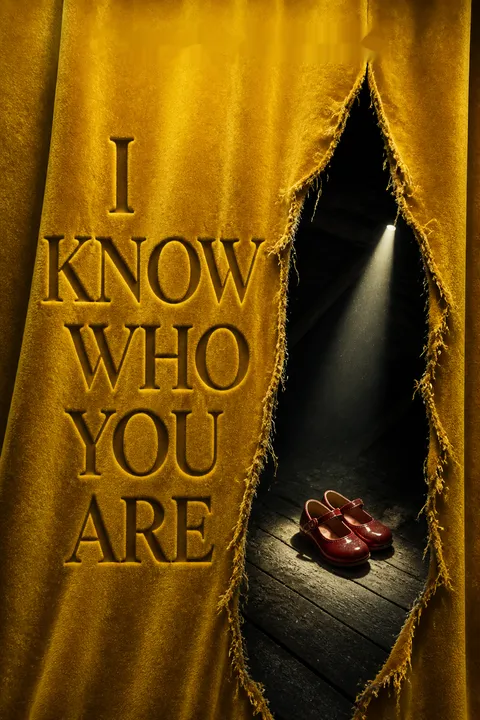
The motif of the red shoes recurs throughout the novel, representing Aimee's stolen childhood, her longing for love, and the price of survival. The shoes, a birthday wish never granted, become a symbol of everything Aimee has lost—and everything Eamonn seeks to reclaim. In the climactic confrontation, Eamonn presents the shoes as a twisted gift, forcing Aimee to relive her trauma and submit to his control. The red shoes are both a weapon and a wound, a reminder that the past can never be fully escaped.
14. The Final Performance
Trapped in her childhood home, bound and at Eamonn's mercy, Aimee draws on the lessons of acting and survival instilled by Maggie. She feigns submission, convincing Eamonn that she wants to be with him, lulling him into complacency. In a desperate act of self-defense, she kills him, ending the cycle of abuse and reclaiming her identity. The final performance is not on stage, but in life—and it is the role that saves her.
15. The Monster Revealed
The aftermath of Eamonn's death is both liberating and devastating. Aimee is forced to confront the reality of her own actions, the legacy of violence, and the impossibility of returning to innocence. The monster is not just Eamonn, but the system of abuse, neglect, and secrecy that created him—and her. The novel's resolution is ambiguous: justice is served, but at a terrible cost, and the scars of the past remain.
16. The Last Act
Six months later, Aimee is free, her name cleared, and her career restored. She is pregnant, married to Jack, and outwardly successful. But the past lingers: Alicia White has vanished, Maggie is dying, and the truth of Aimee's identity remains hidden. In a final, metafictional twist, Aimee's on-camera confession blurs the line between character and self, performance and reality. The novel ends with the haunting refrain: "Sometimes I kill." The cycle of reinvention continues, and the question of who Aimee really is remains unresolved.
Analysis
A modern psychological thriller about identity, trauma, and the masks we wearI Know Who You Are is a masterclass in unreliable narration and psychological suspense, using the conventions of the thriller genre to explore deeper questions of selfhood, memory, and survival. Alice Feeney crafts a narrative where every character is both victim and perpetrator, and where the past is never truly past. The novel interrogates the ways in which trauma shapes identity, the dangers of reinvention, and the corrosive effects of secrecy and shame. Through Aimee's journey—from stolen childhood to public scandal, from victimhood to agency—the reader is forced to confront uncomfortable truths about the nature of evil, the limits of forgiveness, and the impossibility of ever fully knowing oneself or others. The book's final, chilling refrain—"Sometimes I kill"—serves as both a confession and a warning: in a world built on lies, the greatest danger may come from within.
Review Summary
I Know Who You Are receives mixed reviews, averaging 3.42/5. Many readers praise Alice Feeney's gripping writing style, short chapters, and unpredictable twists, with some calling it a page-turning psychological thriller. However, a significant number of reviewers express strong negative reactions to the ending, describing it as revolting, implausible, and relying on shock value. The book's depictions of child abuse, animal cruelty, and spousal abuse also disturb many readers. Comparisons to Feeney's debut, Sometimes I Lie, are frequent, with most agreeing that debut was superior.
People Also Read



Characters
Aimee Sinclair / Ciara
Aimee is the novel's protagonist, an actress whose entire life is a performance. Born Ciara in Ireland, she is blamed for her mother's death, neglected by her family, and ultimately kidnapped by Maggie, who erases her identity and forces her to become Aimee Sinclair. As an adult, Aimee is haunted by her past, her unreliable memory, and her inability to trust anyone—including herself. Her marriage to Ben (Eamonn) is a repetition of childhood abuse, and her career as an actress is both an escape and a prison. Aimee's psychological complexity is rooted in her need for love, her fear of abandonment, and her capacity for self-deception. Her journey is one of survival, self-discovery, and the painful reclamation of agency.
Ben Bailey / Eamonn
Ben, Aimee's husband, is revealed to be Eamonn, her long-lost brother. Scarred by childhood neglect and the loss of his sister, Eamonn's love curdles into obsession and revenge. He assumes the identity of Ben Bailey, orchestrates an elaborate plot to marry and torment Aimee, and frames her for murder. Eamonn's psychological profile is one of deep trauma, narcissism, and a desperate need for control. His incestuous relationship with Aimee is the ultimate violation, and his final acts are driven by a twisted sense of justice and longing for the past. Eamonn is both victim and villain, a product of abuse who becomes an abuser.
Maggie O'Neil
Maggie is the woman who kidnaps Ciara and transforms her into Aimee Sinclair. Her motivations are complex: part envy, part loneliness, part genuine affection. Maggie's own history is one of hardship and reinvention—she has stolen names, identities, and lives to survive. Her relationship with Aimee is a toxic blend of love, control, and resentment. Maggie's legacy is one of psychological manipulation, teaching Aimee to act, lie, and survive at any cost. In her final years, Maggie is consumed by regret, jealousy, and a desire for recognition. She is both creator and destroyer, a symbol of the dangers of unchecked power and unresolved trauma.
Detective Alex Croft
Detective Croft is the primary investigator in Ben's disappearance. Methodical, sharp, and emotionally detached, she is both adversary and potential ally to Aimee. Croft's probing questions and refusal to accept easy answers force Aimee to confront her own lies and the reality of her situation. Croft represents the outside world's demand for truth and accountability, but her own limitations and biases complicate the investigation. She is a mirror for Aimee: both women are defined by their roles, their need for control, and their struggle to reconcile past and present.
Jack Anderson
Jack is Aimee's co-star and eventual lover. Handsome, charming, and emotionally wounded by his own past, Jack offers Aimee a glimpse of genuine connection and safety. Their relationship is complicated by secrets, misunderstandings, and the ever-present threat of exposure. Jack's presence in Aimee's life is both a catalyst for change and a reminder of the difficulty of trust. He represents the possibility of redemption, but also the risk of repeating old patterns.
Alicia White
Alicia is Aimee's professional and personal nemesis: a more beautiful, more successful actress who mirrors Aimee's insecurities and ambitions. Their rivalry is rooted in childhood, and Alicia's eventual disappearance is both a mystery and a warning. Alicia embodies the dangers of envy, competition, and the relentless pursuit of validation. Her fate is left ambiguous, a ghostly presence haunting Aimee's new life.
Jennifer Jones
Jennifer is a tabloid reporter who exploits Aimee's vulnerability for personal gain. Her relentless pursuit of scandal, manipulation of evidence, and willingness to betray confidences make her a formidable antagonist. Jennifer's actions accelerate Aimee's downfall, but also expose the corrosive effects of fame, media, and public scrutiny. She is a symbol of the world's appetite for spectacle and the destruction of privacy.
John Sinclair
John is Maggie's partner and Aimee's surrogate father during her captivity. His role is ambiguous: both protector and participant in Maggie's abuse, he is ultimately destroyed by the violence he helped perpetuate. John's fate—imprisonment and death—serves as a cautionary tale about the consequences of complicity and the impossibility of escaping the past.
Eamonn (as a child)
Eamonn's childhood is marked by loss, neglect, and the burden of caring for his sister. His love for Ciara is genuine but becomes warped by jealousy, abandonment, and the trauma of their separation. The seeds of his later violence are sown in these early years, and his transformation into Ben is both inevitable and tragic.
Hilary (cellmate)
Hilary is Aimee's cellmate during her imprisonment. Practical, resourceful, and unflappable, Hilary provides Aimee with food, information, and a measure of comfort. Her presence is a reminder that survival often depends on the kindness of strangers, and that even in the darkest places, connection is possible.
Plot Devices
Dual Timelines and Unreliable Narration
The novel alternates between Aimee's present-day crisis and her traumatic childhood, gradually revealing the connections between past and present. This structure creates suspense, misdirection, and a sense of inevitability. Aimee's unreliable narration—shaped by trauma, manipulation, and self-deception—forces the reader to question every detail. The use of amnesia, false memories, and planted evidence heightens the sense of paranoia and instability.
Identity Theft and Doppelgängers
The motif of stolen names, forged documents, and impersonation runs throughout the novel. Aimee, Ben, Maggie, and even secondary characters reinvent themselves to survive, escape, or seek revenge. The doppelgänger theme—someone who looks, acts, and even thinks like Aimee—serves as both a literal threat and a metaphor for the inescapability of the past.
Foreshadowing and Symbolism
Recurring symbols—the red shoes, postcards, attic, and photographs—foreshadow key plot twists and emotional beats. The red shoes represent lost innocence and the price of survival; the attic is a repository of hidden truths; the postcards are both a threat and a clue. These devices create a sense of cohesion and inevitability, drawing the reader deeper into the web of secrets.
Metafiction and Performance
Aimee's career as an actress becomes a metaphor for her entire existence: she is always performing, always hiding, always adapting. The novel's final scenes—Aimee's on-camera confession, the media circus, and the ambiguous ending—invite the reader to question the nature of truth, identity, and storytelling itself.
About the Author
Other books by Alice Feeney




Download PDF
Download EPUB
.epub digital book format is ideal for reading ebooks on phones, tablets, and e-readers.








































