
Key Takeaways
1. The Information Environment is Rigged for Chaos, Not Accuracy
The present reality: our information environment—that space where we seek, contribute to, and interact with the world’s knowledge—is completely and truly f*cked.
A massive paradox. We live in an era of unprecedented access to knowledge, yet we feel less certain about critical issues. Our information ecosystem is a "tangle of lies, distortions, and rage-filled rants," designed to promote chaos and deceive us. This crisis impacts everything from health and politics to mental well-being, with misinformation now recognized as a global threat.
Perverting incentives. The tools we rely on for certainty—science, expert opinions, and evidence-informed recommendations—are corrupted by algorithms, sensational headlines, and ideological echo chambers. Social media platforms, for instance, incentivize sharing engaging content over truthful content, turning subtle social rewards (likes, shares) into the dominant motivation for online engagement. This creates a "knowledge production and distribution crisis" where clarity is manipulated for profit.
Ideology's grip. Our perception of information is increasingly colored by political leanings and echo chambers, leading us to only see and share what confirms our existing beliefs. Studies show political ideology can strongly predict beliefs about health treatments, even among physicians, more than exposure to scientific research. This ideological spin happens almost instantaneously, making it harder to find uncorrupted data or straightforward recommendations.
2. "Scienceploitation" Exploits Trust in Science for Profit
The word is simply being used, Gazzola argues, to sell “quantum-inspired woo” by “stealing and distorting concepts from science in order to produce fake scientific foundations to absurd claims.”
Science-y sells. The public generally trusts science, making scientific language a powerful marketing tool. "Scienceploitation" is the practice of using scientific-sounding but often meaningless jargon—like "quantum," "stem cells," or "microbiome"—to inject credibility into bogus products, procedures, and agendas. This isn't new; past eras saw "magnetic" and "radioactive" products marketed with similar deceptive tactics, sometimes with fatal consequences.
The cycle of exploitation. An exciting scientific development generates pop culture buzz, which hucksters then exploit by flooding the market with products that riff on the new science. This cycle has played out with genetics, stem cells, neuroscience, and quantum physics. For example, stem cell language is used to market unproven therapies for everything from pain to anti-aging, despite legitimate science confirming very few established stem cell treatments.
Harmful persuasion. Science-y language creates an "illusion of scientific authority" and certainty, even for pseudoscientific topics. Studies show it persuades across cultures and educational backgrounds, often because its opacity makes it sound impressive. This can lead to real harm, encouraging the sale of ineffective or dangerous health products, and fueling fearmongering about things like "toxins," "5G waves," or "gene-altering vaccines."
3. Academic Hype and Predatory Publishing Pollute Real Science
“If you can find me a single academic who hasn’t had to bullshit or bluff or lie or embellish in order to get grants, then I will find you an academic who is in trouble with [their] head of department.”
The hype pipeline. The academic research community itself contributes to the noise through a "hype pipeline" driven by funding pressures. To secure grants, researchers often make "entirely unrealistic promises of near-future benefit," leading to exaggerated claims in grant applications, publications, and press releases. This culture of hype, where not hyping your research is "frowned upon," distorts public expectations and can take decades to rectify.
A broken system. The grant funding process is "ridiculously competitive and time-consuming," with success rates often low and outcomes arbitrary. Studies show little agreement among peer reviewers on grant quality, and no correlation between grant ranking and future research productivity. This wasteful system, costing billions in public funds, incentivizes "salami science" (dividing findings into many small papers) and "quantity over quality" practices.
Predators and zombies. This pressure fuels a "vast fake science industry" of predatory journals that charge publication fees but lack rigorous peer review, publishing "useless and, too often, fraudulent research." These journals, sometimes with absurd editorial boards (like Ollie the dog), pollute academic literature and are used to legitimize misinformation. Even retracted studies, like the infamous Wakefield paper linking vaccines to autism, continue to be cited and influence public perception, acting as "zombie science" that "will not die."
4. "Health Halos" Deceptively Leverage Our Desire to Do Good
“Without realizing it, people equate nature with God, which makes natural the equivalent of holy. Nature, like God, can do no wrong, and all suffering is due to humans defying the natural—that is, holy—order of things. Act naturally, and we return to paradise.”
The goodness illusion. Health halos are words or phrases—like "natural," "organic," "clean," "gluten-free," or "immune-boosting"—that create an immediate impression of health, safety, or virtue, short-circuiting critical thinking. These terms exploit our desire to do good for ourselves, our families, and the environment, offering a shortcut to certainty in a confusing information environment.
Deceptive marketing. These halos are often "meaningless and deceptive," lacking scientific coherence or evidence.
- "Natural": The "mother of all health halos," it implies inherent goodness despite having no consistent definition and often being applied to highly processed foods.
- "Organic": While regulated, it doesn't necessarily mean healthier or better for the environment, and blind taste tests often show no difference in taste.
- "Non-GMO": Despite overwhelming scientific consensus on GMO safety, this label thrives on the inaccurate belief that GMOs are dangerous.
- "Immune-boosting": A scientifically inaccurate concept that promotes ineffective and potentially harmful supplements, even appearing in headlines from trusted health institutions.
Harmful consequences. Health halos do more than just mislead; they can adversely impact behavior. They can cause people to eat larger portions of "healthy" foods, wrongly perceive unhealthy products (like "natural" cigarettes) as safer, and distract from evidence-informed public health strategies. This "health-halo market cascade" entrenches misleading concepts, making them impervious to scientific correction once they gain public acceptance.
5. Wishful Thinking and Bias Distort Even "Righteous" Research
“People seem far more willing to accept lower-quality data and call it conclusive when it fits with what they perceive to be righteous ends or feel-good ideas,” David Allison tells me.
The allure of "good." Our desire to achieve virtuous goals—whether it's healthier food, a cure for disease, or a more sustainable lifestyle—can warp how we perceive and represent evidence. This "wishful thinking" engages cognitive biases like confirmation bias and motivated reasoning, leading us to construct a feeling of certainty even when objective analysis points elsewhere.
White hat bias. This phenomenon describes the "distortion of research-based information in the service of what may be perceived as righteous ends." Studies show that research on topics deemed noble (e.g., preventing childhood obesity, finding COVID-19 therapies) is more likely to be funded, published, and reported in a misleadingly positive way, even if the data is low-quality or inconclusive. This pollutes the literature and misinforms the public.
Ideology and identity. Wishful thinking is deeply intertwined with our ideological worldviews and personal identities. The "manly optimization" trend, for example, leverages archaic masculinity norms to sell unproven "bro-science" products like testicle tanning. This not only promotes unhealthy behaviors but also reinforces harmful stereotypes. Narratives, especially in documentaries, can powerfully persuade by appealing to emotions and anecdotes, even when the underlying science is weak or absent, making "a good story almost always wins the day."
6. The "Opinion Economy" Thrives on Fake and Biased Reviews
“It is depressing, isn’t it? This journey we’ve all been on,” Butler says after I ask him what his experiment says about the current information environment and our quest for certainty.
A false reality. The "opinion economy" is a vast, largely unregulated industry built on our reliance on online reviews for nearly every purchasing decision. We trust these reviews—often more than friends, family, or experts—because they feel authentic, offer quick answers, and tap into the "wisdom of the crowd." However, this trust is often misplaced.
Ubiquitous fakery. A significant portion of online reviews are "straight-up fake," purchased, AI-generated, or written with ulterior motives. Estimates suggest 25-60% of reviews are unreliable, boosting average star ratings and influencing billions in spending. Companies are incentivized to create fake reviews to improve search rankings and sales, leading to a "review-manipulation arms race" that regulators struggle to control.
Biases in the machine. Even genuine reviews are skewed by numerous biases:
- External factors: Weather (rainy days drag down ratings).
- Personal identity: Gender (men devalue "feminine" brands), cultural prejudices.
- Social influence: Reviewers are influenced by previous ratings, creating a "herd mentality" that undermines the "wisdom of the crowd."
- Post-purchase rationalization: Reviewers are more likely to rate products positively if they've already invested in them.
This results in a polarized, unrepresentative sample of opinions, making reviews of professionals (like doctors) particularly unreliable as they rarely correlate with actual clinical outcomes.
7. You Can't Reliably Spot Fake Information, So Be Skeptical
The fact is most humans are not particularly good at distinguishing between truth and lies.
Illusory superiority. Most people believe they can spot fake news and unreliable information, but research consistently shows this is a cognitive bias. We tend to overestimate our abilities compared to others, making us susceptible to misinformation. This "Dunning-Kruger effect" means those most overconfident in their judgment are often the ones most likely to believe and spread falsehoods.
Sophisticated deception. The technology for producing fake reviews and misleading content is rapidly evolving, making it "increasingly difficult to identify fakes." Even experts and sophisticated algorithms struggle to distinguish authentic from AI-generated or expertly crafted fraudulent posts. This means assuming you can reliably detect fakes is a dangerous overconfidence.
The paradox of trust. Despite recognizing the problem of fake reviews, consumers still view them as highly reliable and essential for decisions. This paradox stems from our desperate desire for certainty and convenient guideposts in a chaotic information environment. The "pull and persuasive force" of online reviews, coupled with our cognitive biases, keeps us coming back, even when we "should know better."
8. A Path Forward: Fix Science, Pause, and Question Everything
Without them, we are truly lost. This I know, with certainty.
The fundamental fix. To escape the "post-truth quagmire," we need a strong, trustworthy empirical foundation. This requires a "massive culture shift" in academia, moving away from quantity and hype towards quality and impact. Reforms must include:
- Shutting down fake journals: Delegitimizing and closing publications that spread harmful nonsense.
- Rapid retractions: Quickly removing fraudulent or unsound papers from literature and clearly flagging them.
- Rewarding replication: Funding and celebrating research that confirms past work and publishes negative results.
- Open data: Making research data accessible to foster transparency and trust.
- Research integrity: Enforcing ethical conduct and discouraging publication in predatory venues.
- Science communication: Prioritizing and supporting accurate, engaging, and non-hyped communication to counter misinformation.
Personal strategies for certainty. As individuals, we can protect ourselves by adopting "The Certainty Six":
- Pause: Recognize the information ecosystem isn't rigged for accuracy; take a beat before sharing.
- Watch for scienceploitation: Be suspicious of science-y jargon, especially from pseudoscience purveyors.
- Resist hype: Assume claims that sound "too good to be true" probably are; look for broad consensus, not single breakthroughs.
- Question "goodness" marketing: Recognize health halos as misleading shortcuts; focus on real food and evidence-based practices.
- Consider the body of evidence: Don't fall for "single study syndrome"; seek scientific consensus from reliable sources.
- Like what you like: Be skeptical of the opinion economy; seek independent expert reviews and trust your own genuine preferences.
Building lighthouses. Our current information environment fosters fatigue and undermines our receptivity to truth. We must reverse the trend of "tearing down the lighthouses"—science, evidence-based recommendations, and authentic opinions—and instead "build up and protect those lighthouses." This generational challenge demands a multi-pronged approach to empower citizens and guide us toward genuine clarity and certainty.
Review Summary
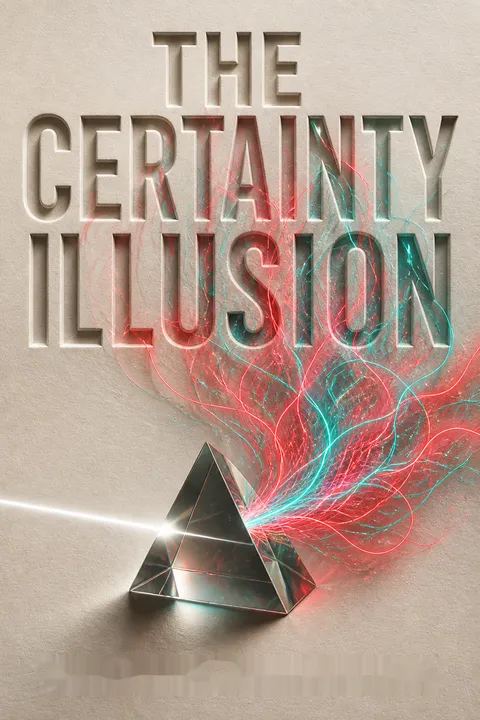
The Certainty Illusion receives mixed reviews averaging 3.97/5 stars. Readers praise Caulfield's examination of pseudoscience, fake scientific journals, manipulated reviews, and misuse of terms like "natural" and "quantum." The book explores three main illusions: science, goodness, and opinion. Many appreciate its accessible writing and Canadian perspective, finding it essential reading for navigating misinformation. However, some criticize perceived political bias, smugness, and excessive examples. Several note the book may primarily appeal to those already skeptical of wellness culture and pseudoscience, with limited practical solutions offered for combating misinformation.
People Also Read

About the Author
Other books by Timothy Caulfield
Download PDF
Download EPUB
.epub digital book format is ideal for reading ebooks on phones, tablets, and e-readers.








































