

Key Takeaways
You are somebody's idiot — and that changes everything
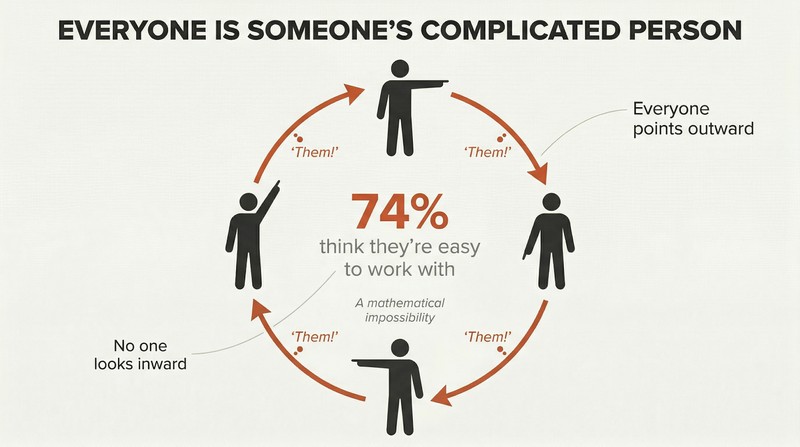
The moment you saw this book's title, a specific name popped into your head. But here's the uncomfortable truth from Ryan Leak's national survey of 1,000 working Americans: while you're mentally drafting a "how to be less complicated" manual for your colleagues, someone else is drafting one for you. That 74% stat is a mathematical impossibility that reveals our collective blind spot.
Recognizing your own complications isn't self-flagellation — it's strategic. Until you acknowledge your quirks, triggers, and blind spots, you'll keep approaching workplace conflicts as the reasonable hero surrounded by villains. Leak's entire framework rests on this premise: understanding complicated people begins with understanding the complicated person in the mirror.
Your misery traces back to 1 – 5 people, not a broken company
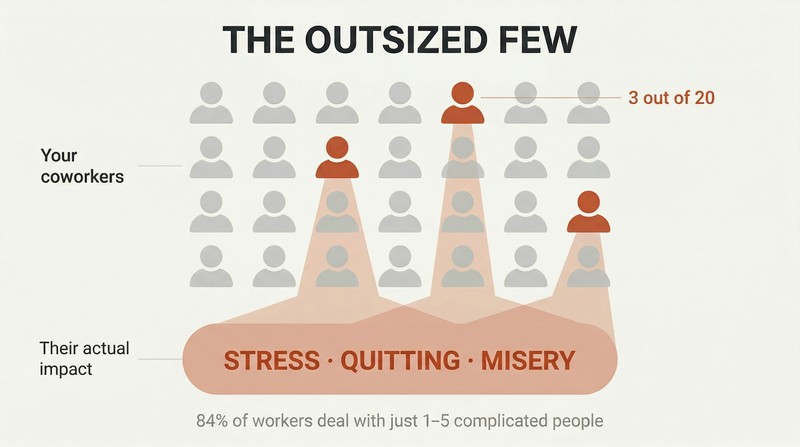
The damage feels enormous. Nearly half of Americans deal with complicated people daily. Two-thirds report high stress. Eleven percent have experienced suicidal thoughts tied to workplace relationships. But Leak's research reveals a surprising silver lining: 84% of workers deal with just 1 to 5 genuinely complicated individuals.
That concentration is your leverage. The negative effects — tanked morale, eroded trust, avoidance, even quitting (44% have quit over a complicated boss) — all trace back to a tiny handful wielding outsized influence. If you improve your working relationship with even two or three of them, you'll likely transform your entire work experience. This isn't about fixing a broken organization; it's about building bridges to a small, specific group.
Understand complicated people instead of avoiding, changing, or canceling them
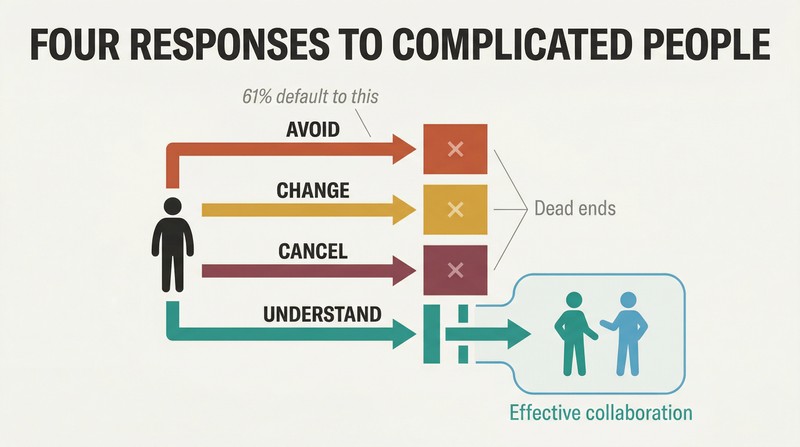
Leak identifies four options when facing complicated people:
1. Avoid them (61% do this constantly or often)
2. Change them (manipulation by another name)
3. Cancel them (write them off entirely)
4. Understand them
Only the fourth option produces lasting results. A coworker named Lucy was labeled "rude" for eight years because no one knew she was deaf in one ear. When she finally shared her story, the label dissolved overnight — she wasn't complicated, just misunderstood. Understanding doesn't mean agreeing. It means engaging authentically, asking questions without judgment, and recognizing that the word "with" in the title is the linchpin — a connecting word that puts you on the same side.
Detox your expectations before every difficult interaction
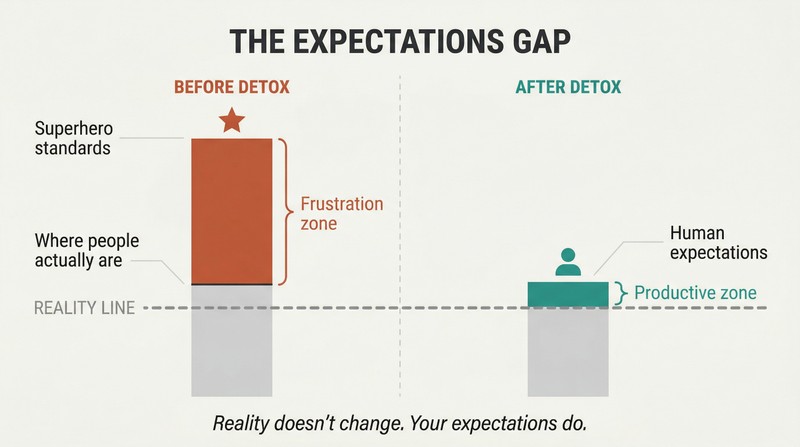
An expectations detox means honestly evaluating what you think people should do — and why reality keeps falling short. Leak describes Baron, a pharma exec whose superhero standards left his team walking on eggshells. When Baron started expecting human imperfection instead of demanding miracles by Monday, creativity flourished and colleagues began sharing ideas they'd hidden for years.
Practical resets Leak recommends: accept that meetings will be messy, that not everyone will agree with your pitch, and that someone going through a divorce won't be emotionally balanced daily. Before interactions, tell yourself: "This probably won't be easy. They probably won't agree. But it's okay if it's complicated." Something can be awkward and still be productive.
Rewrite the villain's backstory before you write them off
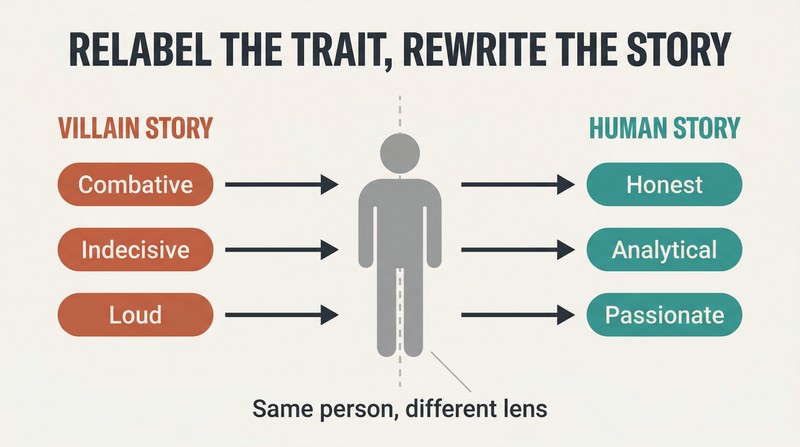
Your brain is an unreliable narrator. It casts you as the hero and fills in blanks about others' motives — usually with villain-level assumptions. Leak applies Brené Brown's hypothesis of generosity: what's the most charitable interpretation of someone's behavior? Maybe that curt reply had nothing to do with you. Maybe their crappy attitude hides a personal crisis.
Try relabeling their traits: "combative" might mean "honest," "indecisive" might mean "analytical," "loud" might mean "passionate." An NBA coach who dreaded working with a notoriously "difficult" player eventually discovered the player's intensity came from relentless drive. His one-line epiphany: "He's grown on me." Leave room for people to grow on you.
Ask what it's like to be on the other side of you
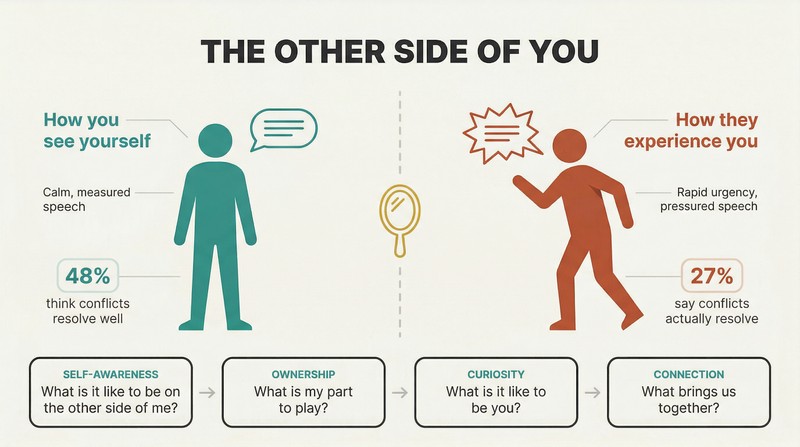
Leak's collaboration mindset rests on four self-check questions:
1. What is it like to be on the other side of me? (self-awareness)
2. What is my part to play? (ownership)
3. What is it like to be you? (curiosity)
4. What brings us together? (connection)
After a speech, someone asked Leak if Kobe Bryant seemed "in a hurry" during their conversation. Kobe wasn't — but Leak realized he often was, making people around him talk faster as if they were on a shot clock. That blind spot was costing him connection. His survey also found executives report 48% positive conflict resolution while employees report only 27% — suggesting leaders routinely misjudge their own effectiveness.
A team of clones will groove together right off a cliff
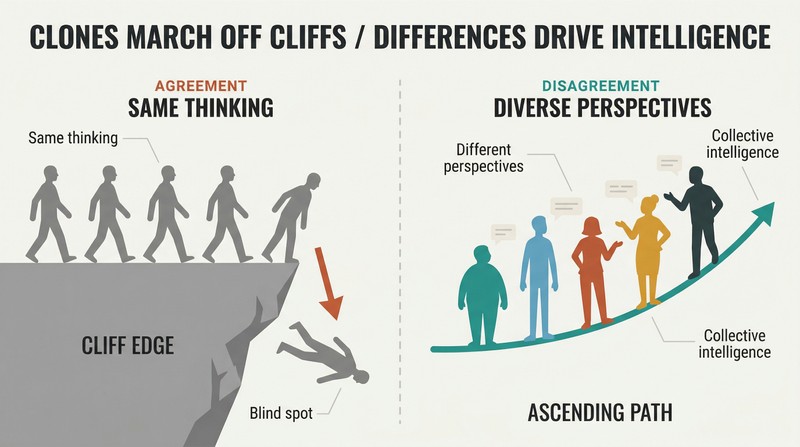
William Wrigley Jr. pivoted from soap to baking soda to chewing gum — each time because customers and employees told him he was wrong. He preferred workers "with backbone" who would challenge his ideas. His philosophy: when two people always agree, one of them is unnecessary.
Research confirms this. A landmark study on collective intelligence found that a team's c factor — its group smartness — wasn't strongly predicted by individual IQ. What mattered most was social sensitivity (reading each other's cues), equal conversational turn-taking, and the proportion of women. Connection quality trumped raw brainpower. Complicated people who see differently aren't obstacles to great work — they're prerequisites for it.
Treat decency as a career strategy, not just a personality trait
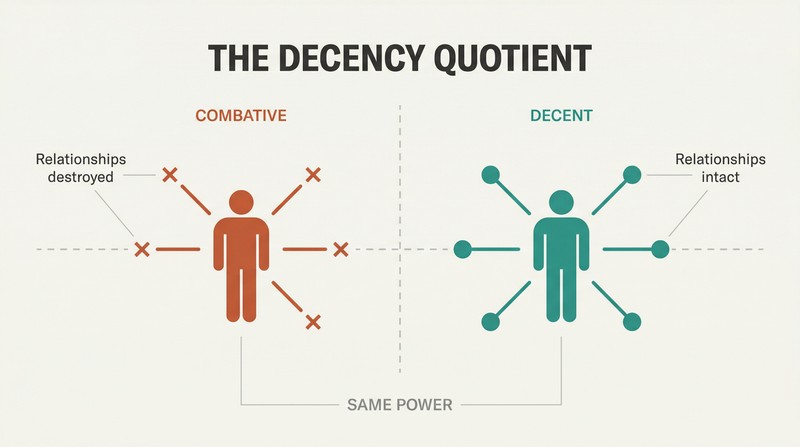
Leak introduces the DQ connection — decency quotient — measuring your ability to connect through kindness, empathy, and genuine care. It's the fifth of his People Qs, alongside intelligence, emotional awareness, adaptability, and tech savvy. A Harvard Business Review article argues DQ ensures that IQ and EQ are "used to benefit society, not tear it down."
Does being decent cost you career advancement? UC Berkeley researchers ran two fourteen-year studies and found that selfish, combative, and manipulative individuals gained no more power than generous, trustworthy ones. The bullies intimidated their way upward but destroyed relationships that offset any advantage. Nice guys don't finish last — they just have fewer bodies under their bus.
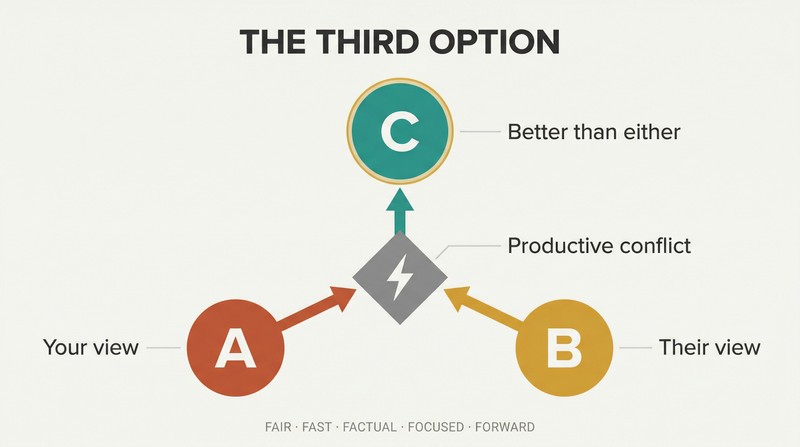
Disagreements are doorways to a third, better option
BlackBerry owned the smartphone market — then watched it evaporate. One root cause: their board consisted entirely of finance people who thought alike. Groupthink killed their ability to hear dissent. Meanwhile, a Fortune 100 leader discovered that his team's "complicated" colleague Richard — an empathetic questioner who slowed meetings down — consistently produced better outcomes. They began inviting him into rooms specifically for balance.
Leak offers five rules for productive conflict:
1. Fight fair — no manipulation or intimidation
2. Fight fast — don't let resentment brew for months
3. Fight factually — stick to data, not ego
4. Fight focused — keep it about the task, not personalities
5. Fight forward — treat disagreement as a stepping-off point for exploration
Set picket fences, not castle walls, around your work life
Some people put the "nearly" in "nearly anyone." They're uncoachable, unapologetic, and uninterested in meeting you 10% of the way. For them, you need boundaries — but Leak distinguishes between a castle wall (defensive, isolating, moat with crocodiles) and a picket fence (delineative, marking where your territory begins while still allowing conversation).
Start with small wins: headphones to block interruptions, Do Not Disturb after hours, scheduled focus blocks, hard stops for phone calls. Boundaries aren't about controlling others' behavior — they're about controlling your response. Crucially, good boundaries keep you connected, not isolated. They define terms for ongoing collaboration. If someone repeatedly violates them, that data tells you when a relationship may need to end.

Decide to forgive coworkers before they hurt you
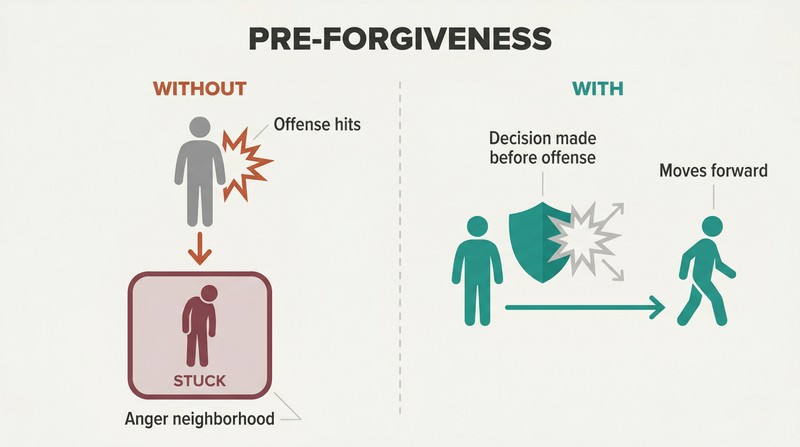
Pre-forgiveness is Leak's term for a one-time life decision: you will forgive people before they've offended you. When an insult lands or a colleague steals credit, you don't deliberate whether to forgive — you already decided. It's not naivety; it's preparation. Since you can't plan around complicated people, plan your way into forgiveness instead.
The data supports this approach. Leak's survey found 59% of workers experienced anger or bitterness from complicated colleagues in the past year. Research shows workplace forgiveness leads to higher job satisfaction, greater engagement, and lower burnout. One practical technique: pick a calendar date by which you want to be over a specific grudge. Give bitterness an expiration date — then work toward it through processing, therapy, or honest conversation.
Analysis
Leak's book arrives at a telling inflection point in workplace culture. The post-pandemic recalibration — hybrid models, five-generation workforces, AI disruption — has amplified interpersonal friction rather than reducing it. His central contribution is reframing the 'difficult people' conversation from a complaint genre into an agency genre: you cannot change complicated colleagues, but you have far more levers than you think.
The book's empirical backbone — a nationally representative 1,000-person survey — lends credibility to claims that could otherwise feel like motivational platitudes. The finding that 84% of people deal with only 1 to 5 genuinely complicated individuals reframes what feels like an overwhelming systemic problem into a targeted, solvable challenge. Similarly, the stark gap between executives' self-reported conflict resolution success (48%) and employees' experience (27%) exposes a power-blindness that few leadership books address this directly.
Where Leak is strongest is in synthesizing psychological concepts for a practitioner audience. The expectations detox, the collaboration mindset's four questions, and the People Qs framework give readers a portable cognitive toolkit rather than abstract principles. The hierarchy of four responses — avoid, change, cancel, or understand — is simple enough to recall in the heat of frustration, which is precisely when frameworks matter most. The weakest element is the book's breadth. By covering everything from generational dynamics to email etiquette to customer service to forgiveness theology, Leak occasionally sacrifices depth for scope. The People Qs framework lumps technology quotient alongside emotional intelligence in a way that feels categorical rather than integrated. And the forgiveness chapter, while personally compelling, pivots from the workplace-centric evidence grounding earlier chapters into a more spiritual register.
Still, Leak's central provocation — that complicated people are often a feature, not a bug, of productive teams — challenges the dominant 'toxic people' narrative that encourages avoidance and self-protection over engagement and growth. In an era when cancellation is the default, advocating for understanding is quietly radical.
Review Summary
How to Work with Complicated People receives mixed reviews averaging 4 out of 5 stars. Readers appreciate Leak's emphasis on self-awareness, acknowledging that we're all complicated to someone. The book offers practical communication strategies and highlights four key habits: self-awareness, ownership, curiosity, and connection. Many found it applicable beyond the workplace. Common criticisms include repetitiveness, lack of actionable steps, and placing too much responsibility on the reader. Some reviewers felt the advice was elementary, while others praised its accessible, conversational tone and found it insightful for personal growth and team leadership.
People Also Read





Glossary
Expectations detox
Resetting unrealistic people expectationsA practice of intentionally evaluating and adjusting what you expect from others before interactions. The goal is to stop getting blindsided by normal human imperfection by aligning expectations with reality, rather than holding people to unspoken or impossible standards. Leak recommends doing this before meetings, calls, and any interaction with complicated individuals.
Collaboration mindset
Four-question framework for teamworkA mental approach to working with complicated people built on four questions asked in every interaction: 'What is it like to be on the other side of me?' (self-awareness), 'What is my part to play?' (ownership), 'What is it like to be you?' (curiosity), and 'What brings us together?' (connection). These questions are meant to be asked repeatedly, not answered once.
People Qs
Five connection skill metricsFive quotients Leak uses to measure how well you connect with others: IQ connection (using knowledge to bridge gaps), EQ connection (navigating emotions wisely), AQ connection (adapting to change and difference), TQ connection (leveraging technology for human connection), and DQ connection (practicing decency and kindness). Each is framed as a bridge-building skill rather than just an individual competency.
DQ connection
Connecting through kindness and careDecency quotient, measuring your ability to connect with people through empathy, genuine care, and ethical behavior. Highlighted by Bill Boulding in Harvard Business Review and applied by Leak as one of the five People Qs. DQ ensures that intelligence and emotional skill serve others rather than manipulate them. It encompasses kindness, integrity, trustworthy motives, and considering others' needs alongside your own.
Hypothesis of generosity
Most charitable assumption about othersA concept from Brené Brown that Leak applies extensively to complicated coworkers: choosing to interpret someone's actions or words with the most charitable assumption possible before jumping to conclusions about their character or motives. The opposite—a 'hypothesis of villainy'—is our default when we feel threatened but often distorts reality.
Pre-forgiveness
Deciding to forgive in advanceLeak's term for making a one-time 'life decision' to forgive people before they offend you. Rather than deliberating whether to forgive each time you're hurt, you've already decided. This doesn't mean excusing harmful behavior or avoiding boundaries—it means being predisposed to letting go of grudges so bitterness doesn't accumulate over a career.
3 Cs
Framework for understanding leaders' prioritiesA tool for communicating effectively upward in an organization by discovering three things about your leaders: what they Celebrate (what they praise), what they Champion (where they invest time and money), and what they Complain about (what they correct or punish). These breadcrumbs reveal leadership priorities and help you tailor your message to resonate.
CAVE people
Citizens Against Virtually EverythingAn acronym for individuals who reflexively oppose any new plan, idea, or change before hearing the details. Mentioned by an insurance industry executive Leak interviewed, the term distinguishes chronic, blanket resistance to change from thoughtful disagreement or constructive criticism.
c factor
Collective intelligence of groupsFrom a 2010 study by Woolley et al., a measurable factor predicting a team's ability to perform well across diverse tasks. The c factor was not strongly correlated with average or maximum individual intelligence. Instead, it correlated primarily with members' social sensitivity, equal conversational turn-taking, and the proportion of women on the team.
CRO (Chief Repeating Officer)
Leader's communication repetition roleLeak's humorous reframing of every leader's primary communication responsibility: repeating the same message in different ways, through different channels, until it actually sticks. Based on the insight that saying something once—in a meeting, email, or company memo—does not mean anyone heard it, internalized it, or changed their behavior because of it.
About the Author
Other books by Ryan Leak

Download PDF
Download EPUB
.epub digital book format is ideal for reading ebooks on phones, tablets, and e-readers.








































