


Plot Summary
Ten Dates, Zero Phones
Jamie Prescott1 is a PhD candidate at NYU writing her dissertation on the parallels between slasher films and romantic comedies. Her best friend and roommate Laurie3 — a documentary filmmaker who expresses affection through handshakes and brutal honesty — drags her to a monthly singles event.
Earlier that day, a news report about a fifth Brooklyn serial killer victim, found surrounded by rose petals, scrolled across their TV, barely registering. The event lands them at Serendipity, a former warehouse club they frequented in college, now redecorated in oppressive crimson velvet across three labyrinthine floors.
At check-in, phones, purses, and watches are confiscated to encourage authentic connection. Ten women settle into the basement bar while ten men wait on the mezzanine. The host13 briefs them: ten-minute dates, move when the bell rings.
Two Sparks, One Fumble
After three forgettable dates, Jamie1 sits across from John.4 He is cute in a Bill Pullman way: floppy hair, warm blue eyes, a soft closed-mouth smile. He listens, asks good follow-ups, makes her blush. Something easy and warm hums between them.
Then Wes2 takes the seat, and Jamie's1 compass spins. He is muscular where John4 was lean, intense where John4 was gentle. He asks what makes her happy; she says movies. They discover shared ground — he loves Miss Congeniality, she loves Saw — and the chemistry crackles until Jamie1 jokes that the worst-case scenario for speed dating would be murder.
She spirals into a monologue about serial killers who target daters, complete with jazz hands on the word. Wes2 goes stone-faced and leaves the instant the bell rings.
Throat Slit at Table Five
Jamie's1 ninth date, Curtis,9 is a textbook creep — vodka Red Bull, sleazy pickup lines, and a conviction that every unimpressed woman is a bitch. She tells him to shut his mouth. The lights cut out. In total darkness, a wet slicing sound ripples through the basement bar.
When the lights return, Curtis9 still sits across from her — but a red curve grins open across his throat, blood pouring down his collar. Both bartenders are dead. The host13 lies facedown in a booth with a knife in her back. Four murders executed in seconds of blackout.
Jamie1 hides under the table, grabs a broken Kahlúa bottle as a weapon, and gives Laurie3 a smaller one. Eight daters survive in the basement: Jamie,1 Laurie,3 Wes,2 John,4 Stu,6 and three others. The speed-dating event has become a slasher film.
The Doors Won't Open
The survivors climb to the ground floor to find the heavy front doors immovable — a keypad demands a code nobody has. In the coat check room lies another horror: the attendant dead with a meat cleaver in her forehead, the lockbox of confiscated phones gone, the check-in iPad vanished.
No landlines. No emergency signage anywhere. Security cameras spray-painted black. Jamie1 recognizes the pattern from every slasher she has studied: the killer isolates victims and strips their ability to communicate.
The building itself becomes the trap — three stories of dead-end corridors, velvet-curtained alcoves, and gas-lamp-lit hallways designed for privacy, now engineered for murder. Armed with broken bottles and a chair leg Wes2 snapped into a stake, the group faces one option: search deeper into the maze for another way out.
Rose Petals Among Corpses
Despite Jamie's1 objections, the survivors split into two groups. Jamie's1 team — Wes,2 Laurie,3 and the twitchy Campbell11 — heads left along the ground-floor corridors. They discover Billie,5 a hostile woman from cocktail hour, hiding behind a curtain, and Jennifer,7 a warm brunette, tucked in a nearby alcove.
At the end of a hallway lie two more bodies surrounded by deliberate scatterings of red rose petals. Jamie1 and Wes2 follow the petal trail alone while the others wait, and the connection strikes them both: the Brooklyn serial killer has been leaving rose petals around his victims for months.
Five women dead before tonight, each found the same way. The petals are not decoration — they are a signature. This killer has been practicing, and tonight he has escalated from hunting lone women to trapping twenty strangers.
Pink Mask, Heart Eyes
Venturing into a dark corridor, Jamie1 witnesses the killer in action: a figure in a pink ski mask with heart-shaped eye holes driving a knife into a man pinned against the wall. She runs, collects Laurie3 and Jennifer,7 and the three barricade themselves behind a bar in a VIP room.
Heart Eyes enters. Jamie1 nearly gives them away when a martini glass slides toward the bar's edge above Laurie's3 head — she catches it mid-fall, one-handed, soundless, her other hand dug into Laurie's3 skin. The killer searches the room but does not find them.
What he leaves behind: a single crimson rose in an ice bucket and a card bearing a misquoted lyric about belonging. Jamie's1 theory crystallizes. The kills are not random. They are romantic gestures. Someone is slaughtering people as a form of courtship.
Her Name in Entrails
When Wes2 and Billie5 return from searching the basement with Dani8 — but without Colette,10 who vanished down there — the reunited group gathers along the mezzanine railing. Below them, the dance floor has been transformed.
A massive heart fashioned from Colette's10 intestines frames five looping letters: JAMIE. Laurie3 vomits into an ice bucket. Billie5 declares she refuses to stay near the woman the killer wants and storms off into the dark. Jamie1 absorbs the truth — the roses, the card, this visceral valentine — and understands she has been cast as the lead in a romance she never auditioned for.
Every person in this building is an obstacle between the killer and his chosen one. The theory she floated with Wes2 is confirmed: whoever is doing this believes he has found his perfect match.
Die Hard in Silk
During a bathroom break, Jamie1 spots a vent above the tampon machine — too small for most people, but Laurie3 is willowy enough. Laurie3 refuses to leave without her, but screams outside the door end the debate.
Jamie1 practically shoves her into the shaft, whispering to keep crawling until she reaches the outside and to get help. Laurie's3 silk jumpsuit slides across the ductwork as her protests fade into the metal tunnel. Moments later, the bathroom door groans open. Heart Eyes stands in the frame, meat cleaver in hand.
Jamie1 locks herself in a stall while he batters the door, then gives up. He scratches a heart and initials into the mirror and leaves — taking Laurie's3 abandoned heels but leaving Jamie1 alive. Again. He has had two clear opportunities to kill her, and both times he walked away.
John Runs Toward the Blade
Wes2 finds Jamie1 after the bathroom encounter. Together they discover John4 in the men's room, blood pouring from his shoulder, slumped against a urinal. Jamie1 presses her palm into the wound while Wes2 improvises bandaging.
They haul him into the hallway — where Heart Eyes stands at the far end, machete glinting alongside his kitchen knife. Wes's2 own blade is hopelessly outmatched. Before either can act, John4 wrenches free and staggers directly at the masked figure, throwing his body into the path of the weapon. Wes2 grabs Jamie1 and runs.
She does not see the impact, but she hears it — the wet thud follows her up the stairs and into the mezzanine darkness. Two romantic interests entered the evening. Now one appears gone, and Jamie1 cannot yet know how deeply misleading that appearance is.
The Badge He Never Showed
When Wes2 proposes triggering the building's monitored fire alarm to summon emergency services, Stu6 demands to know how he has such specialized knowledge. Wes2 confesses: he is a homicide detective, badge number 21397, suspended from the Brooklyn Serial Killer case for punching a colleague who disparaged the victims.
He attended the speed dating event to profile the killer's hunting ground — not expecting the killer to actually be present. Nobody at his precinct knows he is here. There is no backup coming. Jamie1 is furious.
Every loaded glance, every lingering touch — was any of it genuine, or was she simply useful cover? Wes2 insists he forgot his entire mission the moment he sat across from her. She is not ready to believe him. The group fractures further, splitting yet again to search for the alarm panel.
Behind the Locked Door
Alone in the janitor's closet searching for flammable materials, Jamie1 tells Wes2 she liked him — past tense, deliberately. He responds with a speech stripped of composure: he would have taken her home that night, kissed her mid-rant about serial killers, learned every little thing about her.
The admission dissolves her anger. They kiss — brutal, desperate — and what follows against the supply shelves is an act of defiance against every horror of the evening. Afterward, tears on her cheeks and his forehead against hers, they exchange last names and star signs like people on an actual date.
His name is Wes Carpenter.2 He is a Taurus with two sisters. She is Jamie Prescott,1 proud Scorpio. They also find a lighter, hand sanitizer, and paper towels — everything needed to start a fire and trigger the alarm.
The Accomplice Falls
They return to find Stu6 alone — Dani8 was killed during the panel search. Before his fury fully erupts, an ax splits his skull from behind. Heart Eyes stands in the doorframe. Jamie1 and Wes2 flee. When Jennifer7 and Billie5 reappear minutes later, Billie5 claims she found an exit, then sweeps a switchblade across Jennifer's7 throat in one practiced stroke.
She pulls the pink mask from her pocket: she has been the second killer all night, assisting the mastermind. She taunts Jamie1 as a disappointment, declaring herself the killer's true match. Wes2 lunges and Billie5 slashes his chest.
Jamie1 grabs her broomstick stake, channels years of high school softball, and drives it into Billie's5 face. Billie5 staggers, slips in blood, pitches over the mezzanine railing, and crashes onto the bar below. Dead — but Billie5 could not have swung that ax. A second killer remains.
The Nice Guy Unmasked
Jamie1 flees Wes2 — briefly suspecting him as Billie's5 partner — and runs directly into John4 on a staircase. He is completely uninjured. The shoulder wound was corn syrup, the heroic sacrifice a performance.
He confesses with the same earnest warmth he brought to their date: he spotted Jamie1 from the mezzanine the moment she walked in and knew she was his destiny. Billie5 was a fellow predator who followed him home from a cooking class and helped him orchestrate the evening.
The five women killed before tonight were his previous attempts — failed auditions for the role of his soulmate. Tonight's carnage was designed to prove his devotion and test whether Jamie1 could survive it, worthy of being his one true match. He asks her to say yes. She plays along just long enough to plan her next move.
Roses Hide the Blade
Jamie1 tells Wes2 the truth and they locate six survivors barricaded in a locked room. The plan crystallizes: Wes2 clears a furniture barricade hiding a door to the roof and its fire escape, while Jamie1 lures John4 to the dance floor. She picks up the killer's bouquet of roses, finding a knife concealed among the stems.
Standing beneath the spinning disco ball, she waits. John4 appears on the mezzanine, queues Taylor Swift, and delivers a second declaration of love. Jamie1 provokes him by confessing she slept with Wes.2 Fury replaces adoration.
The sprinklers burst to life — Wes2 triggered the alarm upstairs. In the artificial rain, Jamie1 shoves the bouquet into John's4 chest, driving the hidden blade under his ribs. Rose petals scatter across the vinyl floor as his own romantic gesture becomes the instrument of his death.
Laurie's First Hug
Police and paramedics flood the building. Jamie1 walks out of Serendipity's metal doors — barefoot, bloody, still sparkling with red glitter — into the flashing lights of a massive crime scene. Laurie3 made it through the vents and called for help; combined with the fire alarm, emergency services mobilized in force.
Jamie1 spots her across a barricade, wrapped in silver foil. They sprint toward each other. For the first time in their entire friendship, Laurie3 hugs her — arms tight, cheek pressed hard against Jamie's1 temple.
She tells Jamie1 she is her favorite person, which is the most emotionally vulnerable sentence she has ever spoken aloud. Inside the police tent, Captain Strode,12 Wes's2 commanding officer, begins questioning Jamie.1 Wes2 bursts in, frantic, needing to confirm she is alive. When their eyes meet, Jamie1 knows the story continues beyond this night.
Epilogue
Eight months later, Jamie1 teaches Introduction to Film Studies at a college. Laurie3 is developing a documentary about what happened at Serendipity. Wes,2 reinstated as a detective, has moved in with both of them — a domestic arrangement he cheerfully calls a sister-wife situation.
Jamie1 goes to therapy. She cannot listen to Taylor Swift the same way anymore. But when Wes2 walks into the shower fully clothed one morning just to kiss her, she laughs freely and knows the nightmare has an expiration date.
She chose to be both Final Girl and Leading Lady — refusing to amputate either part of herself to fit a role someone else scripted. The credits rolled on the worst night of her life, and what followed was not neat, not painless, but undeniably hers.
Analysis
This novel doesn't merely reference the parallels between slasher films and romantic comedies — it inhabits both genres simultaneously, forcing them to share a single narrative body. Jamie's1 dissertation thesis, that slashers and rom-coms follow identical formulaic structures, becomes a lived hypothesis tested against lethal stakes. The kills follow rom-com escalation patterns — grand gestures, love declarations, rival elimination — while the romance follows slasher beats: forced proximity, stripped communication, desperate intimacy. The genres coexist rather than alternate, proving Jamie's1 academic argument through the mechanism of her survival.
The novel's sharpest blade is its interrogation of male devotion as a mask for control. The killer's4 courtship mirrors conventional romantic-comedy behavior — remembering details, making grand gestures, eliminating competition — pushed to its horrifying logical extreme. The discomfort is not that he is aberrant; it is that his behaviors are recognizable. The gap between persistent and predatory collapses in the dark, and Thompson forces the reader to confront the reality that many women have experienced attentiveness indistinguishable, in certain lighting, from surveillance.
The Jamie1- Laurie3 friendship deliberately subverts the genre expectation that women in horror compete for survival or male attention. Their bond — expressed through insults, improvised weapons, and refusal to sentimentalize — constitutes the novel's true love story. Laurie's3 hug in the final pages carries more emotional weight than any romantic kiss because it represents genuine, unperformative safety: the one outcome both genres promise but rarely deliver.
Jamie's1 refusal to choose between Final Girl and Leading Lady functions as the novel's thesis given flesh. Both archetypes demand women amputate parts of themselves — the Final Girl suppresses desire; the Leading Lady suppresses aggression. By wielding slasher knowledge to survive and emotional intelligence to connect, Jamie1 proves the categories were always false constraints. The monster is not killed by a girl who followed the formula. He is killed by a woman who decided the rules were hers to rewrite.
Review Summary
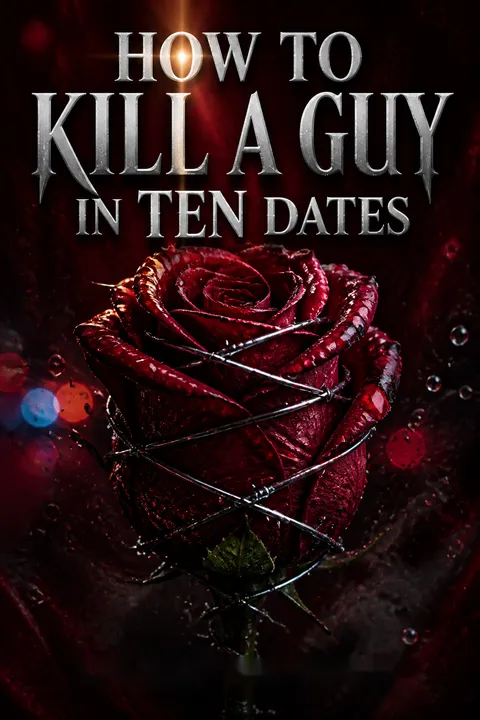
How to Kill a Guy in Ten Dates is a debut slasher rom-com that earned a 4.01/5 rating from 3,427 reviews. Readers praised its unique blend of horror and romance, finding it fun, addictive, and fast-paced. The protagonist Jamie, a film buff trapped in a speed-dating-turned-murder-spree, uses her movie knowledge to survive. Reviewers loved the witty writing, gore, character names referencing horror films, and rom-com quotes twisted into slasher lines. Common criticisms included excessive pop culture references, repetitive pacing in one setting, and unrealistic romantic moments during life-threatening situations. Most found it entertaining despite flaws.
People Also Read



Characters
Jamie Prescott
Genre-savvy Final GirlA PhD candidate at NYU writing her dissertation on the structural parallels between slasher films and romantic comedies, Jamie possesses encyclopedic genre knowledge she deploys with self-deprecating humor and infectious enthusiasm. She self-identifies as 'too much'—too loud, too passionate, too prone to oversharing about murder—and this insecurity coexists with genuine expertise. Her friendship with Laurie3 is the emotional bedrock of her life: unconditional, fiercely protective, expressed through insults rather than sentiment. Romantically, she gravitates toward safe, academic men, though she discovers an attraction to intensity she cannot categorize. Jamie processes the world through film, using narrative frameworks not as escapism but as a survival mechanism—a tendency that proves both her greatest asset and her most intimate vulnerability.
Wes
Intense protector with secretsIntense, capable, and disarmingly direct, Wes enters the speed-dating event as a man clearly carrying weight beneath his composure. His physical presence—broad-shouldered, tattooed, gravitationally confident—contradicts Jamie's1 usual type, which is precisely why the attraction unsettles her. He asks what makes people happy before asking what they do. He counts down from three before doing anything that frightens him, a childhood technique for managing impulsive tendencies that hints at deeper complexity. Under pressure, Wes defaults to protectiveness and problem-solving, sometimes at the cost of his own safety—a hero complex he wears like armor. His growing connection with Jamie1 forces him to reconcile professional obligation with personal vulnerability, and the tension between those poles defines his arc through the night.
Laurie
Pragmatic best friend and lifelineJamie's1 best friend and roommate of five years, Laurie is the logical counterweight to Jamie's1 dramatic energy. A documentary filmmaker whose idea of entertainment is a three-hour study of nomadic sheep farmers, she communicates affection through brutal honesty and the occasional pet name adopted ironically that became genuine. Emotionally guarded to a degree that borders on clinical, Laurie processes fear through pragmatism and love through acts of service she would never label as such. Her relationship with Jamie1 is the story's emotional spine: two women whose incompatible interests forged an unbreakable bond. Laurie's intelligence, physical adaptability, and absolute refusal to abandon Jamie1 under any circumstances reveal a depth of feeling she would rather endure anything than articulate aloud.
John
The gentle date who listensSoft-spoken and unfailingly polite, John presents himself as every woman's safe choice—floppy hair, steel-blue eyes, and a self-effacing smile that never shows teeth. He remembers details from every conversation, asks the right follow-up questions, and makes women feel comfortable enough to share embarrassing stories within minutes. His apparent shyness reads as thoughtfulness, his careful planning as attentiveness. He tells Jamie1 he does not take risks, that he stays in his lane. These qualities—the listening, the planning, the quiet control—make him the kind of man women instinctively trust in a ten-minute window. Whether that instinct serves them well is one of the night's most urgent and unsettling questions, as the line between devoted attention and something darker proves terrifyingly thin.
Billie
Cold outsider with hidden agendaDressed head to toe in black with a permanent expression of disdain, Billie alienates everyone she encounters. Her hostility toward Jamie1 is immediate, inexplicable, and unrelenting—a sourness that reads as either profound antisociality or something far more specific. She cycles between detached cynicism and sharp-eyed awareness, treating the evening's escalating horrors with the same bored irritation she brings to small talk. Her emotional flatness conceals a calculating intelligence that watches, evaluates, and waits.
Stu
Hostile lumberjack antagonistA plaid-wearing, manicured-bearded man who matches Laurie's3 weakness for lumberjack aesthetics, Stu defaults to aggression under pressure. He clashes with Jamie1 from their first date, advocates for splitting up at every turn, and channels his terror into hostility toward anyone he perceives as weak or in charge. His bravado compensates for a fundamental inability to lead, and his conviction that volume equals authority makes him the group's most consistent source of friction.
Jennifer
Warm ally who grows braverA brunette with an enviable blowout and wholesome energy, Jennifer evolves from an anxious nail-digger into a composed ally over the course of the night. She compliments Jamie's1 dress unprompted, bonds easily with everyone, and demonstrates quiet courage when the group fractures. Her 'girl next door' warmth and emerging backbone make her a stabilizing presence, and her willingness to defend Jamie1 against hostility reveals the kind of character growth that survival demands.
Dani
Sweet survivor mourning her friendA sweet woman with a Meg Ryan pixie cut who bonds with Colette10 during cocktail hour. Her grief over losing her new friend reveals emotional depth beneath her cheerful exterior. She is gentle, easily frightened, and deeply human in her response to horror.
Curtis
Sleazy date, first victimJamie's1 ninth speed date, whose pickup line about her dress belonging on his floor epitomizes his personality. His death during their argument launches the night's violence.
Colette
Bubbly blonde, early casualtyA Kate Hudson blonde in a pink dress who bonds instantly with Dani8 during cocktail hour. Her loopy handwriting and heart-dotted name tag become unreadable beneath blood spray.
Campbell
Twitchy loner who boltsA skittish, boyish man whose alternating nervousness and blank stare remind Jamie1 of Norman Bates. He flees the group at the first opportunity, unable to function under collective pressure.
Captain Strode
Wes's commanding officerA short, stern police captain whose no-nonsense authority cuts through chaos. She alternates between exasperation at Wes's2 recklessness and genuine relief at his survival.
Marion
Upbeat speed-dating hostThe event host whose practiced smile and shoulder-shimmy enthusiasm set the evening's tone. Her clipboard efficiency marks her as the first staff member to fall.
Lee
Smitten dater seeking wingmanA sweet dater who spends his entire date with Jamie1 talking about Nia, the woman he is smitten with. His earnest infatuation provides early warmth amid mediocre dates.
Plot Devices
The Slasher Survival Rules
Survival framework and thematic engineA poster on Jamie1 and Laurie's3 bathroom door lists ten rules for surviving a slasher film, from 'Don't have sex' to 'Down doesn't mean dead—double tap.' Jamie's1 encyclopedic knowledge of these rules becomes the group's primary survival guide throughout the night. She uses them to argue against splitting up, to insist on arming everyone, to keep people hidden longer than instinct demands. The rules also function as a meta-narrative device: each time one is broken, consequences follow swiftly. The tension between following genre formulas and adapting to an unprecedented situation drives Jamie's1 character arc. She must decide when the established rules apply, when fear demands improvisation, and ultimately whether survival requires writing her own rule entirely.
The Rose Petals and Romantic Gestures
Killer's signature and motive markerRed rose petals appear around bodies, on trails through corridors, and in escalating romantic displays throughout the night. They connect the club murders to a string of five previous killings in Brooklyn and serve as the primary evidence that the killer views the massacre not as violence but as courtship. The gestures escalate from scattered petals near bodies, to a card bearing song lyrics, to a single rose left in a hiding spot, to a bouquet pinned to a dead man's chest, culminating in a massive heart made from organs spelling Jamie's1 name on the dance floor. Each offering reveals more about the killer's psychology—the delusion that eliminating rivals constitutes devotion, that terror is a necessary prelude to love.
Confiscated Phones and Code-Locked Doors
Total isolation mechanismThe speed-dating event requires all attendees to surrender their phones, watches, and belongings at coat check—marketed as encouraging authentic connection. The killer exploits this policy by stealing the device lockbox, killing the coat check attendant, removing emergency signage, spray-painting security cameras, and code-locking the front doors. This transforms a social experiment into a sealed trap: twenty people locked inside a three-story maze with no external communication. The confiscation also forces characters to rely entirely on each other rather than technology, making interpersonal trust—and its collapse—the currency of survival. Every plan must account for this deficit, from improvised weapons to mapping the building from drunken college memories.
The Pink Heart Eyes Mask
Killer's romantic personaA hot-pink ski mask with a zippered mouth and heart-shaped eye holes covered in dark mesh. Jamie1 encounters it first during a corridor killing and dubs the wearer 'Heart Eyes.' The mask is simultaneously juvenile and terrifying: its color evokes Valentine's Day while the obscured features echo classic slasher anonymity. It functions as the killer's romantic costume, a visual declaration that this bloodshed is an act of love. The pink femininity of the wool and the sweetness of the heart shapes generate cognitive dissonance against the brutality of the wearer's actions, embodying the novel's central argument that romance and horror share identical structures operating behind different masks. Jamie's1 visceral reaction to the eye holes—unable to forget them—makes the mask a psychological weapon as potent as any blade.
The Bouquet with the Hidden Knife
Climax weapon and poetic justiceA knife concealed among the stems of the killer's bouquet of roses becomes Jamie's1 final weapon. In the climactic confrontation on the dance floor, she carries the flowers as though accepting a romantic offering, then drives the hidden blade into the killer's4 chest. The device operates on multiple symbolic levels: the killer's own romantic gesture becomes the instrument of his death, the thorns-among-roses imagery literalizes the danger hidden within performed devotion, and Jamie's1 use of it marks her transformation from someone who studies violence in films to someone who enacts it to survive. The scattered petals that follow the strike create the novel's defining image—romance and carnage occupying the same frame.
Download PDF
Download EPUB
.epub digital book format is ideal for reading ebooks on phones, tablets, and e-readers.








































