


Key Takeaways
Unapologetic desire is more seductive than any pickup line
The party story says it all. Jeffries' friend walked into a formal party he wasn't invited to, cut through a crowd of men surrounding a stunning blonde, and said: "I saw you through the doorway, and unlike these gentlemen, I don't have time for small talk. Can I have your phone number?" He walked out with her digits in under a minute. No clever opener, no games — just direct intent.
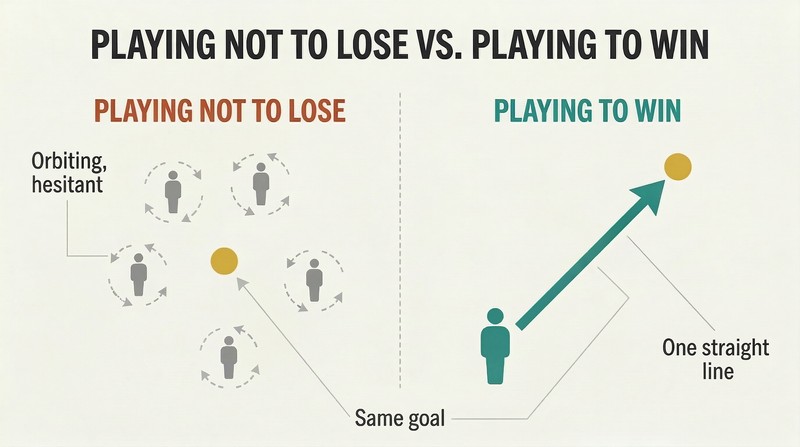
Jeffries calls this the book's foundational attitude: "I make no excuses for my desires as a man. I move through the world without apology." General Patton once criticized rival Montgomery for being more interested in not losing than in winning. Most men tiptoe around women the same way — focused on avoiding rejection rather than pursuing what they want. Directness, Jeffries argues, communicates a man who knows what he wants.
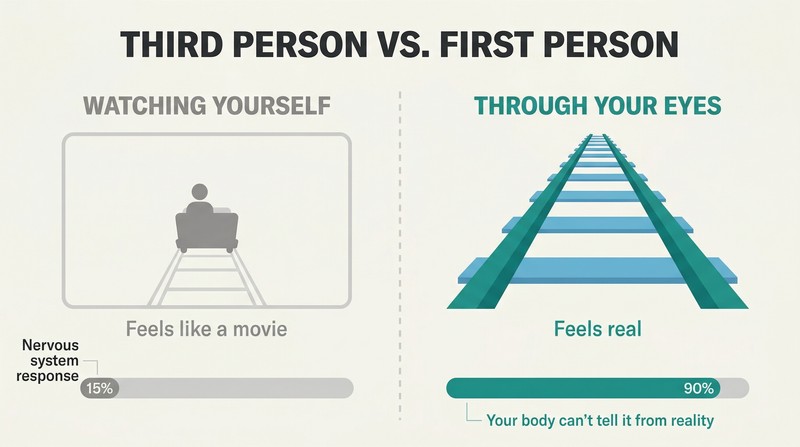
Rehearse confidence through your own eyes, not as a spectator
Two types of mental imagery. In "Picture Type 1," you see yourself from the outside — like watching a movie of yourself. In "Picture Type 2," you see the scene through your own eyes in first person. Only the second type feels real to your nervous system. The roller coaster test proves it: watching yourself ride barely registers, but seeing the track rush toward you triggers a visceral reaction.
The practical exercise chains visualization to a physical trigger called an "anchor." Recall a time you felt powerful, re-experience it in first person, and at the peak of that feeling, squeeze your left wrist. Repeat three times. That wrist squeeze now fires the confident state on demand — in any future situation, without conscious effort. This works, Jeffries argues, where positive thinking fails, because by the time you talk yourself into confidence, the moment has already passed.
Your power comes from what you refuse to tolerate
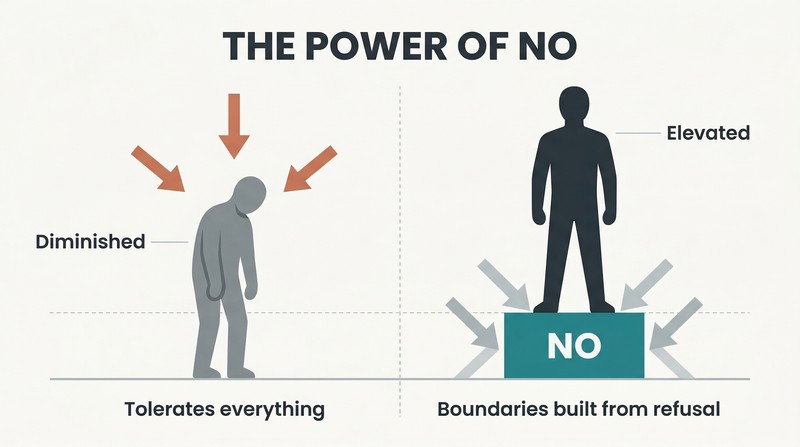
The word "no" is magic. No matter how gorgeous, exciting, or great in bed a woman is, you must be willing to walk away if she doesn't treat you with respect. Self-respect is a boundary defined by what isn't permitted — and while that sounds negative, Jeffries calls it the most positive force you have.
Walking away hurts. Jeffries compares it to a street fight: ignore the pain and carry out your offensive. The paradox is that men who demonstrate they genuinely don't need a particular woman become far more attractive to her — and to every other woman who witnesses that quiet, unbending self-respect. A woman who senses she can't control you treats you completely differently than one who senses she can.
Starve your neediness — build a life that doesn't orbit women
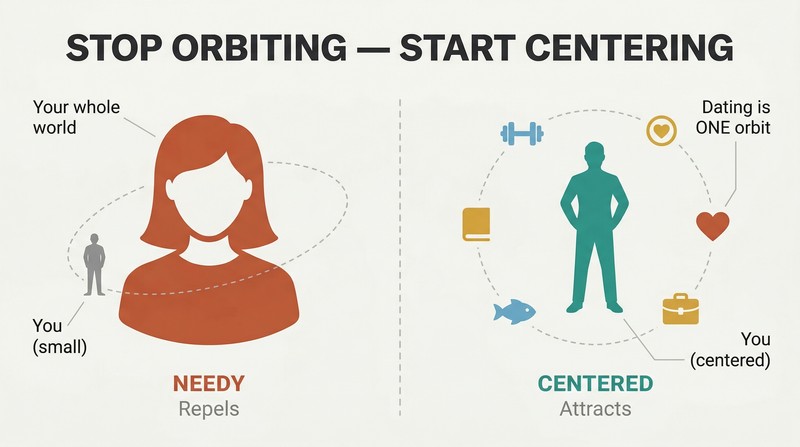
Desperation is the ultimate repellent. Many men who wouldn't tolerate disrespect from another guy become spineless around women. Others turn dating into a joyless compulsion. Both problems share a root: making women the center of existence rather than an addition to a full life.
Jeffries' prescription is blunt: find a hobby that actively excludes women. His choice is bass fishing — most women hate the thought of slimy fish and would never ask to come along. The specific hobby doesn't matter. What matters is that when you stop needing women so desperately, your confidence rises naturally, you gain a pressure-release valve for relationship stress, and you carry yourself differently. Neediness repels; a man with his own world attracts.
Your tone of voice seduces; your words are just along for the ride
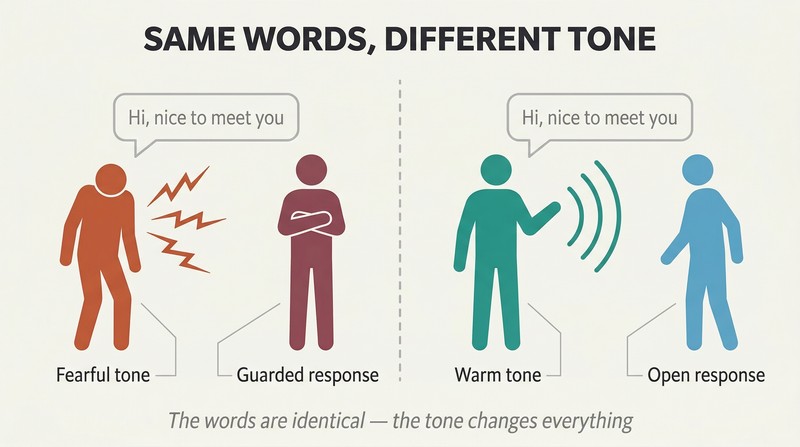
The campus evangelist lesson. Jeffries knew a college evangelist named Chris who always had beautiful women around him — not because of his words, but because his warmth made every stranger feel adored. He approached women as if they were long-lost friends he dearly loved, and they responded in kind. Even guarded women dropped their defenses.
Jeffries calls this the "As If" principle: act as if every woman you approach is someone you're already delighted to see. Your tone, posture, facial expressions, and speaking pace all broadcast your internal expectation. If you expect rejection, you'll convey fear — making her fearful too. If you radiate genuine warmth, you'll get warmth back nine times out of ten. A practice exercise: recite the Pledge of Allegiance aloud with as much warmth and humor as possible — training your voice to carry friendliness on autopilot.
Treat every approach like a copywriter drafting a headline
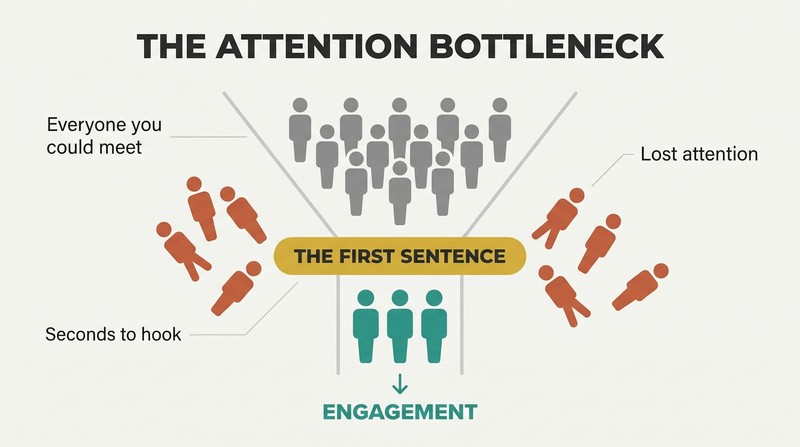
Attention is the bottleneck. Jeffries' brother, an ad copywriter, once spent three hours writing a single sentence — because the headline determines whether anyone reads further. Meeting women works identically: most women aren't actively looking for you, just as most readers skip past ads. You have seconds to hook attention.
Jeffries lists seven attention-grabbers: humor, curiosity, unexpected twists on cliché lines, role-playing, faking familiarity, ego appeals, and sheer boldness. His favorite bar method: hand a woman a notepad listing three terrible pickup lines and ask her to circle the worst — the third being "Hi, I'm taking a survey on bad lines." His street method, the "compliment string," escalates from "I like your hat" to "I like your watch" to a pause and "come to think of it, I like everything." Both work because they're unique, funny, and break the pattern of predictable approaches.
Mirror her breathing and pace to build rapport she can't explain
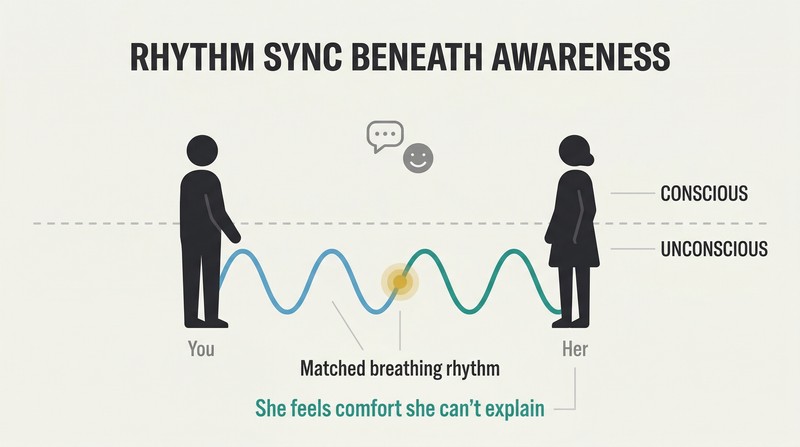
Borrowed from hypnotherapy. Milton Erickson, a legendary hypnotist, could put anyone into a trance by subtly matching their breathing rate — with his own breath, his speaking pace, or even tapping his chest. He'd then gradually slow his rhythm, and the subject's breathing would follow without their awareness.
Jeffries adapts this for dating as "mirroring ": match her breathing rhythm, speech tempo, or a recurring gesture. The key is subtlety — if she consciously notices, she'll think you're mocking her. Done beneath awareness, she simply feels an inexplicable comfort, as if she's known you for years. A simple experiment proves unconscious perception exists: a blindfolded friend can detect you swaying your head from sound alone, yet with eyes open, they can't consciously hear the difference.
Tell stories about 'someone else' to plant feelings she can't resist
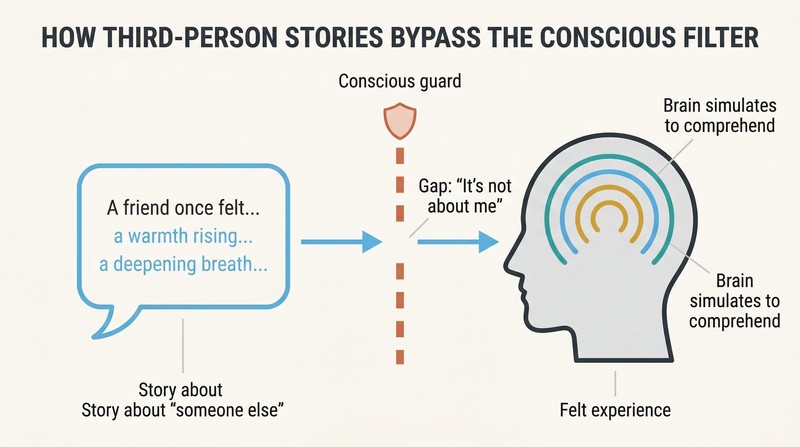
The book's signature technique. "Stacking Realities" works by embedding desired feelings inside a story about a third person. You describe "a friend" who experienced deep attraction — the sound of a voice, rising body warmth, deepening breath — in vivid sensory detail. To understand the story, her brain must internally simulate the experience. She feels what you describe because there's no other way to process the words.
This bypasses conscious resistance because you're not asking her to feel anything — you're narrating someone else's experience. Jeffries pairs this with knowledge of her preferred "representational system" (whether she processes the world primarily through sight, sound, or body sensation) to make the story maximally immersive. The technique also uses "sensory overlap" — starting in her preferred system, then switching to a less-conscious one — to deepen the altered state.
A genuine 'yes' always includes a specific counter-offer
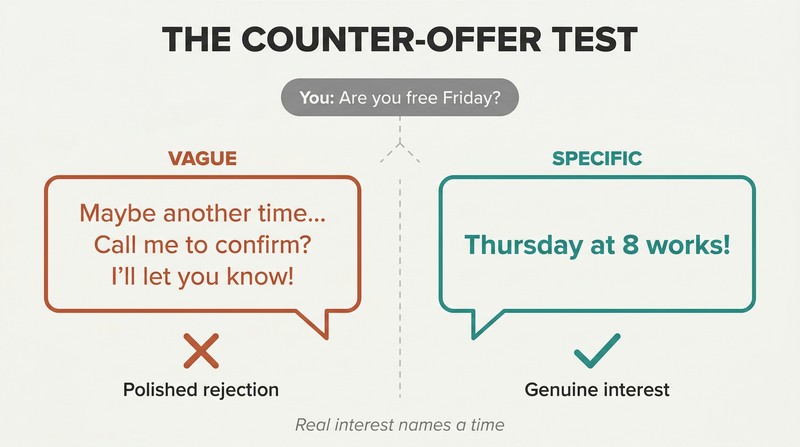
The acid test for real interest. When you pitch a specific night and she's genuinely interested but unavailable, she won't say "how about another time?" — she'll name the time: "I can't Wednesday, but Thursday at 8?" Anything vaguer is a polished rejection. Equally deceptive: "Call me Wednesday to confirm." That's not a date — it's a placeholder while she waits for a better option.
Jeffries lays out strict phone rules:
1. Ask for a specific night, then stop talking
2. Accept only firm dates or specific counter-offers — nothing else
3. Never leave voicemails before a first date
4. Get off the phone immediately once the date is set
5. If she cancels, put the ball in her court: "Call me when you'd like to go out"
The underlying principle: being too available kills the challenge that makes you attractive.
Screen women on character and openness, not just attraction
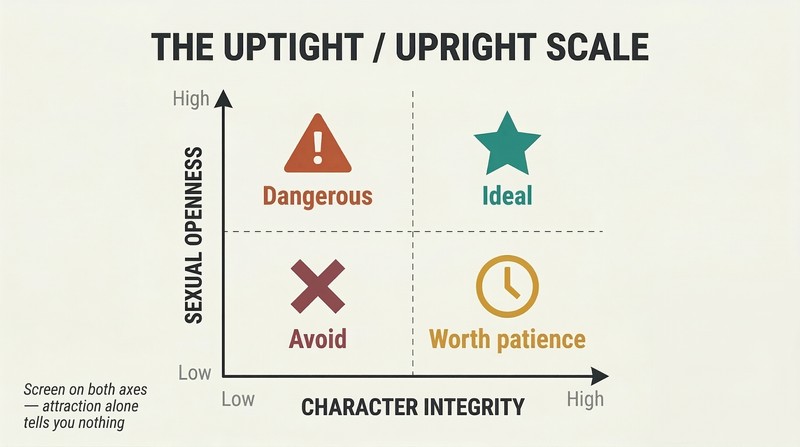
The Uptight/Upright Scale. Jeffries designed a two-axis evaluation framework. The vertical axis measures sexual openness — not performance, but genuine enthusiasm and freedom from hang-ups (the "uptight" score). The horizontal measures character integrity: warmth, honesty, reliability, and follow-through (the "upright" score). A woman can score high on one axis and disastrously low on the other.
Jeffries' model for uprightness was a coworker named Lisa who refused to sell him products he didn't need, despite knowing he'd buy anything she offered. Early warning signs of poor character include: talking about sex on a first date (usually prickteasing, not genuine interest), deliberately making you wait, excessive drinking, breaking commitments, and asking favors before you've even gone out. Early detection and swift removal — the same approach you'd take with cancer.
Analysis
Published in 1992, this book is a founding artifact of what became the 'pickup artist' movement, predating Neil Strauss's The Game by thirteen years. Jeffries blends legitimate NLP techniques borrowed from Milton Erickson and Bandler & Grinder — anchoring, representational systems, mirroring — with a dating philosophy built on adversarial framing and deeply misogynistic views of women.
The confidence-building sections contain genuinely useful psychological insights. The associated vs. dissociated visualization technique aligns with sports psychology research on mental rehearsal. The anchoring protocol resembles modern cognitive-behavioral state management. The advice to cultivate self-respect through boundary-setting and reduce neediness through independent interests predates and overlaps with healthier contemporary relationship advice from authors like Mark Manson.
However, the book's core framework treats dating as warfare. Women are categorized as adversaries to outmaneuver, and the language oscillates between objectification and open contempt. Chapter 19's 'resistance-breaking' methods — including fake crying, guilt manipulation, and physically resuming advances after rejection — describe behavior that most legal and ethical frameworks today classify as sexual coercion. The book's own legal disclaimer tacitly acknowledges this risk.
The NLP-based seduction techniques occupy a contested space in psychology. While mirroring and rapport-building have modest empirical support, the hypnotic seduction claims — stacking realities, sensory overlap — rely on exaggerated beliefs about unconscious influence that mainstream psychology does not validate at the level Jeffries promises. Covert conversational hypnosis is not the guaranteed override of consent the book markets it as.
The book is best understood as a historical document capturing a pre-internet, pre-MeToo era when manipulation was marketed as empowerment for sexually frustrated men. Its handful of legitimate confidence-building insights are buried under layers of dehumanizing language and ethically indefensible tactics. Modern readers seeking the useful kernel — unapologetic self-respect, warm approachability, tolerance for rejection — can find those ideas articulated with far more nuance and mutual respect elsewhere.
Review Summary
The reviews for "How to Get the Women You Desire into Bed" are mixed, ranging from 1 to 5 stars. Some readers find it hilarious and effective, praising its confidence-building techniques and applicability to other areas of life. Others criticize it as dated, misogynistic, and potentially harmful. Critics describe it as embarrassing, impractical, and full of gender biases. Some reviewers appreciate its historical significance in the dating advice genre, while others warn against its manipulative tactics and questionable content.
People Also Read






Glossary
Stacking Realities
Stories that plant feelingsA covert hypnosis technique in which the speaker tells a layered story about a third person's experience—describing sensory details like body warmth, breathing, and arousal—so the listener must internally simulate those feelings to understand the narrative. Jeffries presents it as the book's primary seduction method, claiming it bypasses conscious resistance because the listener isn't being directly asked to feel anything.
Anchoring
Touch-triggered emotional recallAn NLP technique where a specific physical gesture (such as squeezing the left wrist) is paired with a peak emotional state through repetition. Once established, performing the gesture later is intended to re-trigger that state on demand. Jeffries uses anchoring both for building personal confidence and as a seduction tool—linking a touch on a woman's wrist to an aroused state so it can be 'fired' later in the evening.
Representational Systems
Preferred sensory processing modesAn NLP concept dividing perception into three primary channels: visual (pictures), auditory (sounds), and kinesthetic (body feelings). Most people have a dominant system. Jeffries advises identifying a woman's preferred system by asking her to describe a vacation, then listening for sensory-specific language. Speaking in her preferred system is claimed to deepen rapport because you're communicating in her brain's native language.
Sensory Overlap
Switching senses to induce tranceA technique where the speaker starts describing an experience in the listener's preferred representational system, then gradually transitions to a system normally outside her conscious awareness. Jeffries claims this shift—from, say, auditory descriptions to kinesthetic body sensations—induces an altered state that makes the listener more susceptible to suggestion and emotional manipulation.
Mirroring
Matching someone's body patternsSubtly matching another person's breathing rate, speech tempo, tone of voice, or gestures to create unconscious rapport. Attributed to hypnotherapist Milton Erickson, who would match a client's breathing and then gradually alter his own rhythm, causing the client's to follow. Jeffries applies this to dating, emphasizing that mirroring must remain below conscious detection to avoid seeming mocking or strange.
Jeffries Uptight/Upright Scale
Two-axis woman evaluation frameworkA framework for assessing women on two independent dimensions. The vertical axis ('uptight') measures sexual openness and enthusiasm—lower scores indicate fewer hang-ups. The horizontal axis ('upright') measures character: honesty, warmth, reliability, and integrity. Jeffries argues that personality traits like wit and beauty often mask poor character, and this scale helps men quickly identify whether a woman has genuine relationship potential or should be avoided.
As If Frame
Physiology-first attraction creationA resistance-breaking technique where, after rejection, the man asks the woman to physically demonstrate what attraction looks like on her—her facial expression, posture, breathing pattern, and body sensations when attracted to someone. Jeffries claims that placing her body in the physiology of attraction actually creates the state itself, which can then be anchored or immediately acted upon.
FAQ
What’s "How to Get the Women You Desire into Bed" by Ross Jeffries about?
- Down-and-dirty seduction guide: The book is a controversial manual for men who are frustrated with traditional dating and want to learn unconventional, often manipulative, techniques to attract and seduce women.
- Focus on psychology and tactics: It combines psychological principles, confidence-building exercises, and specific scripts or routines to help men overcome rejection and increase their sexual success.
- Divided into practical sections: The book is structured in three main parts—building confidence, meeting women, and getting them into bed—with appendices for further techniques and troubleshooting.
- Emphasis on "unfair" methods: Jeffries openly discusses the use of "unfair" or manipulative tactics, including hypnosis and psychological anchoring, to bypass women’s resistance.
Why should I read "How to Get the Women You Desire into Bed" by Ross Jeffries?
- For insight into seduction psychology: The book offers a deep dive into the mindset and psychological tactics behind pick-up artistry and seduction.
- To understand controversial dating methods: It’s a foundational text in the "seduction community," influencing later works and debates about ethical dating.
- To learn confidence-building exercises: Jeffries provides practical exercises to help men overcome shyness and rejection, which can be useful beyond dating.
- To critically assess manipulative tactics: Reading the book can help readers recognize and critically evaluate manipulative behaviors in dating and relationships.
What are the key takeaways of "How to Get the Women You Desire into Bed" by Ross Jeffries?
- Confidence is essential: The book stresses that self-confidence and unapologetic desire are more important than looks, money, or lines.
- Manipulation and psychology: Jeffries advocates using psychological techniques like mirroring, anchoring, and covert hypnosis to influence women’s emotions and decisions.
- Rejection is part of the process: The author encourages men to learn from rejection, not fear it, and to persist with flexibility.
- Not all women are worth pursuing: The book includes advice on quickly identifying and avoiding women who are "problematic" or "time-wasters."
What is the main philosophy or attitude behind Ross Jeffries’ seduction methods in "How to Get the Women You Desire into Bed"?
- No apologies for desire: Jeffries insists men should never apologize for their sexual desires or intentions.
- Power dynamics: He frames dating as a power struggle, where men must reclaim power from women who "play unfair."
- Self-respect and boundaries: The book emphasizes saying "no" to women and walking away from disrespectful behavior as a sign of strength.
- Persistence with adaptability: Success comes from being persistent but also flexible in approach, learning from mistakes, and not being rattled by setbacks.
How does Ross Jeffries suggest building confidence with women in "How to Get the Women You Desire into Bed"?
- Visualization exercises: The book provides step-by-step mental exercises to "install" confidence and power attitudes using visualization and anchoring.
- Anchoring positive states: Jeffries teaches readers to associate physical actions (like squeezing the wrist) with feelings of confidence, so they can trigger these states in real situations.
- Reducing neediness: He advises men to develop hobbies and interests outside of women to reduce desperation and increase self-worth.
- Practicing saying "no": The book encourages men to set boundaries and practice saying "no" to women to build self-respect and attractiveness.
What are some of the specific techniques for meeting and attracting women in "How to Get the Women You Desire into Bed"?
- Attention-grabbing openers: Jeffries recommends using humor, curiosity, role-playing, and ego appeals to stand out and get a woman’s attention.
- Mirroring and rapport: He teaches mirroring a woman’s breathing, tone, and gestures to create unconscious rapport and comfort.
- Unique pick-up lines: The book provides scripts and routines, such as the "compliment string" and "survey method," tailored for different environments like bars, streets, and supermarkets.
- Creating the illusion of connection: Techniques are given for making a woman feel as if she’s met the man of her dreams, even if just met.
How does "How to Get the Women You Desire into Bed" by Ross Jeffries use hypnosis and psychological manipulation in seduction?
- Covert hypnosis: The book details how to use storytelling and "stacking realities" to bypass a woman’s conscious resistance and implant sexual suggestions.
- Anchoring erotic states: Jeffries explains how to anchor a woman’s arousal to a physical touch or word, so it can be triggered later.
- Sensory overlap: He teaches how to guide women through imagined sensory experiences (like being at the beach) to induce trance states and arousal.
- Ethical and legal warnings: The author includes disclaimers about the potential legal and moral consequences of using these techniques without consent.
What are the "Ultimate Rules and Attitudes for Success with Women" according to Ross Jeffries in "How to Get the Women You Desire into Bed"?
- No excuses for desire: Always move through the world without apology for your sexual intentions.
- You are the prize: Adopt the mindset that "I don’t need you—you need me."
- Uncontrollable by women: Never let a woman control your actions or emotions.
- Attention and uniqueness: The first step is getting her attention by being unique and different.
- Persistence with flexibility: Keep trying, but vary your approach to see what works best.
How does Ross Jeffries recommend handling rejection and resistance from women in "How to Get the Women You Desire into Bed"?
- Learn from mistakes: View rejection as feedback, not failure, and use it to improve your approach.
- Pattern interrupts: Use humor, shock, or reframing to break a woman’s resistance or objections.
- Emotional manipulation: Techniques like guilt, role reversal, and the "as if" frame are suggested to overcome a woman’s "no."
- Walk away if necessary: Sometimes, the best response is to walk away, maintaining self-respect and challenge.
What are some of the most controversial or "unfair" tactics in "How to Get the Women You Desire into Bed" by Ross Jeffries?
- Hypnosis and trance induction: Using covert hypnosis to bypass consent and resistance is a central, highly controversial tactic.
- Deceptive routines: Methods like pretending to be in show business or using fake surveys to get attention are advocated.
- Emotional manipulation: The book suggests using guilt, fake vulnerability, or even crying to break down resistance.
- "Quick-lay" strategies: Jeffries openly discusses using these tactics on women he deems "undeserving" or "problematic," raising ethical concerns.
How does "How to Get the Women You Desire into Bed" by Ross Jeffries advise readers to identify and avoid problematic women?
- Upright/Uptight scale: The book introduces a scale to assess a woman’s sexual enthusiasm (uptightness) and character (uprightness).
- Early warning signs: Jeffries lists behaviors like talking about sex on the first date, flakiness, excessive drinking, or asking for favors as red flags.
- Swift elimination: He advises early detection and quick removal of women who show signs of being "wackos, low-lifes, crazies, and scum."
- Focus on integrity: The book suggests prioritizing women who are honest, keep commitments, and can "receive good things" from a man.
What are the best quotes from "How to Get the Women You Desire into Bed" by Ross Jeffries and what do they mean?
- "I MAKE NO EXCUSES FOR MY DESIRES AS A MAN. I MOVE THROUGH THE WORLD WITHOUT APOLOGY." — Emphasizes unapologetic confidence and directness as the foundation of Jeffries’ philosophy.
- "FOR GUYS, GETTING LAID IS A CHORE. FOR WOMEN, GETTING LAID IS A CHOICE." — Highlights the perceived power imbalance in dating and the need for men to develop strategies.
- "GLANCE AT WHAT YOU MIGHT HAVE TO LOSE, BUT FOCUS ON WHAT YOU WANT TO WIN." — Encourages a goal-oriented, risk-tolerant mindset in pursuing women.
- "PERSISTENCE WITHOUT FLEXIBILITY IS A PRESCRIPTION FOR DISASTER. VARY YOUR APPROACH AND STYLE TO DISCOVER WHAT WORKS THE BEST." — Stresses the importance of adaptability and learning from experience in seduction.
Download PDF
Download EPUB
.epub digital book format is ideal for reading ebooks on phones, tablets, and e-readers.








































