
Key Takeaways
1. Your mind is software that can rewrite your brain's hardware
Think of the brain as hardware, and the mind as software.
The physical vs. intangible. The brain is a physical organ made of neurons and grey matter, while the mind is the intangible home of thoughts and emotions. They exist in a continuous feedback loop where mental exercises shape physical neural pathways, and physical changes alter mental states.
The power of schemas. To navigate the world efficiently, the brain relies on cognitive frameworks called schemas. Through cognitive adaptation, we can update these frameworks in two ways:
- Assimilation: Integrating new information into existing beliefs.
- Accommodation: Restructuring our core beliefs when challenged by contradictory evidence.
Overcoming cognitive bias. We often fall victim to cognitive biases, filtering reality to confirm our pre-existing beliefs while ignoring objective facts. By actively debating with ourselves and challenging our biases, we open the door to profound mental growth.
2. True purpose is found by actively chasing connection and utility
A purpose is simply a meaningful and motivating aim of your life.
The myth of passive discovery. Many people mistakenly believe that life purpose is a grand, singular calling that will magically land in their lap. In reality, purpose is built through active engagement with the world and a commitment to being useful to others.
An emotional compass. Having a clear "why" acts as a powerful buffer against life's inevitable hardships, such as heartbreak or professional failure. Research shows that individuals with a strong sense of purpose recover faster from negative events because they possess superior automatic emotional regulation.
The power of contribution. True fulfillment is deeply tied to community and connection. Simple acts of service and utility yield immense psychological benefits:
- Improving symptoms of depression and anxiety.
- Enhancing social bonds and reducing isolation.
- Fostering genuine self-love that transcends superficial self-criticism.
3. Self-awareness requires objective self-critique over character assassination
You cannot change what you do not acknowledge...
Critique vs. self-talk. Negative self-talk is a destructive form of character assassination that leaves you feeling small and helpless. In contrast, healthy self-critique objectively evaluates specific behaviors and creates a constructive plan for future improvement.
Dismantling defensiveness. Defensiveness is a primitive protective mechanism designed to shield us from the temporary shame of being wrong. However, avoiding vulnerability only stunts our growth and damages our relationships by shifting blame onto others.
The power of vulnerability. Admitting mistakes and owning your shortcomings is a profound display of inner strength and self-confidence. When we drop our defenses, we invite honest communication and earn the respect of those around us.
4. Own your limitations to strip others of their power over you
When you are the first to own your story, then not only can others not use it as power over you, but it also garners a lot of respect.
Insecurities vs. weaknesses. Insecurities are subjective, internal perceptions that may not align with reality, whereas weaknesses are objective, measurable areas of struggle. Both can be systematically improved through targeted training and mindset shifts.
Neutralizing external attacks. Bullies and toxic individuals weaponize our hidden pain points to make us feel small and maintain control. By bringing our limitations into the light and openly acknowledging them, we instantly disarm potential critics.
Reclaiming your narrative. True confidence means being entirely comfortable in your own skin, flaws and all. When you proactively own your mistakes and limitations, you command respect and build an unshakeable foundation of self-security.
5. Rewire your subconscious by choosing the discomfort of growth
Cells that fire together, wire together.
The mechanics of conditioning. Our brains are naturally wired to seek safety and avoid the discomfort of risk or failure. Through long-term potentiation (LTP), repeated thoughts and emotionally charged experiences physically strengthen neural pathways, turning temporary reactions into permanent habits.
The illusion of safety. Staying within your comfort zone feels safe, but it ultimately keeps you trapped in a reactive state governed by your primitive brain. To break free, you must consciously engage your prefrontal cortex to override automatic, fear-based conditioning.
Directing neural change. You do not need to erase old, negative neural pathways; you simply need to starve them of attention. By consistently practicing new, positive behaviors, you build stronger pathways that eventually dominate your subconscious:
- Start with micro-steps to avoid cognitive fatigue.
- Focus on daily repetition to cement the new habit.
- Allow old, unused pathways to naturally weaken over time.
6. Distinguish inevitable pain from self-inflicted suffering
Suffering is a choice, pain is not.
The nature of pain. Pain is an unavoidable, natural reaction to life's difficult events, such as loss, rejection, or physical injury. It must be fully felt and processed to allow for genuine healing and emotional growth.
The trap of suffering. Suffering is self-inflicted misery generated by our own minds through over-analysis, catastrophizing, and mind-reading. We often choose to suffer by clinging to negative narratives or anticipating worst-case scenarios before they even happen.
The guitar analogy. Like the man who worked himself into a rage assuming his friend would refuse to lend him a guitar, we often ruin our own peace of mind with imaginary conflicts. To eliminate unnecessary suffering, we must:
- Stop trying to read other people's minds.
- Focus strictly on what is within our direct control.
- Accept reality as it is, rather than fighting it.
7. Your relationship with yourself sets the baseline for all others
The way that you treat yourself will be the benchmark of what you accept from other significant relationships in your life.
The ultimate foundation. Your relationship with yourself is the non-negotiable insurance policy that protects you from external turbulence. When you prioritize your own mental and physical needs, you build a solid base that prevents you from losing your identity in others.
The necessity of boundaries. Boundaries are personal limits that dictate how you allow others to treat you, not tools to control their behavior. A healthy boundary must always be accompanied by a consistent, self-directed consequence, such as removing yourself from a toxic situation.
Letting go of expectations. Expecting others to think, feel, or react exactly as you do is a recipe for chronic disappointment. By understanding the false consensus effect, you can accept people as they are and stop relying on them for closure or validation.
8. Harness dopamine by choosing earned rewards over instant gratification
Your attention should be looked at as a limited commodity, like money in your bank account or the days left in your life.
The dopamine trap. Cheap, effortless dopamine spikes from social media scrolling and constant notifications deplete our baseline motivation. When our dopamine levels crash below baseline, even simple, productive tasks feel completely insurmountable.
Earning your neurochemistry. Sustained, healthy dopamine levels are achieved through effort-based activities like exercise, meditation, and deep focus. These activities do not cause a chemical crash, leaving you energized and motivated to tackle your day.
Protecting your focus. Multitasking is a neurological myth; the brain simply switches rapidly between tasks, draining your cognitive energy. To maximize your daily productivity, you should:
- Implement strict time-blocking strategies (e.g., 45 minutes of work, 15 minutes of rest).
- Physically remove distractions, like placing your phone in another room.
- Prioritize cognitively demanding tasks when your energy is highest.
9. Keep your goals silent to preserve your drive to achieve them
Receiving the reward before you have started the work wastes the effect of that feeling before you have begun.
The premature reward. Sharing your grand ambitions with others triggers a premature release of dopamine, giving you the psychological satisfaction of achievement without any of the actual work. This social validation effectively drains your motivation to follow through.
The power of silence. Keeping your goals entirely to yourself creates an internal pressure cooker that drives you toward action. When the only way to share your progress is through tangible results, you become highly focused on execution.
Skin in the game. If you must share your goals, ensure there is a real penalty or consequence for failing to meet them. Because loss aversion is a powerful human motivator, the fear of losing something valuable will keep you disciplined when motivation fades.
10. Discipline is not a cage; it is the key to true freedom
The years in my life where I had the least amount of freedom were those when I had the least amount of discipline.
The paradox of structure. Spontaneity and lack of structure often feel like freedom, but they ultimately lead to financial, physical, and mental limitations. True, long-term freedom is built on a foundation of disciplined habits that automate mundane decisions.
The deathbed perspective. When evaluating your life choices, the deathbed test cuts through trivial anxieties and highlights what truly matters. It reminds us that the discomfort of discipline is temporary, while the pain of regret and wasted potential is permanent.
Habit stacking for success. Building discipline does not require drastic, overwhelming lifestyle overhauls. By utilizing habit stacking, you can easily integrate new, positive behaviors into your existing daily routines:
- Identify an established daily habit (e.g., brushing your teeth).
- Immediately stack a new, desired habit on top of it (e.g., flossing or meditating).
- Repeat consistently to outsource the behavior to your subconscious mind.
Review Summary
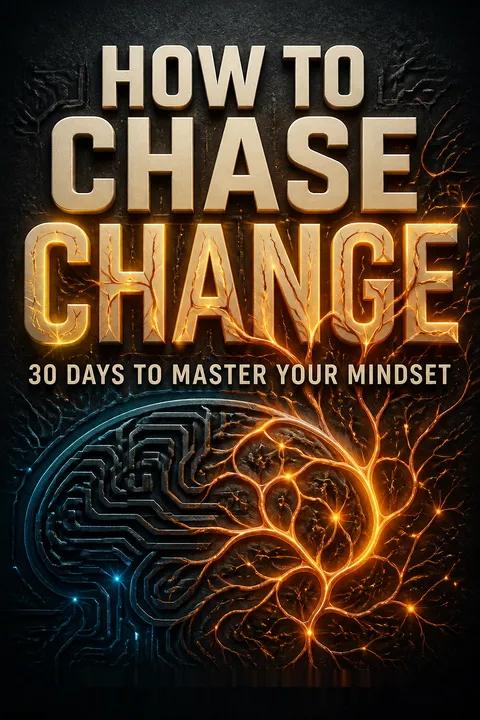
How to Chase Change receives an overall positive reception, averaging 4.01 out of 5 across 267 reviews. Readers frequently praise its practical, actionable advice and neuroscience-backed insights. The audiobook format is widely enjoyed for being engaging and easy to digest. Many appreciate its structure of 30 strategies paired with 30 micro-tasks, though several listeners wish they had a physical copy to better complete the exercises. Common critiques are minor, including the lack of an accompanying PDF and its brevity.
Download PDF
Download EPUB
.epub digital book format is ideal for reading ebooks on phones, tablets, and e-readers.








































