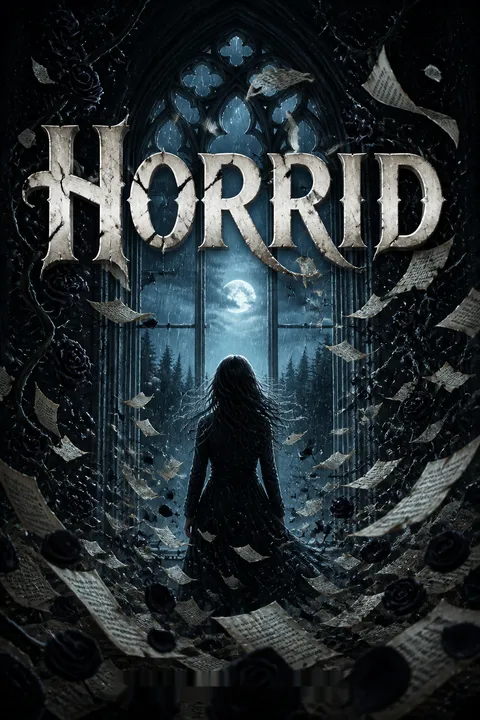

Plot Summary
Rain, Books, and Beginnings
Jane North-Robinson and her mother, Ruth, drive through relentless rain, leaving behind their life in Los Angeles after Jane's father's sudden death. Their journey is heavy with grief and uncertainty, punctuated by a stop at a mystery bookstore where Jane's peculiar comfort—eating books—emerges. The move to Maine is not just a change of scenery but a forced retreat into Ruth's childhood home, North Manor, a place Jane has never seen but now must call home. The rain, the books, and the tension between mother and daughter set the tone for a story about loss, secrets, and the strange ways people cope with pain. The air is thick with unspoken words and the promise of more mysteries to come.
North Manor's Shadowed Welcome
Arriving at North Manor, Jane and Ruth are confronted by the house's dilapidated state—broken windows, overgrown grass, and a sense of abandonment. The house is more than a setting; it's a character, heavy with the weight of family history and secrets. Ruth's reluctance to return is palpable, and Jane senses that the house holds more than just memories. The cold, the dust, and the eerie silence amplify Jane's unease. As they explore, the house's neglect mirrors their own emotional disarray. The manor's presence is oppressive, hinting at a past that refuses to stay buried, and Jane's curiosity is piqued by the sense that something is deeply wrong.
Unpacking Grief and Secrets
Settling in, Jane and Ruth attempt to create normalcy amid chaos. Their grief is raw, manifesting in small rituals—fireside dinners, s'mores, and awkward attempts at comfort. Ruth's avoidance of the past and Jane's simmering anger create a gulf between them. The house's silence is broken only by memories and the occasional unexplained noise. Jane's habit of eating books becomes a private solace, a way to manage emotions she can't express. The sense of displacement is profound; every box unpacked is a reminder of what's been lost. The house, with its locked rooms and lingering smells, becomes a crucible for their unresolved pain.
The Creep House Reputation
Jane's first day at Bells Hollow High is marked by isolation and curiosity. The North Manor is infamous, dubbed the "creep house" by locals, and Jane is both an outsider and the subject of fascination. She befriends Alana and Susie, who offer kindness but also hint at the house's dark reputation. The town's insularity is suffocating, and Jane's attempts to fit in are complicated by whispers about her family. The past is ever-present, and Jane senses that the house's history is intertwined with her own. The seeds of suspicion and fear are planted, setting the stage for deeper revelations.
Roses That Shouldn't Bloom
In the overgrown garden, Jane discovers roses blooming out of season—vivid, thriving, and inexplicably black. The roses' persistence defies nature, and their scent becomes a recurring motif, both comforting and suffocating. Ruth's violent pruning of the bushes and refusal to discuss them add to the sense of unease. The roses symbolize secrets that refuse to die, and their unnatural vitality hints at something supernatural. Jane's fascination with the roses grows, paralleling her increasing obsession with the mysteries of the house and her family's past. The garden becomes a liminal space, where the boundaries between life and death, past and present, begin to blur.
Night Terrors and Broken Glass
Jane's nights are plagued by strange noises, flickering lights, and the sense of being watched. When a rock shatters a window, it's clear that someone—or something—wants them gone. Jane's fear is compounded by her mother's rationalizations and the town's hostility. The incident is dismissed as a prank, but Jane is unconvinced. The house's creaks and groans become sinister, and Jane's imagination runs wild. The boundary between reality and hallucination blurs, especially as her grief and anxiety intensify. The broken glass is both a literal and metaphorical fracture, signaling that safety is an illusion and that the house's secrets are closer to the surface than ever.
School, Friends, and Enemies
Jane's attempts to build a life in Bells Hollow are complicated by the presence of Melanie, a hostile classmate with a personal vendetta. Melanie's aggression escalates from vandalism to psychological warfare, targeting Jane's sense of belonging and safety. Meanwhile, Jane's friendships with Alana and Susie deepen, offering moments of respite and normalcy. The dynamics at school mirror the tensions at home—trust is fragile, and betrayal is always a possibility. Jane's anger simmers beneath the surface, threatening to erupt. The social landscape is a minefield, and every interaction is charged with the potential for revelation or disaster.
The Taste of Paper
Jane's compulsion to eat books intensifies as her stress mounts. The act is both a comfort and a curse, a secret she guards fiercely. When Ruth discovers Jane's habit, the revelation is explosive, dredging up memories of Ruth's own childhood struggles and the family's history of self-destruction. The connection between mother and daughter is both strengthened and strained by this shared legacy of coping through consumption—whether of hair, roses, or words. The motif of eating becomes a metaphor for the ways trauma is internalized and passed down, and for the desperate need to fill the void left by loss.
The Locked Room Mystery
The house's locked rooms become an obsession for Jane, particularly the so-called storage room that is anything but. Her investigations reveal a preserved child's bedroom, untouched for decades, filled with clues to a tragedy no one will discuss. The discovery of a photograph—a girl who looks just like Jane but isn't—shatters her understanding of her family. The locked room is a physical manifestation of the secrets Ruth has tried to keep buried, and Jane's determination to uncover the truth sets her on a collision course with the past. The sense of haunting becomes literal, as the boundaries between memory and ghostly presence dissolve.
Ghosts in the Hallways
Jane's experiences in North Manor become increasingly surreal—lights flicker, marbles roll across floors, and the presence of a little girl is felt but never fully seen. The house is alive with echoes of the past, and Jane's grip on reality weakens. She is haunted not just by ghosts, but by the weight of unspoken trauma and generational pain. The supernatural elements are ambiguous, leaving Jane—and the reader—uncertain whether the hauntings are real or manifestations of psychological distress. The house becomes a labyrinth of memory and fear, and Jane is both its prisoner and its key.
The Sister in the Mirror
The truth about the girl in the photograph—Jemima Rose—emerges slowly and painfully. Jane learns that Jemima was not her aunt, as she'd been told, but her sister, a child Ruth had as a teenager and lost in a tragic accident. The revelation is devastating, upending Jane's sense of self and her relationship with her mother. The motif of mirrors and reflections underscores the theme of identity—Jane sees herself in Jemima, both literally and figuratively. The boundaries between the living and the dead, the present and the past, are shattered. Jane is forced to confront the reality that she is haunted by more than just ghosts—she is haunted by the truth.
The Truth About Jemima
Ruth finally confesses the full story: as a pregnant teenager, she was isolated and controlled by her own mother, Emilia. Jemima was raised more as Emilia's child than Ruth's, and Ruth's emotional distance was both a survival mechanism and a source of lifelong guilt. Jemima's death—buried alive in a gardening accident—was the catalyst for Ruth's flight from Maine and her refusal to return. The family's history is one of repression, denial, and unacknowledged pain. The truth is both liberating and crushing for Jane, who must reconcile her longing for connection with the reality of generational trauma.
Haunted by the Past
Armed with the truth, Jane is drawn deeper into the house's mysteries. The supernatural becomes undeniable as Jemima's presence asserts itself—through messages, apparitions, and a growing influence over Jane's thoughts and actions. The roses, the marbles, the piano music—all are manifestations of a restless spirit and a family unable to let go. Jane's anger and grief are mirrored in Jemima's, and the line between victim and perpetrator blurs. The past refuses to stay buried, and Jane must decide whether to break the cycle or succumb to it.
Halloween Revelations
On Halloween, the boundaries between worlds are thinnest, and the truth comes to light. Jane learns from her friends that everyone in town knows the story of Jemima's death—except her. The revelation that Jemima was her sister, not her aunt, is a public secret, a "secret de Polichinelle." The dance, the costumes, and the festivities are a backdrop to Jane's internal unraveling. The night becomes a crucible for confession, confrontation, and the final unmasking of the family's darkest secrets. The supernatural and the psychological collide, and Jane is forced to face the consequences of knowing too much.
Melanie's Vengeance
Melanie, driven by her own family's trauma, breaks into North Manor seeking a lost teddy bear—her sister Annie's last connection to Jemima and the past. The confrontation between Jane and Melanie is charged with decades of pain, blame, and misunderstanding. Melanie's version of events casts Jemima as a tormentor, Annie as a victim, and the North family as cursed. The house becomes a battleground for competing narratives, and Jane is caught between loyalty to her sister's memory and empathy for Melanie's suffering. The cycle of vengeance threatens to consume them both.
Roses, Rage, and Retribution
The supernatural elements reach a crescendo as Jemima's ghost exacts revenge on Melanie, drawing her into the earth among the roses. Jane is paralyzed by indecision—should she intervene, or is this retribution justified? The roses, now fully symbols of both beauty and death, become the site of final reckoning. Jane's own anger and capacity for violence are brought to the fore, and she must confront the darkness within herself. The line between justice and cruelty is blurred, and the cost of secrets is made painfully clear.
The Price of Secrets
In the wake of the night's events, Jane is left to grapple with the consequences of truth and the burden of survival. The house is quieter, but the scars remain—on Jane, on Ruth, and on the town. The cycle of trauma is not easily broken, and the temptation to bury pain persists. Jane's relationship with her mother is changed forever, marked by both honesty and the knowledge that some wounds never fully heal. The price of secrets is steep, and the cost is measured in lives, sanity, and the possibility of peace.
Sisters, Ghosts, and Closure
In the end, Jane is left with the knowledge that she is not alone—haunted by her sister, shaped by her mother, and connected to a lineage of women marked by pain and resilience. The ghosts of North Manor are not easily exorcised, but Jane finds a measure of closure in acknowledging them. The house remains, a monument to the past, but Jane's future is unwritten. The story closes on a note of ambiguity—healing is possible, but only if the truth is faced, the dead are remembered, and the living choose to break the cycle.
Analysis
Horrid is a chilling exploration of grief, generational trauma, and the destructive power of secrets. Katrina Leno weaves a narrative that is as much about the supernatural as it is about the psychological, using the haunted house trope to interrogate the ways families inherit and perpetuate pain. The novel's central metaphor—the compulsion to consume, whether books, hair, or roses—reflects the desperate need to fill emotional voids and the dangers of internalizing suffering. The ambiguity between haunting and mental illness invites readers to question the nature of reality and the reliability of memory. At its core, Horrid is a story about the cost of silence: the ways unspoken truths fester, infecting generations, and the necessity of confronting the past to break free from its grip. The book's modern relevance lies in its unflinching portrayal of mental health struggles, the complexities of mother-daughter relationships, and the societal tendency to stigmatize and suppress uncomfortable histories. Ultimately, Leno suggests that healing is possible—but only through honesty, empathy, and the courage to face the ghosts, literal and figurative, that haunt us all.
Review Summary
Horrid received mixed reviews, with many praising its atmospheric and creepy elements but criticizing the underdeveloped characters and rushed ending. Readers appreciated the exploration of grief, mental health, and family secrets. Some found it predictable and lacking in true horror, while others were captivated by the haunted house setting and mysterious plot. The book's unique approach to YA horror divided opinions, with some loving its dark themes and others feeling underwhelmed by the execution. Overall, it seems to be a polarizing read that may appeal more to those new to the horror genre.
People Also Read

Characters
Jane North-Robinson
Jane is a seventeen-year-old uprooted by her father's death and thrust into a decaying family manor in Maine. Her relationship with her mother is fraught—marked by love, resentment, and a shared legacy of secrets. Jane's compulsion to eat books is both a coping mechanism and a symbol of her need to internalize and control her pain. She is intelligent, sensitive, and fiercely curious, but also prone to anger and self-doubt. Jane's journey is one of self-discovery, as she uncovers the truth about her family, confronts the supernatural, and grapples with the darkness within herself. Her development is a painful but necessary reckoning with grief, identity, and the possibility of healing.
Ruth North
Ruth is Jane's mother, a woman fleeing her own traumatic past. As a teenager, Ruth was rebellious and angry, shaped by a cold, controlling mother and the tragedy of losing her first child, Jemima. Her decision to keep Jemima's existence a secret from Jane is both protective and destructive, creating a chasm of mistrust. Ruth's coping mechanisms—avoidance, overwork, and emotional distance—mirror Jane's own struggles. Her eventual confession is an act of courage, but also an admission of failure. Ruth's arc is one of reluctant honesty, as she confronts the consequences of her choices and seeks reconciliation with her daughter.
Jemima Rose
Jemima is the spectral presence at the heart of North Manor's mysteries. In life, she was Ruth's daughter, raised more as a doll than a child, and her death was both an accident and a catalyst for generational trauma. In death, Jemima is both victim and perpetrator—her anger, loneliness, and need for recognition drive the supernatural events in the house. She is a reflection of Jane's own pain and potential for darkness. Jemima's relationship with Jane is complex—part sibling bond, part haunting, part warning. She embodies the dangers of secrets left to fester and the longing for connection that transcends death.
Melanie Cansler
Melanie is Jane's antagonist at school and the embodiment of unresolved trauma. Her sister Annie was Jemima's childhood friend and the other victim of the tragedy at North Manor. Melanie's hostility toward Jane is rooted in her family's pain and the belief that the Norths are cursed. Her quest to recover Annie's teddy bear is a desperate attempt to reclaim agency and closure. Melanie's actions are both cruel and pitiable—she is a product of generational suffering, unable to break free from the cycle of blame and revenge. Her confrontation with Jane is a collision of two wounded souls, each seeking validation and retribution.
Annie Cansler
Annie is Melanie's older sister and Jemima's childhood friend. Her role in Jemima's death—whether as accidental perpetrator or failed savior—is the subject of conflicting narratives. Annie's life is marked by trauma, institutionalization, and a sense of being haunted by the past. Her story is a cautionary tale about the cost of secrets and the impossibility of escaping guilt. Annie's presence looms over both Melanie and Jane, a reminder that the consequences of tragedy ripple outward, affecting generations.
Alana
Alana is Jane's first friend in Bells Hollow, offering kindness and stability amid chaos. She is Melanie's cousin, and her divided loyalties reflect the complexities of small-town relationships. Alana's own experiences with grief and family dysfunction make her a compassionate confidante. She is a stabilizing force, helping Jane navigate the treacherous social landscape of school and the mysteries of North Manor. Alana's role is that of a bridge—between past and present, between Jane and the community.
Susie
Susie is Jane's other close friend, known for her musical talent and straightforward demeanor. She provides comic relief and grounded advice, helping Jane maintain perspective amid escalating supernatural and emotional turmoil. Susie's family owns the local bookstore, connecting her to Jane's love of literature. Her willingness to stand by Jane, even in the face of danger and disbelief, is a testament to the power of chosen family. Susie's presence is a reminder that healing is possible through friendship and shared experience.
Will
Will manages the local bookstore and becomes a source of comfort and connection for Jane. His easy rapport and shared love of mysteries offer Jane a glimpse of normalcy and hope. Will's own family history is less fraught, making him an outsider to the town's web of secrets. His attempts to help Jane, both practically and emotionally, are sincere, though ultimately limited by the depth of her trauma. Will represents the possibility of a future beyond North Manor, if Jane can find the strength to move forward.
Emilia North
Emilia is Ruth's mother and the original owner of North Manor. Her rigid expectations, emotional coldness, and obsession with appearances create the environment in which Ruth's and Jemima's tragedies unfold. Emilia's influence lingers long after her death, shaping the dynamics of the family and the atmosphere of the house. She is both a victim of her own upbringing and a perpetrator of generational harm. Emilia's legacy is one of repression, denial, and the high cost of maintaining secrets.
Greer Robinson
Greer is Jane's deceased father, whose loss precipitates the family's move and the unraveling of their lives. In memory, he is loving, supportive, and the only person who truly understood Jane's anger. His absence is a constant ache, and his presence is felt through flashbacks and the rituals Jane clings to. Greer's role is that of the lost anchor, the person whose death exposes the fragility of the family's foundations. His memory is both a source of pain and a guide for Jane as she navigates the darkness.
Plot Devices
Haunted House as Living Character
North Manor is more than a setting; it is a living, breathing entity that reflects and amplifies the emotional states of its inhabitants. Its creaks, locked rooms, and shifting atmosphere serve as both literal and metaphorical manifestations of the family's secrets and unresolved grief. The house's supernatural elements—flickering lights, ghostly apparitions, blooming roses—blur the line between psychological and paranormal horror. The manor's presence is a constant reminder that the past cannot be escaped, only confronted.
Unreliable Narration and Memory
Jane's experiences are filtered through the lens of trauma, grief, and psychological distress. Hallucinations, dreams, and supernatural events are presented ambiguously, leaving both Jane and the reader uncertain of what is real. The use of unreliable narration heightens the sense of unease and mirrors the process of uncovering repressed memories. The truth is elusive, and every revelation is subject to doubt and reinterpretation.
Generational Secrets and Cycles
The novel's central mystery revolves around secrets kept by Ruth and Emilia, and the ways these secrets are inherited by Jane. The motif of eating—books, hair, roses—serves as a metaphor for the internalization of pain and the cyclical nature of trauma. The locked rooms, hidden photographs, and preserved bedrooms are physical representations of the family's refusal to confront the past. The story's structure, with its gradual unveiling of history, emphasizes the difficulty and necessity of breaking destructive cycles.
Supernatural as Metaphor
The haunting of North Manor is both literal and symbolic. Jemima's ghost is a manifestation of the family's collective guilt, anger, and need for recognition. The supernatural events—messages, apparitions, possessions—are intertwined with psychological breakdowns, making it impossible to separate haunting from mental illness. The ambiguity serves to underscore the theme that some wounds are so deep they transcend death, and that healing requires acknowledgment, not denial.
Small-Town Insularity and Collective Memory
Bells Hollow is a character in its own right, a place where everyone knows the truth but no one speaks it aloud. The concept of the "secret de Polichinelle"—a secret everyone knows but pretends not to—drives the plot and isolates Jane. The town's collective memory is both a source of information and a barrier to healing, as gossip and reputation shape the narrative as much as facts. The insularity of the community amplifies the sense of claustrophobia and inevitability.

Download PDF
Download EPUB
.epub digital book format is ideal for reading ebooks on phones, tablets, and e-readers.








































