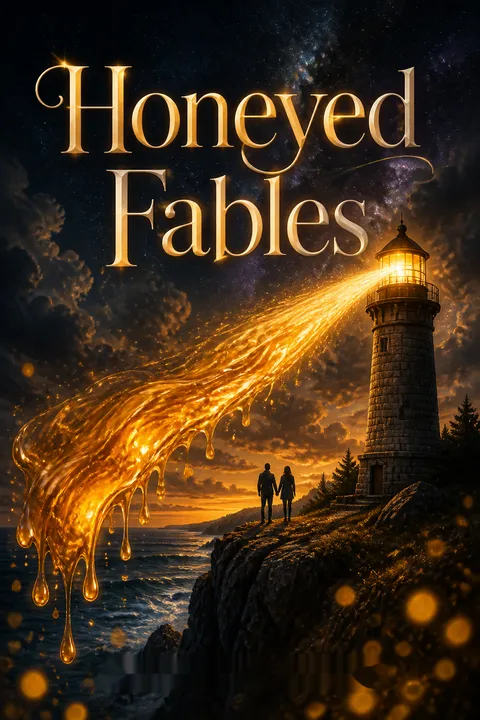

Plot Summary
Bookstore Battles Begin
Fallon Madison, fiercely independent and anxious, pours her soul into Shoreline Scribes, a cozy New Hampshire bookshop. Her best friend Thomas pushes her to hire help, but Fallon resists, clinging to control. Meanwhile, Hayes "Fitz" Fitzgerald, heir to a Boston business empire, arrives in Sanderling to assess the competition for his father's company. Their first encounter is a collision of pride and wit—Fallon's protectiveness over her rare books meets Hayes's entitled curiosity. Sparks fly, not just from attraction but from the friction of two people used to being in charge. The store's warmth and the city's charm set the stage for a rivalry that's as personal as it is professional, with both determined not to yield an inch.
The Reluctant Hire
Pressured by Thomas and her own exhaustion, Fallon reluctantly agrees to hire Hayes, who offers himself as a new employee under the guise of needing work. Hayes's real motive is to get close, gather intel, and undermine her bid for a coveted city retail space. Fallon's trust issues flare, but Thomas's insistence and Hayes's persistence wear her down. The dynamic shifts: Hayes is no longer just a rival but an insider, privy to the rhythms and vulnerabilities of Fallon's daily life. Their banter sharpens, and the boundaries between business and personal begin to blur, setting up a dangerous intimacy neither fully understands.
Clash of Wills
As Hayes learns the ropes, he and Fallon clash over every detail, from inventory to customer service. Each tries to assert dominance, but their arguments are laced with a growing, reluctant fascination. Fallon's anxiety and need for control are challenged by Hayes's confidence and subtle provocations. The store becomes a battleground for their philosophies—community versus commerce, heart versus ambition. Yet, beneath the surface, both are drawn to the other's passion and vulnerability. The tension is palpable, and the line between adversary and ally grows ever thinner.
Espresso and Intrigue
Outside the store, their paths cross unexpectedly—at the Pilates studio, the local café, and late-night walks home. Hayes's presence unsettles Fallon, who is used to solitude and self-reliance. Hayes, meanwhile, is forced to confront his own dissatisfaction with his privileged but hollow life. Their conversations grow more personal, revealing cracks in their armor. Fallon's guarded heart is tempted by Hayes's rare moments of gentleness, while Hayes is intrigued by Fallon's resilience and the pain she hides. The city's smallness ensures they can't avoid each other, and each encounter deepens the intrigue.
Unlikely Allies
When a shipment arrives late, Hayes steps up to help Fallon, earning a sliver of her trust. They bond over the challenges of small business ownership, the loneliness of leadership, and the weight of expectations—hers self-imposed, his inherited. Fallon begins to see Hayes as more than a corporate spy, while Hayes glimpses the cost of Fallon's independence. Their alliance is uneasy, but necessity and mutual respect begin to outweigh suspicion. The store, once a fortress, becomes a place of shared effort and, tentatively, shared dreams.
Tension After Hours
After a long day, Fallon and Hayes find themselves alone in the store. The air is thick with unspoken longing and unresolved conflict. A simple act—Hayes helping Fallon with inventory—turns electric. Their banter gives way to vulnerability, and the physical tension that's been simmering finally erupts. The encounter is both a release and a complication, blurring the lines between enemy and lover. Both are left shaken, unsure whether they've crossed a point of no return or simply exposed deeper wounds.
Secrets and Signed Editions
As their relationship deepens, secrets threaten to surface. Hayes continues to report to his father, torn between duty and desire. Fallon, meanwhile, navigates the advances of Ryan, a charming literary agent, and the pressures of her store's rapid growth. The signed editions that draw customers are also symbols of the connections—and compromises—Fallon has made. Hayes's jealousy and Fallon's fear of abandonment collide, forcing both to confront what they truly want. The stakes are no longer just business; hearts are on the line.
The Lighthouse Confession
Hayes takes Fallon to the old lighthouse, a place of solitude and reflection. There, away from the world's demands, they share their deepest fears—Hayes's resentment of his father's control, Fallon's anxiety and grief over her past. The confession is raw, stripping away pretense and exposing the pain that drives them. For the first time, they see each other not as rivals but as fellow survivors, each carrying invisible scars. The lighthouse becomes a symbol of hope—a place where healing might begin, if only they dare to reach for it.
Lines Crossed
Their connection intensifies, both emotionally and physically. Nights together become escapes from the pressures of their respective worlds. Yet, the secrecy of their relationship breeds new anxieties. Fallon fears being just another conquest; Hayes fears betraying his family and himself. Their intimacy is passionate but fraught, each encounter deepening their dependence and their dread of loss. The outside world—friends, business rivals, and family—presses in, threatening the fragile sanctuary they've built.
Rival Hearts
The arrival of Hayes's friends, especially the competitive Jace, stirs up old rivalries and new insecurities. Jace's interest in Fallon tests Hayes's possessiveness and Fallon's trust. The trio's dynamic is a microcosm of the larger battle between loyalty and ambition, love and self-preservation. The jazz lounge outing becomes a crucible, exposing the cracks in every relationship. Fallon is forced to choose where her loyalties lie, while Hayes must decide if he can truly let someone in.
The Jazz Lounge Test
At the jazz lounge, the tension between Fallon, Hayes, and Jace comes to a head. Dancing, flirting, and subtle power plays reveal the depth of Hayes's feelings and the threat Jace poses. Fallon, caught between two magnetic forces, must assert her own agency. The night is a test—not just of fidelity, but of self-worth and the courage to claim happiness. The aftermath leaves all three changed, the boundaries between friend, lover, and rival forever altered.
Boundaries Broken
As Fallon and Hayes grow closer, the secrets they keep become harder to bear. Hayes's dual life—devoted lover and corporate saboteur—reaches a breaking point. Fallon's past trauma resurfaces, triggered by the intensity of her feelings and the fear of abandonment. A series of misunderstandings and half-truths culminate in a devastating confrontation. Trust is shattered, and both are forced to reckon with the cost of their choices. The love that once seemed inevitable now feels impossible.
The Unraveling
In the aftermath of betrayal, Fallon retreats into herself, haunted by grief for her parents and the loss of Hayes. Hayes, trapped by family obligations and guilt, spirals into self-loathing. Both must confront the wounds that predate their relationship—the ghosts that have shaped their every decision. For Fallon, it means returning home and facing the pain she's long avoided. For Hayes, it means questioning the legacy he's been groomed to inherit. Their separation is both a reckoning and a chance for rebirth.
Ghosts of the Past
Fallon visits her parents' graves for the first time since their death, finally allowing herself to mourn and forgive. The act is cathartic, breaking the cycle of self-blame that has defined her life. Hayes, learning the truth of Fallon's loss, is humbled and moved. He realizes that love is not about rescue but about bearing witness to another's pain. The ghosts that haunted them begin to fade, replaced by the possibility of healing—if they can find the courage to try again.
The Sacrifice
Hayes faces the ultimate test: his father demands he marry Raquel to secure the family business, threatening Fallon's future if he refuses. Hayes is torn between loyalty to his family and love for Fallon. In a moment of selflessness, he agrees to the marriage, sacrificing his own happiness to protect Fallon's dreams. The decision devastates both, but it is an act of love as much as defeat. Fallon, learning the truth, is forced to decide whether to accept the sacrifice or fight for what they both deserve.
Shattered Trust
Fallon confronts Hayes's father, refusing to be a pawn in his schemes. She rejects the grant money and the manipulation, standing up for herself and for Hayes. The confrontation is fierce, exposing the rot at the heart of the Fitzgerald legacy. Hayes, inspired by Fallon's courage, begins to see a way out—a future not dictated by fear or obligation. The cost of honesty is high, but it is the only path to freedom.
California Reckoning
Fallon travels to California for a book convention, seeking distance and clarity. The trip is both an escape and a return to herself. Surrounded by friends and the world of books she loves, she begins to imagine a life beyond grief and betrayal. Hayes, meanwhile, is released from his engagement when Raquel chooses her own freedom. Both are changed—wiser, scarred, but open to the possibility of love without conditions.
Truths and Reunions
Hayes and Fallon reunite, each having faced their demons and chosen growth over fear. Their love, once forged in conflict and secrecy, is now tempered by honesty and mutual respect. They vow to build a future together—not as saviors or martyrs, but as partners. The story ends not with a fairy-tale resolution, but with the promise of hard-won happiness, rooted in truth, vulnerability, and the courage to begin again.
Analysis
A modern fable of grief, love, and self-forgivenessHoneyed Fables is more than a romance; it is a meditation on the ways we construct and defend our identities in the face of trauma and expectation. Through the lens of a small-town bookstore and the high-stakes world of family business, Whitney Dean explores the cost of control, the necessity of vulnerability, and the redemptive power of community. The novel's dual perspectives invite readers to inhabit both the anxious, fiercely independent mind of Fallon and the privileged, conflicted heart of Hayes, revealing the universality of longing and the particularity of pain. The story's emotional arc is one of descent and ascent: from rivalry to intimacy, from betrayal to forgiveness, from isolation to partnership. In a world obsessed with winning and self-sufficiency, Honeyed Fables argues for the courage to ask for help, the wisdom to let go, and the grace to begin again. Its lesson is clear: healing is not linear, love is not a panacea, and the stories we tell ourselves can both imprison and liberate us. In the end, it is only by facing our ghosts—together—that we find the strength to write new fables, honeyed with hope.
People Also Read



Characters
Fallon Madison
Fallon is the heart of Shoreline Scribes, a fiercely independent woman shaped by grief and anxiety. Orphaned by a tragic accident she blames herself for, she channels her pain into her bookstore, creating a haven for herself and her community. Fallon's relationships are marked by caution and self-protection; she fears vulnerability as much as she craves connection. Her friendship with Thomas is her anchor, but her romance with Hayes forces her to confront her deepest wounds. Fallon's journey is one of learning to trust—not just others, but herself. She evolves from a woman defined by loss and control to one capable of forgiveness, love, and hope.
Hayes "Fitz" Fitzgerald
Hayes is the only son of a powerful Boston businessman, raised in luxury but starved of genuine affection. Groomed to inherit FFJ Holdings, he is burdened by his father's expectations and the emptiness of a life built on obligation. Hayes's initial mission to undermine Fallon is complicated by his growing admiration and love for her. He is both arrogant and deeply insecure, using control as a shield against his own vulnerability. Hayes's arc is one of self-discovery—learning to defy his family's toxic legacy, accept his own desires, and risk everything for love. His relationship with Fallon is both a challenge and a salvation.
Thomas O'Leary
Thomas is Fallon's assistant manager and confidant, the steady presence who keeps her grounded. Witty, sarcastic, and fiercely loyal, he is both a source of comic relief and emotional support. Thomas's own relationship with Ansel provides a model of healthy partnership, contrasting with the chaos of Fallon and Hayes's romance. He is unafraid to challenge Fallon, pushing her to grow while respecting her boundaries. Thomas's role is that of the guardian—shielding Fallon from harm, but also knowing when to let her fight her own battles.
Jace
Jace is Hayes's childhood friend and perennial rival, embodying the dangers of unchecked ego and entitlement. His flirtation with Fallon is both a test of loyalty and a reflection of his own insecurities. Jace's relationship with Hayes is fraught—part camaraderie, part competition, always pushing boundaries. He serves as a foil to Hayes, highlighting the latter's growth and capacity for change. Jace's actions, though often selfish, ultimately force Hayes and Fallon to confront their true feelings.
Andrew
Andrew is the voice of reason among Hayes's friends, offering stability and perspective. Bound to the Fitzgerald family by history and obligation, he understands the cost of loyalty and the pain of compromise. Andrew's quiet support is crucial in moments of crisis, helping Hayes navigate the treacherous waters of family and business. He is a bridge between worlds—old money and new dreams, duty and desire.
Frank Fitzgerald
Frank is the architect of Hayes's misery, a man who values legacy over love. His machinations drive the central conflict, forcing Hayes to choose between family and happiness. Frank's inability to see his son as anything but an extension of himself is both his tragedy and his undoing. He represents the old world—rigid, ruthless, and ultimately self-defeating.
Raquel
Raquel is both victim and agent in the Fitzgerald family drama. Pressured to marry Hayes for business reasons, she is as much a pawn as he is. Her eventual decision to break the engagement is an act of courage, freeing both herself and Hayes from a cycle of obligation. Raquel's story is a reminder that everyone in this world is fighting their own battles, and that freedom often comes at a cost.
Ryan
Ryan is a minor but pivotal character, representing the temptations and compromises of Fallon's professional life. His flirtation and business dealings with Fallon test her boundaries and highlight her integrity. Ryan's presence is a catalyst, forcing Fallon to clarify what she wants and what she will not accept.
Ansel
Ansel is Thomas's boyfriend, a background figure who nonetheless embodies stability and acceptance. His relationship with Thomas offers a counterpoint to the turbulence of the main romance, showing that love can be simple, supportive, and sustaining.
Clyde
Clyde is a symbol of endurance and kindness, a minor character whose presence underscores the theme of community. His refusal to retire and his affection for Fallon and Thomas highlight the importance of intergenerational support and the quiet heroism of everyday life.
Plot Devices
Dual Perspectives and Alternating Narration
The novel alternates between Fallon and Hayes's points of view, allowing readers to experience the same events through different emotional lenses. This structure deepens empathy, reveals misunderstandings, and heightens dramatic irony—especially as secrets and motives are slowly unveiled. The dual narration also mirrors the central theme: the difficulty of truly knowing another person, and the courage required to bridge that gap.
Enemies-to-Lovers and Forced Proximity
The classic enemies-to-lovers trope is given fresh life through the forced proximity of the workplace. Hayes's infiltration of Fallon's store creates constant friction, but also opportunities for vulnerability and connection. Their initial antagonism is both a mask and a crucible, burning away pretense and exposing raw need. The trope is used not just for romantic tension, but as a vehicle for character development and healing.
Secrets, Betrayal, and Redemption
Both protagonists harbor secrets—Hayes's true identity and mission, Fallon's unresolved grief. The gradual revelation of these truths propels the narrative, creating cycles of trust, betrayal, and forgiveness. The plot hinges on the characters' willingness to confront their own flaws and to risk honesty, even when it threatens everything they've built.
Symbolism of Place
The bookstore, the lighthouse, and the city itself are more than backdrops—they are extensions of the characters' psyches. The store is Fallon's sanctuary and prison; the lighthouse is a beacon of hope and a site of confession; the city is both opportunity and threat. These spaces are used to externalize internal conflicts and to mark stages of transformation.
Intertextuality and Literary Allusions
References to works like Wuthering Heights, Pride & Prejudice, and The Great Gatsby are woven throughout, both as Easter eggs for book lovers and as thematic anchors. These allusions deepen the emotional resonance, connecting the characters' struggles to timeless questions of love, loss, and identity.



Download PDF
Download EPUB
.epub digital book format is ideal for reading ebooks on phones, tablets, and e-readers.








































