
Key Takeaways
1. Beauty's Enduring Relativity: A Shifting Ideal Across Time and Culture
This book starts from the principle that Beauty has never been absolute and immutable but has taken on different aspects depending on the historical period and the country: and this does not hold only for physical Beauty (of men, of women, of the landscape) but also for the Beauty of God, or the saints, or ideas...
A fluid concept. The very notion of beauty is not a fixed, universal truth but a dynamic construct, constantly re-evaluated and redefined by each era and culture. What one society deems beautiful, another might find ordinary or even repulsive, highlighting the profound subjectivity embedded in aesthetic judgment. This historical variability extends beyond physical appearance to encompass abstract ideals, divine representations, and even moral virtues.
Beyond desire. Throughout history, a recurring thread in the understanding of beauty is its capacity to evoke pleasure independent of desire or possession. Whether admiring a painting, a landscape, or a person, true beauty is appreciated for its intrinsic qualities, not for what it can offer or how it can be acquired. This detachment distinguishes aesthetic appreciation from mere covetousness or utility.
Art as a mirror. While the modern age often links beauty primarily to art, historical perspectives reveal a more nuanced relationship. In many periods, the beauty of nature was paramount, with art's role being to represent that natural beauty, even when the subject itself was considered ugly or dangerous. Artworks, therefore, serve as invaluable historical documents, offering glimpses into the prevailing aesthetic ideals of their time, even if those ideals coexisted with contradictory notions.
2. Ancient Greece: Harmony, Proportion, and the Intertwined Soul
Even in the golden age of Greek art, Beauty was always associated with other values, like 'moderation','harmony' and 'symmetry'.
Integrated ideals. In ancient Greece, beauty was rarely an isolated concept; it was deeply interwoven with moral and philosophical virtues. The Delphic Oracle's pronouncement, "The most beautiful is the most just," encapsulates this holistic view, where aesthetic appeal was inseparable from qualities like moderation, harmony, and symmetry. This early understanding lacked a distinct aesthetic theory, often associating beauty with whatever pleased or drew the eye (Kalón).
Psychophysical unity. Greek art, particularly sculpture, pursued an empirical research into the "living Beauty of the body," aiming for a psychophysical harmony that unified physical form with the goodness of the soul—an ideal known as Kalokagathia. Artists like Phidias, Miron, and Praxiteles sought to synthesize living bodies to create an ideal beauty, often expressed through static forms that conveyed equilibrium and repose, prioritizing simplicity over excessive detail.
Plato's intellectual beauty. For philosophers like Plato, true beauty transcended the sensible world. He argued that beauty possessed an autonomous existence, distinct from its physical manifestations, and could only be grasped through intellectual sight, not the imperfect senses. Consequently, he viewed art as a "false copy" of true beauty, potentially morally harmful, and advocated for the beauty of geometric forms based on mathematical proportion as a purer ideal.
3. The Apollonian and Dionysiac Dialectic: Order's Dance with Chaos
This co-presence of two antithetical divinities is not accidental, even though it was not topicalised until modern times, when Nietzsche tackled the issue.
Delphic duality. The ancient Greek worldview, while emphasizing Apollonian order, measure, and harmony (as seen in the Delphic mottoes like "Observe the limit"), also acknowledged the disruptive force of Dionysus, god of chaos and unbridled passion. This inherent tension between order and chaos, visible in the co-presence of Apollo and Dionysus on the Delphi temple, reveals a more complex understanding of beauty than often assumed by later "Classical" interpretations.
Antithetical perceptions. Greek thought grappled with several antitheses within its concept of beauty:
- Sensible perception vs. appearance: Heraclitus suggested that harmonious beauty manifests as a random flux, challenging the idea of fixed forms.
- Sound vs. vision: While visible forms (Kalón) were deemed beautiful, music, with its capacity to arouse passions, often evoked suspicion.
- Distance vs. nearness: Greek art favored a detached contemplation, whereas music implied a more intimate, potentially unsettling, involvement.
Nietzsche's reinterpretation. It was Nietzsche who later fully articulated this duality, positing Apollonian beauty as a serene, harmonious facade that often concealed a deeper, disquieting Dionysiac beauty. This "joyous and dangerous" beauty, antithetical to reason and linked to possession and madness, represented the nocturnal, irrational side of the Greek aesthetic, a vital reservoir that would resurface in modern expressions of beauty.
4. Medieval Splendor: Light, Color, and the Mystical Order of All Things
Three qualities are required for Beauty. In the first place integrity or perfection: since incomplete things, precisely because they are such, are deformed. Due proportion or harmony among the parts is also required. Finally clarity or splendour: in fact we describe things whose colours are clear and brilliant as beautiful.
Claritas and divine light. Medieval aesthetics placed immense importance on claritas (clarity or splendor) as a fundamental component of beauty, alongside integrity and proportion. This concept was deeply rooted in the identification of God with light across various cultures, from ancient deities to Neoplatonic philosophy, which saw God as a luminous current permeating the universe. Medieval art, particularly illuminations and stained-glass windows, celebrated primary colors and internal luminosity, where light seemed to radiate from objects themselves.
Symbolic order and wealth. Colors in the Middle Ages carried profound symbolic and social meanings. Rich, vivid colors and precious gems were not merely decorative but signified wealth, power, and divine favor, contrasting sharply with the drab attire of the poor. This appreciation for color extended to poetry and mystical visions, where hues like "oriental sapphire" or "coruscating flame" evoked spiritual experiences and the beauty of creation.
Monsters in harmony. Even seemingly ugly or monstrous creatures found a place within the medieval concept of beauty, not as negations, but as elements contributing to the overall cosmic harmony. Theologians and philosophers, drawing on universal symbolism, justified their presence as part of God's providential design, where contrasts (like shadows in a painting) enhanced the beauty of the whole. Monsters were also sources of fascination, appearing in bestiaries and architectural ornamentation, evolving from symbolic entities to natural curiosities by the early modern period.
5. Renaissance: Nature's Imitation Meets Suprasensible Grace
The painter is master of all the things that may come to man's mind, and so if he wishes to see beauties of which he may become enamored he has the power to make them, and if he wishes to see monstrous things that terrify him, or clownish and comical things, or truly pitiful things, he is the lord and creator of them.
Dual orientation. The Renaissance witnessed a complex, yet coherent, dual approach to beauty: it was simultaneously an imitation of nature, guided by scientific rules like perspective, and a contemplation of supernatural perfection. Artists, exemplified by Leonardo da Vinci, were seen as both meticulous observers of the natural world and inventive creators, capable of imbuing their works with an enigmatic grace that transcended mere replication.
The power of the simulacrum. Advances in techniques like linear perspective and oil painting allowed for an unprecedented precision in reproducing reality, yet always filtered through the subjective viewpoint of the observer. This "ennoblement of the simulacrum" meant that art could capture the essence of beauty, even in minute detail, making the reproduced image a powerful vehicle for aesthetic experience.
- Perspective: Organized space, depth, light, and color.
- Oil painting: Magical luminosity, as seen in Flemish art.
Neoplatonic influence. Marsilio Ficino's Neoplatonism played a crucial role, elevating beauty to a high symbolic value. It posited that sensible beauty was a reflection of a superior, suprasensible divine beauty, diffused throughout humanity and nature. This framework allowed for the integration of hermetic alchemy and physiognomy, fostering a rich symbolic complexity in art and literature, where figures like Venus could embody both celestial and terrestrial ideals, as seen in the works of Titian and Botticelli.
6. From Baroque Drama to Enlightenment Reason: A Spectrum of Aesthetic Experience
The true critical point in this life of God is the one in which he abandons his individual existence as this man, the Passion, suffering on the cross, the Calvary of the spirit, the torments of death.
Baroque's dramatic intensity. Following the Renaissance, the Baroque era embraced a "disquieting, nebulous, and surprising Beauty," moving away from rigid classical proportions. This period, marked by political and economic turmoil, saw artists like Borromini and Guarini create astonishing, dynamic architectures that defied conventional harmony. The Baroque aesthetic celebrated agudeza or wit—a combination of precise fancy and surprising effect—where multiplicity of detail and tension replaced static equilibrium, expressing a beauty "beyond good and evil" that could encompass ugliness, falsehood, and death.
Enlightenment's dual nature. The 18th century, often perceived as purely rational, presented a complex aesthetic landscape. While Neoclassicism championed rational rigor, discipline, and a "true" Classical beauty (inspired by archaeological discoveries), it coexisted with the lingering sensuality of Rococo and a burgeoning interest in subjective experience. Thinkers like Hume argued that beauty was not inherent in objects but formed in the mind of the beholder, leading to aesthetic subjectivism.
The Sublime's emergence. A pivotal development was the rise of the Sublime, distinct from beauty. Pseudo-Longinus initially defined it as an artistic effect evoking grand passions and ecstasy. However, Edmund Burke and later Kant expanded it to encompass natural phenomena that inspire awe, terror, and a sense of overwhelming power or vastness (e.g., stormy seas, starry skies). For Kant, the Sublime, while humbling the senses, ultimately affirmed human reason's independence from nature, revealing a "moral greatness" in the face of the infinite.
7. Romanticism's Embrace: The Vague, the Grotesque, and the Tragic Sublime
Beauty ceases to be a form and the beautiful becomes the formless and the chaotic.
A new sensibility. Romanticism, more a set of attitudes than a strict movement, challenged classical canons by embracing contradictions and finding beauty in the vague, the melancholic, and the grotesque. Figures like Foscolo embodied this blend of beauty and melancholy, reason and emotion, while the "Beauty of the Medusa" symbolized the allure of the terrifying and formless. This era saw death itself, wrested from the purely macabre, acquire a tragic beauty, as exemplified by Napoleon's decree against suicide for love.
The "je ne sais quoi" and nature's mystery. Rousseau popularized the "je ne sais quoi" to describe an indefinable beauty, advocating for a return to nature and spontaneity against artificial, "lofty" beauty. For Romantics, nature was not merely picturesque but obscure, mysterious, and overwhelming, inspiring sublime visions that defied precise forms. This immersion in nature often manifested as nocturnal walks and a pervasive melancholy, reflecting a deep yearning (Sehnsucht) for the distant, magical, and unknown.
Truth, myth, and irony. Romantics like Novalis and Friedrich Schlegel sought a dynamic, discordant beauty, believing that beauty could spring from ugliness and that it produced truth, rather than merely reflecting it. They envisioned a "new mythology" that would liberate the human spirit through aesthetic forms. Schlegel's concept of "irony" allowed for the co-presence of opposing viewpoints, enabling a simultaneous approach and withdrawal from the object, preventing both enslavement and skepticism, and mirroring the interpenetration of subjective aspiration and objective reality.
8. The Religion of Art: Decadence, Artificiality, and Life as Aesthetic Creation
Beauty is always bizarre. I don't mean to say that it is deliberately, coldly bizarre, for in that case it would be a monster that has gone off the rails of life. I say that it always contains a hint of the bizarre, which makes it Beauty in particular.
Art for art's sake. Confronted by the industrial world's "sadness, uniformity, gloom, and ugliness," late 19th-century artists cultivated an "aesthetic religion," where beauty became a supreme value to be realized at all costs. This "Art for Art's sake" movement, particularly Decadentism, sought to transform life itself into a work of art, embracing transgression, sickness, death, and the demoniac as fascinating subjects, not for moral judgment but for aesthetic redemption.
Dandyism and the cult of self. Dandyism, exemplified by figures like Beau Brummel and Oscar Wilde, manifested this aesthetic religion as an art of living and dressing with style, elegance, and provocative wit. The dandy's life became a meticulously crafted performance, a "triumphant example of Beauty," where artificiality was prized over brute nature. This cult of self, often eccentric and anti-bourgeois, sometimes challenged social norms, as seen in Wilde's public trials.
Symbolism and the hidden world. Symbolism, a key Decadent movement, sought to uncover a secret world of "mysterious analogies" hidden within natural reality. Poets like Baudelaire saw nature as a "forest of symbols," where colors, sounds, and images conversed, revealing profound affinities. Mallarmé pursued a "poetics of absence," using evocative language and blank spaces to suggest rather than name, aiming to reveal the "immutable lacework of Beauty." This quest for an absolute, often through intensified, artificial sensations and even dissipation (Rimbaud), underscored the era's belief that art could create a "second nature," where any violation of the natural could be considered art.
9. The New Object: Industrial Forms, Mass Production, and Functional Beauty
The new Citroen has plainly fallen from the heavens in the sense that, right from the start, it appears as a superlative object. It must not be forgotten that the object is the best vehicle of the supernatural: the object can easily hold within itself a perfection and an absence of origin, a closure and a brilliance, a transformation of life into matter (matter is far more magical than life), and finally a silence that belongs to the order of the marvellous.
Victorian solidity and its challenges. The mid-19th century saw the rise of "Victorian Beauty," a bourgeois ideal blending luxury with practicality, solidity, and durability. The home became a sanctuary of "harmonious and hierarchical happiness," filled with objects reflecting cost and permanence. However, this aesthetic was challenged by new industrial materials like iron and glass, which, initially met with resistance from traditionalists like Ruskin and Morris, eventually paved the way for a new "industrial" beauty.
Functionalism and Art Nouveau. The late 19th and early 20th centuries witnessed a revolution in architectural taste, embracing glass and iron for their social and progressive spirit, as seen in Henri Labrouste's libraries. Art Nouveau (Jugendstil) emerged with its sinuous lines, organic ornamentation, and voluptuous forms, extending to fashion and the emancipated female body. While initially decorative, it evolved into Art Deco, which, by the 1920s and 30s, reconciled art and industry, emphasizing abstraction, simplification, and functionalism, making quality and mass production compatible.
Mass culture and the "ready-made." The 20th century's commercialization of life transformed everyday objects into mass-produced commodities, often losing their unique "aura." Dadaists like Marcel Duchamp critiqued this by presenting "Ready Mades" (e.g., a bicycle wheel), defunctionalizing common objects into art. Pop Art, with figures like Andy Warhol and Roy Lichtenstein, embraced mass-produced beauty without utopian pretense, showing how any object—from a soup can to a celebrity's face—could acquire aesthetic value based on its presentation within social coordinates, reflecting the artist's loss of monopoly over images.
10. Materiality and the Unseen Depths: Contemporary Aesthetics of Substance
The artist lovingly studies his material, he examines in depth, he observes its behaviour and reactions; he questions it in order to be in command of it, he interprets it with a view to taming it, he obeys it in order to bend it to his will; he studies it in depth to discover latent possibilities that might suit his ends; he delves into it so that it might itself suggest new and original possibilities; he follows it so that its natural developments may coincide with the exigencies of the work to be created; he investigates the ways in which a long tradition has taught [artists] to handle it in order to engender new ways of working with it, or to extend the old manner of working it; and if the tradition with which that material is laden seems to jeopardise its ductility, making it heavy and dated and dull, he tries to recover its pristine freshness so that the more it is unexplored, the more fecund it will be; and if the material is new he will not be frightened by the daring of certain cues that seem to emerge from it spontaneously, nor will he lack the boldness to make certain experiments or shirk the difficult task of penetrating it the better to identify its possibilities...
Re-assessing material. In reaction to earlier aesthetic trends that prioritized abstract spirituality or superficial form, contemporary aesthetics has profoundly re-evaluated the significance of material itself. Beauty, truth, and creation are now understood to reside not just in angelic ideals but also in the tangible, sensory universe of things—objects that can be touched, smelled, and are subject to the laws of gravity, decay, and transformation. This shift emphasizes the artist's intimate engagement with the physical substance of their work.
Informal art and raw expression. Twentieth-century artists, particularly in "informal" painting and sculpture, often focused exclusively on material, allowing splashes, cracks, lumps, and drips to speak with the immediacy of chance. Works might evoke raw materials like "tarmac, asphalt, paving, rubble," transforming the canvas or sculpture into something akin to a natural phenomenon. This approach, however, is not passive; artists select, highlight, and confer form upon the formless, guiding the viewer to discover hidden beauty in what might otherwise be overlooked.
From waste to fractals. The exploration of material extends to industrial waste and commercial objects, as seen in artists like Cesar and Arman, who transform discarded items into compelling art. This practice, while often a critique of consumerism, also teaches an appreciation for the inherent "forms" of industry, redeeming the "uselessness" and "wretchedness" of these objects to reveal an unsuspected beauty. Furthermore, modern electronic techniques now allow for the discovery of unexpected formal aspects in the depths of material, such as the intricate, invisible structures of fractals, opening new frontiers for an "aesthetics of fractals."
Review Summary
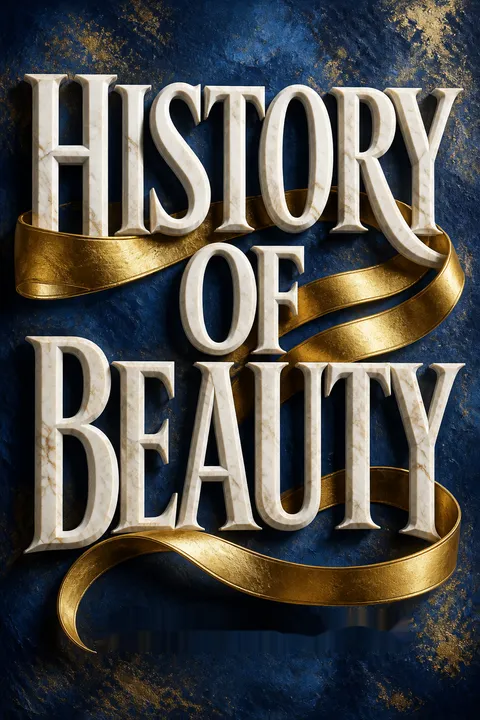
Reviews of History of Beauty are mixed, averaging 3.82/5. Many praise its stunning visuals and rich collection of philosophical excerpts spanning ancient Greece to modernity. Critics note it reads more like a curated art album or sourcebook than a rigorous academic study, with Eco's own analytical voice largely absent. Some appreciate its accessibility as a coffee-table reference, while others find it disjointed and superficial. Persian-language readers note significant censorship of nude artwork in translated editions, undermining the book's visual-textual integrity.
People Also Read
About the Author
Other books by Umberto Eco
Download PDF
Download EPUB
.epub digital book format is ideal for reading ebooks on phones, tablets, and e-readers.








































