
Plot Summary
Naked in a Hedge Maze
Jason Asano awakens—stripped of all dignity, clothes, and notably, hair—in a hedge maze with two moons above. Struggling to explain his predicament (am I dreaming, dead, or insane?), he encounters magical screens displaying status panels, quests, and inventory, as if life itself is now a video game. Unnerved but practical, Jason decides to accept the unknown, and tackle the bizarre challenge set before him—explore or be devoured by sunburn or embarrassment. Piece by piece, Jason latches onto the basic mechanics of this world, wrestling with existential confusion and a desperate longing for even the simplest comfort—like pants.
Monsters, Hamsters, and Healing
Jason faces his first challenge when the maze brims with monsters—giant hamsters, malicious hedgehogs, tyrannical pheasants, and flying eels. Riddled with wounds from battle, but never fully dying, he discovers healing ointment and loot spilling straight into his mysterious "inventory." His interface reveals a world of rigidly structured mechanics—rewarding every bruise with coins and monster parts. Still balancing disbelief, Jason endures and explores, the surreal gradually becoming his new sense of normal, even as he questions his sanity and the macabre routine of killing, looting, and magically healing.
Maze, Medallion, and Mill
After enduring the trials of monster-infested hedges, Jason navigates to the maze's center: a dilapidated well, his ultimate quest milestone. By delving creatively and examining evidence—strange tokens, magic circles, and the subtle cruelty of this place—Jason slowly assembles the rules of survival. Yet, before progress is possible, a more brutal threat encroaches: cannibals roam the maze, discussing captive sacrifices, and worse, their preferences for distinct human flavors. With nowhere else to go, Jason chooses the lesser horror: descending the dark well, guided only by the hope that below is a way forward—rather than a dead end.
Cannibal Cultists Crawl Below
In darkness, Jason crawls through a foul tunnel, panic threatening to consume him. Guided only by touch, he stumbles into a cavern lit by a found lamp, and presses on—his reward: an abandoned summoning room trashed by unknown violence. Here, he encounters a wizard in distress amidst the ruins of failed magic, the pentagram glowing with shattered hopes. But wizard-heroes don't always err on the side of good. Jason's rescue does not invoke gratitude, but hostility—he's blamed for the summoning gone awry, and the wizard's cannibalistic threats drive Jason to desperate violence. In the end, survival costs blood.
Summoning Circle Fight
Jason's first human kill leaves him in a fog of shock, his hands slick with another's blood. He cannot claim innocence—he wrestled, stabbed, survived. Yet the line crossed leaves him fundamentally altered. Even moments of reprieve are brief, as a monster snake—a cultist's vengeful familiar—comes to avenge its master. Jason flees, chased through narrowing tunnels and up treacherous ladders. He escapes by the thinnest fortune, as the well collapses, crushing the monster and narrowly sparing him. But survival is not unalloyed; Jason is battered by physical pain and shaken by the burden of necessary violence.
Snake, Snakeskin, and Survival
In pain and broken, Jason draws again on magic's bounty: potions, ointments, and loot logic save his flesh, if not his mind. Unraveling quest chains and hidden objectives with each monster slain or accident survived, his inventory now brims with odd treasures—snakeskin, fangs, coins, gems, and the tools for power. The reward for surviving the snake and escaping the pit is not simply survival, but advancement: the first dark essence, an awakening stone, legendary loot. Jason begins to recognize the rules of the world: every risk, every kill is both punishment and promise for greater rewards.
Loot, Language, and Lore
Making sense of his loot and the revelations within the basement, Jason discovers that his "outworlder" status grants broad powers: reading all languages, looting monsters like a role-playing game, and absorbing magical books for instant knowledge—starting with the basics of ritual magic. As the mechanics unfold, so does the darker side of magic: skills transform the very mind, essence absorption is excruciating, and some items—like his World Phoenix Token—elude all logic. Jason's grappling with literal and figurative translation opens the doors to magic, but also alienates him from any sense of prior reality.
Gaining Grim Powers
Jason absorbs and awakens his first dark essence—suffering feverish pain and rebirth in the process. Gaining "Midnight Eyes," he can see through darkness, and with further quest rewards—an awakening stone—he unlocks the ability "Cloak of Night," conjuring a shroud of shadows. Each new power is a mutation, reshaping body and soul. Yet every ascension leaves him weaker, exhausted—mana, health, and stamina are resources to be spent and measured. Jason senses the allure and the peril: the mechanics offer structure, but the seduction of convenience and power threatens to draw him onto darker, irreversible paths.
Prisoners and Party
Recaptured by the cannibal cultists, Jason awakens caged among strangers—Rufus, Gary the leonid, Farrah, and Anisa the healer. Collared to suppress their powers, they bond over shared peril. The cult looms, threatening to sacrifice them in a grotesque ritual pit. Jason, ever scheming, leverages his outworlder's quirks to break free—using silver coins for borrowed strength, keys reclaimed from corpses, and a growing mastery of his inventory and magic. Working together, they coordinate a desperate escape. Despite setbacks and injuries, the crisis forges their nascent fellowship from mutual need and the inevitability of violence.
Blood Pits and Beasts
Forced into a sacrificial ritual, Jason and his new companions face a literal pool of blood and an artificial abomination—the Sanguine Horror—conceived to end worlds. Manipulated by the cult, they accidentally complete the sacrificial requirements, summoning a monster of undead leeches and bloody bandages. With powers suppressed, all seems lost. Yet by marshaling cooperation and wit—Jason's leeches and salt, Gary's strength, Farrah's lava, Rufus's blade—they prevail, though not without cost. In victory, the full cost emerges: death, pain, and the chilling knowledge that their triumph was equal parts luck, sacrifice, and borrowed time.
Band Together or Die
After narrowly escaping destruction, the group must reckon with their trauma, their choices, and each other. Betrayal, guilt, and violence mar the early bonds, yet necessity and shared values slowly forge something stronger. Jason, in particular, struggles—tormented by both pride at their survival and remorse for the means required. Gary, Rufus, and Farrah urge Jason to see himself as "one of us"—not because of his powers, but the hardness and compassion hidden beneath survival's ugly envelope. Only through honest confession and mutual reliance do they find the resolve to face what else this world will demand.
Song of Suffering
In aftermath and reflection, Jason and the others return to the city. Their heroic rescue is rewarded, but each is changed: Jason's powers continue to grow—his abilities, leech-infested familiar, cloak, and stranger's skills gain terrifying efficiency. With each new contract and encounter, Jason leans into the role of affliction specialist, growing infamous for not only killing but instilling terror. The group begins to find joy amid their wounds: social fellowship, music, food, and—occasionally—forgiveness. Yet every victory, every test faced and passed, is a reminder: to stand against monsters, one must become something monstrous, and live with the price.
To Save or Flee
Facing new threats—sand pirates, tribal invasions, and astral disruptions—Jason and friends seize opportunities for heroism that deepen their bonds, but also test their resolve. They undertake dangerous group contracts, navigate city politics, and mentor younger adventurers like Humphrey. Each mission demands growth: Jason must wield both cooperation and manipulation, learning to lead and provoke not just with strength, but insight and humility. The clash of personal values, especially with establishment figures and the corrupt upper class, forges new lessons. Sometimes, survival or success requires hard choices: not all can be saved, not every challenge can be met, and sometimes running—rather than fighting—is wisdom.
Unveiled: New World Wonders
Major expeditions draw together adventurers, arcanists, and nobles alike, seeking to fix the world's failing astral spaces. Jason, excluded by politics and prejudice, throws energy into solo contracts and city investigations. Meanwhile, his friends uncover a far-reaching conspiracy and face catastrophic defeat—construct armies, abomination overlords, and agonizing losses on both sides. Evolving racial gifts and abilities are both curse and blessing, and the question of what can be changed, what must be endured, and what should have been left untouched tugs at every person. Uncertainty and grief thread through every "victory"; the new world and its wonders exact a brutal price.
Outworlder's Odyssey
As Jason's reputation grows from oddity to influencer, he delves deeper into the city's underbelly—solving frauds, sparring with politics, and wrestling with his outworlder status. The mechanisms of this universe are now his: skills, party interface, loot, and interface evolve with each choice. Encounters with gods, moral conundrums, and the karma of hard-won power all shape him and his companions. He learns there are no perfect answers—only consequences to be owned. To be an adventurer, to survive, Jason must become both monster and hero, iron in will, kinder in judgment, and ruthless—first with himself.
Bonds of Adventure
New friendships and romances flourish, but every connection is shadowed by risk and loss. Jason finds hesitant love in Cassandra and loyal partnership in his quirky companions. The death of Farrah—a cost of leadership and miscalculated expedition—strikes everyone with fresh pain, guilt, and rage. Survival no longer suffices: Jason and his friends must seek not just strength, but meaning. Their response to horror is not escape, but to shape the wider world: seeking justice, righting wrongs, and questioning the systems that reproduce suffering. Every hard choice, every act of mercy or defiance, forges a vision for betterment—harder won, more dearly paid.
Justice in Greenstone
Entwined in the city's rotten politics, Jason exposes schemes—from monster-summoning land grabs to criminal collusion among even the powerful. Moments of violence—slaying thugs, bearing witness to bureaucratic rot—teach him the cost of integrity and give him leverage with the ruling elite. Escalating from pawn to player, Jason leverages evidence and threat alike to force justice—winning more with cunning than brute strength. Even as his friends are scattered or lost, and powerful enemies gather, he learns the most important leverage is wielding power without losing oneself, and integrity's value is not in comfort but in having "a line not to cross."
Training, Trials, and Transformation
Jason, at first an underdog among prodigies, endures arduous training, relentless self-doubt, and the ever-present specter of failure—from field assessments to the mirage arena. He learns that true growth accounts for both strengths and weaknesses, martial prowess and magical synergy. Each confrontation—from knife fights to tactical sparring to orchestrating team victories—tests his philosophy: victory is less about raw power and more about cunning, adaptation, and heart. As party and personal skills evolve, so do the burdens—Jason's embrace of responsibility, accountability, and the slow, painful forging of a leader willing to pay the price for power earns his place among adventurers.
Faceless Thief, Fateful Choices
Completing his investigation, Jason unmasks the infamous thief—Sophie Wexler—only to find she is less criminal than casualty, trapped by schemes and lusts of powerful men. For once, Jason is not just executor of the system, but its challenger; he pushes to transform Sophie from fugitive to protected Adventurer. The complications are manifold: bureaucratic backstabbing, shifting alliances, and the consequences of mercy and justice repeatedly colliding. Jason learns the power of refusing to play someone else's game—choosing instead to shape his own. The future remains uncertain, but as old orders topple and new opportunities arise, Jason stands—scarred but unbowed—ready to fight with monsters and make of his story a life worth living.
Analysis
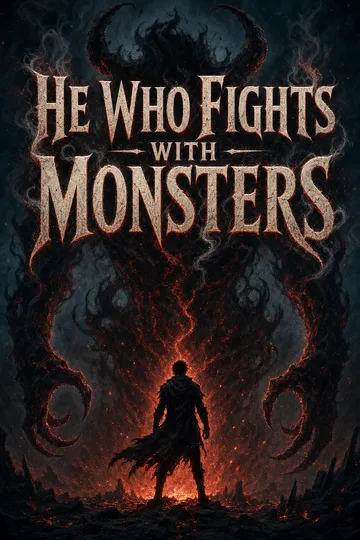
He Who Fights With Monsters 4 is a vibrant, genre-savvy dialogue with the themes of power, morality, community, and the cost of heroism in an uncaring world. Blending LitRPG mechanics with epic fantasy, portal fiction, and urban intrigue, it reframes resource-gathering and level-up logic as both seductive trap and necessary structure. The "game" is never simply a comfort; it constantly exposes Jason—and the reader—to the peril that growth comes not just from overcoming monsters, but from adapting to and even accepting the monsters within. Major lessons revolve around the humility to accept limits, the courage to shape and defy systems, and the burden of wielding strength responsibly—not merely for self, but for the many who cannot. Through repeated losses, Pyrrhic wins, and hard-earned compassion, Jason's journey (and that of his companions) interrogates what it means not only to survive, but to live well: to negotiate the messy arithmetic of mercy, justice, and community in a world both more magnificent and more cruel than the stories ever promised.
Review Summary
He Who Fights with Monsters 4 receives mixed reviews. Many praise the character development and world-building, enjoying Jason's return to Earth and family interactions. However, some criticize the slower pace, lack of action, and focus on family drama. The book's political commentary and Jason's personality polarize readers. Some appreciate the change in setting, while others find it less engaging than previous installments. Despite criticisms, fans eagerly anticipate the next book, with the series maintaining a dedicated following on platforms like Royal Road.
People Also Read
Characters
Jason Asano
Jason is an Australian gamer and underachiever, thrust unwillingly into a dangerous magical world. Quick-witted and self-deprecating, he copes with confusion and trauma through dark humor and stubborn rationality. His outworlder gifts grant him a unique "interface"—translation, loot, skill mastery, and party management—but also mark him as perpetual outsider—human, yet not. His powers are grueling and morally gray (poisons, afflictions, horror magic). Jason's leadership, sense of justice, and capacity for mercy evolve beyond self-preservation, reshaping into a fierce, if sometimes conflicted, drive to do better. Every battle, loss, and victory forges him anew—both monstrous and more human.
Rufus Remore
Rufus, a scion of a legendary adventure academy, is the archetypal swordmaster: disciplined, tactical, and burdened by expectations. He is Jason's first true ally—at first a judge and mentor, and later a friend marked by hard lessons and deepening trauma. Rufus's sense of duty is unyielding, but his belief in control is shaken by the death of Farrah and the failure to protect his friends. Outwardly competent, he struggles with survivor's guilt, learning to accept fallibility and the limits of strength. His journey with Jason teaches him that true leadership is less command than compassion—and that to protect others is both privilege and curse.
Gary the Leonid
Gary is a massive, lion-headed leonid—a race of powerful, proud warriors. His brawn is matched by surprising warmth, humor, and artistry. Initially comic relief, Gary becomes the emotional core of the group—offering unwavering loyalty, physical might, and mastery as magical blacksmith. His grief at Farrah's death and refusal to let Rufus collapse are evidence of his staunch, sometimes bruising compassion. Gary is a survivor who finds family in his companions, and endures hardship not for glory but for love—embodying the quiet sacrifices that make heroism possible.
Farrah
Farrah is a powerful human magician and one of the trio who first befriends Jason. Intelligent, sardonic, and dedicated to both science and adventure, she acts as Jason's teacher in magic lore and ritual. Her wizardry is explosive—volcano powers and audacious boldness—but she also embodies nuance and ethics, challenging Jason's ideals and their limits. Farrah's tragic death in the astral space expedition leaves a void in the group and pushes her friends into new roles—her legacy is in the knowledge, courage, and compassion she inspired in those who survived her.
Humphrey Geller
Humphrey is the son of a famous adventure family: a dragon-essenced rising star forged in privilege, yet earnest and burdened by expectation. His talents—martial prowess, powerful abilities, and natural leadership—are counterbalanced by self-doubt and a desire to do good. Through Jason's friendship, Humphrey learns to question tradition, becoming more flexible, open-minded, and ultimately a leader capable of making hard choices. He is the vital link between the older generation and new, showing that even the "chosen" must earn greatness through pain and empathy.
Anisa
Anisa is an elf healer marked by discipline, faith, and uncompromising morality. Her presence exposes the tension between absolute purity and the messy reality of survival. She judges Jason and his powers as unclean, standing as an antagonist who challenges the group's cohesion—and tests Jason's patience. Anisa's rigid idealism and inability to adapt ultimately alienate her from the team, highlighting the dangers of inflexibility, but also prompting necessary questioning of power, faith, and the role of compassion vs. rule.
Cassandra Mercer
Cassandra, daughter of the powerful Mercer family, is a talented, ruthless, and alluring human adventurer. Her skills in politics and combat rival Jason's, making her both complementary and provocative as a romantic partner and rival. Their relationship is marked by sly mutual respect, seductive gamesmanship, and angled as much toward outmaneuvering noble expectations as toward each other. Cassandra embodies the promise and perils of power—teaching Jason both the necessity of compromise and the thrill of besting the game's most dangerous players.
Clive Standish
Clive is an academic official from the Magic Society—gangly, anxious, but brilliant. His obsession with astral magic and puzzle-solving pairs with genuine decency—he aids Jason in both intellectual pursuits and challenges that require more ethical nuance than his bureaucratic role typically permits. Clive's partnership with Jason unravels forbidden knowledge and the dark history beneath Greenstone, proving that even intellectuals must choose courage when truth carries risk. He represents the bridge between the world's arcane foundations and its living consequences.
Belinda & Sophie Wexler
Sophie, the infamous silver-haired thief, and Belinda, her partner, are fugitives from Old City politics—preyed upon by Ventress, Lamprey, and Silva. More victims than villains, their ingenuity, resourcefulness, and deep loyalty to each other entangle Jason in a struggle for survival complicated by city-wide corruption. The dilemma of whether to protect, punish, or use them prompts Jason to grapple with the costs of mercy and the nature of redemption. Their arc forces Jason and Greenstone itself to confront the reality that crime, justice, and power are seldom black-and-white.
Danielle Geller
Danielle is Humphrey's mother and a silver-rank legend—wise, formidable, pragmatic. She commands Greenstone's adventurers with both compassion and discipline, shaping not just her family but the next generation. Danielle's guidance (and sometimes resistance) keeps Jason and his cohort focused, even as she navigates her own burdens of compromise and ambition. Her arc is one of mastering the tension between tradition and reform, proving that "heroes" are made not by ability, but by how they wield it for the many, not just the few.
Plot Devices
Integrated Game System
The novel's most pervasive device is Jason's "outworlder interface"—a digital RPG-inspired overlay mapping quests, skills, inventory, stats, and party interface onto every experience. This literalizes growth, reward, and consequence; every risk and loss is tallied, every victory a resource for further advancement. The system's cold logic—loot, coin, healing, death—allows for the mechanical accumulation of power and the erosion of prior morality. It interrogates genre convention, but also enables the twin seductions of progress and dehumanization: magic becomes not only power, but an existential threat as the border fades between player and character, person and "monster."
Party Structure and Shared Interface
The ability to create parties—shared chat, quests, resources—transforms survival from individual endeavor to collective action. The party interface literalizes trust, dependence, and the importance of shared purpose. It also highlights fission and fusion: the group is only as strong as its weakest or most fractured link, and coercive power or rule without insight breeds disaster.
Foreshadowing of Corruption and Moral Decay
The narrative is laced with foreshadowing: every "black mark," every corrupt official, every hidden clause speaks to a city and a system far less fair than appearance suggests. As Jason learns to navigate—sometimes manipulating, sometimes subverting, sometimes acceding—foreshadowed threats escalate into betrayals, losses, and transformations both personal and systemic. The cost of mercy, and the leverage of secrecy, create a grinding tension between strategy, complicity, and courage.
Field Assessment and the Value of Flawed Heroes
The assessment framework—deliberately or by mischance—perpetually places protagonists in situations meant to reveal, rather than simply reward, character. Mirage arenas, open contracts, and shifting rules mean that both test and tester are subject to error, arrogance, and growth. The device of assessing, failing, retesting, and succeeding (or sacrificing) places value not on talent alone, but grit, adaptability, and self-knowledge.
Recurring Motif of Outworlder's Alienation
Jason's constant reminders—missing hair, coins bearing his face, languages all suddenly intelligible—undergird a motif of chronic alienation. He is never at home, always aware that reality's rules are arbitrary, that foes may be friends and vice versa. Jason's journey is not simply to survive, but to claim agency and shape meaning amid chaos—fighting monsters, yes, but also learning what not to become.
Central Mystery of Astral Magic and World's History
Across the narrative, hints of a greater darkness—failing astral spaces, hidden orders, constructs, and an ancient, wiped history—drive protagonists to look past immediate crises. Discovering the shape of lost worlds and the function of now-corrupted magic becomes both quest and warning: sometimes, in fighting monsters, the greatest threat is the legacy left by those monsters became.
He Who Fights with Monsters Series
About the Author

Download PDF
Download EPUB
.epub digital book format is ideal for reading ebooks on phones, tablets, and e-readers.








































