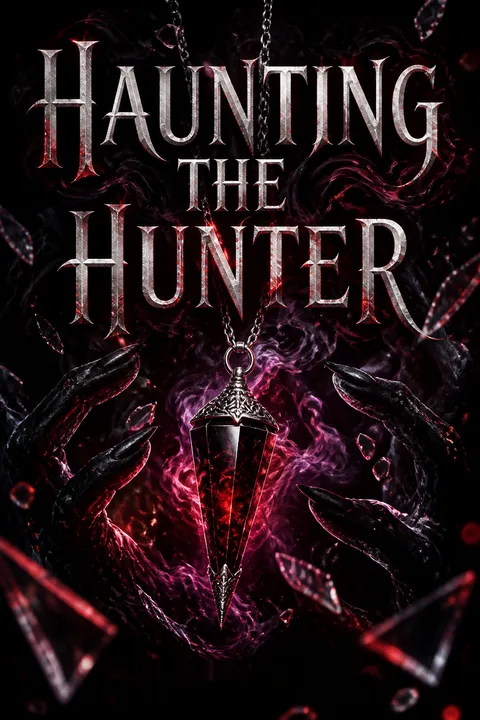

Plot Summary
Summoning Shadows, Binding Fates
Callisto, a young witch marked by trauma and isolation, performs a ritual to protect her brother Cade, unknowingly drawing the attention of Alabaster, a powerful, possessive demon. The ritual, meant to bind a spirit to Cade for protection, instead forges a dangerous connection between Callisto and Alabaster. As the veil thins, Alabaster's obsession grows, and Callisto's latent magic stirs. The siblings' bond is tested as supernatural forces converge, and the lines between protector and predator blur. The summoning sets in motion a chain of events that will force both Callisto and Cade to confront the darkness within and around them, binding their fates to a game neither fully understands.
Blood and Broken Glass
Cade, trained as a weapon by the cult-like Covenant, executes a brutal mission at a decadent party, blending sex and violence in a chilling display of his detachment. Haunted by guilt and a growing sense of being watched, he struggles to reconcile his role as a killer with his need to protect Callisto. Meanwhile, Callisto's nightmares intensify, and the presence she summoned begins to manifest in unsettling ways—shattering glass, flickering lights, and whispered threats. Both siblings are haunted by their past and the supernatural, their realities fracturing as the boundaries between the living and the dead, the mundane and the magical, begin to dissolve.
The Hunter's Mission
Driven by vengeance and a need to shield his sister, Cade targets the Covenant's inner circle, eliminating threats with ruthless efficiency. His latest kill, Allen White, is both a strategic move and a personal vendetta. Yet, the aftermath leaves Cade shaken—visions, phantom touches, and a sense of being haunted by something he cannot fight. The pendulum Callisto gave him becomes a talisman, its magic both a comfort and a curse. As Cade's grip on reality slips, he is forced to question whether the true enemy is the cult, the supernatural, or the darkness within himself.
Haunted by Desire
Alabaster's fixation on Callisto deepens, manifesting in dreams and physical sensations that leave her both terrified and exhilarated. The demon's presence is seductive, his touch both a violation and a comfort. Callisto, isolated and desperate for connection, finds herself drawn to the very force she fears. Their encounters escalate from spectral caresses to full possession, challenging Callisto's sense of self and agency. The haunting becomes a twisted courtship, with Alabaster determined to claim her body, mind, and soul, regardless of the cost.
Sibling Scars, Sibling Shields
Callisto and Cade's relationship is fraught with unspoken pain and mutual protectiveness. Raised by parents who saw Callisto as a sacrifice and Cade as a weapon, both siblings carry scars—physical and emotional. Their attempts to shield each other often lead to conflict, as Cade's overprotectiveness clashes with Callisto's need for autonomy. The revelation of Callisto's growing power and Cade's vulnerability to the supernatural forces them to confront their shared trauma. In their struggle to save each other, they must learn to trust, forgive, and accept the parts of themselves shaped by violence and loss.
The Demon's Game
Alabaster manipulates the siblings' world, orchestrating events to isolate Callisto and draw her deeper into his influence. He toys with her fears and desires, pushing her to embrace her magic and her darkness. The demon's jealousy and possessiveness become increasingly dangerous, especially as other supernatural entities—like the ancient Alok—take interest in Callisto. Alabaster's motives are ambiguous: is he protector, corrupter, or both? As Callisto's power grows, so does her ability to resist and even challenge Alabaster, turning the haunting into a battle of wills.
Ghosts in the Veil
The boundaries between worlds thin as Callisto's magic and the pendulum's power attract spirits and demons alike. Cade experiences vivid dreams and spectral encounters, while Callisto's home becomes a nexus of supernatural activity. The siblings are forced to navigate a reality where ghosts, demons, and ancient curses are as real as their own pain. The arrival of a mysterious cat, Karma, and the reappearance of childhood friend-turned-witch Genevieve, further complicate the web of alliances and threats. The veil is no longer a barrier but a battleground.
The Witch's Awakening
Pushed to her limits by fear, desire, and the need to save her brother, Callisto begins to master her magic. Guided—sometimes gently, sometimes cruelly—by Alabaster, she learns to channel her energy, control her visions, and wield her power as both shield and weapon. Her awakening is marked by pain and sacrifice, but also by moments of joy and self-discovery. As she steps into her role as a witch, Callisto becomes a force to be reckoned with, capable of challenging both the Covenant and the supernatural beings that seek to control her.
Possession and Protection
Possession becomes both a literal and metaphorical theme as Alabaster inhabits Callisto, Jack, and even household objects. The violation is intimate and terrifying, blurring the lines between self and other, consent and coercion. Yet, possession is also a form of protection—Alabaster's way of keeping Callisto safe from other threats, even as he becomes one himself. The siblings and their allies must navigate the dangers of being vessels for forces beyond their control, learning to reclaim their bodies and their agency in the process.
The Covenant's Curse
The Covenant's origins are revealed to be rooted in the misuse of a powerful grimoire and the worship of a forgotten god. The cult's rituals, sacrifices, and obsession with power have left a legacy of trauma and supernatural fallout. Callisto's mark, Cade's training, and the family's history are all tied to the Covenant's curse—a cycle of violence and control that can only be broken by confronting the source. As the siblings uncover the truth, they realize that defeating the cult means facing not just its leaders, but the god that feeds on their suffering.
Escape and Betrayal
Cade's mission to infiltrate the Covenant's stronghold leads to his capture and torture, orchestrated by Benjamin Teller and Rosa White. Betrayals abound as supposed allies reveal hidden agendas, and the line between friend and foe blurs. Genevieve's role as both victim and accomplice complicates the rescue, while Jack's possession by Alok introduces a new threat from within. The escape is hard-won, marked by sacrifice, violence, and the shattering of old loyalties. The cost of survival is high, and trust is a rare commodity.
The Cat Named Karma
The arrival of Karma, a black cat with golden eyes, offers a moment of levity and companionship amid the chaos. Yet, the cat is more than a pet—it is a symbol of fate, magic, and the unpredictable consequences of the siblings' actions. Karma's presence weaves through the narrative, offering comfort, warning, and a reminder that even small choices can have profound effects. In a world where nothing is as it seems, Karma is both a familiar and a mystery.
The Witch's Mark
Callisto's mark, carved into her flesh by her parents, is both a curse and a source of power. It ties her to the Covenant, the grimoire, and the god they serve. As she learns the true history of her family and the cult, Callisto reclaims her mark as a symbol of survival and strength. The process is painful—requiring her to confront memories of betrayal, sacrifice, and abuse—but it is also liberating. By embracing her scars, Callisto transforms them from instruments of control into emblems of resistance.
The Grimoire's Secret
The discovery of Jonathan Halloway's journal and the true nature of the grimoire reveal the depth of the Covenant's corruption. The book is not just a tool, but a sentient artifact that chooses its wielder and shapes destinies. Its power is seductive, offering knowledge and strength at a terrible price. Callisto and Cade must decide whether to use the grimoire to fight the cult or destroy it to break the cycle. The secret of the grimoire is both a weapon and a warning: power without wisdom leads only to ruin.
The God in the Shadows
The Covenant's god, once thought to be a myth, is revealed to be real—and hungry. Its influence permeates the cult, the grimoire, and the siblings' lives. Alabaster and Alok, ancient beings themselves, recognize the danger and the opportunity the god represents. The battle shifts from human enemies to cosmic forces, with Callisto and Cade caught in the crossfire. The god's awakening threatens to consume not just the cult, but everyone touched by its curse. The final confrontation will require sacrifice, courage, and the willingness to face the darkness within.
The Price of Power
Magic, love, and survival all come at a cost. Callisto's growing power strains her body and mind, leaving her vulnerable to both physical and spiritual harm. Cade's willingness to kill to protect his sister erodes his humanity, even as it saves lives. Alabaster's love is possessive and dangerous, offering both protection and peril. The siblings and their allies must decide what they are willing to give up—and what they refuse to lose. The price of power is never paid in full, and every victory leaves a scar.
The Rescue and the Reckoning
Cade's escape from the Covenant's clutches is orchestrated through a fragile alliance with Benjamin and Genevieve, but not without loss and betrayal. The siblings are reunited, but the wounds—physical, emotional, and magical—run deep. Jack's possession by Alok introduces a new threat, and the god's influence lingers. The rescue is not an ending, but a reckoning: debts must be paid, secrets revealed, and the true battle—against the god and the legacy of the Covenant—still looms. The family's survival depends on their ability to trust, forgive, and fight together.
Becoming More Than Human
In the aftermath, Callisto and Cade begin to heal, embracing their power and their scars. Alabaster, changed by love and loss, chooses to stay, accepting the risks and responsibilities of his bond with Callisto. The siblings, no longer defined by their trauma, forge a new path—one that honors their pain but refuses to be ruled by it. The story ends not with a final victory, but with the promise of growth, resilience, and the possibility of happiness. In a world haunted by gods and ghosts, becoming more than human is both the challenge and the reward.
Analysis
A modern gothic of trauma, agency, and forbidden loveHaunting the Hunter is a dark, sensual reimagining of the gothic romance, blending horror, fantasy, and psychological drama to explore the legacy of trauma and the struggle for agency. At its core, the novel is about survival—how we carry our scars, how we protect those we love, and how we reclaim power in a world determined to take it from us. The supernatural elements—demons, ghosts, cults, and sentient artifacts—are metaphors for the forces that shape and haunt us: family, desire, violence, and fate. The story challenges traditional binaries: love and possession, victim and survivor, human and monster. It asks what it means to be more than the sum of our wounds, to find hope and connection in the darkest places. The lessons are clear: power demands sacrifice, love is both risk and reward, and healing is possible—but only when we face the shadows within and without. In the end, Haunting the Hunter is a testament to resilience, the transformative power of love, and the courage to become more than what the world has made us.
People Also Read

Characters
Callisto Halloway
Callisto is the emotional and magical heart of the story—a young woman marked for sacrifice by her cultist parents, scarred both physically and psychologically. Her relationship with her brother Cade is fraught with love, resentment, and mutual protectiveness. Isolated and desperate for connection, she inadvertently summons Alabaster, whose obsession both terrifies and empowers her. Callisto's journey is one of reclaiming agency: learning to wield her magic, confronting her trauma, and transforming her scars into sources of strength. Her development is marked by vulnerability, resilience, and a growing willingness to embrace both her darkness and her capacity for love.
Cade Halloway
Cade is Callisto's older brother, trained by the Covenant to be a killer and leader, yet always an outsider. His life is defined by violence, guilt, and a relentless drive to protect his sister at any cost. Cade's psychological landscape is shaped by trauma, dissociation, and a deep-seated fear of losing control. His encounters with the supernatural—especially the ghostly presence tied to the pendulum—force him to confront the limits of his logic and the reality of magic. Cade's arc is one of reluctant acceptance: learning to trust, to feel, and to fight not just for survival, but for meaning and connection.
Alabaster (Kai)
Alabaster is an ancient, powerful being drawn to Callisto by her summoning and the grimoire's magic. His fixation is possessive, blending protection with manipulation and desire with danger. Alabaster's relationship with Callisto is both a haunting and a courtship, challenging her boundaries and forcing her to confront her own darkness. Psychologically, he is both self-aware and self-indulgent, torn between the rules of his kind and his growing attachment to Callisto. Over time, Alabaster is changed by love, choosing vulnerability and connection over domination, and accepting the risks of becoming more human.
Jack
Jack is Cade's best friend and Callisto's confidant, a skilled hacker with a dark past and a penchant for inappropriate humor. His relationship with Callisto is complicated by a shared history and unspoken feelings, while his loyalty to Cade is tested by secrets and betrayals. Jack's psychological profile is marked by a need for belonging, a fear of abandonment, and a willingness to do whatever it takes to protect those he loves. His possession by Alok introduces a new layer of vulnerability and danger, forcing him to confront the limits of his agency and the reality of supernatural threats.
Genevieve (Genni)
Genevieve is a childhood friend of Callisto, now a witch trapped by the Covenant and used as both tool and bargaining chip. Her survival depends on her ability to navigate shifting allegiances, conceal her true power, and make impossible choices. Genni's relationship with Benjamin is fraught with dependency and hope, while her connection to Callisto is a reminder of lost innocence and the possibility of redemption. Psychologically, she is marked by trauma, resilience, and a deep longing for freedom and agency.
Benjamin Teller
Benjamin is Rosa White's right hand, a man whose loyalty to the Covenant is undermined by his love for Genevieve. His actions are driven by self-preservation, ambition, and a willingness to betray anyone to save the woman he loves. Benjamin's psychological complexity lies in his ability to compartmentalize violence and tenderness, to manipulate and to sacrifice. His alliance with Cade is pragmatic, but his ultimate loyalty is to Genni, making him both a valuable ally and a potential threat.
Rosa White
Rosa is the ruthless leader of the Covenant, driven by loss, ambition, and a fanatical devotion to the cult's god. Her psychological profile is marked by grief, rage, and a willingness to inflict suffering to achieve her goals. Rosa's interactions with Cade are both personal and symbolic—a battle between old power and new resistance. She embodies the dangers of unchecked authority, the seduction of power, and the destructive potential of belief without compassion.
Alok
Alok is an immortal being, older and more powerful than Alabaster, whose interest in Callisto and the unfolding events is both personal and cosmic. He serves as a foil to Alabaster—more detached, more ruthless, and less bound by human concerns. Alok's psychological landscape is shaped by boredom, curiosity, and a willingness to disrupt for his own amusement. His possession of Jack introduces chaos and raises the stakes, forcing the protagonists to confront threats from within as well as without.
Karma
Karma is more than a cat—she is a symbol of fate, magic, and the unpredictable consequences of the characters' actions. Her presence offers comfort, warning, and a reminder that even small choices matter. Karma's interactions with the supernatural suggest a deeper connection to the magical world, serving as both familiar and guide.
The Ghost (Little Ghost)
The ghost tied to Cade's pendulum is a silent, comforting presence—an embodiment of love, longing, and the possibility of redemption. Their connection to Cade is both magical and emotional, offering solace in moments of despair and anchoring him to the world. The ghost's role is to remind the characters—and the reader—that even in the darkest moments, hope and connection are possible.
Plot Devices
Dual Narratives and Shifting Perspectives
The novel alternates between Callisto and Cade's perspectives, allowing readers to experience the story's events through both the haunted witch and the weaponized hunter. This structure highlights their parallel journeys—each grappling with trauma, supernatural threats, and the struggle for agency. The shifting perspectives also create dramatic irony, as the siblings' secrets and misunderstandings drive tension and emotional stakes. The dual narrative structure mirrors the novel's themes of duality: light and dark, love and violence, human and supernatural.
Possession and Body Horror
Possession—by demons, ghosts, and even magical objects—is a recurring device, used to explore themes of agency, consent, and identity. The physical and psychological horror of being inhabited by another force is both literal and metaphorical, reflecting the characters' struggles with control, trauma, and desire. Possession is also a tool for protection and intimacy, blurring the lines between violation and care. The device is used to heighten tension, complicate relationships, and force characters to confront their deepest fears.
The Grimoire and Magical Artifacts
The grimoire, pendulum, and other magical artifacts serve as catalysts for the plot, driving the action and shaping the characters' destinies. These objects are not passive tools but sentient forces with their own agendas, choosing their wielders and demanding sacrifices. The artifacts embody the dangers and seductions of power, offering knowledge and strength at a price. Their presence raises questions about fate, free will, and the ethics of magic.
Foreshadowing and Prophecy
Dreams, visions, and prophecies are woven throughout the narrative, foreshadowing key events and revealing hidden truths. Callisto's nightmares, Cade's spectral encounters, and the tarot and rune readings all serve to build suspense and deepen the sense of inevitability. The use of prophecy raises questions about fate and agency: are the characters doomed to repeat the past, or can they forge a new path? The device also allows for moments of dramatic irony and emotional resonance, as characters struggle to interpret and resist their destinies.
Fourth Wall and Meta-Narrative
The novel frequently breaks the fourth wall, addressing the reader directly and inviting them to become complicit in the unfolding story. This device blurs the boundaries between fiction and reality, seduction and consent, author and audience. The meta-narrative structure heightens the sense of intimacy and danger, making the reader both witness and participant in the haunting. It also reinforces the novel's themes of obsession, possession, and the power of storytelling.
Download PDF
Download EPUB
.epub digital book format is ideal for reading ebooks on phones, tablets, and e-readers.








































