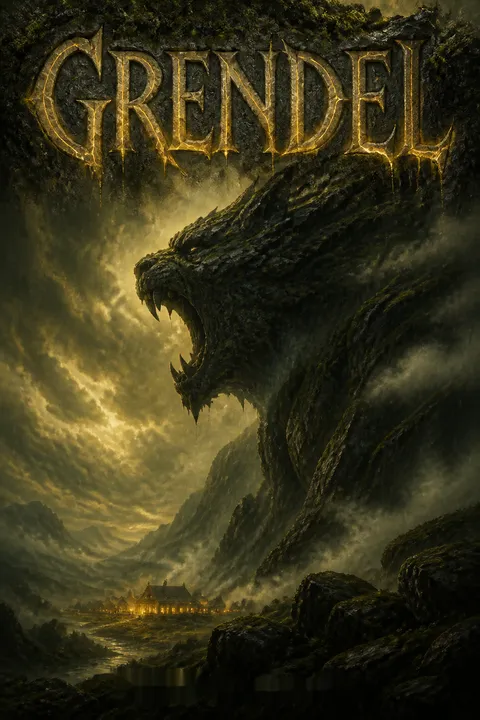

Summary Temporarily Unavailable
This summary is temporarily unavailable and is currently being updated. You can still explore the FAQs and other metadata below.
Plot Summary
Monster's Lament Begins
Grendel, the infamous monster, stands at the edge of his twelfth year of war against the humans, filled with bitterness and existential confusion. He is not a mindless beast but a thinking, feeling creature, tormented by the cyclical, meaningless violence of his existence. The world around him—animals, trees, the sky—seems indifferent, and Grendel's attempts to communicate with it are met with silence. He is both repulsed by and drawn to the humans he haunts, recognizing in their rituals and fears a mirror of his own loneliness. His war is not just with men, but with the absurdity of existence itself, and his monstrous acts are as much a cry for meaning as they are acts of violence. Grendel's story begins with a howl into the void, a plea for understanding that goes unanswered.
Childhood in the Cave
Grendel recalls his childhood in the dark, damp cave with his mute, monstrous mother. He explores the underground world, feeling both protected and suffocated by her love. His first venture into the outside world ends in disaster: he is trapped in a tree, attacked by a bull, and discovered by humans who mistake him for a spirit or disease. Their fear and violence terrify him, and only his mother's ferocious intervention saves him. This trauma marks Grendel's first real encounter with the world's brutality and randomness. He learns that the universe is chaotic, indifferent, and that he is fundamentally alone—neither beast nor man, but something in between, forever an outsider. The experience shapes his cynical worldview and deepens his sense of alienation.
Watching Men's Rise
From the shadows, Grendel watches as scattered human tribes evolve into organized societies. He sees their violence, their endless cycles of war, and their capacity for both cruelty and creativity. Hrothgar, a cunning and ambitious leader, rises to power by uniting neighboring tribes through war, tribute, and the construction of roads and alliances. Grendel is both fascinated and horrified by the humans' ability to create meaning through stories, rituals, and art. The arrival of the Shaper—a blind poet—transforms the world, as his songs give the past a new, beautiful order, making even Grendel question his own memories. Grendel is seduced by the Shaper's vision, longing for inclusion, but ultimately recognizes the stories as comforting lies.
The Shaper's Spell
The Shaper's songs enchant the court, rewriting history and giving purpose to Hrothgar's people. Grendel, moved to tears, is torn between the beauty of these stories and the knowledge of their falsehood. He tries to approach the humans, seeking acceptance, but is met with violence and rejection. The Shaper's art is both a blessing and a curse: it inspires hope and unity, but also justifies war and exclusion. Grendel realizes that the stories shape reality, making him the villain in their myth. He is trapped by the narrative, unable to escape the role assigned to him. The seductive power of art becomes a prison, deepening Grendel's despair and rage.
Dragon's Fatal Wisdom
Seeking answers, Grendel visits an ancient, all-knowing dragon. The dragon, cynical and amused, explains that the universe is meaningless, a random swirl of matter and time. He tells Grendel that his role as a monster is necessary: by terrorizing humans, Grendel gives them purpose, drives their creativity, and defines their values. The dragon's vision is cold and deterministic—nothing matters, all will end in dust. He gifts Grendel invulnerability to human weapons, sealing his fate as the eternal outsider. Grendel leaves the dragon's lair changed, burdened by the knowledge that his existence is both essential and utterly pointless, and that he is trapped in a story he cannot escape.
Grendel's War Unleashed
Empowered by the dragon's spell, Grendel begins a campaign of terror against Hrothgar's hall. He attacks with impunity, slaughtering warriors and mocking their rituals. The humans, unable to harm him, are driven to despair and superstition. Grendel feels both triumphant and empty—his invulnerability isolates him further, making him a force of nature rather than a participant in the world. He toys with Unferth, the would-be hero, exposing the emptiness of human ideals and the futility of heroism. Grendel's violence becomes a performance, a dark mirror to the humans' own savagery and need for meaning.
Unferth and Heroism Mocked
Unferth, Hrothgar's champion, confronts Grendel, seeking glory and a meaningful death. Grendel, however, refuses to grant him the dignity of martyrdom, instead humiliating him and sparing his life. Unferth's sense of purpose is shattered; he becomes a broken man, obsessed with regaining his honor but forever denied it by Grendel's mockery. Through Unferth, Grendel exposes the contradictions and limitations of the heroic code. Heroism, he suggests, is a story people tell themselves to mask the chaos and meaninglessness of existence. Grendel's refusal to play along with the narrative is both an act of cruelty and a desperate assertion of his own agency.
Wealtheow: Beauty and Sacrifice
Wealtheow, a princess given in marriage to Hrothgar to secure peace, brings grace and compassion to the court. Her presence soothes conflicts and inspires devotion, even in Grendel, who is both captivated and tormented by her beauty and selflessness. Wealtheow represents the possibility of redemption and the power of love to create meaning. Yet Grendel, in a moment of crisis, nearly kills her, only to realize that her death would be as meaningless as her life. He spares her, recognizing that neither violence nor mercy can resolve his existential dilemma. Wealtheow's sacrifice and suffering highlight the tragic limits of human goodness in a world ruled by fate and violence.
Hrothulf's Shadow Grows
Hrothulf, Hrothgar's nephew, arrives at court after his father's murder. He is a brooding, intelligent youth, influenced by the radical ideas of his mentor, Red Horse. Together, they discuss the nature of power, justice, and revolution, questioning the legitimacy of kings and the violence that underpins society. Hrothulf's presence introduces a new threat to Hrothgar's rule, as the seeds of rebellion and betrayal are sown. Grendel watches with dark amusement, seeing in Hrothulf's ambitions a reflection of his own outsider status. The court becomes a microcosm of human history—cycles of violence, idealism, and inevitable corruption.
Winter, Religion, and Doubt
As winter deepens, the humans turn to religion for comfort, performing rituals and sacrifices to their gods. Grendel observes their ceremonies with skepticism, noting the emptiness and theatricality of their faith. He encounters Ork, an old priest, and tricks him into believing he has communed with the divine. The episode exposes both the power and the absurdity of religious belief—the need for meaning in a meaningless world. The death of the Shaper, the court's poet, marks the end of an era, leaving the humans and Grendel alike adrift. The world grows colder, more uncertain, as old certainties crumble.
The Stranger Arrives
News spreads of a band of foreign warriors arriving by sea, led by a mysterious, implacable stranger—Beowulf. Grendel senses a new, unsettling presence, one that feels both fated and alien. The court is uneasy, torn between hope and resentment. Beowulf's calm, enigmatic demeanor unsettles Grendel, who recognizes in him a force unlike any he has faced before. The stage is set for a final confrontation, as the old order teeters on the brink of destruction. Grendel, both fearful and exhilarated, feels the weight of destiny closing in.
Beowulf's Deadly Embrace
Grendel attacks the hall one last time, expecting another night of easy slaughter. Instead, he is caught in Beowulf's unbreakable grip. The fight is brutal and surreal—Beowulf's strength is otherworldly, his words and presence overwhelming. Grendel's arm is torn from his body, and he flees into the night, mortally wounded. As he stumbles through the darkness, pursued by memories and the indifferent gaze of animals, Grendel confronts the ultimate absurdity of his existence. His death is both an accident and an inevitability, a final, bitter joke played by the universe. In his last moments, Grendel recognizes the futility of all stories—heroic, monstrous, or otherwise—and dies alone, misunderstood, and unredeemed.
Analysis
A postmodern meditation on meaning, monstrosity, and mythGrendel is a profound reimagining of the Beowulf legend, using the monster's perspective to interrogate the foundations of Western storytelling, morality, and identity. Gardner's novel is both a critique and a celebration of the power of art—it exposes the comforting lies of myth and religion, yet acknowledges their necessity for human survival. Through Grendel's existential journey, the book explores the terror and beauty of a universe without inherent meaning, the loneliness of the outsider, and the tragic limitations of both violence and love. The novel's postmodern techniques—its inversion of perspective, metafictional awareness, and philosophical depth—invite readers to question the stories they inherit and the roles they play. Ultimately, Grendel is a story about the search for significance in a world that offers none, and the courage required to face the abyss with both rage and dark humor. Its lessons resonate in an age of uncertainty: meaning is made, not found, and every monster is, in some sense, a mirror.
Last updated:
Report IssueReview Summary
Grendel by John Gardner retells Beowulf from the monster's perspective, exploring existential themes and the nature of good and evil. Many readers praise Gardner's poetic prose and philosophical depth, while others find it pretentious or difficult to follow. The novel examines Grendel's loneliness, his observations of human civilization, and his encounters with a dragon and the hero Beowulf. Critics are divided, with some hailing it as a masterpiece and others dismissing it as confusing or pointless. Overall, it's a thought-provoking but polarizing work.
People Also Read


Characters
Grendel
Grendel is the novel's narrator and tragic protagonist, a creature both monstrous and deeply human. He is defined by his isolation—neither fully beast nor man, he is forever an outsider, longing for connection yet doomed to be misunderstood. Grendel's intelligence and sensitivity set him apart from the world he inhabits; he is tormented by the search for meaning in a universe that offers only chaos and indifference. His encounters with humans, the Shaper, and the dragon force him to confront the limitations of art, religion, and reason. Over the course of the novel, Grendel evolves from a curious child to a cynical, embittered adult, ultimately embracing his role as the monster in humanity's story. His psychological journey is marked by moments of hope, despair, rage, and dark humor, culminating in a death that is both tragic and absurd.
Hrothgar
Hrothgar is the wise and ambitious king of the Danes, whose rise to power is marked by violence, cunning, and the ability to inspire loyalty. He is both a builder and a destroyer, uniting tribes through war and tribute, and presiding over the construction of Hart, the great mead hall. Hrothgar's authority is rooted in both strength and the stories told about him, particularly by the Shaper. As he ages, Hrothgar becomes increasingly burdened by the costs of power—betrayal, political intrigue, and the threat posed by Grendel and his own kin. His relationship with Wealtheow and his children is tinged with regret and vulnerability. Hrothgar's psychological complexity lies in his awareness of the fragility of order and the inevitability of decline, making him both a tragic and sympathetic figure.
The Shaper
The Shaper is the blind bard whose songs transform the world, giving history order, beauty, and purpose. His art is both enchanting and dangerous—it inspires hope, unites people, and justifies violence. For Grendel, the Shaper is both a tormentor and a source of longing, as his stories define Grendel as the enemy and exclude him from the human community. The Shaper's power lies in his ability to make people believe in a reality that is more beautiful and coherent than the truth. His death marks the end of an era, leaving the court and Grendel adrift in a world stripped of comforting illusions. The Shaper embodies the double-edged nature of art: its capacity to heal and to deceive.
The Dragon
The dragon is an ancient, all-knowing creature who lives atop a hoard of treasure. He represents the ultimate voice of cynicism and fatalism, dismissing all human endeavors as meaningless. The dragon's philosophy is cold and deterministic—everything is dust, and nothing matters. He tells Grendel that his role as a monster is necessary for the humans' self-definition, but that this, too, is ultimately pointless. The dragon's gift of invulnerability is both a blessing and a curse, sealing Grendel's fate as an eternal outsider. Psychologically, the dragon is both mentor and tormentor, embodying the seductive allure of nihilism and the terror of a universe without meaning.
Unferth
Unferth is Hrothgar's champion, obsessed with the ideals of heroism and honor. He seeks meaning through glorious death, but Grendel repeatedly denies him this, exposing the emptiness of the heroic code. Unferth's humiliation and subsequent obsession with regaining his honor make him a tragic figure, caught between the stories he believes and the reality he faces. His interactions with Grendel reveal the limitations of human ideals and the psychological cost of living in a world where meaning is constructed, not inherent. Unferth's journey is one of disillusionment, as he is forced to confront the gap between myth and reality.
Wealtheow
Wealtheow is the beautiful, compassionate queen given to Hrothgar as a peace offering. Her presence brings harmony and hope to the court, soothing conflicts and inspiring devotion. For Grendel, she represents the possibility of redemption and the power of love to create meaning. Yet her role is also one of suffering and sacrifice—she is traded between men, her happiness secondary to political necessity. Wealtheow's interactions with Grendel and the court highlight the limits of human goodness in a world shaped by violence and fate. Her psychological depth lies in her quiet strength, her acceptance of suffering, and her ability to inspire both love and despair.
Hrothulf
Hrothulf is Hrothgar's nephew, orphaned by violence and raised in the court. He is intelligent, introspective, and increasingly disillusioned with the existing order. Influenced by his radical mentor, Red Horse, Hrothulf questions the legitimacy of kingship, the nature of justice, and the cycles of violence that define society. His presence introduces political intrigue and the threat of rebellion, as he contemplates overthrowing the established order. Psychologically, Hrothulf is torn between loyalty, ambition, and a desire for justice, making him both a potential savior and a future tyrant.
Grendel's Mother
Grendel's mother is a monstrous, wordless presence in the cave, embodying both protection and suffocation. Her love for Grendel is fierce but inarticulate, rooted in instinct rather than understanding. She rescues him from danger but cannot offer him answers or companionship. As the novel progresses, she descends into madness, her world shrinking to a cycle of fear and grief. For Grendel, she is both a source of comfort and a reminder of his own isolation. Her psychological role is that of the primal mother—nurturing, terrifying, and ultimately unreachable.
Beowulf
Beowulf is the enigmatic hero who arrives from across the sea to confront Grendel. He is calm, almost inhuman in his composure and strength, embodying the inevitability of fate and the power of myth. Beowulf's words and actions are unsettling, as if he exists outside the normal bounds of reality. For Grendel, Beowulf is both a nemesis and a mirror—a figure who brings the story to its destined end. Psychologically, Beowulf represents the unknowable, the force that shatters old certainties and brings about transformation through violence.
Ork
Ork is an elderly, nearly blind priest who yearns for genuine contact with the divine. When Grendel tricks him into believing he has communed with a god, Ork responds with awe and gratitude, articulating a vision of the universe that is both beautiful and tragic. Ork's faith is sincere, but his experience also exposes the absurdity and necessity of religious belief. He is a figure of pathos, embodying the human need for meaning in the face of mortality and chaos.
Plot Devices
Inversion of Perspective
Gardner's most significant device is the inversion of perspective, telling the story from Grendel's perspective. This shift transforms the monster from a mindless villain into a complex, sympathetic antihero, forcing readers to question the nature of good, evil, and the stories we tell. The device allows for deep psychological exploration and subverts traditional heroic narratives, exposing their limitations and blind spots.
Existential and Philosophical Dialogue
The novel is structured around philosophical dialogues—between Grendel and the dragon, Grendel and Unferth, Grendel and the Shaper, and so on. These conversations explore existentialism, nihilism, the power of art, the nature of heroism, and the search for meaning. The narrative is less about external action and more about the internal, psychological battles of its characters, using dialogue as a means of dramatizing abstract ideas.
Metafiction and Intertextuality
Grendel is acutely aware of the stories being told about him, and the novel frequently comments on the process of myth-making, the construction of history, and the power of narrative to shape reality. The Shaper's songs, the dragon's speeches, and Grendel's own narration all highlight the artificiality and necessity of stories. The book is deeply intertextual, engaging with Beowulf and other literary traditions, and often blurring the line between fiction and reality.
Foreshadowing and Cyclical Structure
The novel is suffused with a sense of inevitability—Grendel's war lasts twelve years, echoing mythic cycles, and the arrival of Beowulf is foreshadowed as a destined event. The narrative structure is cyclical, with seasons, rituals, and battles repeating, underscoring the futility and persistence of the search for meaning. Grendel's death is both an accident and a fulfillment of prophecy, reinforcing the tension between free will and fate.
About the Author
John Champlin Gardner was an American novelist and university professor born in Batavia, New York. His parents' love of literature greatly influenced him. At age 11, Gardner accidentally killed his younger brother in a farming accident, an event that haunted him and shaped his writing. He is best known for his novel Grendel, a retelling of Beowulf from the monster's perspective. Gardner's work often explored themes of guilt, redemption, and morality. He was a controversial figure in the literary world, known for his outspoken criticism and unconventional approach to fiction. Gardner died in a motorcycle accident in 1982, leaving behind a legacy of innovative and thought-provoking literature.
Other books by John Gardner
Download PDF
Download EPUB
.epub digital book format is ideal for reading ebooks on phones, tablets, and e-readers.








































