
Plot Summary
Scyld's Legacy and Heorot's Rise
The tale begins with the rise of Scyld Scefing, a foundling who becomes a mighty king, uniting the Danes and establishing a legacy of strength and generosity. His descendants, especially Hrothgar, inherit this greatness. Hrothgar, seeking to celebrate his people's prosperity, constructs Heorot, a magnificent mead-hall, as a symbol of unity and joy. The hall becomes the heart of Danish society, echoing with music and laughter. Yet, this beacon of civilization also draws the attention of dark forces lurking beyond the bounds of human order, setting the stage for the conflict between light and shadow that will define the story.
Grendel's Nightly Terror
Grendel, a monstrous descendant of Cain, is tormented by the joy in Heorot. Night after night, he invades the hall, slaughtering Hrothgar's warriors and leaving the Danes in terror and mourning. For twelve years, Heorot stands empty at night, its glory overshadowed by grief. Hrothgar, once a triumphant king, is now haunted by helplessness, unable to protect his people or reclaim the hall. The Danes turn to desperate measures, even pagan sacrifices, but nothing can end Grendel's reign of terror. The land is trapped in a cycle of violence and despair, awaiting a hero who can break the curse.
Beowulf Hears the Call
In distant Geatland, Beowulf, nephew to King Hygelac and famed for his strength, hears of Hrothgar's plight. Moved by duty, kinship, and the lure of glory, he gathers a band of loyal warriors and sails across the sea to Denmark. Beowulf's resolve is fueled by a desire to prove himself and repay Hrothgar for past kindness to his family. His journey is both a physical crossing and a symbolic passage from youth to heroic maturity. The Geats' arrival is met with suspicion but also hope, as the Danes sense the possibility of deliverance.
Arrival at the Golden Hall
Beowulf and his men are challenged by the Danish coast-guard but soon escorted to Heorot. There, Beowulf formally introduces himself, declaring his lineage and purpose. Hrothgar, recalling Beowulf's father and recognizing the young hero's reputation, welcomes him warmly. The hall, once a place of sorrow, is briefly restored to its former glory as warriors gather, and hope flickers anew. Beowulf's confidence and clarity of purpose inspire the Danes, setting the stage for a confrontation that will test the limits of human courage and monstrous malice.
Boasts, Banquets, and Doubt
At a celebratory feast, Beowulf boasts of his past exploits, vowing to fight Grendel without weapons. Unferth, a Danish thane, questions Beowulf's courage, recalling a swimming contest he supposedly lost. Beowulf responds with dignity, recounting his true deeds and subtly shaming Unferth for his lack of action against Grendel. Queen Wealhtheow honors Beowulf, and the mood in Heorot shifts from anxiety to anticipation. The night deepens, and the warriors prepare for the coming trial, each man wrestling with hope and dread.
The Monster in the Night
As darkness falls, Hrothgar entrusts Heorot to Beowulf. The Geats feign sleep, but Beowulf remains vigilant. Grendel bursts into the hall, eager for slaughter, but is shocked by Beowulf's strength. The two grapple in a primal struggle, the hall shaking with their fury. For the first time, Grendel feels fear and pain, realizing he has met his match. The other warriors' weapons prove useless against the monster's enchanted hide, but Beowulf's grip alone is enough to tear Grendel's arm from his body. Mortally wounded, Grendel flees into the night.
Beowulf's Fierce Handgrip
The Danes awaken to find Heorot stained with blood and Grendel's severed arm displayed as a trophy. Hrothgar and his people rejoice, praising Beowulf as their savior. The hall is cleansed and restored, and Beowulf's fame spreads. Songs are sung, and gifts are exchanged in a grand celebration. Yet, beneath the joy, there is a sense of foreboding—evil, once defeated, often returns in new forms. The victory is real but incomplete, as the cycle of vengeance and violence continues to shadow the world.
Grendel's Defeat and Celebration
Hrothgar rewards Beowulf and his men with treasures and honors. The Danes and Geats feast together, sharing stories of past heroes and tragic feuds. Queen Wealhtheow presents Beowulf with a precious necklace, urging him to guide her sons wisely. The celebration is tinged with reminders of the fragility of peace and the dangers of pride. Hrothgar offers Beowulf fatherly advice, warning him that all glory fades and that wisdom and humility are the true marks of greatness. The night ends in revelry, but fate has more trials in store.
Grendel's Mother's Vengeance
In the darkness, Grendel's mother, driven by grief and vengeance, attacks Heorot. She kills Hrothgar's trusted advisor and retrieves her son's severed arm. The Danes are plunged back into mourning, and Hrothgar is overcome with sorrow. He describes the haunted mere where the monster dwells and begs Beowulf to pursue her. The cycle of violence deepens, and Beowulf, undaunted, prepares for a new and even more perilous battle, knowing that true heroism demands facing not just monsters, but the consequences of victory.
Descent into the Mere
Guided by Hrothgar and his men, Beowulf tracks Grendel's mother to a hellish, mist-shrouded lake. The water is teeming with serpents and stained with blood. Beowulf arms himself with a special sword, Hrunting, and plunges into the depths. The descent is both literal and symbolic—a journey into the underworld, where the boundaries between man and monster, life and death, are blurred. Beowulf's courage is tested not just by physical danger, but by the darkness within and the weight of destiny.
Battle Beneath the Waves
In the murky depths, Beowulf is seized by Grendel's mother and dragged to her lair. Hrunting fails him, but he discovers a giant's sword and uses it to slay the monster. He also finds Grendel's corpse and beheads it, bringing the head and the sword's hilt back to the surface. The Danes, fearing Beowulf lost, rejoice at his return. Hrothgar interprets the victory as a sign of divine favor and again warns Beowulf of the dangers of pride and the inevitability of death. The hero is honored, but the shadow of mortality lingers.
Gifts, Wisdom, and Farewell
Beowulf is lavishly rewarded by Hrothgar, who imparts final words of wisdom about the fleeting nature of power and the importance of humility. The Geats prepare to return home, bearing gifts and tales of their exploits. The bond between the Danes and Geats is strengthened, and Beowulf's reputation as the greatest of heroes is secured. Yet, the story's tone is bittersweet, as the cycles of violence, fate, and loss remain ever-present. The journey home marks the end of Beowulf's youthful adventures and the beginning of his legacy as a leader.
Beowulf's Return and Rule
Beowulf returns to Geatland, presenting his treasures to King Hygelac and Queen Hygd. He recounts his adventures, emphasizing loyalty and the dangers of feuds. After Hygelac and his heir die in battle, Beowulf becomes king. He rules wisely and peacefully for fifty years, earning the love and respect of his people. Yet, even the greatest heroes cannot escape the passage of time. As Beowulf ages, the world changes, and new threats arise, testing the endurance of his legacy and the values he embodies.
The Dragon's Awakening
Deep beneath a barrow, a dragon guards a vast treasure. When a desperate slave steals a cup from the hoard, the dragon awakens in fury, unleashing fire and destruction upon the Geats. Beowulf, now an old king, feels responsible for his people's suffering. Despite knowing his own mortality, he resolves to face the dragon alone, embodying the hero's duty to protect his people at any cost. The stage is set for one final, fateful confrontation between man and monster.
The Last Heroic Stand
Beowulf gathers a small band of warriors and approaches the dragon's lair. As the battle begins, his companions, overcome by fear, flee, leaving only the young warrior Wiglaf to stand by his side. Beowulf's strength is no longer what it once was, and his sword fails him. The dragon's fire and venom prove nearly overwhelming. Yet, with Wiglaf's help, Beowulf delivers the fatal blow, slaying the dragon but suffering a mortal wound. The cost of heroism is revealed in its starkest terms.
Wiglaf's Loyalty and Sacrifice
As Beowulf lies dying, Wiglaf remains steadfast, tending to his lord and chastising the other warriors for their cowardice. He retrieves the dragon's treasure at Beowulf's request, allowing the dying king a final glimpse of the gold he has won for his people. Wiglaf's loyalty and courage stand in contrast to the failure of the others, highlighting the values of kinship, honor, and sacrifice that define true heroism. The torch of leadership and memory is passed to a new generation.
Death of Beowulf
Beowulf, content that he has fulfilled his duties and brought peace to his people, gives thanks for his life and the treasures he has secured. He names Wiglaf as his successor and requests a barrow be built in his memory. With dignity and acceptance, Beowulf dies, his spirit departing to whatever fate awaits. The Geats mourn their king, recognizing the end of an era and the uncertainty of the future. The hero's death is both a personal loss and a symbol of the passing of heroic age.
Mourning and the End of an Age
The Geats build a great funeral pyre and barrow for Beowulf, burying him with the dragon's treasure. They mourn not only their king but the loss of security and greatness he represented. The poem ends with a lament for the passing of the best of kings—mild, generous, and eager for glory. The cycle of violence and fate continues, but Beowulf's memory endures as a beacon of what is possible when courage, loyalty, and wisdom are united in a single life.
Analysis
Beowulf endures as a foundational work of Western literature because it grapples with universal questions of heroism, mortality, and meaning. The poem's world is one of constant flux, where joy and sorrow, order and chaos, are in perpetual tension. Beowulf's journey—from ambitious youth to self-sacrificing king—embodies the heroic ideal while also exposing its costs and limitations. The narrative's cycles of violence and vengeance reflect the inescapable grip of fate, yet the poem also insists on the value of courage, loyalty, and wisdom. In a modern context, Beowulf invites readers to consider the nature of leadership, the responsibilities of power, and the importance of legacy. Its warnings against pride and its celebration of communal bonds remain deeply relevant. Ultimately, Beowulf is both a lament for a lost heroic age and a meditation on what it means to live—and die—with honor.
Review Summary
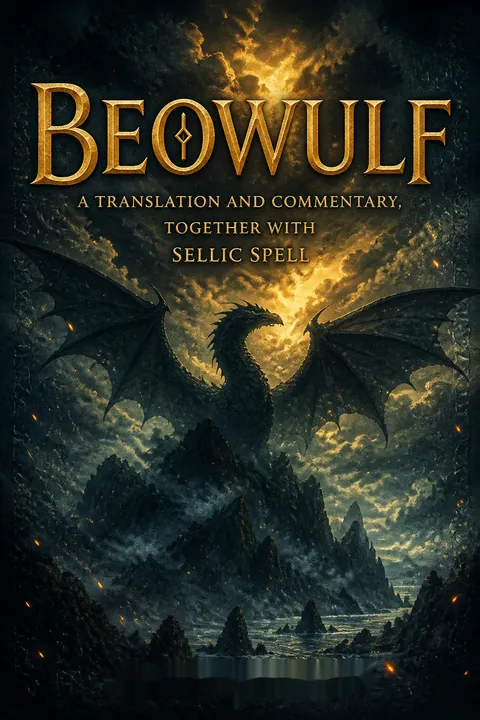
Beowulf, translated by J.R.R. Tolkien, receives mixed reviews. Many praise Tolkien's faithful translation and extensive commentary, appreciating his scholarly insights and the book's connection to his Middle-earth works. Some find the prose translation less poetic than verse versions but value its accuracy. The included "Sellic Spell" and "Lay of Beowulf" are highlights for many readers. However, some find the academic commentary challenging. Overall, reviewers commend the book for its scholarly merit and Tolkien's passion for the subject, though it may not be ideal for casual readers.
Characters
Beowulf
Beowulf is the central figure, a paragon of strength, courage, and honor. Initially driven by the desire for glory and the duty to aid Hrothgar, he matures into a wise and selfless king. His relationships are defined by loyalty—to his king, his kin, and his people. Psychologically, Beowulf is both confident and reflective, aware of his mortality and the limits of human achievement. His development from ambitious youth to self-sacrificing ruler illustrates the tension between personal glory and communal responsibility. In his final battle, he accepts death with dignity, embodying the tragic nobility of the heroic code.
Hrothgar
Hrothgar is the aging Danish king, once a mighty warrior but now beset by grief and helplessness. He represents the burdens of leadership and the inevitability of decline. Hrothgar's relationship with Beowulf is both paternal and political; he sees in the young hero a reflection of his own lost vigor. His wisdom is hard-won, and he counsels Beowulf on the dangers of pride and the fleeting nature of power. Hrothgar's psychological depth lies in his acceptance of fate and his role as a moral guide, contrasting youthful heroism with the humility of age.
Wiglaf
Wiglaf is a young warrior of noble lineage, distinguished by his unwavering loyalty to Beowulf. When all others abandon their king, Wiglaf alone stands firm, embodying the virtues of kinship and courage. His actions in the final battle mark him as the inheritor of Beowulf's legacy. Psychologically, Wiglaf is motivated by gratitude, honor, and a deep sense of duty. His rebuke of the cowardly warriors and his care for the dying Beowulf highlight his emerging maturity and the hope for continuity in a world shadowed by loss.
Grendel
Grendel is a monstrous outcast, descended from Cain, who attacks Heorot out of hatred for human joy and community. He represents the forces of chaos, alienation, and resentment that threaten civilization. Grendel's actions are driven by a deep sense of exclusion and rage. Psychologically, he is both terrifying and pitiable—a creature doomed by fate and ancestry. His defeat by Beowulf is both a physical and symbolic victory of order over chaos, but his legacy of violence persists through his mother.
Grendel's Mother
Grendel's mother is a formidable adversary, motivated by grief and the ancient code of vengeance. She is less overtly evil than her son, embodying the relentless cycle of retribution that haunts the world of the poem. Her lair beneath the mere is a symbolic underworld, and her battle with Beowulf is a test of his endurance and adaptability. Psychologically, she is driven by maternal love twisted into violence, a reminder that even monsters are shaped by loss and longing.
Unferth
Unferth is a Danish thane who initially challenges Beowulf's reputation, motivated by envy and insecurity. His skepticism provides a foil to Beowulf's confidence, highlighting the tension between established authority and new talent. However, Unferth ultimately redeems himself by lending Beowulf his sword, Hrunting, for the battle against Grendel's mother. Psychologically, Unferth is complex—capable of both pettiness and generosity, embodying the ambiguities of human character.
Wealhtheow
Queen Wealhtheow is Hrothgar's wife, a figure of dignity and wisdom. She plays a crucial role in maintaining harmony at court, offering counsel and gifts to Beowulf. Her primary concern is the future of her sons and the stability of the kingdom. Psychologically, Wealhtheow is both nurturing and politically astute, aware of the fragility of peace and the importance of alliances. Her interactions with Beowulf underscore the interconnectedness of personal and communal destinies.
Hygelac
Hygelac is Beowulf's uncle and king of the Geats. He welcomes Beowulf's return and rewards his loyalty. Hygelac's reign is marked by both prosperity and eventual tragedy, as he dies in battle, leaving a power vacuum that Beowulf must fill. Psychologically, Hygelac is a figure of stability and generosity, but his fate illustrates the vulnerability of even the mightiest rulers to the tides of war and fate.
The Dragon
The dragon is the final antagonist, awakened by a theft from its hoard. It represents the inevitability of death, the destructive power of greed, and the limits of human achievement. The dragon's attack on the Geats is both a literal and metaphorical crisis, forcing Beowulf to confront his mortality. Psychologically, the dragon is less a character than a force of nature—implacable, inscrutable, and ultimately fatal.
The Cowardly Warriors
The warriors who abandon Beowulf in his final battle serve as a collective character, embodying the erosion of the heroic code. Their failure highlights the rarity and value of true loyalty and courage. Psychologically, they are motivated by fear and self-preservation, a reminder that heroism is a choice, not a given. Their shame and Wiglaf's rebuke underscore the poem's concern with legacy and the transmission of values across generations.
Plot Devices
Cycles of Vengeance and Fate
The narrative is structured around cycles of violence and retribution—Grendel's attacks, his mother's vengeance, and the dragon's wrath. Each conflict is both a response to past wrongs and a cause of future suffering. This cyclical structure reflects the poem's preoccupation with fate (wyrd) and the limits of human agency. Foreshadowing is used throughout, with songs and speeches hinting at future tragedies and the impermanence of glory. The juxtaposition of feasting and mourning, victory and loss, underscores the fragility of human achievements.
Heroic Code and Its Limits
The poem explores the ideals of the heroic code—strength, courage, loyalty, and generosity—while also exposing their limitations. Beowulf's journey from youthful warrior to wise king illustrates the tension between personal glory and communal responsibility. The failures of Unferth and the cowardly warriors serve as counterpoints, highlighting the difficulty of living up to these ideals. The narrative structure, with its digressions and embedded stories, situates Beowulf's exploits within a broader historical and moral context, inviting reflection on the meaning and cost of heroism.
Symbolic Settings and Objects
Key locations—the bright hall of Heorot, the dark mere, and the dragon's barrow—function as symbols of civilization, chaos, and mortality. Objects such as Grendel's arm, the giant's sword, and the dragon's treasure serve as tangible markers of victory, loss, and the passage of time. The use of gifts and heirlooms reinforces themes of legacy and the transmission of values. The poem's structure, moving from communal celebration to solitary struggle, mirrors the hero's journey and the arc of human life.
About the Author
Other books by J.R.R. Tolkien

Download PDF
Download EPUB
.epub digital book format is ideal for reading ebooks on phones, tablets, and e-readers.








































