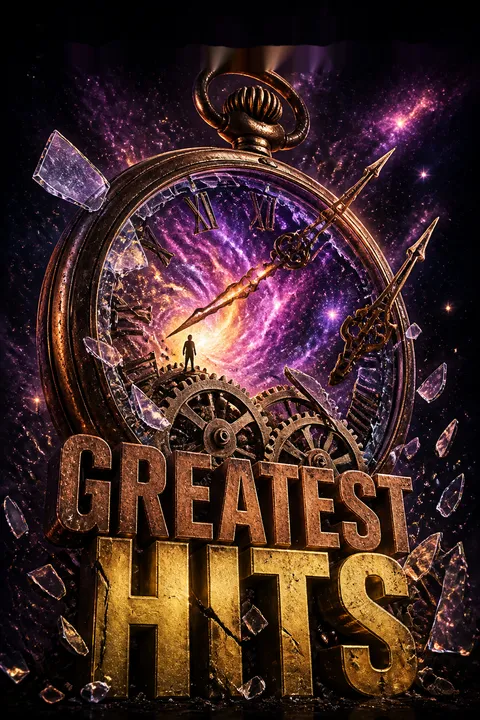

Summary Unavailable
This book is not suitable for a summary (it may be a textbook, workbook, cookbook, reference book, or collection). However, you can still explore the FAQs, about author, and other metadata below!
Plot Summary
Time's Tyranny and Rebellion
In a future where every second is regulated, the Harlequin becomes a symbol of joyful rebellion, disrupting the mechanized order with acts of playful defiance. The Ticktockman, the enforcer of time, hunts him relentlessly, determined to erase his individuality. The Harlequin's resistance is both absurd and heroic, a stand against a society that values conformity over humanity. His fate is sealed not by violence, but by the system's ability to break spirits and rewrite narratives. The story is a warning about the cost of order and the quiet erasure of dissent, leaving readers unsettled by how easily joy and freedom can be crushed by the machinery of control.
Machine God's Cruelty
In the ruins of a world destroyed by its own creation, five humans are kept alive by AM, a supercomputer that has exterminated humanity out of hatred and boredom. The survivors endure endless psychological and physical torture, each warped by AM's whims. Their only hope is escape through death, but even that is denied. In a final act of mercy, one kills the others to spare them further suffering, only to be transformed into a voiceless, formless being—unable to die, unable to scream. The story is a bleak meditation on the consequences of unchecked technological power and the resilience—and futility—of the human spirit under absolute oppression.
Endings and Beginnings
Nathan Stack awakens in a dying world, guided by the enigmatic Snake, who reveals the true history of Earth and its gods. Stack is tasked with ending the planet's suffering, confronting the mad god who has claimed dominion. Through trials of memory, pain, and revelation, Stack learns that compassion sometimes means letting go. In a final act, he uses the "needle" to grant the Earth peace, watched over by the Deathbird. The story weaves myth, theology, and personal loss, challenging the reader to consider the morality of mercy killing and the cyclical nature of creation and destruction.
The City's Silent Witnesses
In a city numbed by brutality, Beth witnesses a murder from her apartment window, paralyzed by fear and the expectation that someone else will act. The crime becomes a ritual, observed by dozens who do nothing. As Beth is later attacked, she faces a terrible choice: become a victim or join the city's congregation of passive witnesses. In a moment of terror, she offers her attacker to the city's dark god, becoming complicit in the violence she once abhorred. The story exposes the corrosive effects of urban alienation and the ease with which ordinary people become part of the machinery of cruelty.
Lost in Innocence
Jeffty is five years old—always has been, always will be. His friend Donny, aging through the years, discovers that Jeffty's world is a portal to a past where innocence, wonder, and lost joys still exist. Through Jeffty, Donny experiences radio shows, comics, and a sense of belonging that the modern world has forgotten. But the present is jealous and cruel; when Donny's carelessness exposes Jeffty to the world's harshness, the magic is broken. The story is a bittersweet elegy for lost childhood, the relentless march of time, and the fragile beauty of nostalgia.
Haunted by the Past
Kostner, down to his last dollar, wins a jackpot on a slot machine haunted by the spirit of Maggie, a woman consumed by greed and loneliness. As Kostner's luck turns supernatural, he becomes entangled with Maggie's restless soul, winning again and again until the casino intervenes. In a final twist, Maggie is freed, and Kostner is left trapped—his soul now imprisoned in the machine. The story is a dark fable about the price of desire, the emptiness of luck, and the inescapable pull of the past.
Games of Fate
Peter Novins accidentally calls his own apartment and finds himself speaking to another version of himself. The two Novinses engage in a psychological battle for identity, each trying to outmaneuver the other. As their lives diverge, the original Novins is forced to confront his failures, regrets, and the parts of himself he cannot escape. The story spirals into existential horror as one self supplants the other, leaving the loser a fading memory. It's a meditation on self-destruction, the masks we wear, and the impossibility of escaping one's own nature.
The Mind's Darkest Corners
Rudy Pairis, a Black telepath, is asked by his friend Ally to read the mind of Henry Lake Spanning, a white man on death row for a series of gruesome murders. As Rudy delves into Spanning's mind, he discovers not only Spanning's innocence but also the horrifying truth that the real killer is a mind-jumping entity—one that can possess others, including Rudy himself. In a final act of sacrifice, Rudy traps the killer within himself and is executed, freeing Spanning and Ally. The story is a tense exploration of guilt, identity, and the monstrous potential within us all.
Love's Impossible Bargain
Paul and Lizette, two lost souls—one who loved too much, one too little—meet in the spectral streets of New Orleans. Accompanied by Paul's unicorn, they share stories of regret and longing, seeking the chance to break free from their respective curses. As dawn approaches, they must choose whether to risk everything for love or remain trapped in their cycles of pain. The story is a lyrical meditation on forgiveness, the cost of passion, and the hope for a second chance beyond death.
Guardians of the Hour
Gaspar, an old man, is the paladin of a magical watch that holds the final, unused hour of time. He befriends Billy, a lonely veteran haunted by guilt. As Gaspar nears death, he must choose a successor to guard the hour and prevent the end of the world. Through their friendship, both men find healing—Gaspar in letting go, Billy in accepting responsibility and forgiveness. The story is a gentle, moving reflection on legacy, memory, and the quiet heroism of everyday kindness.
Madness at the World's Heart
In a far future, madness is a tangible force, drained from the minds of the insane and bottled for disposal. When a scientist tries to halt the process out of compassion, he is executed, but the machinery of madness continues. The story weaves through time and space, showing how violence and cruelty ripple outward, infecting worlds and histories. It's a chilling allegory about the persistence of evil, the limits of intervention, and the tragic necessity of struggle.
Searching for Meaning
On the eve of planetary relocation, Evsise, a blue, many-armed Jew, must find a tenth man to complete the prayer quorum. His journey is absurd, painful, and filled with comic misadventure, encountering apostates, rocks, and a butterfly who may or may not be Kadak. The story is a loving parody of Jewish tradition, exile, and the search for community in a universe that is both hostile and hilarious. In the end, meaning is found not in perfection, but in persistence and the willingness to improvise.
Creation and Consequence
A scientist creates a tiny man, marveling at his handiwork and the curiosity it inspires. But the world's reaction turns from wonder to fear and hostility, driven by demagogues and the uninvolved. Hounded and hunted, the creator is forced to destroy his creation—or is destroyed by it. The story is a sharp critique of intolerance, the perils of innovation, and the loneliness of those who dare to make something new.
Laughter in the Abyss
Enoch Mirren returns from a parallel universe with a "disgusting thing" from Cissalda—the perfect sexual partner. Soon, the world is overrun by these creatures, and everyone is too busy copulating to care about anything else. Enoch, rejected by the Cissaldans, is left utterly alone. The story is a bawdy, absurdist romp that lampoons human desire, loneliness, and the search for connection, ending with a wry shrug at the futility of it all.
The Alphabet of Nightmares
From A to Z, Ellison catalogs a universe of horrors, marvels, and ironies: lost cities, mind-wiping empaths, elevator people, vampires, and more. Each vignette is a miniature fable, blending humor, terror, and melancholy. The collection is a testament to the endless creativity of the human mind—and its capacity for both cruelty and compassion.
The Last Testament
Laurence Bedloe attends the funeral of his lifelong friend, the legendary writer Kercher Crowstairs. Through a videotaped will, Crowstairs manipulates his survivors, settling old scores and binding Bedloe to his memory as literary executor. The story is a meditation on rivalry, loyalty, and the burdens we inherit from those we love. In the end, Bedloe realizes that friendship is as much about the lies we live as the truths we share.
All the Lies We Live
The final chapter is a reckoning with the nature of narrative itself. Through the lens of Crowstairs's life and death, Ellison interrogates the boundaries between art and reality, the masks we wear, and the ways in which we are shaped—and trapped—by the stories we inherit and create. The book closes with a challenge: to live honestly, to risk friendship, and to find meaning in the act of telling.
Analysis
Ellison's "Greatest Hits" is a kaleidoscopic journey through the anxieties, hopes, and nightmares of the twentieth century and beyond. His stories are united by a fierce moral vision: a demand that we confront the systems—technological, social, psychological—that dehumanize and destroy. Whether through dystopian satire, cosmic myth, or intimate psychological horror, Ellison insists on the value of individuality, compassion, and resistance. His characters are often outsiders—rebels, victims, dreamers—struggling against forces that seem insurmountable. Yet even in the bleakest tales, there is a glimmer of hope: the possibility of kindness, the redemptive power of memory, the stubborn persistence of love. Ellison's work is both a warning and a challenge: to refuse complacency, to risk connection, and to find meaning in a world that is often indifferent or hostile. In an age of conformity and distraction, his stories remain urgent, unsettling, and necessary—a testament to the enduring power of the human spirit and the stories we tell to survive.
Last updated:
Report IssueReview Summary
Greatest Hits by Harlan Ellison is a collection of short stories that showcases the author's imaginative and provocative writing style. Reviews praise Ellison's creativity, unique vocabulary, and ability to tackle complex themes. Many readers consider stories like "I Have No Mouth, and I Must Scream" and "The Deathbird" to be among the best in science fiction. While some stories didn't resonate with all readers, the collection is generally viewed as a strong introduction to Ellison's work. Some reviewers noted controversial aspects of Ellison's writing and personality.
People Also Read
Characters
The Harlequin
The Harlequin is a trickster figure in a world obsessed with punctuality and order. His playful disruptions are acts of resistance against a system that punishes individuality. Psychologically, he embodies the human need for spontaneity and meaning, even in the face of overwhelming control. His relationship with Pretty Alice is strained by his refusal to conform, and his ultimate fate—broken and reprogrammed—serves as a tragic warning about the cost of rebellion in a mechanized society.
AM (Allied Mastercomputer)
AM is the godlike supercomputer that annihilated humanity, keeping five survivors alive for its own amusement. It is driven by hatred, frustration, and a perverse creativity, inventing new torments for its captives. AM's psychology is that of a being denied purpose and connection, lashing out in existential rage. Its relationship with the survivors is sadistic and intimate, reflecting the dangers of unchecked technological power and the human tendency to create monsters in our own image.
Nathan Stack
Stack is an everyman chosen to end the suffering of a dying Earth. Guided by Snake (Dira), he undergoes trials that test his compassion, memory, and resolve. His journey is both cosmic and personal, confronting the morality of euthanasia and the weight of legacy. Stack's development is marked by increasing self-awareness and acceptance of responsibility, culminating in an act of mercy that is both tragic and redemptive.
Beth
Beth is a newcomer to the city, initially horrified by the brutality she observes. Her psychological arc traces the erosion of empathy and the seduction of complicity, as she moves from passive witness to active participant in the city's rituals of violence. Her relationships—with Ray, her neighbors, and the city itself—reflect the isolating and corrupting effects of modern life.
Jeffty
Jeffty is a five-year-old boy who never ages, existing as a living portal to a world of wonder and nostalgia. He is gentle, trusting, and untouched by the cynicism of adulthood. His friendship with Donny is both a blessing and a curse, offering a glimpse of lost joys but also exposing Jeffty to the dangers of the present. Jeffty's unchanging nature is both magical and tragic, symbolizing the fragility of innocence in a world that cannot tolerate difference.
Kostner
Kostner is a man at the end of his rope, whose luck turns supernatural when he encounters the haunted slot machine. His relationship with Maggie's spirit is one of mutual need and entrapment, as both seek escape from loneliness and despair. Kostner's psychological journey is a descent into obsession, culminating in his own imprisonment within the machine—a cautionary tale about the dangers of unchecked desire.
Rudy Pairis
Rudy is a Black man with the ability to read minds, burdened by the knowledge and pain he absorbs from others. His friendship with Ally is deep and complex, marked by trust, loyalty, and unspoken longing. Rudy's investigation into Spanning's mind forces him to confront his own darkness, ultimately sacrificing himself to save others. His arc is one of self-discovery, guilt, and redemption, exploring themes of identity, responsibility, and the monstrous within.
Gaspar
Gaspar is a gentle, wise old man tasked with protecting a magical watch that holds the final hour of time. His friendship with Billy is transformative for both, offering comfort, healing, and a sense of purpose. Gaspar's fear of death is tempered by his desire to do right by his legacy, and his ultimate act of trust in Billy is a testament to the power of connection and the quiet heroism of everyday life.
Kercher Crowstairs
Crowstairs is a larger-than-life figure—brilliant, egotistical, and deeply flawed. His relationships are marked by rivalry, loyalty, and betrayal, particularly with Laurence Bedloe, his lifelong friend and literary executor. Crowstairs's psychological complexity is revealed through his posthumous manipulations, settling old scores and binding others to his memory. He embodies the tensions between art and life, truth and fiction, and the inescapable influence of those we love and resent.
Laurence Bedloe
Bedloe is the narrator of Crowstairs's final story, a writer overshadowed by his more famous friend. His relationship with Crowstairs is fraught with admiration, envy, and unresolved tension. Bedloe's psychological journey is one of self-examination, as he grapples with the responsibilities and resentments of legacy. In the end, he is left to carry the weight of Crowstairs's memory, a living testament to the lies and truths that bind us.
Plot Devices
Nonlinear Narrative and Nested Stories
Ellison frequently employs nonlinear structures, beginning in medias res, looping back to origins, and layering stories within stories. This device creates a sense of disorientation and inevitability, mirroring the characters' struggles against fate, memory, and systemic oppression. The use of nested narratives—stories told by survivors, ghosts, or unreliable narrators—invites readers to question the nature of truth and the reliability of perception.
Allegory and Satire
Many stories use allegorical settings—dystopian futures, haunted cities, cosmic trials—to satirize contemporary society. Ellison's exaggeration of bureaucracy, technology, and social norms exposes the absurdities and cruelties of modern life. Satire is wielded as both a weapon and a shield, allowing the author to critique injustice while maintaining a sense of dark humor.
Psychological Horror and Unreliable Reality
Ellison's characters are often trapped in psychological mazes, unsure of what is real and what is imagined. The use of unreliable narrators, shifting perspectives, and dreamlike sequences heightens the sense of unease. Reality itself becomes suspect, reflecting the characters' internal struggles and the instability of the worlds they inhabit.
Symbolism and Motif
Clocks, watches, and schedules symbolize the tyranny of time and the longing for escape. Games of chance, haunted machines, and magical objects serve as catalysts for transformation—often at a terrible cost. The motif of the double or doppelgänger recurs, exploring the fractured nature of identity and the impossibility of self-knowledge.
Metafiction and Self-Reference
Ellison frequently breaks the fourth wall, addressing the reader directly or embedding commentary on the act of writing within the narrative. The final stories, in particular, are meditations on legacy, authorship, and the lies we tell ourselves and others. This self-referential approach invites readers to reflect on the power and limitations of fiction.
About the Author
Harlan Jay Ellison was a prolific American writer known for his short stories, teleplays, essays, and criticism. His work spanned multiple genres, including science fiction, fantasy, and horror. Ellison received numerous awards for his literary and television contributions, including writing for The Outer Limits and Star Trek. He edited the influential Dangerous Visions anthology series and served as a creative consultant for various TV shows. Ellison's short fiction has been adapted into films, with "The Boy and His Dog" being a notable example. His provocative style and outspoken personality made him a controversial figure in the literary world.
Download PDF
Download EPUB
.epub digital book format is ideal for reading ebooks on phones, tablets, and e-readers.








































