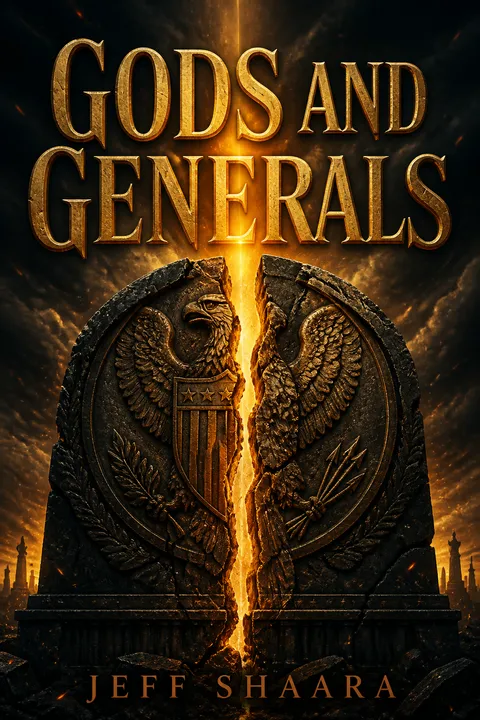
Plot Summary
1. Divided Loyalties Awaken
In late 1850s America, the rumbling prelude to war shakes every home. The book opens in a quiet, uncertain time that masks deep undercurrents of conflict over slavery, states' rights, and national identity. Families, especially those of Robert E. Lee, Stonewall Jackson, Hancock, and Chamberlain, are torn between allegiances. For these future leaders, decisions of loyalty are personal, not merely political—they must wrestle with their own beliefs, histories, and the weight of family expectations. The emerging tension is echoed in the friendships forged at West Point, soon to be shattered as the young nation moves toward inevitable violence. The emotional turmoil is palpable, setting a tone of sorrow, doubt, and resignation that will color the years to come.
2. Preparing for Turmoil
As war draws near, routines shift and cracks appear within both armies and civilian society. Lee returns to Virginia to manage a complicated estate, coping with family decline and financial confusion. Hancock despairs in a quartermaster's role, longing for field command. Jackson struggles with personal loss and a stern faith that underpins his decisions, while Chamberlain seeks meaning beyond academic life. The nation watches news from Kansas and the burning issues of abolition, violence, and uncertain peace. Each man faces intimations of coming change—a shifting sense of purpose, duty, and acceptance that the world will soon demand something greater from them.
3. Losses and New Callings
Death, illness, and grief permeate the lives of the central characters, reshaping their ambitions and forging a steely resolve. Lee attends to a declining wife and fractured estate while feeling the pull of military duty. Jackson's devastating family losses and unwavering faith push him into increasingly rigid moral certainty and discipline. Chamberlain, feeling unfulfilled as a professor, senses a calling as the nation's crisis grows, while Hancock wrestles with frustration in the peacetime army and strains to return to a life of action. These losses deepen their characters and set the emotional foundation upon which great deeds—both tragic and noble—will be built.
4. Lines Drawn in Blood
John Brown's raid on Harper's Ferry shocks the nation's conscience and catalyzes inevitable conflict. Lee is thrust into command, quelling the insurrection in a measured, reluctant show of force. Jackson, present at Brown's execution, sees grim necessity rather than victory. Hancock holds the West together amid rebellious whispers, while Chamberlain grows more restless for a role with meaning. Across the nation, uncertainty gives way to battle lines—literal and metaphorical—as personal and public decisions about conscience, law, and violence can no longer be postponed.
5. Clash at Harper's Ferry
The immediate aftermath of Harper's Ferry exposes Americans, soldiers, and leaders alike to the impossible complexities of fighting against their countrymen. Lee's tactical brilliance contrasts with private doubts about violence against his own homeland. Jackson and other officers stand guard at John Brown's execution, grappling with the spiritual and moral implications of civil strife. The event's emotional impact ripples, forcing all involved to confront what they are willing to sacrifice—for country, state, or deeply held beliefs.
6. Tides of Secession Rise
The election of Abraham Lincoln crystallizes tensions, sending the Southern states down the path of secession. Families agonize over divided loyalties; officers debate oaths, obligations, and the definition of treason. Lee, in Texas command, is caught between fidelity to the U.S. Army and love for Virginia. Hancock, isolated in California, faces political schemes and offers to switch sides, clinging to national duty. Jackson, Chamberlain, and others are swept up in a world unraveling, taking their first steps toward the epochal battlefields soon to define them. The tone is tense, mournful, and edged with sorrow at friendships and fellowships dissolving.
7. Families Torn, Nations Shaped
Loved ones are left behind, and the meaning of "home" changes forever. Lee resigns from the army, heartbroken yet unyielding, forced to choose Virginia over America. Jackson joins Virginia's defense, moving from teacher to general. Chamberlain, refusing a career-saving academic sabbatical, volunteers for service, straining his marriage and risking everything for conviction. Hancock, bitter but resolute, refuses California's independence schemes, setting out to serve—and suffer—with the Union. All marvel with pain at the cost, signifying the tragic cost of war: not just battlegrounds, but the daily lives, loves, and hopes of millions.
8. Rumors, Revolt, and Duty
Rumors swirl, commanders bicker, armies shift, and questions of command versus conscience take center stage. The early, chaotic months of war are defined by desperate attempts to hold the old army together, as officers must decide between home state and Federal government. Supply lines, poorly organized militia, and the panic of revolution plague both sides as trust is shattered and allegiances questioned. In this swirl, the characters deepen—loyalties are reaffirmed or broken, and the psychological cost of rebellion becomes unmistakable.
9. Commanders in Conflict
As battles multiply, so do complaints, rivalries, and hastily given promotions. Lee is beset by politics and frustrations, forced to work above and around resentful or ambitious subordinates like Joe Johnston and Jefferson Davis. Jackson's fierce discipline wins him fame but breeds resentment. The Union's "political" generals cause confusion and tragedy—Burnside, Hooker, and McClellan's ambitions and flaws have brutal consequences for those under their command. Through it all, the story grows more intimate; the war's psychological toll is shown in sleepless nights, haunted dreams, and quiet prayers.
10. Faith Amidst the Firestorm
Losses, both in battle and in waiting, deepen the lean on faith for Jackson and Lee, while others find rage or pragmatism. Jackson's Calvinist steel will drive him relentlessly, for better and worse, even as he quietly cries for the lost daughter of a family he befriends. Lee's stoicism is matched by a gentleness that sustains him and those around him. The cost of faith—personal sacrifice, hard decisions, quiet obedience in impossibly complex situations—is made palpable, creating emotional resonance and a tragic, almost Greek inevitability to the war's course.
11. Dawn of Catastrophe
The first campaigns—Bull Run, the Valley Campaign—make clear that neither North nor South are adequately prepared for the war they face. Heroism and incompetence exist side by side. Chamberlain and the Twentieth Maine are introduced to the misery, courage, and chaos of real combat. Jackson's and Lee's military genius begins to emerge, tested by changing fortunes. Hancock rises from behind-the-lines burdens to prove his mettle in the field. Each man, in their own way, confronts and endures the transformation of war from abstract conflict to all-consuming reality.
12. Fredericksburg's Bloody Fields
The Battle of Fredericksburg is both spectacle and slaughter, as Union assaults are thrown headlong against immovable Confederate lines. The carnage is relentless and senseless; Hancock and Chamberlain witness friends and regiment after regiment decimated on Marye's Heights. Lee and Longstreet, from the heights, can only hope that the "terrible" splendor of it will finally break the Union will. After the battle, the toll is visible in the ruined town, the shattered lives, and in the haunted words of commanders who saw their men slaughtered to satisfy egos or illusions of glory.
13. Tragedies at Chancellorsville
The war's tides turn again at Chancellorsville. Lee and Jackson risk all with a daring flank march, outmaneuvering Hooker despite being outnumbered. The psychological drama is at its height: Lee gambles brilliantly; Hooker loses confidence and organizational grip; Hancock, Couch, and others persevere amid chaos and retreat. The catastrophic, accidental wounding of Stonewall Jackson by his own men devastates the Confederate cause and morale. Personal moments—last meetings, prayers, and farewells—highlight the cost. The victory is pyrrhic; emotions run from euphoria to devastation, as the loss of Jackson is mourned by all, even by those who fought against him.
14. Breaking Points and Sacrifice
The aftermath of Chancellorsville brings exhaustion and grief—Jackson's mortal struggle, Anna Jackson's sorrow, Lee's despair. In Northern camps, doubt consumes the Union army's leadership, while discipline and faith prop up the Confederates. Across both sides, men reckon with the limits of duty, willpower, and what a cause can truly demand. The story dwells on funerals, scars—both visible and hidden—and the irrecoverable changes wrought by years of fighting.
15. Fallen Leaders, Fading Hope
The deaths of Jackson, other key figures, and the suffering of those left behind symbolize the draining reservoir of both hope and manpower. Hancock, Chamberlain, Lee, and others struggle to keep faith with their cause and with themselves. Emotional burdens are exposed in the faces of the wounded, the empty places in ranks and homes, and the ever-growing list of the dead. The human spirit is tested, bending but not always breaking, as the war threatens to devour its best and brightest.
16. Endurance Through Suffering
Both armies and the families who wait/pray for them adapt to tragedy, deprivation, and ongoing uncertainty. Moments of rest, music, food, letter-writing, and cherished small joys anchor the survivors—often the only defense against despair. Chamberlain's men endure quarantine and missed action; Lee and Longstreet wrestle with how to supply and inspire their half-starving army; Anna Jackson, Mary Lee, and Almira Hancock show resilience and grace amid overwhelming sorrow. These chapters pulse with grief, quiet fortitude, and the deep ache for a home they may never see again.
17. New Generals, Daring Gambits
After Chancellorsville, new corps leaders emerge on both sides—Hill and Ewell for the South, a resurgent Meade for the Union. Lee, believing only decisive action will end the war and preserve the Confederacy, plans a daring northern invasion—the Gettysburg Campaign. Longstreet returns, the question of Stuart's absence and role hangs heavy, and all involved sense both the grandeur and the desperation of the coming showdown. The psychological tone turns fateful and loaded with anticipation.
18. Invasion Looms, Fate Awaits
The final chapters build inexorably toward the Battle of Gettysburg—a climax not told here, but ever-present on the horizon. Lee marches his confident, battered army into Pennsylvania, while the North scrambles under new command. The sense is apocalyptic: friendships, hopes, and nations all hang in the balance, the shadow of war falling across every field, every family, and every soul. Emotions alternate between grim determination, exhaustion, and a faint, trembling hope that final sacrifice will yield something that endures.
Analysis
Stripped to its emotional core, Gods and Generals is less a tale of armies maneuvering than of men enduring—wrestling with faith, loss, and the agony of choices in a nation coming apart. Jeff Shaara's novel vividly inhabits a world where every victory carries the seeds of its own defeat, where faith shores up desperate courage, and where friendship and fraternity are sundered by principle and necessity. The book's intelligence lies in its refusal to either condemn or glorify either side: the psychological toll of war is as apparent in quiet moments of prayer or sorrow as in spectacle and slaughter. In an age when war is often rendered with either nostalgia or cynicism, Gods and Generals clings to the tragic dignity of its characters, urging modern readers to consider the costs of polarization, pride, and the inability to see humanity across philosophical divides. The war's true lessons emerge not on the battlefield but in the enduring ache of conscience, the struggle for personal redemption, and the hope—tremulous but real—that sacrifice will not be forgotten.
Review Summary
Gods and Generals receives mixed reviews, averaging 4.09/5. Many praise Shaara's character-driven storytelling, vivid battle descriptions, and humanization of Civil War generals. Positive reviewers highlight the emotional depth and historical accuracy, comparing it favorably to The Killer Angels. Critics argue the book romanticizes Confederate leaders, particularly Jackson and Lee, while neglecting slavery's role in the war. Some find the pacing slow and battle descriptions excessive. Most agree it offers an engaging, personalized perspective on the Civil War, though opinions differ on whether it matches his father's literary standard.
People Also Read
Characters
Robert E. Lee
Lee serves as the story's central, tragic patriarch—commanding, revered, yet achingly caught between family, state, and nation. Haunted by the shadow of his father's disgrace and the failing health of his wife, he chooses Virginia over the U.S., suffering with every sacrifice. Lee's calculated audacity and stoic leadership win admiration but also weight him with the terrible burden of wasted lives, missed chances, and the irrevocable pain of civil conflict. His faith in Providence sustains him through relentless strain—enduring heartbreak from Jackson's loss, political friction with Jefferson Davis, and guilt over endless bloodshed. Lee's evolution is from loyal officer to the sorrow-etched "father" of his fractured, doomed cause.
Thomas "Stonewall" Jackson
Jackson is the story's most intense psychological portrait: a rigid, almost mystical warrior forged by devastating personal losses and a stern Calvinist creed. Never at peace—wrestling with childhood trauma, death of loved ones, estrangement from self and others—he becomes legendary for discipline, speed, and daring in battle. Jackson's eccentricities and obsessions both endear and isolate him. Though driven by a sense of God's direct guidance, he also aches for affection and joy, glimpsed in rare moments with his daughter or in laughter with children. His accidental death at Chancellorsville becomes a symbol for the South's tragic fortunes, and his absence haunts the rest of the war.
Winfield Scott Hancock
The "superb" Hancock is a model of duty—handsome, capable, yet always angling for real action instead of bureaucratic tedium. His marriage to Almira provides an emotional anchor amid the army's chaos. Hancock struggles with the political cronyism and cowardice that infect Union high command, despises pointless sacrifice, and is haunted by the deaths he's ordered and witnessed. His evolution is marked by wounds—physical and psychological—but also by steadfastness that inspires both men and commanders. Hancock's friendship with Armistead and others across enemy lines epitomizes the war's intimacy and heartbreak.
Joshua Lawrence Chamberlain
Chamberlain begins as a brilliant but inwardly restless professor, torn between duty to family and country. Urged by conscience, he volunteers, straining his marriage and redefining his sense of self. As an officer, he endures trial by fire—waging internal battles of fear, reason, and faith as well as the external violence of war. Chamberlain's psychological arc traces a journey from naiveté to the terrible wisdom of a survivor, learning both the limits and the necessity of hope, the price of leadership, and the enduring value of quiet compassion in wartime.
James Longstreet
Longstreet, Lee's "War Horse," provides the voice of skepticism and caution. Grieving family tragedies, he withdraws emotionally but remains a vital, reliable commander; his pragmatism balances Jackson's religious zeal and Lee's instinctive brilliance. Longstreet's difficulty with new corps commanders, especially A. P. Hill, signals the challenges of ego and loyalty within the Confederate ranks. He serves as both confidant and challenger to Lee, advocating for defensive tactics and measured risks against Lee's bolder impulses.
Jefferson Davis
As the Confederate Chief Executive, Davis is both the glue and a source of division—a leader with great integrity but limited ability to manage the conflicting egos and necessities of his generals. His mental and physical decline parallels the Confederacy's fortunes. His determination to control strategy, coupled with a suspicious, often autocratic streak, frustrates Lee and others, causing confusion, missed opportunities, and deepening the army's hardships.
Darius Couch
As a Union corps commander, Couch brings a sense of quiet wisdom and integrity to the army's high command, counseling Hancock and others while despairing at political interference and costly blunders. His resignation in protest after Chancellorsville represents a breaking point—not just for him, but for many officers exhausted by the senseless sacrifice of good men. Couch's story highlights the personal toll of watching hopes, plans, and lives squandered by flawed leadership.
George Gordon Meade
Meade, ascending unexpectedly to army command on the eve of Gettysburg, personifies the Union's late-war search for competence over glory. Scarred by earlier failures but respected for discipline and devotion, Meade lacks the charisma of Hooker or McClellan but represents a redirection—toward professionalism, humility, and readiness to bear terrible responsibility.
A. P. Hill
Hill's sharp intelligence and fiery personality make him both indispensable and volatile. Continually feuding with Longstreet and Jackson, he nevertheless embodies the Confederate army's resourcefulness and aggression. His elevation to corps command after Jackson's death marks both his ambition and the South's growing strain as tragedy decimates its leadership ranks.
Almira Hancock, Anna Jackson, Mary Lee
Each woman in the narrative is both a witness and a victim to the war's devastation, enduring long absences, deaths, and the unraveling of home life with dignity, courage, and occasional despair. Their grief, fortitude, and support shape the men they love and amplify the cost of every battle.
Plot Devices
Rotating Point of View Across Divides
The narrative alternates perspectives among four central men—Lee, Jackson, Hancock, and Chamberlain—interspersed with secondary voices (Longstreet, Couch, Stuart, etc.). This allows readers to grasp the war's shifting tides, moral ambiguities, and emotional breadth from both Confederate and Union vantage points, dissolving simplistic narratives and illuminating the war's intimate cost.
Deep Psychological Realism and Interior Monologue
The novel's inner lives—doubts, prayers, rationalizations, and recollections—are as crucial as battlefield maneuvers. Characters debate with themselves and each other, providing insight into their decisions and struggles, fuelling empathy and emotional tension. Faith, guilt, and duty are explored with raw, confessional honesty.
Foreshadowing and Historical Irony
Decisions made in sorrow or defiant hope ("If only, if only...") echo down to tragic battles and fateful deaths (especially at Chancellorsville, Antietam, Fredericksburg). Foreshadowing is woven subtly, creating suspense and a sense of inevitability. The final chapters are weighted by knowledge of the looming crisis at Gettysburg, visible even as the participants cannot see their own endings.
Intimate Depiction of Battle and Aftermath
Battles are not only tactical but personal, filtered through the confusion, terror, and trauma felt by commanders and foot soldiers. The aftermath—shivering in the mud or searching among corpses for loved ones—anchors the grandeur and tragedy in particular, haunting imagery.
Symbolic Use of Place and Weather
From Arlington's decaying estate to the fog over Fredericksburg and the thick Wilderness brush, physical spaces underscore characters' internal dilemmas and the war's atmosphere—uncertainty, sorrow, and hope for cleansing or renewal.
Narrative Compression and Selective Time Jumps
Rather than chronicling every campaign, the novel telescopes events to linger on moments of decision or loss, skipping across time to emphasize the evolution (and attrition) of character, morale, and national destiny. This keeps the arc taut and emotionally resonant.
Letters, Prayers, and Omens
Personal letters, overheard prayers, and "signs" (such as northern lights seen after Fredericksburg, or the dreams and deaths of children) serve as narrative bridges and touchstones, foreshadowing both hope and doom.
Download PDF
Download EPUB
.epub digital book format is ideal for reading ebooks on phones, tablets, and e-readers.








































