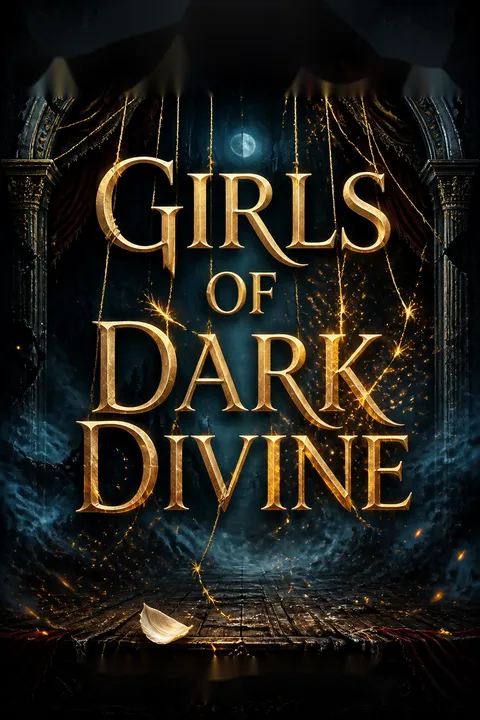

Plot Summary
A Death in the Shadows
Emberlyn, the lead Marionette, is jolted from her restless night by the screams of her sisters. Heather, one of the Marionettes, has died suddenly, her body ravaged by the curse that binds them all to the cruel Puppet Master, Malcolm Manrow. The girls are forced to confront the horror of their existence: they are dancers, but also prisoners, their bodies and souls owned by Malcolm, who uses a dark magic to control them. The death is not just a tragedy but a warning—no one is safe, and the curse is killing them one by one. Emberlyn, hardened by past loss, must be strong for her sisters, even as she wonders if she will be the next to fall.
Midnight Burial, Broken Bonds
Under the cover of night, the Marionettes secretly bury Heather in a city park, hiding her death from the world. The ritual is both an act of love and a grim necessity, as the curse prevents them from seeking help or speaking the truth. Emberlyn and Aleida, her closest friend, share a moment of grief and resolve by the river, questioning the nature of the curse and whether escape is possible. The burial deepens the bond between the girls but also exposes the cracks—fear, despair, and the growing realization that their time is running out. Emberlyn's hope for freedom is met with Aleida's fear of the unknown, setting the stage for a painful choice.
The Curse Devours
The Marionettes' daily life is a cycle of performance and dread. The curse not only controls their bodies on stage but also erases their memories and autonomy. Emberlyn clings to fragments of her past, while the others have lost almost everything. The girls are forced to perform night after night, their pain masked by beauty and grace. Malcolm's power is absolute—he manipulates them with a smile, punishes defiance, and replaces the fallen without remorse. The arrival of a new girl to audition for the troupe is a reminder that they are all replaceable, and that the world outside is oblivious to their suffering.
The Dance of Control
On stage, the Marionettes are divine, their movements flawless, but every step is dictated by Malcolm's invisible strings. Emberlyn, the star, is both envied and pitied by her sisters. The audience is entranced by the spectacle, unaware of the agony beneath the surface. The shadowy figure that dances with Emberlyn each night is a mystery—part comfort, part curse. The girls' only respite is in their rare moments of connection, but even these are haunted by the knowledge that the curse is killing them. The theater is both sanctuary and cage, and the girls are trapped in a dance they cannot escape.
The Beautiful Doomed
Malcolm holds auditions to replace Heather, and Emberlyn watches with dread as a talented, hungry new dancer—Grace—is chosen. The ceremony that binds Grace to the curse is brutal and inescapable. Emberlyn is forced to participate, locking the door and holding Grace down as Malcolm performs the dark ritual. The process is dehumanizing, stripping Grace of her agency and marking her as the next doomed Marionette. The other girls, traumatized by their own initiations, can only offer hollow comfort. The cycle of hope and destruction continues, and Emberlyn's guilt grows as she becomes complicit in the system she longs to destroy.
The New Marionette
Grace's transformation is horrific—her body wracked with pain, her memories fading as the curse takes hold. The other Marionettes try to comfort her, but they are powerless to stop her suffering. Emberlyn is haunted by her role in Grace's undoing, and by the knowledge that she, too, once hoped for greatness. The girls gather for a farewell ball before leaving for a new city, but the celebration is hollow. The absence of the lost and the presence of the new weigh heavily on them all. Emberlyn's longing for escape intensifies, but so does her fear of what it might cost.
Hope and Betrayal
As the troupe prepares to travel to Parlizia, Emberlyn sees a chance for freedom. She tries to persuade Aleida to run away with her, but Aleida refuses to abandon their sisters. The journey is fraught with tension—Emberlyn's attempts to escape are thwarted by Malcolm's vigilance and the curse's violent response. When she finally tries to break free at the train station, the curse nearly kills her, proving Malcolm's threats were real. The girls arrive in Parlizia, more trapped than ever, and Emberlyn's hope is replaced by rage and despair. The cost of defiance is higher than she imagined.
The Shadow's Embrace
In the grand theater of Parlizia, Emberlyn is watched by a shadowy figure who seems to know her pain. She discovers secret passageways and encounters Étienne, a boy who is both real and not—his body flickers between solid and dust, and he is intimately connected to the curse. Étienne reveals that he was once a dancer, and that Malcolm's magic stole his shadow, trapping him in the theater's darkness. He knows the truth of the curse and the fate of the previous Marionettes. Emberlyn is drawn to him, sensing a bond that transcends their suffering. Together, they begin to unravel the secrets that bind them.
Escape and Punishment
Emberlyn's growing resistance to Malcolm's control is met with violence. After a failed escape attempt, Malcolm punishes her savagely, breaking her body and spirit. The curse heals her wounds, but the trauma lingers. Emberlyn's sisters are terrified, and the hope of escape seems more distant than ever. Yet, in her darkest moment, Emberlyn finds unexpected comfort in Étienne's presence. He tends to her wounds and leaves a white rose as a sign that she is not alone. The possibility of rebellion flickers, but the risks are deadly.
The Boy of Dust
Emberlyn and Étienne's connection deepens as they share their stories and secrets. Étienne reveals that he knew the original Marionettes, and that Malcolm's curse is rooted in an act of ultimate betrayal—killing someone he loved. The curse is powerful but not unbreakable; it is weakened by selfless love and strengthened by selfishness. Emberlyn realizes that her own desire for freedom must be tempered by her love for her sisters. Together, she and Étienne plot to destroy Malcolm, knowing that the cost may be their own lives.
Secrets in the Dark
The Marionettes, led by Emberlyn, finally share the truth with each other. They agree to risk everything to kill Malcolm and break the curse, even if it means dying together. The plan is set for closing night, when the chaos of the final performance will give them their best chance. Emberlyn and Étienne share a night of intimacy and hope, confessing their love and dreaming of a future beyond the theater. But the threat of betrayal and the weight of their pasts hang over them all. The stage is set for a final confrontation.
The Final Performance
On closing night, the Marionettes take the stage for their last performance. Emberlyn, cast as Mephistopheles, is consumed by rage and love for her sisters. She fights against the curse with all her strength, and for a moment, she breaks free. The other girls, inspired by her defiance, begin to resist as well. The audience is stunned as the performance descends into chaos. Malcolm, desperate to maintain control, unleashes the full force of his magic. Étienne sets the theater on fire, creating the distraction they need. The battle for freedom has begun.
The Fire and the Fall
As the theater burns, Emberlyn and her sisters fight to escape. Malcolm's power is weakened, but he is still deadly. In the chaos, Étienne confronts Malcolm, sacrificing himself to save Emberlyn. The curse is finally broken as Malcolm is consumed by the flames, but not before he tries to drag Emberlyn down with him. The girls flee into the snow, battered but alive. Étienne's fate is uncertain—he is free, but his body is failing. Emberlyn is left with the memory of his love and the hope that he found peace.
The Taste of Freedom
The Marionettes, finally free from the curse, emerge into a world that is both familiar and strange. Their memories begin to return, and they must decide what to do with their newfound freedom. Some seek out lost families, others dream of new beginnings. Emberlyn grieves for Étienne but is comforted by the knowledge that his sacrifice made their freedom possible. The girls promise to stay together until they find their way home. The taste of freedom is bittersweet, but it is theirs at last.
The Last Goodbye
Emberlyn returns to the ruined theater, haunted by memories of loss and love. She is joined by Aleida, her best friend, and together they honor the past while looking to the future. The girls agree to meet again, to share their stories and celebrate their survival. Emberlyn dances alone on the rebuilt stage, reclaiming her passion and her identity. The pain of the past lingers, but it is no longer a prison. The curtain falls on one story, and the opening act of another begins.
The Opening Act
Emberlyn stands at the threshold of a new life, forever changed by the darkness she has endured. The curse is broken, but its lessons remain: the power of love, the cost of freedom, and the strength found in sisterhood. As she steps onto the stage, she is no longer a Marionette, but a survivor—a girl of dark divine. The future is uncertain, but it is hers to claim. The story ends with hope, resilience, and the promise that even in the darkest places, light can be found.
Analysis
Girls of Dark Divine is a haunting, lyrical exploration of power, trauma, and the redemptive potential of love and solidarity. At its core, the novel is a meditation on what it means to reclaim agency in a world designed to strip it away. The curse that binds the Marionettes is both a supernatural device and a metaphor for the systems—patriarchal, artistic, societal—that exploit and consume young women. The story's emotional arc is driven by Emberlyn's journey from reluctant survivor to selfless leader, and by the collective awakening of the girls as they choose to risk everything for each other. The relationship between Emberlyn and Étienne is a poignant study in healing and connection, showing that even in the darkest places, love can be a source of strength. The novel's use of performance, beauty, and art as both prison and liberation is especially resonant in a modern context, where the cost of visibility and the hunger for autonomy remain urgent issues. Ultimately, Girls of Dark Divine is a story about the courage to break cycles of harm, the necessity of community, and the hope that, even after devastation, it is possible to dance again.
Review Summary
Girls of Dark Divine by E.V. Woods receives mixed reviews averaging 3.59/5 stars. Readers praise the dark gothic atmosphere, cursed ballerina premise, and sisterly bonds, with many noting Phantom of the Opera vibes. The writing style is described as gorgeous and immersive. However, criticisms include slow pacing, underdeveloped curse explanation, and an insta-love romance with a shadow character that divides opinion. Many felt the book's potential wasn't fully realized despite its unique concept. The ending proved emotional and bittersweet for most readers, leaving lasting impressions.
People Also Read



Characters
Emberlyn
Emberlyn is the heart and soul of the Marionettes—a fiercely loyal, passionate, and stubborn young woman who refuses to surrender to despair. As the lead dancer, she is both envied and pitied, bearing the brunt of Malcolm's control and the responsibility of protecting her sisters. Haunted by fragments of her past and the memory of lost friends, Emberlyn's journey is one of self-discovery, sacrifice, and transformation. Her love for Aleida and her growing bond with Étienne force her to confront the limits of her own courage. Ultimately, Emberlyn's willingness to put others before herself becomes the key to breaking the curse, but not without immense personal cost. Her arc is one of reclaiming agency, embracing vulnerability, and finding hope in the ashes of suffering.
Aleida
Aleida is Emberlyn's closest confidante and emotional anchor. Compassionate, nurturing, and quietly strong, she helps the other Marionettes adapt to their cursed existence, even as she hides her own pain. Aleida's refusal to abandon her sisters, even when offered a chance at escape, reveals her deep sense of loyalty and selflessness. As the curse begins to consume her, Aleida's vulnerability becomes a catalyst for Emberlyn's transformation. Her impending death is a constant reminder of the stakes, and her courage in the face of despair inspires the others to fight for freedom. Aleida's arc is one of quiet heroism, love, and the bittersweet acceptance of fate.
Malcolm Manrow
Malcolm is the antagonist—a charming, manipulative, and deeply broken man who wields dark magic to control and exploit the Marionettes. His desire for power and fame is rooted in a fundamental selfishness, having killed someone he loved to gain his abilities. Malcolm's cruelty is masked by a veneer of sophistication, but his true nature is revealed in moments of violence and indifference. He is both a literal and symbolic representation of patriarchal control, using beauty and art as tools of domination. Malcolm's inability to understand love or selflessness is his undoing, and his death is both a personal and systemic reckoning. He is a study in the banality of evil and the corrosive effects of unchecked ambition.
Étienne
Étienne is a mysterious, otherworldly figure—once a dancer, now a being trapped between life and death after Malcolm stole his shadow. He is both a literal shadow and a metaphor for the parts of ourselves lost to trauma. Étienne's knowledge of the curse and the fate of the original Marionettes makes him both a guide and a warning. His growing connection with Emberlyn is a source of hope and healing, but also of grief, as he is ultimately unable to escape the consequences of Malcolm's magic. Étienne's arc is one of longing, sacrifice, and the redemptive power of love. His final act—helping to destroy Malcolm and save the girls—cements his place as both a tragic hero and a symbol of resilience.
Grace
Grace is the latest girl to be cursed, her journey mirroring Emberlyn's own descent into despair. Initially full of hope and ambition, Grace is quickly broken by the initiation ritual and the realization of her fate. Her anger and resentment toward Emberlyn reflect the cycle of complicity and victimhood that traps all the Marionettes. Over time, Grace's resilience emerges, and she becomes a key ally in the rebellion. Her arc is one of transformation—from victim to fighter—and her story underscores the cost of survival in a world that preys on the vulnerable.
Rosalyn
Rosalyn is the skeptic of the group, quick to challenge authority and question Emberlyn's plans. Her sarcasm and bluntness mask a deep fear and a fierce loyalty to her sisters. Rosalyn's journey is one of learning to trust, to hope, and to risk vulnerability for the sake of others. She is often the voice of reason, but also of doubt, forcing the group to confront uncomfortable truths. Rosalyn's arc is about finding faith in the face of despair and choosing solidarity over self-preservation.
Jia
Jia is the youngest and most sensitive of the Marionettes, often overlooked but deeply perceptive. Her innocence is both a liability and a source of strength, as she is able to see beauty and possibility even in the darkest moments. Jia's decision to join Emberlyn's rebellion is a turning point, signaling the group's collective resolve. Her arc is one of coming of age, finding her voice, and discovering the power of hope.
Miriam
Miriam is a gentle soul, more comfortable with dreams than with conflict. She is often anxious and hesitant, but her loyalty to her sisters compels her to act when it matters most. Miriam's journey is one of overcoming fear, embracing agency, and finding courage in community. Her arc highlights the importance of small acts of bravery and the quiet resilience that sustains the group.
Anushka
Anushka brings humor and perspective to the group, using wit as a shield against despair. She is adaptable, resourceful, and quick-thinking, often finding solutions in moments of crisis. Anushka's arc is about balancing self-preservation with solidarity, and her ability to find light in the darkness is a vital source of strength for the others.
Heather
Heather's death at the beginning of the story is the inciting tragedy that forces the Marionettes to confront the reality of their curse. Her absence haunts the group, and her memory becomes a rallying point for rebellion. Heather represents the cost of inaction and the urgency of fighting for freedom. Her story is a reminder that every loss is both an ending and a call to action.
Plot Devices
The Curse and the Strings
The central plot device is the curse that binds the Marionettes to Malcolm, represented by invisible strings that control their bodies and erase their memories. The curse is a metaphor for systemic oppression, trauma, and the loss of agency. It is powered by selfishness and broken by selfless love, creating a moral framework that drives the characters' choices. The curse's rules—its ability to heal wounds, prevent escape, and silence truth—create a claustrophobic atmosphere and raise the stakes for rebellion. The strings are both a visual and emotional symbol, reinforcing the theme of control versus autonomy.
The Shadow and the Doppelgänger
Étienne's existence as both a boy and a shadow is a powerful plot device, representing the parts of ourselves lost to trauma and the possibility of healing through connection. The shadow's dance with Emberlyn is both a literal performance and a metaphor for intimacy, longing, and the search for wholeness. The revelation that the shadow is Étienne's lost self ties together the personal and supernatural elements of the story, and his sacrifice becomes the key to breaking the cycle of suffering.
The Locked Room and Secret Passages
The theater's hidden rooms, secret passageways, and locked doors are recurring motifs that reinforce the sense of entrapment. They also provide opportunities for clandestine meetings, revelations, and moments of hope. The physical barriers mirror the psychological ones—the girls' inability to speak the truth, to remember their pasts, or to act without fear. The discovery of these spaces is often linked to moments of resistance and self-discovery.
Foreshadowing and Repetition
The story is structured around cycles—of performance, death, and replacement. The fate of the original Marionettes foreshadows the dangers facing Emberlyn and her sisters, and the repetition of rituals (auditions, initiations, performances) creates a sense of inevitability. The breaking of these cycles—through acts of rebellion, love, and sacrifice—is what ultimately allows for change. The use of foreshadowing heightens tension and underscores the themes of fate and agency.
The Final Performance and the Fire
The closing night performance is both a literal and symbolic climax, where all the story's threads converge. The fire that consumes the theater is a purifying force, destroying the old order and making way for something new. The chaos of the final performance allows the girls to break free, but not without loss. The fire is both an ending and a beginning, a moment of destruction that makes healing possible.
Download PDF
Download EPUB
.epub digital book format is ideal for reading ebooks on phones, tablets, and e-readers.








































