
Key Takeaways
1. Karl Marx was right: Workers own the critical means of production
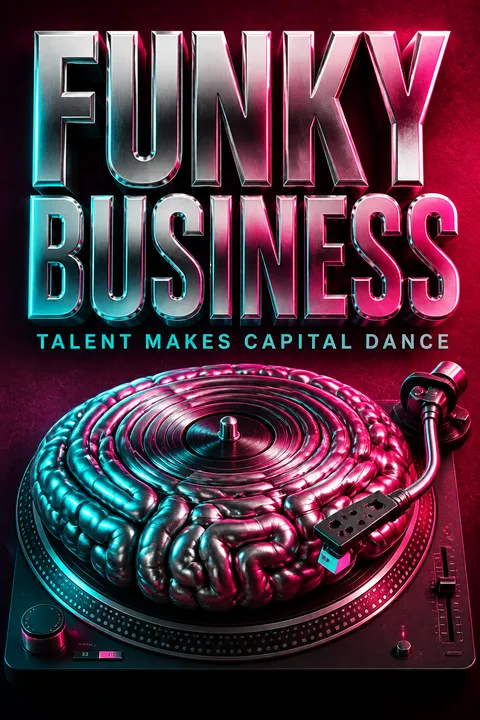
The critical means of production is small, gray and weighs around 1.3 kilograms. It is the human brain.
The brainpower revolution. In the modern economy, traditional assets like raw materials, heavy machinery, and financial capital have become commodities. True value now resides in the intangible, intellectual contributions of individuals, with 70 to 80 percent of what people do in contemporary organizations driven by their minds.
Shift in power. Because individuals own their brains, power has shifted from the capital investors to the competence investors. This means that the uneducated, loyal, and humble employee is a relic of the past. Consider these shifts:
- Value in a modern car is 70% intangible (software, design, logistics) rather than steel.
- General Electric Capital generates over half of GE's profits, proving the hard stuff is now the soft stuff.
- Brains can easily walk out the door at 5:00 PM, leaving corporations empty.
The new cold war. Entire nations now compete in a "cold knowledge war" to attract and retain intellectual capital. To survive, organizations must learn how to herd flocks of highly mobile, independent brains rather than managing physical labor.
2. We live in a surplus society of senseless oversupply and hyper-competition
The surplus society has a surplus of similar companies, employing similar people, with similar educational backgrounds, working in similar jobs, coming up with similar ideas, producing similar things, with similar prices, warranties, and qualities.
The commodity trap. We are drowning in an ocean of abundance where overcapacity is the norm in almost every industry. When everything is good, nothing is special, and companies are forced to compete for mere seconds of customer attention.
The demanding dictator. The customer has evolved from a humble, passive buyer into a ruthless, highly informed dictator. Armed with instant information and collective bargaining power, consumers can easily bypass traditional intermediaries.
- Overcapacity averages 40% in automotive, 50% in steel, and 140% in computers.
- Customers use platforms like LetsBuyIt.com to form powerful buying syndicates.
- Comparison shopping is effortless, reducing search costs to near zero.
Attention is scarce. In this "seen it, done it" society, sameness is a death sentence. To survive, companies must move beyond competing for market share and instead battle for "mind share" and "heart share" through extreme, sensational experiences.
3. Techno-economic parity has leveled the global playing field
In a borderless world, individuals or companies that are perceived as being only 1 percent better, or those that get a head-start and can use this initial advantage to gain even more reputation and market share, may kill all the others.
The flat world. Knowledge, technology, and best practices now travel at the speed of light, erasing historical geographic monopolies. A software engineer in Bangalore or a tailor in Wuhan can access the exact same tools and information as their counterparts in New York or Berlin.
The death of 'Made In'. National borders have become irrelevant to both consumers and corporations. The modern economy is multi-centric, and value is defined by who made it, not where it was made.
- Bangalore hosts over 140,000 IT engineers working for 20% of the Fortune 500.
- A Volvo 850 built in Belgium contains only 25% Swedish components.
- Supranational alliances (EU, NAFTA, APEC) have reduced average tariffs from 50% to under 5%.
Winner-takes-all markets. Because the playing field is horizontal, minor differences in performance lead to colossal differences in rewards. The global market increasingly behaves like an Olympic sprint, where a 1% advantage allows the winner to capture the entire market.
4. Funky Inc. must be ruthlessly focused and hollow
Funky Inc. looks like the façades from an old Hollywood motion picture – nice on the outside, virtually empty on the inside, save for one thing: brains.
Dismantling the conglomerate. The pursuit of corporate synergy is a dangerous illusion that often results in political infighting and mediocrity. Funky Inc. rejects the urge to be everything to everyone, choosing instead to be something unique for a highly specific tribe.
The hollow enterprise. To remain agile, organizations must ruthlessly outsource any activity where they are not genuinely world-class. By stripping away non-core processes, the firm becomes a virtual network of specialized partners.
- Nike and Timberland do not manufacture shoes; they manage design and brand.
- Dell owns no factories, acting instead as an intelligent broker of customized parts.
- The average US firm's Standard Industry Code (SIC) diversity has halved since the 1970s.
Targeting global tribes. Instead of segmenting markets by geography, Funky Inc. targets biographical tribes bound by shared values, attitudes, and obsessions. Whether insuring high-risk drivers or selling bulletproof fashion, riches are found in deep, global niches.
5. Leverage structural capital to turn individual talent into organizational capability
If you think competence costs – try incompetence.
The learning imperative. Because knowledge is highly perishable, organizations must treat it like milk and date it. The primary challenge of the modern firm is not acquiring knowledge, but rapidly transferring and transforming it across the enterprise.
Freezing creativity. To maximize profitability, companies must convert tacit, "gaseous" individual insights into explicit, "solid" structural capital. This process of freezing creativity allows for costless reproduction and massive economies of scale.
- Gaseous knowledge (ideas in the mind) must become fluid (dialogue) and then solid (systems/products).
- The first copy of a software program or CD-ROM is expensive; subsequent copies are virtually free.
- Skandia systematically measures and packages intellectual capital to ensure organizational continuity.
Knowledgeable management. Building a learning organization is not about creating a bureaucratic "knowledge management" department. It requires embedding learning into every employee's daily routine, turning the workplace into a continuous educational campus.
6. Ditch the pyramid: The future of organization is heterarchical
Hierarchy is an organization with its face toward the CEO and its ass toward the customer.
The death of the pyramid. Hierarchies assume a stable environment, predictable processes, and standardized outputs. In a chaotic, real-time economy, these rigid structures suffer constant nervous breakdowns because they isolate knowledge instead of combining it.
The heterarchical model. Funky Inc. is heterarchical, meaning it contains multiple, overlapping structures of positions, processes, and professions. This "spaghetti organization" allows resources and project teams to self-organize dynamically.
- Oticon's "spaghetti" structure features zero permanent desks, paperless offices, and fluid project pools.
- Flatter organizations increase the span of control, forcing decision-making down to the front lines.
- Circular designs allow peers to elect their own leaders, mimicking professional partnerships.
Playgrounds over tombs. Pyramids are, after all, the grandest tombs ever built by man. To foster the rapid, cross-functional collaboration required for mass customization, we must replace these corporate mausoleums with dynamic, open playgrounds.
7. True innovation requires ignoring customers and celebrating failure
You cannot expect the customer to think the unthinkable.
The limits of market research. Customers are inherently conservative and can only ask for incremental improvements within their existing frame of reference. Radical, industry-redefining innovation requires the courage to ignore customer feedback and pursue the bizarre.
The necessity of failure. Innovation is a numbers game that requires constant, risky experimentation. To foster a creative environment, organizations must develop an exceptionally high tolerance for mistakes, treating failure as a badge of honor.
- 3M's "bootleg policy" allows researchers to spend 15% of their time on personal, unapproved projects.
- Coca-Cola survived the New Coke disaster without firing a single executive, preserving its risk-taking culture.
- Viagra, penicillin, and galvanized rubber were all the results of "failed" experiments.
Creative destruction. To avoid being made obsolete by competitors, Funky Inc. must actively destroy its own successful products. Leaders must appoint "chief destruction officers" to cannibalize existing cash cows before others do.
8. Leadership must shift from command-and-control to storytelling and direction
True leaders are CSOs – Chief Storytelling Officers.
Spiritual management. In a world where employees own the means of production, intimidation and micromanagement are useless. Leadership is no longer about putting out fires or enforcing rules; it is about providing meaning, direction, and a shared vision.
The power of myth. Because rules are restrictive, funky leaders communicate through powerful stories, metaphors, and simple, memorable principles. These narratives capture the imagination and align the organizational tribe without suffocating individual initiative.
- Ingvar Kamprad's frugal bus rides reinforce IKEA's core value of cost-consciousness far better than any manual.
- Simple visions, like Disney's "make people happy" or Motorola's "wireless," provide clear boundaries.
- Leaders must "over-inform" because information degrades by 40% with every organizational layer it crosses.
Infusing chaos. The ultimate goal of a funky leader is to make themselves redundant by empowering others. Rather than maintaining rigid order, they must deliberately introduce constructive instability to prevent intellectual stagnation.
9. Personalization and attitude-first recruitment are the keys to the talent war
We hire attitudes," says Herb Kelleher of SouthWest Airlines. The logic is that you can make positive people into good pilots, but turning great pilots with attitude problems into charming servers of customers is close to impossible.
One-to-one contracts. Standardized, mass-produced employment contracts are obsolete in a brain-based economy. Because talent is highly diverse and scarce, organizations must offer customized, individual agreements that cater to personal lifestyles and motivations.
Hiring for vibe. Funky Inc. recruits for attitude and trains for skill, recognizing that technical capabilities can be taught, but core values and passion cannot. The goal is to build an organizational tribe of like-minded individuals who share a common vibe.
- SAS Institute offers unlimited sick days and on-site daycare to pamper its intellectual assets.
- Cisco Systems recruits at non-traditional venues like microbrewery festivals and marathons to find diverse talent.
- Shared ownership, through widespread stock options, aligns the interests of the talent with the firm.
Treating people as volunteers. Because top performers have endless options, they must be treated as voluntary investors of intellectual capital. If an organization fails to provide an inspiring, fun, and respectful environment, its stars will simply walk.
10. Economies of soul: Emotions, aesthetics, and ethics are the ultimate differentiators
In an emotional economy, it is better to piss off 90 percent of the people while capturing the attention and interest of the other 10 percent, than to be merely OK to all of them.
The last taboo. When functional quality and technology are standardized across competitors, rational arguments lose their power. True competitiveness must be built on "economies of soul"—appealing directly to the feelings, fantasies, and desires of consumers and employees.
Aesthetics and design. Design is no longer a superficial add-on; it is the core carrier of meaning and seduction. From toilet brushes to mobile phones, products must be designed to evoke intense, subjective emotional reactions.
- Alessi sells ordinary toilet brushes for $80 by transforming them into poetic works of art.
- Apple's Steve Jobs focused on making screen buttons look "so good you'll want to lick them."
- Brands act as emotional "valium for our souls," reducing anxiety in a chaotic, oversupplied world.
Total ethics. In a transparent, globally connected village, corporate hypocrisy is instantly exposed. Ethical behavior is not a public relations stunt; it is a critical competitive weapon that attracts both conscious consumers and elite talent.
Download PDF
Download EPUB
.epub digital book format is ideal for reading ebooks on phones, tablets, and e-readers.








































