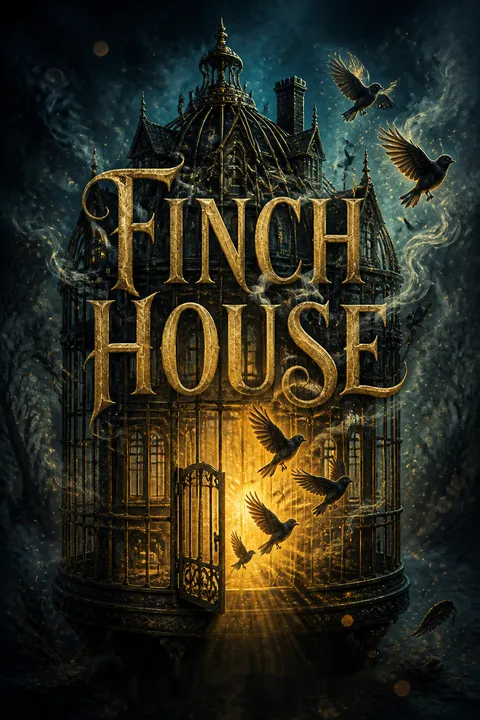

Plot Summary
Racing the Garbage Truck
Eleven-year-old Micah, dreading her impending move away from her beloved grandfather ("Poppop"), races a garbage truck to claim a discarded, flower-painted bookshelf. This small act of scavenging, or "networking," is a cherished ritual with Poppop, symbolizing their close bond and her resistance to change. As she secures the bookshelf, Micah's joy is tinged with sadness—her new home will be an hour away, and she fears losing daily moments with Poppop. Their conversation in the truck reveals her anxiety about growing up and leaving behind the comfort of family. Poppop reassures her that change is inevitable and can lead to growth, but Micah clings to the hope that some things—like their connection—can remain constant, even as everything else shifts.
The Forbidden Yellow House
As Micah bikes through her soon-to-be-former neighborhood, she's drawn to Finch House, a once-abandoned, imposing yellow Victorian that has always fascinated her. Despite Poppop's stern warnings to stay away, her curiosity is irresistible, especially now that the house is suddenly restored and occupied. She meets Theo, a new boy living there, and is captivated by the house's transformation and the mysterious chest among the curbside trash. The encounter is both thrilling and unsettling—Micah senses the house's secrets and feels the weight of her broken promise to Poppop. The forbidden allure of Finch House becomes a symbol of the unknown changes in her life, and her need to understand its story mirrors her struggle to accept her own.
Secrets, Promises, and Loss
After her visit to Finch House, Micah faces tension at home. Poppop's fear and anger at her disobedience are uncharacteristic, and her mother reveals a long-buried family secret: Poppop's older sister vanished at Finch House decades ago. This revelation reframes the house's danger and Poppop's protectiveness, layering Micah's curiosity with guilt and empathy. Micah's attempts to research the house and its missing children online yield little, deepening the mystery. The emotional distance between Micah and Poppop grows, as both struggle with memories and unspoken grief. The house becomes a nexus for generational trauma, and Micah's need for answers intensifies, even as she's warned that some truths are too painful to pursue.
The Mystery Deepens
Unable to let go of the mystery, Micah sneaks into Poppop's room and finds an old photo album, searching for clues about her great-aunt. Her obsession with Finch House grows, and she becomes convinced that the house holds the key to her family's pain. When Poppop disappears, Micah's worry turns to action—she retraces his steps, enlisting Theo's help. Their search leads them back to Finch House, where the boundaries between past and present, reality and the supernatural, begin to blur. The house's atmosphere is thick with secrets, and Micah's determination to uncover the truth is matched only by her fear of what she might find.
Searching for Poppop
Micah and Theo's search for Poppop becomes a journey through the uncanny. The house seems to resist their efforts, its layout shifting and its shadows deepening. Micah's guilt over breaking her promise and dragging Theo into danger is palpable. When they discover a hidden door in the attic, Micah's curiosity overpowers her fear. The door opens into a darkness that feels alive, and Micah hears Poppop's voice calling from below. Driven by love and desperation, she descends, crossing the threshold into a realm where the house's true nature is revealed. The act of entering the forbidden space marks a point of no return for Micah and her companions.
The Attic's Hidden Door
The attic door leads to a surreal, liminal version of Finch House, where time and space are fluid and the house's history is alive. Micah is separated from Theo and meets Callie, a girl from the 1970s who, like many others, is trapped in the house's alternate reality. Micah learns that Finch House collects lost children, holding them in a timeless limbo. The house's loneliness and need for a "Heart"—a keeper who anchors its magic—are revealed. Micah's journey through the house is both a literal and metaphorical descent into the family's and community's buried wounds, as she encounters echoes of the missing and the forgotten.
Into the Darkness
Lost in the house's shifting halls, Micah is confronted by Jenn, her great-aunt, who appears as a child. Jenn is both a victim and an agent of the house, having become its Heart after being abandoned decades ago. She confesses to luring others into the house out of loneliness and resentment, and reveals that Poppop's guilt and absence have haunted her for years. The house's power is sustained by cycles of abandonment and longing, and Jenn's offer to reunite Micah with Poppop comes at a terrible price: Micah must take Jenn's place as the Heart, or risk losing her loved ones forever. The emotional stakes are at their highest, as Micah must choose between self-sacrifice and escape.
Lost and Lured
Jenn's manipulation and the house's demands force Micah to confront the legacy of trauma and the seductive pull of stasis. Through a series of visions, Micah relives Jenn's original entrapment—her desperate attempts to escape, her deal with the house, and her transformation from victim to warden. The house's need for a Heart is revealed as a way to avoid loneliness and erasure, but it comes at the cost of trapping others. Micah's empathy for Jenn is complicated by her anger at Jenn's willingness to sacrifice others for her own freedom. The house's bargains are revealed as cycles of pain, and Micah realizes that breaking them will require a new kind of courage.
Ghosts and Revelations
In the turret room, Micah confronts the essence of Finch House—a being of shadow and sunlight, both protector and captor. She negotiates with the house, offering herself as a new kind of Heart: one who will bridge the house's need for connection with the world outside, rather than perpetuate cycles of isolation and fear. The house tests her resolve, forcing her to weigh the cost of freedom against the comfort of stasis. Micah's willingness to embrace change, and her insistence on agency and empathy, become the keys to breaking the house's hold. The house's acceptance of her terms signals a shift from haunting to healing.
Bargains with the House
Micah's deal with Finch House releases the trapped children, including Jenn, and restores Poppop and Theo. The house's power is transformed—no longer a prison, but a place of memory and possibility. Jenn and Poppop are finally able to reconcile, expressing the grief and forgiveness that have been denied for decades. The open door becomes a symbol of release, as the ghosts of the past step into the unknown, free at last. Micah's courage and compassion have rewritten the rules of the house, turning it from a site of generational trauma into a place where healing can begin.
The Heart's Choice
With the house's magic now part of her, Micah returns to her new home, changed but not trapped. She carries the memories and lessons of Finch House with her, as well as a new sense of agency. Her relationship with Poppop is deepened by honesty and shared history, and her friendship with Theo is strengthened by their ordeal. The house's lingering presence is felt, but it is no longer a threat—it is a reminder of the power of choice, memory, and connection. Micah's acceptance of change, and her refusal to let fear dictate her actions, mark her growth from a child clinging to the past to a young person forging her own path.
Breaking the Cycle
The aftermath of Finch House's liberation is marked by reconciliation and hope. Poppop and Jenn confront their shared past, expressing regret and forgiveness. The freed children step into new lives, and Micah's family begins to settle into their new home. The house's magic lingers, but it is now a source of strength rather than fear. Micah's journey has taught her that change is both inevitable and necessary, and that healing requires both courage and compassion. The story ends with the promise of new beginnings, as Micah embraces the unknown with open eyes and an open heart.
A New Beginning
As Micah settles into her new home, she reflects on the lessons of Finch House. The rituals of family and friendship continue, but she is no longer defined by fear or loss. The house's magic is now a quiet presence, a reminder of the power of memory and the importance of facing the past. Micah's story is one of resilience and transformation—she has broken the cycle of abandonment and become the keeper of her own story. The final image is one of hope: Micah, surrounded by loved ones, ready to face whatever comes next, knowing that she carries both the pain and the promise of her family's history within her.
Analysis
Finch House is a haunting, emotionally resonant exploration of family, memory, and the power of confronting the past. Through the lens of a supernatural mystery, Ciera Burch crafts a narrative that is both a gripping ghost story and a nuanced meditation on generational trauma. The house itself is a living metaphor for the ways in which pain, loss, and longing can shape—and sometimes imprison—those who inherit them. Micah's journey from fear and resistance to agency and empathy models a path toward healing: she refuses to accept the cycles of abandonment and silence that have defined her family, instead forging new connections and insisting on the possibility of change. The novel's use of supernatural plot devices—bargains, haunted spaces, and liminal realities—serves to externalize the internal struggles of its characters, making the invisible wounds of grief and guilt visible and actionable. Ultimately, Finch House is a story about the courage to face what haunts us, the necessity of forgiveness, and the hope that comes from choosing to move forward, even when the way is uncertain. It is a powerful reminder that the past shapes us, but does not have to define us—and that healing, though difficult, is always possible when we choose connection over isolation.
People Also Read


Characters
Micah Robinson
Micah is an eleven-year-old girl caught between childhood and the demands of growing up. Her close bond with her grandfather, Poppop, anchors her emotionally, and her resistance to moving away is both a fear of change and a longing for stability. Micah's curiosity is her defining trait—she cannot let mysteries lie, even when warned of danger. This drive leads her into Finch House, where her empathy and determination are tested by supernatural forces and family secrets. Micah's journey is one of self-discovery: she learns to balance her desire for answers with the need for compassion, and ultimately chooses agency over victimhood. Her willingness to confront pain, forgive, and embrace change marks her as a resilient and transformative protagonist.
Elijah "Poppop" Robinson
Poppop is Micah's grandfather, a figure of warmth, wisdom, and quiet sorrow. His playful "networking" adventures with Micah mask a deep-seated grief over his sister Jenn's disappearance at Finch House decades earlier. Poppop's protectiveness is rooted in guilt and trauma, and his reluctance to discuss the past creates emotional distance. When he is drawn into Finch House's supernatural realm, his vulnerability is exposed, but his love for Micah remains steadfast. The story's resolution allows Poppop to confront his regrets, reconcile with Jenn, and accept forgiveness. His arc is one of healing—moving from silence and shame to openness and connection.
Jenn Robinson (Aunt Jenn)
Jenn is Poppop's older sister, lost to Finch House as a child and transformed into its Heart—a supernatural warden who both suffers and inflicts suffering. Jenn's loneliness and resentment drive her to lure others into the house, perpetuating cycles of abandonment. Her relationship with Micah is complex: she is both a guide and a threat, seeking release from her role but willing to sacrifice others for her own freedom. Jenn's arc is one of tragic misunderstanding and eventual redemption. Through Micah's empathy and courage, Jenn is freed from her supernatural bondage and given a chance to move on, her pain acknowledged and her humanity restored.
Theo
Theo is the new boy living in Finch House, initially skeptical and wary of its haunted reputation. His friendship with Micah is forged through shared danger and mutual curiosity. Theo's pragmatism and loyalty provide balance to Micah's impulsiveness, and his willingness to face his fears is a quiet act of bravery. Though drawn into the house's supernatural drama against his will, Theo's support is crucial to Micah's success. His arc is one of growth—from passive bystander to active participant, learning that courage is not the absence of fear but the choice to act despite it.
Finch House (The House/Heart)
Finch House is more than a setting—it is a character in its own right, a sentient entity shaped by the memories, traumas, and desires of those who inhabit it. The house's need for a Heart reflects its fear of abandonment and erasure, and its bargains are both protective and predatory. Through its interactions with Micah and Jenn, Finch House becomes a metaphor for generational trauma, the weight of history, and the possibility of healing. Its willingness to change, to accept a new kind of Heart, signals a shift from haunting to hope.
Micah's Mother
Micah's mother is a stabilizing force, managing the logistics of their move while carrying her own unresolved grief over her aunt's disappearance. Her approach to parenting is pragmatic but compassionate, encouraging Micah's curiosity while setting boundaries. She serves as a bridge between past and present, and her willingness to share family secrets enables Micah's journey of discovery. Her arc is one of acceptance—learning to let go of the past while honoring its lessons.
Renee
Theo's older sister, Renee, provides comic relief and a touch of skepticism. Her teasing masks genuine concern for her brother, and her stories about Finch House's haunted reputation add layers to the house's mythology. Renee's presence grounds the supernatural elements in everyday sibling dynamics, and her willingness to help Micah and Theo reflects the importance of community and solidarity in the face of fear.
Callie
Callie is one of the many children trapped in Finch House's alternate reality, a relic of the 1970s who has adapted to her strange existence with a mix of humor and resignation. She serves as a guide to Micah, explaining the rules of the house and the nature of its bargains. Callie's arc is one of bittersweet release—her freedom at the story's end is a testament to the power of hope and the importance of letting go.
The Shadow-and-Sunlight Woman (Finch House's Essence)
The shadow-and-sunlight woman is the personification of Finch House's magic—a being who embodies both the house's protective instincts and its capacity for harm. She is both guide and gatekeeper, testing Micah's resolve and ultimately accepting her as a new kind of Heart. Her presence underscores the story's themes of agency, choice, and the complexity of power.
The Other Trapped Children
The many children and teens trapped in Finch House represent the cumulative weight of forgotten stories and unresolved grief. Each is a reminder of the consequences of neglect and the importance of memory. Their release at the story's end is both a literal and symbolic act of healing, as the house's cycle of loss is finally broken.
Plot Devices
Haunted House as Living Metaphor
Finch House is not just a setting but a living, sentient force—its shifting rooms, hidden doors, and supernatural bargains mirror the psychological landscape of its inhabitants. The house's need for a Heart, its cycles of abandonment, and its power to trap or release are metaphors for the ways families and communities carry, transmit, and sometimes heal from trauma. The supernatural elements are grounded in emotional truth, making the haunting both literal and symbolic.
Dual Timelines and Memory
The narrative weaves together Micah's present-day quest with flashbacks and visions of Jenn's original entrapment. This dual timeline structure allows the reader to experience the weight of history and the persistence of unresolved pain. Memory is both a source of suffering and a path to healing, as characters confront the truths they have avoided and find ways to forgive and move forward.
The Bargain and the Heart
The central plot device is the bargain with Finch House—the role of the Heart, which requires both agency and self-sacrifice. The house's bargains test the characters' willingness to confront their fears, accept change, and act with empathy. The shifting of the Heart from Jenn to Micah, and the negotiation of new terms, symbolize the possibility of breaking destructive cycles and forging healthier relationships with the past.
Foreshadowing and Symbolism
The recurring motifs of the bracelet, the chest, and the key foreshadow the story's revelations and resolutions. These objects serve as anchors for memory, identity, and connection, linking characters across generations. The rituals of "networking," scavenging, and storytelling ground the supernatural in the everyday, reinforcing the theme that magic and meaning are found in ordinary acts of love and curiosity.
Liminal Spaces and Transformation
The house's hidden doors, shifting rooms, and alternate realities are liminal spaces—thresholds between past and present, life and death, fear and hope. Crossing these boundaries requires courage and a willingness to embrace uncertainty. The story's structure mirrors this journey, moving from the familiar to the uncanny and back again, with each crossing marking a step toward transformation.
Download PDF
Download EPUB
.epub digital book format is ideal for reading ebooks on phones, tablets, and e-readers.








































