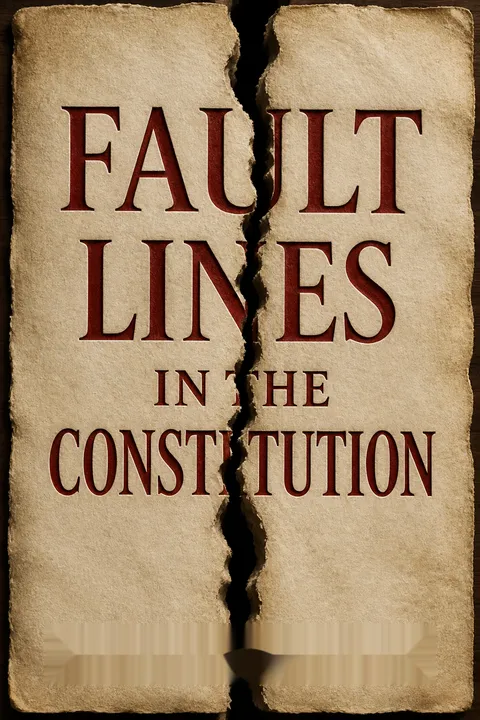

Key Takeaways
1. The Constitution's Foundational Flaws Persist
"We are still suffering from the consequences of disputes and decisions made in an overheated room in 1787, as a new form of government for our country was being created."
Historical Roots. Many contemporary issues, from political gridlock to unequal representation, trace their origins directly back to the compromises and unresolved disputes of the 1787 Constitutional Convention. The Framers, despite their skill, left "fault lines" that continue to affect the nation.
Unintended Consequences. These initial decisions, often made under pressure or through reluctant compromise, have had unforeseen and negative consequences over two centuries later. What seemed like practical solutions then now create significant challenges for modern governance.
Ongoing Struggle. The book argues that the Constitution, while a source of pride, is not a perfect document but rather a work in progress. Its inherent limitations, ambiguities, and "flatly bad ideas" necessitate continuous evaluation and potential reform to achieve a "more perfect Union."
2. Legislative Gridlock is Hardwired
"Even if a hefty majority of the members of one house supports a piece of legislation, the bill might not get past the other house."
Bicameral Obstacles. The requirement that both the House and Senate must pass identical versions of a bill creates significant hurdles, often leading to legislative paralysis. This structure, intended as a check, frequently becomes a choke point.
Antilynching Example. Historically, antilynching legislation, despite popular support and House passage, repeatedly failed in the Senate due to filibusters by Southern Democrats. This illustrates how one chamber can effectively kill widely supported bills.
Party Divisions. When different political parties control each house, or even when the same party is internally divided, the bicameral system exacerbates gridlock. This makes compromise difficult, leading to widespread dissatisfaction with the federal government's ability to act.
3. Unequal Representation Distorts Democracy
"In 2016, half the people in the country—those in small states—had more than four times the pull in the Senate as the other half, who lived in big states with larger cities and more diverse populations."
Senate Disparity. The Great Compromise established equal representation for all states in the Senate, regardless of population size. This means citizens in smaller states wield disproportionately more power per capita than those in larger states.
Electoral College Impact. This imbalance extends to the Electoral College, where small states receive a "boost" from their two senatorial votes, further amplifying their influence in presidential elections. This can lead to the popular vote winner losing the presidency.
Policy Skew. The disproportionate power of small states can skew national policy, as seen in issues like homeland security funding or agricultural subsidies. Senators from less populated states can leverage their votes to secure benefits for their constituents, sometimes at the expense of broader national interests.
4. Senate Supermajority Rules Empower Minorities
"How could a bill that had the solid support of the majority of both houses of Congress die?"
Filibuster's Power. Senate rules, particularly the filibuster, allow a minority of senators (as few as 41 out of 100) to block legislation from even coming to a vote. This requires a "supermajority" (60 votes for cloture) to end debate, effectively giving a minority veto power.
DREAM Act Failure. The DREAM Act, supported by a majority in both the House and Senate, failed because it couldn't overcome a Senate filibuster. This demonstrates how a minority can thwart the will of the majority on critical issues.
Judicial Appointments. The filibuster has also been used to block presidential nominations, including federal judges and Supreme Court justices. This led to the "nuclear option," where both parties eventually eliminated the filibuster for most nominations, highlighting the rule's controversial nature.
5. Gerrymandering Undermines Fair Elections
"But when politicians have the power to shift district boundary lines around to suit themselves, they can preselect the voters who will put them into office."
Manipulating Maps. State legislatures, often controlled by one party, redraw congressional district maps every ten years following the census. This process, known as gerrymandering, allows them to create districts that favor their party.
Packing and Cracking. Techniques like "packing" (concentrating opposition voters into a few districts) and "cracking" (spreading opposition voters across many districts) ensure predictable electoral outcomes. This means voters often don't choose their representatives; representatives choose their voters.
Reduced Accountability. Gerrymandering reduces incentives for compromise and responsiveness to diverse constituents, as politicians are more beholden to their party's mapmakers than to a broad electorate. This contributes to partisan polarization and legislative gridlock.
6. Citizen Participation is Limited
"Although our Constitution was written in the name of 'We the People,' the people themselves have no explicit power at the national level."
No Direct Democracy. Unlike many states and countries, the U.S. Constitution does not provide mechanisms for citizens to directly propose or vote on national laws or constitutional amendments. All federal lawmaking is done through representatives.
Unequal Voting Access. States retain significant control over voting laws, leading to a "crazy quilt" of varied requirements for registration, identification, and early voting. This patchwork system creates unequal access to the polls, with some states making it harder for citizens to exercise their right to vote.
DC's Disenfranchisement. Residents of the District of Columbia pay federal taxes but lack voting representation in Congress and full control over their local laws. This "taxation without representation" denies a significant population a voice in national governance.
7. Presidential Eligibility and Succession are Ambiguous
"Unfortunately, no one knows exactly what those terms mean or whether they necessarily fit someone born in a US territory."
"Natural Born Citizen" Clause. The Constitution's requirement for a president to be a "natural born Citizen" is undefined, leading to uncertainty and debate over the eligibility of candidates born abroad or in U.S. territories. This ambiguity can create constitutional crises.
Succession Gaps. While the 25th Amendment clarified some aspects of presidential succession and disability, key phrases like "unable to discharge the powers and duties of his office" remain vague. This could lead to disputes if a president is incapacitated but unwilling to step aside.
Leadership Vacuums. The line of succession, particularly beyond the Vice President, can place individuals from different political parties or those with limited executive experience in charge during a crisis. This risks a leadership vacuum or a government perceived as illegitimate by the public.
8. Emergency Powers Threaten Civil Liberties
"When a nation is at war many things that might be said in time of peace are such a hindrance to its effort that their utterances will not be endured so long as men fight."
Wartime Restrictions. The Constitution grants the government additional "emergency powers" during times of "Rebellion or Invasion," which historically have been interpreted broadly. This can lead to the suspension of civil liberties, as seen with the Sedition Acts or Japanese internment.
Habeas Corpus Suspension. The right of habeas corpus, protecting against unlawful detention, can be suspended during these emergencies. The definition of "Rebellion or Invasion" is narrow, but modern threats like epidemics or cyberattacks challenge this traditional interpretation.
Undefined Authority. The Constitution lacks clear definitions for what constitutes a "true emergency" and the specific limits of government authority during such times. This ambiguity allows officials to make sweeping decisions that can infringe on individual freedoms without clear constitutional guidance.
9. The Lame-Duck Period Creates Governance Gaps
"A president on his way out the door might make a monumental decision that should be made by the one who was recently elected—the person who would have to implement it."
Extended Transition. The period between a presidential election in November and the inauguration on January 20th (the "lame-duck" period) leaves a significant window for an outgoing administration to make major policy decisions. This can bind the incoming president to policies they did not choose.
Hoover and Bush Examples. President Hoover's inaction during the Great Depression and President George H.W. Bush's deployment of troops to Somalia illustrate how lame-duck presidents can either fail to address crises or initiate complex foreign interventions that burden their successors.
Undermining Popular Will. This gap means that the will of the electorate, expressed in the recent election, is not immediately translated into governance. The outgoing president, having lost public confidence, can still exert considerable power, creating potential instability and undermining democratic accountability.
10. The Constitution Needs Continuous Improvement
"it is incumbent on their successors to improve and perpetuate"
Ongoing Evolution. The Framers themselves recognized that the Constitution was not a perfect, immutable document, but one that would require ongoing "reflection and choice" to adapt to changing times. The Bill of Rights, adopted shortly after ratification, set a precedent for continuous amendment.
Addressing Fault Lines. The book argues that many of the identified "fault lines" – from legislative gridlock to unequal representation and ambiguous emergency powers – demand attention. These issues hinder the government's ability to function effectively and serve its citizens.
Pathways to Reform. While amending the Constitution is notoriously difficult, other avenues exist, such as changing Senate rules, passing new laws to address issues like gerrymandering, or developing "work-arounds" for the Electoral College. Ultimately, citizen engagement is crucial for driving necessary reforms.
People Also Read









Download PDF
Download EPUB
.epub digital book format is ideal for reading ebooks on phones, tablets, and e-readers.








































