


Plot Summary
The Hunted Prince
Lachlan Gage1 stalks New York City two days after Cate's2 kidnapping, the memento mori on his neck branding him for execution by the Wild Hunt. At a magical speakeasy, he forces his way past a vampire gatekeeper to reach Durant,15 an arms dealer and his ex-girlfriend's brother.
Durant15 drugs his whiskey with magic-suppressing herbs, but Lach1 drinks anyway, desperate for leads on the Infernal Court. When six Hunt soldiers attack, Lach1 and Durant15 fight together, killing several immortals who will resurrect to hunt again.
Durant15 supplies weapons and intel: Bain is at his London club. Lach1 nips across the Atlantic, surrenders his guns, and confronts the prince. But the brunette on Bain's lap is not Cate.2 She was never there. Oberon's5 trap has closed, but not the one Lach1 walked into.
This opening crystallizes Lach's central contradiction: he is both predator and prey. The memento mori transforms a man who once commanded the Hunt into its target, forcing him to rely on old, untrustworthy allies like Durant. His willingness to drink drugged whiskey signals a shift from calculated control to desperate love, a vulnerability he has avoided for centuries. The London misdirection reveals Oberon's strategic genius: he understands Lach well enough to predict his rashness, using Bain as bait to draw him into the open. Lach's admission that he 'wasn't thinking' marks the first crack in the emotional armor he built after his parents' deaths.
The Gilded Cage
Cate2 wakes in the Hallow Court to Oberon5 and his twin Titania8 debating whether to execute her over breakfast. Oberon,5 the charming prince she once thought was her ally, confesses he engineered everything: he framed Bain for tainted clover, sent MacAlister to attack her, and staged her kidnapping to provoke Lach1 into a fatal confrontation with the Wild Hunt.
Titania8 lobbies to kill her, but Oberon5 demurs. Cate,2 thinking fast, pretends to despise Lach,1 claiming she was his prisoner desperate for escape. Flattered, Oberon5 leads her through sculpted gardens into a hedge maze, then unveils the blighted, rotting Otherworld beyond his estate.
His ambition is to resurrect the fallen Terra Court, become king, and unite the fractured fae realms. Her ring, he reveals, is the esmeraude signet that will unlock the throne.
Oberon embodies the dark side of charm: a narcissist who mistakes manipulation for intelligence. His need to explain his plan to Cate, to watch her understand his brilliance, reveals an ego that may be his undoing. Cate's survival instinct kicks in immediately, her nurse's training in crisis response translating into a performance of calculated submission. She weaponizes Oberon's condescension, letting him believe she is merely a fragile human rather than a strategic threat. The blighted Otherworld serves as visual proof that the magical realms are dying without the Terra Court's unifying power, giving Oberon's warmongering a veneer of necessity that masks pure ambition.
Witches and Wedding Plans
The witches Ilsa16 and Marin arrive at Oberon's5 summons. Ilsa,16 silver-haired and defiant, negotiates for a captive friend's release before examining Cate's ring. She declares an ancient binding spell prevents removal: only Cate2 can take it off, and only when she truly wishes to.
Marin proposes a handfasting, a witch wedding ritual that would convince the ring that Oberon5 and Cate2 are one person, allowing him to claim it. Three nights of rituals follow, ending with a midnight ceremony. But on the final night, Ilsa16 doses everyone's drinks.
Titania8 collapses first, then Cate.2 When she wakes, she is staring at her own unconscious body. Marin explains they have cast a transference spell, swapping Cate2 into Titania's8 form. The handfasting was a ruse. The witches planned an escape all along, at the cost of their own lives if caught.
The witches' scheme introduces the theme of sacrifice that runs through the entire book. Ilsa and Marin know Oberon will hunt them down, yet they choose to save Cate and the captive 'friend' (later revealed to be another prisoner). Their willingness to die for a stranger they recognize as important hints at the larger prophecy about icons and changing times. The handfasting ritual itself becomes a dark mirror of Lach and Cate's accidental bond: one forced and transactional, the other born of genuine love. The magic binding the ring reflects Cate's psychological state, refusing release until she is ready to face the truth about herself.
Wearing Another's Skin
Trapped in Titania's8 body but wielding the fae princess's magic, Cate2 orders Hallow Court guards to carry her unconscious double away, seizes the mute maid Kelly,18 and drags the witches toward an exit. She snaps her fingers picturing a Dublin street from Marin's phone, and the four crash behind a dumpster in the mortal world.
Kelly,18 finally able to speak, reveals Oberon5 stole her voice and her blood. Ilsa's16 glamour drops: she is actually young, her aged appearance a disguise. When Hallow Court guards approach, recognizing their princess, Cate2 channels Titania's8 hauteur to send them away, then dispatches the others to safety in Kildare.
She slips into O'Malley's pub as the transference spell dissolves, her body returning. But the borrowed magic is gone. Stranded, she borrows a bartender's phone and leaves Ciara3 a voicemail before Oberon's5 guards walk through the door.
This sequence tests Cate's adaptability under maximum pressure. She must inhabit her enemy's skin, channel authority she does not feel, and perform competence with magic she has never used. The body-swap forces Cate to experience fae power firsthand, providing subconscious preparation for her eventual awakening. Kelly's liberation from Oberon's silencing spell mirrors Cate's own journey toward truth: both women have had their voices stolen by powerful men. The witches' sacrifice, Ilsa's hidden youth, and Kelly's trauma collectively demonstrate that Oberon's cruelty extends far beyond Cate, making the Hallow Court a gilded prison for many.
Snatched Between Worlds
Lach1 appears in the Dublin pub, glamoured by Ciara's3 hasty magic to hide his pointed ears. He finds Cate2 hiding in the corridor, and when Oberon's5 guards close in, he kisses her to mask their faces, then slips them out with departing patrons. In a dark alley, he snaps his fingers to nip them home.
But mid-transit, an invisible force grips Cate's2 neck and tears her from his arms. The Wild Hunt has learned to intercept him between worlds. Cate,2 refusing to let go, hurls herself forward through the void, her fingers brushing his shirt as she tumbles.
She snaps her own fingers with a single desperate image: safety. They crash through a bookshelf in the St. Charles Avenue library, her childhood refuge from foster care. Bloodied and stunned, Lach1 laughs. The ward over New Orleans holds. The Hunt cannot follow.
The Hunt's ability to intercept mid-nip raises the stakes dramatically, transforming a previously safe mode of travel into a life-threatening gamble. Cate's instinctive snap of her own fingers, redirecting them to her psychological safe haven, provides the first concrete evidence that she possesses latent fae power, even if she and Lach do not yet fully understand it. The library as sanctuary is deeply Freudian: the orphan who built a home among books now finds she carries magic that can bend space itself. Lach's laughter at their absurd landing, bloodied on a floor of scattered novels, signals a man who has accepted that survival with her will never be tidy.
The Mating Bond Revealed
In the deserted library, amid toppled books, they make love. Afterward, Cate2 notices a golden ribbon tattoo on Lach's1 wrist she has never seen before. He confesses: the night he bound her with silk rope, their passion accidentally sealed a fae mating bond.
They are magically married. Then he tells her a deeper truth. His mother was never the Terra Court heir; his aunt Stacia was, vanished a century ago with the true bloodline. His father's deathbed letter revealed the decades-long lie.
Lach1 believes Cate's ring is Stacia's signet, and that Cate2 herself might be the lost heir. She reels, unable to accept she could be anything but human. She tries to remove the ring and it shocks her, refusing to budge. Lach1 tells her she can reject the bond if she chooses, and he will respect it.
This conversation represents the book's emotional fulcrum. Lach, who built his identity on control and secrecy, voluntarily surrenders both, giving Cate the power to reject him. The mating bond, revealed as accidental, removes any question of manipulation: the universe chose them, not Lach's scheming. The Terra Court secret recontextualizes everything Cate thought she knew about her captor-turned-lover. His lifelong burden of pretending to an inheritance he never possessed explains his isolation, his ruthlessness, and his terror of vulnerability. Cate's inability to remove the ring, despite her conscious desire, suggests her subconscious knows truths her waking mind refuses to accept.
The First Blood Sacrifice
Ciara3 has rallied New Orleans's fractious covens to cast the bona fides ward, a blood-oath spell that shields the city from the Wild Hunt. Every magical creature must swear loyalty or be magically expelled. The spell buys Lach1 time but traps him on Earth, severed from the Otherworld where his magic is strongest.
At a tense coven meeting, witches, vampires, and werewolves bicker over drained magic and old tribal grievances. Then Roark4 gets a call: a witch named Thalia, the one who first proposed the ward, has been executed.
A memento mori is carved into her neck. Cate2 studies crime scene photos and notices Theban symbols written in the victim's blood: 'Blood spilled. Blood owed.' The killing is not random. It is a message and a ritual, and Lach1 suspects a traitor in his own circle fed the Hunt his location.
The bona fides ward embodies the book's central paradox: safety requires sacrifice, but sacrifice breeds resentment. Ciara's diplomatic triumph in uniting the covens comes at the cost of draining their magic and forcing reluctant oaths, creating the very dissent that will later be weaponized against them. Thalia's murder introduces the ritualistic pattern that governs the antagonist's logic: each victim is chosen because they enabled the ward. The Theban message, unnoticed by trained fae but spotted by a nurse accustomed to reading wounds, demonstrates Cate's clinical eye is as valuable as magical knowledge. Her observational skill makes her an asset the conspirators underestimate.
Samhain's Thin Veil
Cate2 visits Willow Broussard's11 tea shop, seeking answers about her ring. The witch reads her tea leaves and suggests a Samhain séance to contact Gran, the dead foster mother who gave Cate2 the ring. Meanwhile, a second body surfaces: a human tourist executed in St. Roch Cemetery with the memento mori carved postmortem into her neck.
On Halloween, Lach1 and Cate2 stroll the enchanted Garden District in elaborate fairy-tale costumes, navigating tense encounters with hostile witches and wary vampires. At La Porte's Danse Macabre, they watch the erotic pageant of life and death before slipping backstage.
At midnight, Cate2 attends Willow's11 séance. Gran materializes in limbo, telling Cate2 the ring was always hers and urging her to look at her foster care file. Then Goemon14 of the Wild Hunt appears, warning that a Cabal moves against Lach.1
Halloween serves as the narrative's axis between the living and the dead, the human and the magical. Cate's first trick-or-treating experience becomes a map of political tensions, with each costumed porch representing a faction's allegiance or hostility. The Danse Macabre, an erotic ritual celebrating the cycle of life and death, mirrors the mating bond's primal pull while foreshadowing the bloodshed to come. Gran's appearance in limbo delivers the book's most haunting line: 'It was always yours.' The ring was never a gift but a trust, held until Cate was ready. Goemon's warning from within the Hunt itself confirms that the threat is not external but internal, a conspiracy that has already infiltrated Lach's city.
A Vampire Elder Falls
After the séance, Cate2 and Lach1 walk along the Mississippi under a nocturnal eclipse that snuffs out the stars. They follow a glowing orb to Jackson Square and find Étienne,13 the ancient vampire elder, strung from the iron gates. His chest has been carved open, his heart removed, and the memento mori marks his neck.
Humans and creatures flood the square, drawn by the macabre spectacle. Lach1 throws up a glamour to make the corpse appear a Halloween decoration, but the supernatural community knows. Baptiste6 arrives, grief transforming into fury.
When she learns Lach1 hid the earlier murders, she accuses him of complicity and vows to find the killer herself. The death of a Vampire Council member shatters the fragile alliance. The murderer has methodically targeted the architects of the ward, and only one more death is needed to collapse it.
Étienne's murder marks the point of no return for the coven alliance. As the eldest vampire in New Orleans and a genuine friend to the Gage family, his death carries both emotional and political weight. Lach's decision to conceal the earlier murders, meant to prevent panic, now reads as deceit and makes him appear complicit. Baptiste's performance of grief contains layers: genuine loss over her sire mixed with the satisfaction of a plan proceeding perfectly. The nocturnal eclipse functions as both omen and evidence, confirming Willow's later theory that each murder disrupts the magical balance. The orb that leads them to the body also led Shaw and Dante earlier, a breadcrumb trail designed to draw attention at the killer's chosen moment.
The Ring Slips Free
After days of estrangement and silence, Lach1 sends Cate2 a note summoning her to a candlelit dinner in the Avalon's empty dining room. He has cooked gumbo, following Baptiste's6 advice to use food as an olive branch.
When Cate2 arrives, Lach1 drops to his knees and crawls to her, apologizing for his arrogance, his secrecy, and his failure to treat her as an equal. She forgives him. Afterward, Cate2 realizes she has been holding back, afraid to lose everything again. She grasps her mother's ring, and it slides off effortlessly.
They wait for some magical revelation. Nothing happens. Cate2 is crushed, believing this proves she is merely human. But Lach1 drops to one knee and produces a diamond solitaire, asking her to marry him not because of destiny or prophecy, but because his life began the day he met her.
Lach's grovel, crawling across the floor on his knees, is the physical manifestation of his psychological transformation. A man who once demanded bargains and obedience now offers submission. The ring's release at the moment Cate fully accepts both herself and Lach confirms the witch Ilsa's earlier diagnosis: the binding spell only responded to genuine readiness, not coercion. The anticlimax, the absence of immediate magical fireworks, forces both characters to choose each other without cosmic justification. Lach's proposal reframes their entire relationship: not a bargain, not a bond, not destiny, but choice. It is the answer to the question that has haunted Cate since the library: does he love her or what she represents?
The Glamour Unraveled
The engagement delights Ciara,3 who drags Cate2 to a bridal boutique. In the restroom, Ciara3 rummages through Cate's2 purse and finds a tiny handmade effigy doll from Willow's11 shop, one Cate2 never purchased. Idly unwinding its threads, Ciara3 suddenly screams.
Cate2 rushes to the mirror and sees a stranger: her cheekbones are sharper, her ears sweep to elegant points, her once-brown eyes are abismine-black flecked with gold. Gossamer wings, shimmering violet and blue, unfurl from her back. Golden mating-bond tattoos spiral across her hand.
Reddish-brown Theban symbols, the color of neither shadow nor light court, mark her chest and remain fixed, unmoving. She is fae, but belongs to no known court. Ciara,3 terrified and feeling betrayed, levels a gun before lowering it. The glamour that hid Cate2 her entire life, bound by Willow11 to protect her, has shattered.
The bathroom mirror scene literalizes the book's central identity question: who is Cate when the stories she told herself are stripped away? The effigy represents external protection, a spell cast without her knowledge or consent, raising uncomfortable questions about autonomy and benevolent deception. Her wings, a trait thought lost to the fae, mark her as something ancient and rare. The reddish-brown Theban tattoos, distinct from both Lach's black shadow-court ink and Oberon's iridescent light-court script, confirm she is the Terra Court heir, tied to the earth magic that binds all others. Ciara's instinct to draw a gun, to see a threat before a sister, demonstrates how deeply the fae world's paranoia runs.
The Pentacle Exposed
Willow11 arrives at the Avalon with a map and a theory. The murders form a pentacle across New Orleans: a rougarou in Third Parish, Thalia in Second Parish, the human tourist in St. Roch, and Étienne13 in First Parish. One more fae death will complete the ritual and collapse the ward.
Lach1 has Roark4 seize Willow11 to contain the information, but under veritum-laced whiskey, she confesses she knew Cate2 was fae and calls her an icon, a hybrid bloodline prophesied to rise when chaos threatens. Desperate, Lach1 pricks his finger and drips blood onto the map.
Using the mating bond, the blood splits, one drop stopping at the Avalon, the other gliding to The Fontaine. Baptiste's6 restaurant. The vampire ex-girlfriend, who played the grieving ally, has been Oberon's5 agent all along, methodically sacrificing creatures to bring down the spell.
Willow's pentacle theory transforms what seemed like random terrorism into a coherent ritual, revealing the killer as someone with deep magical knowledge and a long-term plan. The rougarou, dismissed by the covens as unimportant because werewolves handle their own, was actually the first sacrifice, its victim status obscured by prejudice. Lach's use of their mating bond blood for tracking demonstrates how personal connection can be weaponized as magical tool, the ancient power of fated mates repurposed for desperate detective work. Baptiste's unmasking recontextualizes every interaction: the helpful dinner advice, the grief performance over Étienne's body, the offer to 'handle' the killer through Caleb's compelled confession.
Blood at The Fontaine
Baptiste6 serves Cate2 and Ciara3 drugged wine at The Fontaine, then marches them to the walk-in freezer at gunpoint. She reveals she has been serving Oberon,5 who promised her a place in his new order once the ward falls and the Nether Court is destroyed.
Dante,12 her vampire progeny, arrives with Channing,9 who is horrified to find his sister captive. Baptiste6 compels Dante12 to break Channing's9 neck. But Dante,12 quietly rebellious, fed Channing9 his blood first. Channing9 will rise as a vampire. Then Shaw7 walks in.
Cate2 expects rescue, but Baptiste6 greets him as a co-conspirator. Shaw7 is a member of the Cabal. He made a bargain with Oberon,5 brokered through Titania,8 to destroy the ward. He wanted power, recognition, to wound the brother who made him feel invisible his entire life.
Channing's death and promised resurrection as a vampire represents the complete dissolution of Cate's human life. The brother she spent years protecting, who betrayed her to Oberon, now becomes a creature of the world she was thrust into. Dante's small act of defiance, feeding Channing his blood against Baptiste's knowledge, suggests that even compelled vampires retain fragments of will when motivated by genuine feeling. Shaw's revelation as Cabal member recasts his entire narrative: the partying, the vampire friends, the complaints about being sidelined were not adolescent rebellion but the symptoms of a young man radicalized by neglect. His bargain with Oberon mirrors Cate's original bargain with Lach, a parallel the book draws starkly.
Shaw's Last Act
Lach1 and Roark4 burst into the kitchen. Shaw7 levels his gun, his bargain with Oberon5 demanding fae blood to collapse the ward. Someone must die. Lach1 offers his own life, but Shaw7 refuses. With tears streaming, he presses the gun to his own head and fires.
The ward shudders, cracking open as Shaw's7 blood spreads across the tile. Ciara's3 shadows spear through Baptiste's6 heart. Roark4 shoots the remaining witch. Dante12 grabs Channing's9 body and vanishes into the night. Lach1 cradles Shaw,7 but his brother is already gone. Cate2 pulls Lach1 up. The Wild Hunt is coming.
Oberon5 is coming. She orders Lach1 to flee, to warn the other courts and rally allies. He kisses her once, promising to find her, and snaps his fingers. He vanishes. Cate2 remains, wings unfurled in the rupturing ward-light, ready to face whatever walks through the door.
Shaw's suicide is a refutation of the book's central bargain logic. He entered a deal with Oberon believing it was unbreakable, that fae bargains could not be circumvented. But by choosing to die himself rather than kill family, he proves that sacrifice can transform a bargain's terms. His death does break the ward, fulfilling his obligation, but on his own terms. Lach's flight reverses the entire book's trajectory: the prince who refused to leave his city, who swore to die fighting, now runs because staying serves no one. Cate's choice to remain, winged and exposed, completes her transformation from hunted human to protector. The final image, her wings spread against the collapsing ward, answers the question the ring's removal could not: she is fae, and she is exactly where she belongs.
Analysis
Fallen Court operates on the principle that information is the most dangerous weapon. Every character keeps secrets, and every secret, once revealed, reshapes the battlefield. Lach1 hides his parents' true history and the nature of Cate's ring. Cate2 hides from herself, the occlusion spells on her ring and the effigy literalizing her psychological refusal to face her heritage. Oberon5 hides his puppets within Lach's1 own city. Shaw7 hides his bargain with the enemy. The plot functions as a series of unmaskings, each revelation accelerating the crisis rather than resolving it.
The book's emotional core is a study in the difference between control and love. Lach's1 original bargain with Cate,2 his secrecy about the mating bond, and his attempts to sideline her from danger all stem from the same instinct: the belief that safety requires domination. His character arc involves learning that love demands surrender, not command. His crawl across the dining room floor, literally lowering himself beneath Cate,2 is the physical expression of this transformation.
Cate's2 parallel journey involves accepting that she is not merely human, not merely a victim, not merely an accessory to Lach's1 world. Her wings, when they finally unfurl, are not just a physical transformation but a spiritual one: she can no longer pretend to be ordinary, no longer hide from the power she carries. The book argues that identity is not something bestowed by bloodline but claimed through action. Cate2 becomes fae not when the ring comes off, but when she chooses to stay and fight.
The Wild Hunt functions as an externalized conscience, an inevitable reckoning for violence committed. But the Cabal within New Orleans proves more dangerous than the Hunt outside, suggesting that the real threats are never the obvious ones. Baptiste's6 betrayal, Shaw's7 complicity, Oberon's5 long reach: all confirm that the enemy is already inside the gates. The bona fides ward, meant to keep death out, becomes a cage that traps the Gages with their betrayers.
The book's handling of sacrifice is notably unsentimental. The witches who save Cate2 are later murdered by Oberon.5 Shaw7 dies to break a bargain he should never have made. Channing9 is killed and turned, losing his humanity. Each sacrifice carries a real and permanent cost, and the narrative does not offer the comfort that these losses were worth it. Instead, it insists that love makes the cost bearable, not absent. Lach's1 flight at the end, leaving Cate2 behind, is not abandonment but trust: he finally believes she can stand without him.
Review Summary
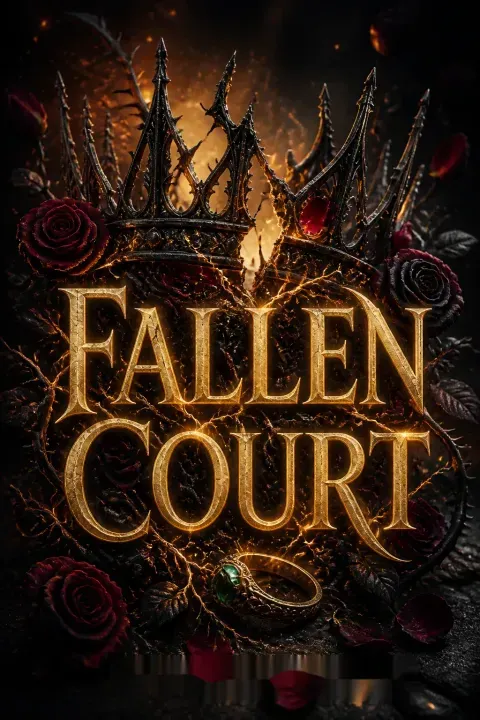
Fallen Court receives mixed reviews averaging 3.89/5 stars. Readers praise the addictive plot, world-building, found family dynamics, and obsessive romance between Cate and Lachlan. Many enjoy the urban fantasy Fae setting and dual POV narration. However, common criticisms include slow pacing, repetitive writing, filler content, and poor communication between characters. The major cliffhanger ending frustrates readers who must wait for book three. Some found it disappointing compared to book one, while others consider it even better.
Characters
Lachlan Gage
Prince of the Nether Court, dark fae marked for deathLach1 has ruled New Orleans for over two centuries, maintaining power through fear, bargains, and calculated violence. His magic manifests as living shadow tattoos that swirl across his body and the ability to nip between locations. Beneath his cold, ruthless exterior lies deep guilt over his parents' deaths and a conviction that he is unworthy of love. His mother was believed to be the Terra Court heir, but a deathbed letter from his father revealed the lie: his aunt was the true heir, and her bloodline vanished. He carries the memento mori, a Wild Hunt execution mark, for killing a penumbra to save Cate2. His accidental mating bond with her forces him to confront his controlling nature and learn vulnerability. He would sacrifice anything, including his life, for family and for her.
Cate
Trauma nurse turned fae, Lach's mate, hidden heirCate2 grew up in foster care after her parents' death, raised by a woman she called Gran. She became a nurse, specializing in trauma, and spent her life protecting her reckless younger foster brother Channing9. When she bargains with Lach1 to save Channing's9 life, she enters a world she never knew existed. Stubborn, observant, and quick-thinking under pressure, she applies her clinical training to supernatural threats, noticing details others miss. Her only possession from her mother is a ring she has worn since childhood, an esmeraude signet of immense magical and political importance. Her deepest wound is a fear of abandonment that makes trust nearly impossible. She longs for family and belonging but has learned, through years of loss, to armor herself against hope.
Ciara Gage
Lach's sister, acting ruler of the Nether CourtBeneath her bubbly, fashion-obsessed exterior, Ciara3 possesses sharp political instincts and a willingness to shoulder burdens she never asked for. When Lach1 is marked for death, she creates the bona fides ward by convincing the city's fractious magical factions to cooperate, a diplomatic feat her brother never attempted. She befriends Cate2 immediately, becoming the sister Cate2 never had. Her relationship with Roark4, Lach's1 penumbra, crackles with unacknowledged tension, and she resents being thrust into leadership while simultaneously proving herself more capable than anyone expected. She processes fear and grief through deflection and humor, but her loyalty is absolute.
Roark
Lach's penumbra, bonded warrior and advisorRoark4 has served as Lach's1 penumbra since childhood, a magically bonded companion whose signet ring once linked his thoughts to Lach's1. Stoic, lethal, and unfailingly loyal, he functions as Lach's1 conscience and enforcer. He knows the truth about the Gage family's faked inheritance and has guarded the secret for decades. When Lach1 passes the signet to Ciara3, the mental link shifts to her, forcing a proximity neither of them is comfortable with. His growing protectiveness toward Ciara3 complicates his duty. He processes emotion through action, preferring gunfire to conversation, but his devotion to the Gage family runs deeper than any magical bond.
Oberon
Prince of the Hallow Court, ambitious manipulatorOberon5 presents a charming, polished facade that masks a calculating and ruthlessly ambitious core. As prince of the oldest light fae court, he believes himself entitled to rule all the fae realms. He orchestrates a complex plan to provoke war between the shadow courts, eliminate Lach1, and claim the Terra Court throne using Cate's ring. His ego is his defining vulnerability: he needs to be seen as clever, to have his genius acknowledged, and he consistently underestimates those he considers beneath him. His twin sister Titania8 both enables and resents him, their relationship a toxic blend of loyalty and barely suppressed hatred.
Baptiste Du Roschiers
Vampire elder, Lach's ex, First Parish coven leaderCenturies old and exquisitely dangerous, Baptiste6 owns La Porte theater and The Fontaine restaurant in the French Quarter. She and Lach1 share a long, complicated history as former lovers and current political rivals. After Étienne's13 death, she assumes leadership of the First Parish coven and the city's vampires. Her loyalties are transactional, her motives opaque, and her charm is as sharp as her fangs. She presents herself as a pragmatic businesswoman who separates sentiment from strategy, but her actions suggest deeper currents of ambition and resentment. She commands absolute obedience from the vampires she has sired.
Shaw Gage
Lach's youngest brother, overlooked and resentfulThe youngest Gage sibling, Shaw7 attended the fae academy in the Otherworld and returned feeling invisible next to his powerful older brothers. Lach1 dismisses him as too young and irresponsible for real responsibility, pushing him to the margins of family business. Shaw7 gravitates toward vampires and other outsiders, seeking acceptance his family denies him. He befriends Channing9 and Dante12, forming a trio of misfits. His resentment of Lach1 runs deep and unresolved, compounded by years of feeling like an afterthought. He craves recognition and power, believing he deserves more than the scraps his family offers.
Titania
Oberon's twin sister, Hallow Court princessTitania8 is the feminine mirror of Oberon5 in appearance but chafes under his control, alternating between sycophantic obedience and barely veiled hostility. She teaches at the fae academy and had a past relationship with Shaw Gage7 that ended badly. She lobbies to kill Cate2 during her captivity, whether from genuine malice or strategic calculation is unclear. Her resentment of Oberon5 suggests she might be an ally under different circumstances, but her own ambitions and fears keep her bound to his schemes.
Channing
Cate's human foster brother, magnet for troubleChanning9 has been Cate's2 responsibility since childhood. Reckless, impulsive, and fiercely loyal in his own misguided way, he makes a bargain with Oberon5 to protect Cate2, unwittingly delivering her into captivity. His knack for attracting danger lands him in the hospital multiple times, and his friendship with vampires like Dante12 pulls him deeper into the supernatural world Cate2 tried to shield him from. Despite his mistakes, his love for his sister is genuine, and he would do anything to keep her safe, including making terrible deals.
Fiona Gage
Lach's estranged sister, lives in New YorkFiona10 left New Orleans to escape the violence and politics of the courts, living in New York with her witch girlfriend Romy17. She gave up her guns but not her sharp tongue. She resents Lach1 for what she sees as his abandonment of their mother's legacy and his failure to reclaim the Terra Court throne. Despite their bitter relationship, she shelters him when he comes to New York and ultimately travels to the Astral Court to help find a cure for the memento mori. Her idealism hides deep wounds from a family that has never known how to love without hurting each other.
Willow Broussard
Witch who runs La Belle Dame tea shop, Cate's guideWillow11 is a devout witch, follower of the Belle Mère, and an outsider in the First Parish coven due to her mixed Eastern and Western magical heritage. She reads tea leaves, sells effigies and gris-gris, and refuses to perform curses. Her quirky style (leopard-print pajamas, platinum-streaked bob) belies sharp intelligence and deep magical knowledge. She helps Cate2 navigate the mystery of the ring while harboring secrets of her own about Cate's2 true nature. Her loyalty is to the goddess and to a prophecy about icons who will rise in times of chaos.
Dante
Baptiste's vampire progeny, Channing's conflicted friendDante12 was sired by Baptiste6 and owes her absolute obedience through the compulsion bond between maker and progeny. He befriends Shaw7 and Channing9, forming genuine attachments that complicate his loyalty to Baptiste6. His feelings for Channing9 run deeper than friendship, creating an internal conflict between his nature as a vampire bound to his sire and his growing capacity for love and independent choice. He is used by Baptiste6 as a tool, compelled to commit acts he would otherwise refuse, but small rebellions suggest his will is not entirely broken.
Étienne
Ancient vampire elder, Lach's ally and Baptiste's mentorA centuries-old vampire who sits on the Vampire Council, Étienne13 has been an ally to the Gage family since Lach's1 father ruled. Genuinely fond of Lach1, he treats him with paternal warmth rare among the city's creatures. He advocates for cooperation between the covens and the Nether Court, believing the old alliances still hold meaning. His presence commands respect across all three parishes, and his influence keeps the vampires aligned with the Gages. He values friendship across species lines, a perspective increasingly rare in the fractured political landscape.
Goemon
Wild Hunt soldier who warns Lach of the CabalA member of the immortal Wild Hunt, bound to execute those marked for death, Goemon14 has crossed paths with Lach1 multiple times. Unlike his fellow hunters, he shows Lach1 mercy and delivers cryptic warnings about a conspiracy called the Cabal. He appears in limbo during Cate's2 Samhain séance, projecting himself through the thinning veil to deliver a message he cannot speak plainly. Bound by Hunt magic, he cannot refuse his duty but finds ways to delay and subvert it, suggesting a conscience that operates within his constraints.
Durant
Vampire arms dealer, Baptiste's brotherDurant15 runs a speakeasy in New York's magical enclave and deals in weapons and information. He and Lach1 share a complicated history: Lach1 dated his sister Baptiste6, and Durant15 still holds a grudge. Despite this, he helps Lach1 fight off the Wild Hunt and supplies weapons for the assault on Bain's club. His loyalty is ultimately to himself, but he respects Lach1 enough to assist when the price is right.
Ilsa
Witch who sacrificed herself to rescue CateOne of the two witches summoned to the Hallow Court to examine Cate's ring, Ilsa16 appears elderly but is actually young, her aged form a glamour. Defiant toward Oberon5, she negotiates for a captive friend's release before helping Cate2. She orchestrates the body-swap escape, knowing it will cost the witches their lives when Oberon5 discovers their betrayal.
Romy
Fiona's witch girlfriend, spellcaster and researcherA devout witch who chose Fiona10 over her coven, Romy17 practices earth magic and follows the Belle Mère. She helps Lach1 in New York with cloaking spells and grimoire research before traveling to the Astral Court with Fiona10 to find a cure for the memento mori. Her relationship with Lach1 is tense, built on mutual wariness rather than trust, but her love for Fiona10 makes her an ally.
Kelly
Mute maid rescued from the Hallow Court, a sirenA siren whose voice and blood were stolen by Oberon5 through a magical spell, Kelly18 served silently in the Hallow Court until Cate2 dragged her to freedom during the escape. Once free, she speaks for the first time in years, revealing the extent of Oberon's5 cruelty. She flees with the witches to Kildare, hoping to reunite with a daughter she has not seen since her capture.
Plot Devices
The Memento Mori
Execution mark; hunter's beaconA brand burned into the back of Lach's1 neck, depicting a winged skull and crossbones. It is the Wild Hunt's death mark, applied when a fae kills someone under protected status. The brand cannot be glamoured or hidden, and it allows the Hunt to track the marked individual's magic use. Any fae who sees it understands its meaning: the bearer is condemned to die. The Hunt will pursue relentlessly until the sentence is carried out. The mark burns with awareness, sometimes stinging in cemeteries or when death draws near. Lach1 received it for killing MacAlister, a penumbra of the Infernal Court, in order to save Cate's2 life. Removing the mark is considered impossible, though Fiona10 and Romy17 search for a cure at the Astral Court's alchemical labs.
The Bona Fides Ward
City-wide protective spell; blood oath barrierCreated by Ciara3 with the cooperation of all three New Orleans parishes, this spell draws on the combined magic of witches, vampires, werewolves, and other creatures to project a shield over the entire city. Every magical being within city limits must swear a loyalty oath to the Nether Court or suffer magical expulsion and physical marking as a dissident. The ward prevents the Wild Hunt from entering, protecting Lach1. However, it traps him on Earth, cutting him off from the Otherworld where his magic is strongest and where fae stop aging. The spell was forged with blood from representatives of each species. This becomes its vulnerability: five ritual murders, one from each contributing bloodline, will collapse the ward. The killings form a pentacle across the city's parishes.
The Esmeraude Ring (Terra Court Signet)
Hidden heir's signet; magical occlusion deviceCate's2 only possession from her mother, a gold filigree ring set with an esmeraude gemstone (not a common emerald, but a rare fae jewel). It is actually one of two identical signet rings belonging to the Terra Court, worn by the heirs of the fallen realm. An ancient occlusion spell bound to the ring hid Cate's2 fae nature her entire life, making her appear human. The binding could only be broken when Cate2 was genuinely ready to accept the truth about herself. The ring also functions as a key to reclaiming the Terra Court throne through the Axis Mundi, the magical center point that once connected the fae and human worlds. Oberon5 wants it to claim the throne for himself. Lach1 recognized it the night he met Cate2 and built his original bargain around keeping it close.
The Mating Bond
Soul-deep magical marriage; tracking connectionAn ancient, nearly forgotten fae magic that binds two souls together. It was sealed accidentally between Lach1 and Cate2 during their first sexual encounter, when Lach1 used silk rope to bind Cate's2 wrists, unknowingly replicating a handfasting ritual. The bond manifests as golden ribbon tattoos on their skin that cannot be glamoured (though Lach1 hid his for weeks). Once sealed, mated pairs experience an intense protective instinct and an insatiable physical need for each other, described as a primal drive that overrides rational thought. The bond cannot be broken, but either party can reject it if they choose. Magic sees mated pairs as one person, making the bond blood useful for locator spells. The bond also allows partners to sense each other's presence and emotions across distances.
The Effigy Doll
Occlusion spell anchor; glamour maintenanceA small handmade doll from Willow Broussard's11 tea shop, similar to the gris-gris effigies she sells for blessings and protection. Willow11 secretly placed one in Cate's2 purse during a visit, weaving a powerful occlusion spell around it that reinforced the glamour hiding Cate's2 fae nature. The effigy's magic was layered over the ring's original binding spell, creating a double layer of concealment. When Ciara3 idly unwound the doll's threads in the bridal shop bathroom, the occlusion spell collapsed, and Cate's2 true fae form emerged for the first time. The effigy represents both protection and control: Willow11 meant to keep Cate2 safe from those who would exploit her, but also made choices about Cate's2 identity without her knowledge or consent.
Filthy Rich Fae Series

About the Author


Download PDF
Download EPUB
.epub digital book format is ideal for reading ebooks on phones, tablets, and e-readers.








































