Plot Summary
Framing Ghosts in Light
—Lois Cairns, a Toronto film critic and lapsed historian, frames her life through cinema's haunted lens. She meditates on the permanence of film, its ability to trap time and memory, always questioning what is truly seen and what persists at the narrative's margins. Her loss of career and sense of purpose echo with the anxiety of motherhood to her autistic son, Clark. The book's opening blurs the lines between personal memoir, film lecture, and the dead speaking through flickering images. Lois's hunger for meaning is shaped by broken dreams, tinged with envy of the immortality granted by the lens, and foreshadowing a haunting that is cinematic, literal, and familial.
Vanishing Lady of Vinegar House
—Lois is pulled into the century-old mystery of Mrs. Iris Dunlopp Whitcomb, eccentric spiritualist, painter, early filmmaker, and source of regional myths. Famous for the disappearance of both her son and herself, Mrs. Whitcomb's legend is inseparable from the isolated Vinegar House and its haunted past. Lois's research introduces accounts of séance, silver nitrate film, and the trauma left by her son's loss. Balcarras, a local historian, offers speculations about madness, ritual, and possible supernatural erasure—all linked by burned reels, veiling, and whispered warnings. Lois feels a professional and maternal kinship with Mrs. Whitcomb, sensing the past's gravitational pull into her own present.
Lois in the Haunted Present
—Lois juggles singlehanded care for her son Clark, whose autism and echolalic speech both isolate and define him. Simon, her husband, remains pragmatic but exhausted. Lois's anger, regret, and anxiety about Clark's future color every moment. The daily routine is punctured by outbursts—hers and Clark's—and feelings of doom. Lois's sense of being "born fucked up" is soothed and intensified by her love for cinema, the temporary transcendence of narrative, and the disconnection from ordinary parental life. Her quest for validation as a writer, mother, and interpreter of meaning deepens the book's sense of unease and longing.
Experimental Cinema Encounter
—Lois attends a screening curated by the pretentious, abrasive Wrob Barney. Amidst recycled porn and posturing, she is transfixed by a segment in Untitled 13: flickering images and an arcane, masked figure recalling archaic rituals and veiled goddesses. The sequence evokes déjà vu, triggering a migraine and synaesthetic hallucinations tied to rural folklore—a convergence of memory, myth, and trauma. It leads Lois to recognize the story of Lady Midday, an Eastern European demoness, and to suspect that Wrob has uncovered (and sampled) lost work by Mrs. Whitcomb, possibly Canada's first female filmmaker.
Uncovering Lady Midday
—Lois traces the legend of Lady Midday (Poludnica): a noon-witch, crop walker, and punisher of the disrespectful, notorious for beheadings. The myth, embedded in Wendish folklore, intersects Mrs. Whitcomb's own translations and her experimental films—obsessively retelling the tale with shifting visual and narrative strategies. The story's thematic core, the danger of curiosity and the price of seeing, becomes a structural motif. Lois's investigation mirrors Lady Midday's bargain: do your work, remain unseen. She realizes she's being drawn into a pattern of obsession and possible doom that echoes her subject's fate.
Family Inheritance and Autistic Bonds
—Lois's relationship with Clark parallels Mrs. Whitcomb's with her 'special' son, Hyatt. Lois's guilt, hope, and terror about motherhood, genetic inheritance, and difference infuse the running narrative. Simon's pragmatic support and her mother's relentless worry both stoke and sooth Lois's self-hatred. The intergenerational dynamic of misunderstood children and desperate mothers is reflected in tales of Mrs. Whitcomb's artistic veiling, her attachment to folk rituals, and Canada's own tendency to erase and archive what is uncomfortable. Lois's chronic pain, migraines, insomnia, and self-doubt blur into mythic and psychic contagion.
Mystery of Silent Films
—Through interviews with Wrob, Jan Mattheuis, and trips to archives and rural Ontario, the history of lost silent films comes to the fore. Film reels pulled from pits, fires, and museum dumps become both evidence and accursed talisman—literal vessels for Lady Midday's image. Lois's desire for discovery is rivaled by Wrob's greed and egotism; archival bureaucracy, Canadian film's obscurity, and the volatility of silver nitrate stock create a labyrinthine investigation. Each new fragment and shadowy image pushes Lois further into physical illness and psychic distress, as the past refuses to stay pictured.
Teaching, Motherhood, Obsession
—Lois's reminiscences as a film instructor reveal both her raw devotion to lost, experimental, and Canadian cinema and the toll it takes: career collapse, professional bitterness, and an ever-widening gap between herself and ordinary life. Her insistence on seeing, analyzing, and revealing meaning is set against her inability, at times, to connect productively with Clark or with her mother. Meanwhile, teaching becomes a metaphor for narrative control—her tragic flaw mirrors Mrs. Whitcomb's artistic ambition, drawing both women toward a potentially fatal encounter with the numinous.
Wrob Barney's Appropriation
—Wrob emerges as Lois's professional nemesis: a manipulative, entitled appropriator of others' work, desperate for recognition. Through digital theft, impersonation, and manipulation, Wrob positions himself as "saviour" of Canadian film history while callously burning bridges and exploiting the same history he claims to preserve. His actions increasingly haunt Lois, echoing the book's themes of creative parasitism, contaminated inheritance, and the double-edged nature of recovery—both archival and psychic. He represents what happens when the hunger for meaning becomes vampiric, draining the life from the original and its witness.
Folklore, Memory, and Research
—With companion Safie Hewsen, Lois dives deeper into the archives, family records, and folklore of Mrs. Whitcomb—unearthing not only lost films, paintings, and letters, but the trauma-soaked story of her childhood, father, and supernatural visitation. Parallel to the films and murals she uncovers, Lois's experience becomes increasingly dreamlike and haunted. Night terrors, mysterious illnesses, and spectral visitations intensify, blurring boundaries between research and possession, past and present, fiction and reality. The story's recursive structure loops: each new answer is another version of Lady Midday, inviting the same old tale to be told again.
Echoes of the Past
—As Lois and Safie's investigation peaks, the line between documented history, personal confession, and supernatural threat collapses. Family documents, Mrs. Whitcomb's diaries, and archival encounters suggest not only psychological but occult transmission—autobiography as haunting, research as dangerous exposure. Lois suffers blackouts, blindness, and seizures; Clark falls desperately ill, as if infected by ancestral trauma or the god's gaze. The pattern repeats across generations: obsession, loss, and the limits of self-knowledge. Lois becomes the conduit for a terrible relic, with no option but to see it through.
The Danger of Seeing
—With all safeguards lost and the project stolen by Wrob, Lois, Safie, and Simon face the final dilemma: destroy the dangerous reel, or let the "work" continue? The ancient hunger for spectacle, worship, and narrative completion now threatens not only personal but communal annihilation. An unsanctioned screening at the Ursulines Studio, curated by Wrob, becomes the site of catastrophe as the boundary between film and ritual, past and present, dissolves. The burning of the film unleashes Lady Midday, resulting in death and madness—art as both portal and destroyer.
Desperate Collaboration
—The endgame brings Lois's fragile alliance with Safie, embattled partnership with Simon, and her ghostly kinship with Mrs. Whitcomb into sharp relief. Each must choose between selfishness and sacrifice: what price is worth paying to close the gate once it is open? The story's resolution is neither exorcism nor simple damnation, but a tangled compromise—witness, loss, and a struggle to act for someone else's sake. The quest for knowledge is replaced by the necessity of containment, responsibility, and enduring scars.
Awakening the Hungry God
—The climactic moment is a direct confrontation with the supernatural: Lois, as stand-in for a long line of obsessive creators, faces Lady Midday through the fusion of art and memory. She is offered not only oblivion, but "blessing"—a son made whole, dreams fulfilled, wounds healed. She refuses the devil's bargain, grasping at the hard gift of reality and imperfection. The god's appetite for meaning, attention, and sacrifice is acknowledged, but not surrendered to. Imagination and will become both defense and doom.
Catastrophe at the Screening
—The attempted public showing of Lady Midday's reel results in literal and figurative conflagration. Wrob dies violently, a would-be usurper consumed by what he invoked. Ghosts, victims, and relics are unearthed both physically (bones) and psychically (traumas). Lois survives, newly sightless, but with a measure of peace; the closure is always ambivalent, the door never quite bolted. Public myth solidifies around a safe, marketable version of the events, while the true cost is borne privately among survivors—marked, but alive.
Loss, Recovery, and Consequence
—After disaster, Lois's vision and health are uncertain. Family bonds strain, then cautiously reknit. She and Safie cooperate on a bestselling book, "Highly Combustible," blending fact and sanitized fiction, creating a legacy that both exposes and occludes the truth. Simon, Safie, and Lois's mother become grounding presences. The work of mourning, documentation, and self-acceptance replaces the quest for completion. The price of meaning is loneliness, ambiguity, and damaged senses. Lois weighs the miracle of survival against the impossibility of true understanding or closure.
Making Meaning After Ruin
—With the films, time, and original creators gone, Lois must choose what kind of meaning to construct from the ruins. The "true" story is unfilmable, unspeakable, known only through scars. Yet life continues: Clark grows and endures; Lois's career, ironically, flourishes upon the bones of tragedy; Simon, Safie, and others persist in solidarity. Public history privileges safety and commodification over horror and sacrifice; the real work, and the real loss, is hidden between frames. The book ends with a meditation on art, pain, motherhood, and the twin lures of oblivion and survival.
Doors and Mirrors Remain
—The epilogue, a metafictional "sting," blurs attribution and authorship: warnings against seeing, against storytelling itself. The haunting, cyclical nature of the tale suggests that every act of memory or art invites risk, and that there is no true ending—only repetition, reappearance, and the recurring challenge to look away or look again. The real difference is not what is seen, but who is changed by the act of seeing.
Analysis
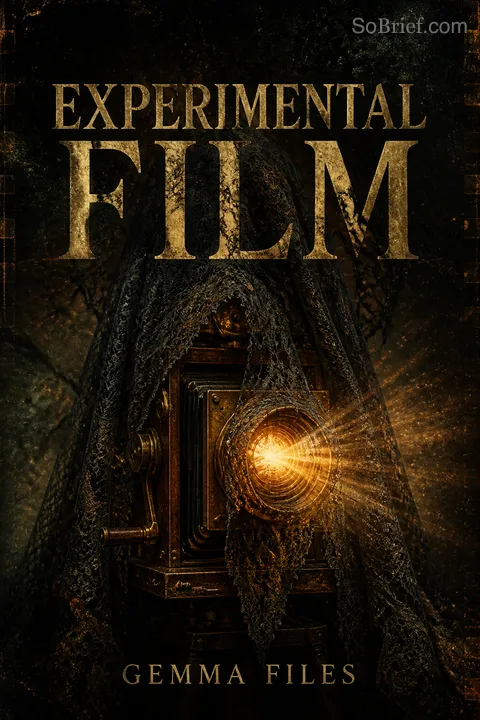
In Experimental Film
, Gemma Files crafts a metafictional horror of lineage, ambition, and the perils of sight—psychological, artistic, maternal. The book warns that not all knowledge liberates; some hungers seek only attention, sacrifice, and replication. Artistic work, memory, even motherhood are tainted by the risk that our efforts to matter only invite repetition of familiar traumas. The motif of film—both literal and symbolic—suggests that every act of seeing, recording, or storytelling blurs the boundaries between observer and observed, past and present, desire and fear. Lois's journey maps the siren call of obsession, the mirror trap of creative rivalry, and the dangers (and necessities) of loving what is flawed and unfixable—her child, her art, herself. The book refuses both easy catharsis and nihilism, insisting instead on the messy, enduring work of surviving, carrying scars forward, and refusing inherited bargains that would buy comfort at the price of forgetting or betrayal. In this haunted world, every story is an unfinished film, every door and mirror a potential catastrophe—and the only real courage lies in seeing both too much and not enough, and telling the truth anyway.
Review Summary
Experimental Film by Gemma Files receives mixed reviews, with ratings ranging from 1 to 5 stars. Readers praise its unique blend of horror, film history, and folklore, as well as its exploration of motherhood and autism. Many appreciate the atmospheric writing and complex characters. However, some find the pacing slow and the protagonist unlikable. Critics note the book's dense exposition and technical film jargon, which may be challenging for some readers. Overall, it's considered an ambitious and unconventional work that resonates with many but may not appeal to all.
People Also Read
Characters
Lois Cairns
—Lois is the novel's narrator: an ex-film critic, would-be historian, and mother of an autistic boy, Clark. Intellectually restless, psychologically brittle, Lois is racked by insecurity about her failures as parent, partner (to Simon), and professional. Her need to matter—to leave a mark, uncover importance—slides into obsession as she pursues the mystery of Mrs. Whitcomb and the lost experimental films. Lois's chronic pain, insomnia, and lapsed ambition dovetail with a hair-trigger defensiveness and unsparing self-analysis. As the story unfolds, she is drawn into a haunted dialogue with history, undermining the distance between subject and investigator. Her most enduring bond is with Clark, whose difference both isolates her and becomes the measure of her own limits. Ultimately, Lois is forced to choose between "vision," authorship, and direct connection—learning to act for others, live with consequences, and accept the futility and necessity of narrative.
Clark Cairns
—Lois's young son, Clark, is a source of both joy and terror. His repetitive speech, dependency, and singular logic cast Lois into cycles of worry, love, and anger—sharpening her sense of inherited error and possible doom. A figure of both vulnerability and accidental wisdom, Clark channels the story's themes of difference, hidden language, and the danger of expectations. As Lady Midday's supernatural attention intensifies, Clark's health and safety become the ultimate stakes for Lois's choices. His very otherness enables survival; his capacity for unexpected affection anchors Lois in messy, embodied reality, away from obsession and oblivion.
Iris Dunlopp Whitcomb
—A century prior, Mrs. Whitcomb was a painter, folklorist, spiritualist, grieving mother, and pioneering filmmaker. Her trauma, childhood loss, and dangerous talent converged in her legendary disappearance and the creation of cursed films—endlessly reinterpreting the myth of Lady Midday. Both a projection of Lois's own anxieties and a real presence, Mrs. Whitcomb exemplifies the price of artistic ambition, the hunger for resolution, and the seductive peril of seeing too much. Her veiling, withdrawal, and ambiguous martyrdom are at once acts of self-preservation and inadvertent invitation to predatory forces—an illustration of the cost of art, motherhood, and history.
Simon Burlingame
—Simultaneously Lois's anchor and a vulnerable skeptic, Simon offers pragmatic love, cautious encouragement, and periodic resistance to Lois's descent into obsession. His own quirks and anxieties, shaped by a Catholic heritage and analytic temperament, at times clash with Lois's mythic, compulsive frame of mind—highlighting tensions between support and abandonment, faith and rationality, patience and fatigue. His greatest terror is losing both Lois and Clark; his sacrifices underline the story's central lesson: that loving, not knowing, can be the greater courage.
Wrob Barney
—Wrob exemplifies appropriation in its most selfish, corrosive form—a failed artist seeking credit and attention through the commodification of others' work. His hunger mirrors Lois's, but stripped of humility, empathy, or boundaries. Wrob's ambition makes him dangerous; his betrayals, thefts, and ultimate undoing (literally torn asunder during the final screening) illustrate both the perils of unchecked ego and the story's running metaphor: that seeing, stealing, and claiming too much costs everything, leaving only ruin behind.
Safie Hewsen
—Safie, former student of Lois's, becomes her indispensable partner and conscience. Her mixed Armenian/Yezidi heritage and artistic ambitions generate rich parallels with both the Whitcomb legend and the hungry gods at the story's heart. As technical whiz and emotional ballast, Safie tempers Lois's self-destructiveness, anchors her to reality, and embodies the hope of artistic survival beyond fatal obsession. Her decisions, loyalty, and capacity for skepticism—honed by her own family's legacy with misunderstood gods—offer a partial redemption from the narrative's spiral of self-sacrifice.
Mrs. (Lee) Cairns
—Lois's mother, Lee, is simultaneously antagonist and ally: a source of practical help, relentless judgment, and sharp-edged love. Her relationship with Lois mirrors Lois's anxieties about Clark: cycles of blame, resentment, and dependence. Lee's recovery from addiction, passionate advocacy, and constant presence underscore the narrative's theme of family burdens and the limits of self-knowing. She functions as both warning for and defense against inherited trauma.
Jan Mattheuis
—Head of the Ontario Film Recovery Project, Jan enables much of Lois's research and plays intermediary between obsessive seekers and institutional memory. His enthusiasm for film is tempered by caution; ultimately, he becomes another victim of the narrative's curse, dying in a fire possibly orchestrated by the supernatural hunger lurking at the story's core (with Wrob's possible complicity). His loss symbolizes both the importance and the fragility of cultural preservation.
Vasek Sidlo
—Once a blind child psychic adopted by Mrs. Whitcomb, Vasek becomes a medium by which memory, image, and supernatural trauma are transferred across time and technology. His tragic fate—eternal daylight, endless endurance under Lady Midday's gaze—makes him a warning against the double-edged gift of second sight and the price of being made vessel for another's work. His collaboration with Lois at the climax allows a final, if costly, opportunity for closure.
Lady Midday
—Not merely a folk tale, Lady Midday personifies the dangers of curiosity, artistic ambition, cyclical stories, and the ancient hunger for worship and sacrifice. Simultaneously numinous and impersonal, the Lady is less a villain than the embodiment of consequences: her gaze enacts both inspiration and destruction, requiring tithes of meaning and loss. Her presence is triggered wherever boundaries thin—by film, confession, or obsession itself. Lois's refusal of her "blessing" is the story's vital defiance.
Plot Devices
Cinema as Haunted Mirror
—Experimental Film's narrative is built on the premise that film doesn't just reflect but preserves the past, becoming a haunted art that can trap, transmit, and revive ghosts and traumas. The lost silent films are both metaphors and literal objects of supernatural power: flashpoints of myth, memory, and visual obsession. The film reel, the screen, the mirror—these are all doors, and every act of looking risks letting something hungry, ancient, and unknowable in. Fragmentary records, missing pieces, and unreliable narration reinforce the sense of a past that is both inviting and dangerous.
Maternal Legacy and Generational Trauma
—Both the central story and its echo structures (Lois's family, Mrs. Whitcomb's line) are powered by autistic inheritance, unresolved grief, and the compulsion to save, fix, or expiate the failures of the past. Lois's self-awareness is tinged with self-hatred, shaped by her mother, and projected onto Clark; Mrs. Whitcomb's spiraling attempts to "solve" her haunting are mirrored in Lois's own. Patterns repeat: the attempt to rescue, the risk of becoming the danger, the paradox of loving and failing simultaneously.
Folkloric Patterning and Metafiction
—The narrative consciously blurs fiction and history, diary and document, myth and psychological confession. Folk tales are retold, mutated by each retelling; the exposure of their capricious gods is mirrored by the dangers of searching for meaning in the chaos of lived experience. Chapters are constructed as frames, ellipses, overlays, interruptions—a book that knows it is a film about storytelling and seeing. Multiple endings, epilogue "stings," and dialogues with dead authors heighten the recursive unease.
Obsession, Rivalry, and the Price of Knowledge
—The engine of the novel is the lure of forbidden knowledge, the possibility of mattering, the drive to finish—or control—the narrative. Lois, Wrob, and all mirrors for Mrs. Whitcomb are ultimately undone by the very obsession that motivates their art or pursuit. This use of rivalry and hunger is familiar in horror but complicated by compassion: the drive to save Clark, to repair trauma, to pass meaning onto others. Crisis arises when the need to see, to rescue, or to know collides with the cost for all involved.
Foreshadowing, Recursive Structure, and Collapse of Time
—The book constantly flags its own endings, flashes forward to consequences, or circles back to prior scenes (both in narrative and documentary time). Characters are haunted by foreknowledge, dreams, and folk wisdom; every new reel or document is a possible repetition of past disaster. The motif of silence, blindness, or inability to see points to the limits not only of film but consciousness itself.
Download PDF
Download EPUB
.epub digital book format is ideal for reading ebooks on phones, tablets, and e-readers.








































