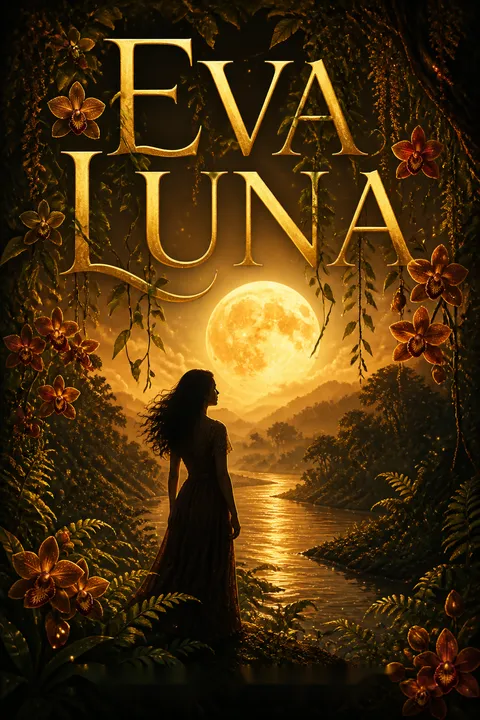

Plot Summary
Jungle Roots and Orphaned Beginnings
Eva Luna's story begins with her mother, Consuelo, a red-haired orphan raised by missionaries in the lush, feverish jungle. Consuelo's mysterious origins and her affinity for the natural world shape her daughter's destiny. The jungle is a place of myth and danger, where Consuelo learns to survive by blending into her surroundings and absorbing stories from the land and its people. Her life is marked by displacement and resilience, and she passes on to Eva a sense of wonder, a love of storytelling, and a belief in the magical possibilities of reality. This chapter sets the tone for Eva's life: one of improvisation, adaptation, and the search for belonging in a world that is both cruel and enchanted.
Consuelo's Journey to the City
After a scandalous friendship with a gold-prospecting Portuguese, Consuelo is sent away from the jungle to the city, her only keepsake a gold nugget. She endures the rigid discipline of a convent, where her wildness is suppressed but not extinguished. Consuelo's ambiguous status—neither servant nor family—mirrors her daughter's later liminality. Her poetic imagination and resistance to authority set her apart, and she finds solace in daydreams and stories. Eventually, she is placed in the home of Professor Jones, an eccentric European scientist obsessed with embalming the dead. Consuelo's years in the city are marked by loneliness, but also by the quiet accumulation of knowledge and the forging of her own identity, which she will later impart to Eva.
Professor Jones and the House of Death
Consuelo becomes indispensable to Professor Jones, learning his secrets of preserving corpses and managing his household. The house is filled with mummies, books, and the scent of chemicals—a place where death is both denied and domesticated. Consuelo's practical skills and emotional detachment allow her to thrive, but she remains haunted by the absence of love and the memory of the jungle. The political turmoil outside barely touches their insulated world, but the death of the dictator and the burial of Jones's prized mummy signal the end of an era. When the gardener is bitten by a snake, Consuelo's compassion and desire awaken, leading to a brief, transformative love affair that results in Eva's conception.
The Birth of Eva Luna
Eva is born feet-first, a sign of luck, in the same house of death where her mother has served for years. Her father, the Indian gardener, survives against all odds, and Consuelo raises Eva alone, instilling in her a love of stories and a belief in the magical dimension of reality. Eva's early years are shaped by her mother's tales, the presence of mummies, and the discipline of hard work. She learns to see beyond appearances, to find wonder in the mundane, and to use imagination as a shield against hardship. The death of Consuelo leaves Eva orphaned, but also equipped with the tools to survive: storytelling, adaptability, and a fierce independence.
Stories as Survival
After Consuelo's death, Eva is cared for by her godmother, a formidable woman whose faith and superstition provide both comfort and constraint. Eva's life becomes a series of domestic jobs, each household a new world with its own rules and dangers. She learns to navigate the whims of her employers, the cruelty of poverty, and the unpredictability of fate. Through it all, stories remain her refuge and her weapon—she invents, embellishes, and retells, transforming suffering into narrative. Her friendship with Elvira, a cook, and her encounters with the streetwise Huberto Naranjo introduce her to the complexities of love, loyalty, and survival in a society marked by inequality and violence.
Rolf Carle's Haunted Childhood
Across the ocean, Rolf Carle is born into a family ruled by a brutal father in postwar Austria. His childhood is scarred by abuse, fear, and the trauma of war. The horrors of the concentration camp and the violence of his father's return from the front leave Rolf with deep wounds and a longing for escape. His mother's resignation and his siblings' suffering shape his understanding of power and vulnerability. When his father is killed—possibly by his own students—Rolf is freed from tyranny but burdened by guilt and shame. His emigration to South America marks the beginning of a new life, but the ghosts of his past continue to haunt him.
War, Trauma, and Escape
Rolf finds refuge with relatives in a German-speaking colony in South America, a place frozen in time and insulated from the chaos of the outside world. Here, he experiences love, sexual awakening, and the comforts of family, but also the limitations of nostalgia and insularity. His affair with his cousins and his mentorship under a journalist named Aravena open his eyes to the wider world and the complexities of truth and power. Rolf's decision to become a filmmaker and his eventual involvement in political events signal his transformation from passive survivor to active participant in history.
Eva's Early Losses
Eva's journey through various households exposes her to the full spectrum of human cruelty and kindness. She endures abuse, exploitation, and betrayal, but also finds moments of tenderness and solidarity. Her godmother's madness, Elvira's steadfastness, and the eccentricities of her employers teach her resilience and adaptability. Eva's encounters with the underworld of the city—prostitutes, transvestites, and revolutionaries—expand her understanding of identity and possibility. Each loss and disappointment becomes material for her stories, and each escape a step toward self-invention.
The Streets and Huberto Naranjo
Eva's friendship with Huberto Naranjo, a streetwise boy who becomes a revolutionary leader, is a central thread in her life. Together, they navigate the dangers of the city, learning to trust and betray, to love and let go. Huberto's journey from petty thief to guerrilla commander mirrors the political awakening of the country, and his relationship with Eva is marked by both tenderness and frustration. Their paths diverge and intersect, shaped by the demands of survival and the pull of destiny. Through Huberto, Eva is drawn into the world of political struggle, where stories become weapons and love is both a refuge and a risk.
The Many Faces of Love
Eva's experiences with love are as varied as the people she encounters: the sensual awakening with Riad Halabi, the unrequited passion for Kamal, the complex friendship with Mimi, and the tumultuous affair with Huberto. Each relationship teaches her something about herself and the world—about power, vulnerability, and the limits of desire. Love is often intertwined with betrayal and loss, but also with moments of joy and transcendence. Eva learns to distinguish between love that imprisons and love that liberates, and to use her stories to heal and transform both herself and others.
Agua Santa and the Pearl of the Orient
Eva's time in Agua Santa, living with the compassionate merchant Riad Halabi and his melancholic wife Zulema, offers a respite from the chaos of her earlier life. Here, she learns the rhythms of domesticity, the pleasures of learning, and the complexities of adult desire. The arrival of Kamal, Riad's cousin, disrupts the fragile equilibrium, leading to a forbidden affair and Zulema's eventual suicide. Eva's role as witness and survivor in this domestic tragedy deepens her understanding of the human heart and the costs of passion. Her eventual exile from Agua Santa marks the end of innocence and the beginning of her adult journey.
Betrayal, Desire, and Exile
The aftermath of Zulema's death and Eva's unjust imprisonment force her to confront the realities of power and injustice. With Riad's help, she is freed, but the scandal and gossip drive her from Agua Santa. Her brief, transformative love affair with Riad is both a farewell and a blessing, equipping her with the confidence and resources to start anew. Eva's journey to the capital is marked by uncertainty and fear, but also by a renewed sense of purpose. She rejects the roles imposed on her by others and resolves to shape her own destiny, using her stories as both shield and sword.
Coming of Age in Revolution
In the capital, Eva becomes entangled in the world of revolutionaries, artists, and outcasts. Her friendship with Mimi, a trans woman and performer, exposes her to new forms of identity and resistance. Eva's storytelling becomes a means of survival and subversion, allowing her to navigate the shifting allegiances and dangers of a society in turmoil. The rise of the guerrilla movement, the fall of the dictatorship, and the ongoing struggle for justice are mirrored in Eva's personal journey. She learns that stories can change minds, inspire action, and offer hope in the face of despair.
Mimi's Transformation
Mimi's journey from Melesio, a persecuted gay man, to Mimi, a celebrated actress and trans woman, is a testament to the power of self-invention and resilience. Her friendship with Eva is a source of mutual support and inspiration, and together they create a chosen family that defies conventional boundaries. Mimi's struggles with love, acceptance, and her own body reflect the broader themes of transformation and liberation that run through the novel. Her success as an actress and her refusal to conform to societal expectations make her a symbol of hope and possibility for Eva and others on the margins.
The Guerrilla Dream
Huberto Naranjo's evolution from street kid to guerrilla commander embodies the hopes and contradictions of the revolutionary movement. The guerrillas' struggle is marked by courage, sacrifice, and moments of triumph, but also by disillusionment, betrayal, and defeat. Eva's involvement in their cause—smuggling weapons, forging documents, and shaping public opinion through her stories—forces her to confront the complexities of power and the costs of change. The eventual failure of the revolution and the offer of amnesty signal the end of an era, but also the beginning of a new chapter in the country's history.
The Great Escape
The rescue of the guerrilla prisoners from Santa Maria prison is a high point of collective action and ingenuity. Eva's skills as a storyteller and maker of "Universal Matter" (fake grenades) are crucial to the plan's success. The operation is a testament to the power of solidarity, creativity, and courage in the face of overwhelming odds. The escape becomes a legend, inspiring hope and fear in equal measure. For Eva, it is both a personal and political victory, affirming her belief in the transformative power of stories and the possibility of change.
Stories Shape Reality
As Eva's telenovela "Bolero" becomes a national sensation, she realizes the power of narrative to shape reality, challenge authority, and heal wounds. Her stories blend fact and fiction, past and present, personal and political, offering new possibilities for understanding and transformation. The boundaries between life and art blur, and Eva becomes both creator and character in her own ongoing story. Through her writing, she reclaims her past, honors her dead, and imagines a future in which love, justice, and freedom are possible.
Love, Memory, and Invention
In the novel's final movement, Eva finds love with Rolf Carle, a man as haunted and resilient as herself. Their union is both a culmination and a new beginning—a testament to the possibility of healing, connection, and joy after a lifetime of loss and struggle. Eva's ability to invent, to tell stories, and to shape her own destiny becomes her greatest gift. The novel ends with a celebration of love, memory, and the creative power of the imagination—a reminder that, in the end, we are the stories we tell ourselves and each other.
Analysis
Eva Luna is a celebration of the transformative power of storytelling and the resilience of the human spirit in the face of adversity. Through the intertwined lives of Eva, Rolf, Huberto, Mimi, and others, Isabel Allende explores themes of identity, memory, love, and revolution. The novel is both a personal and political narrative, using magical realism and nonlinear structure to blur the boundaries between fact and fiction, past and present. Allende's characters are survivors—of war, abuse, poverty, and oppression—who use imagination, solidarity, and self-invention to carve out spaces of freedom and joy. The novel critiques systems of power and inequality, but also affirms the possibility of change, healing, and connection. In a world marked by violence and loss, Eva Luna offers a vision of hope rooted in the creative act of storytelling—a reminder that we are, ultimately, the stories we tell and the lives we choose to invent.
Review Summary
Eva Luna is a magical realist novel set in an unnamed South American country, following the life of the titular character. Readers praise Allende's vivid storytelling and character development, though some find the plot meandering. The book explores themes of love, politics, and the power of storytelling. While many reviewers consider it enchanting and beautifully written, some criticize its pacing and occasional stereotyping. Overall, it's regarded as a captivating, if not perfect, entry in Allende's body of work.
People Also Read

Characters
Eva Luna
Eva Luna is the heart of the novel—a woman born of the jungle, orphaned young, and shaped by hardship, loss, and the transformative power of stories. Her life is a journey through poverty, exploitation, and revolution, but also through love, friendship, and self-discovery. Eva's gift for storytelling is both her shield and her weapon, allowing her to survive, adapt, and ultimately shape her own destiny. Psychologically, she is marked by resilience, empathy, and a restless imagination. Her relationships—with her mother, her godmother, Elvira, Huberto, Mimi, Riad, and Rolf—reflect her longing for connection and her refusal to be defined by others. Over the course of the novel, Eva evolves from a passive victim to an active creator of her own life, embodying the possibility of transformation and hope.
Consuelo
Consuelo, Eva's mother, is a figure of mystery and strength—a red-haired orphan raised in the jungle, marked by both trauma and wonder. Her life is a testament to survival against the odds, and her legacy to Eva is a belief in the magical dimension of reality. Consuelo's stories, resilience, and refusal to submit to authority shape Eva's character and worldview. Psychologically, she is both wounded and wise, capable of great love and great detachment. Her brief, passionate affair with the Indian gardener and her years of service in Professor Jones's house reveal her capacity for adaptation and her longing for freedom. In death, she remains a guiding presence for Eva, a symbol of the enduring power of memory and imagination.
Rolf Carle
Rolf Carle is a man marked by the traumas of war, abuse, and exile. His childhood in Austria is a nightmare of violence and fear, and his emigration to South America is both an escape and a search for belonging. Rolf's intelligence, sensitivity, and drive lead him to become a filmmaker and journalist, bearing witness to the horrors and hopes of his adopted country. Psychologically, he is both vulnerable and resilient, struggling to reconcile his past with his present. His relationships—with his family, his cousins, Aravena, and ultimately Eva—reflect his longing for connection and his fear of loss. Through his love for Eva and his commitment to truth, Rolf finds a measure of healing and fulfillment.
Huberto Naranjo
Huberto Naranjo is a product of the streets—a boy who learns to survive through cunning, strength, and adaptability. His journey from petty thief to guerrilla commander mirrors the political awakening of the country and the contradictions of revolution. Huberto's relationship with Eva is marked by both tenderness and frustration, shaped by the demands of survival and the pull of destiny. Psychologically, he is driven by a need for respect, loyalty, and justice, but also by a deep-seated machismo and fear of vulnerability. His evolution as a leader and his ultimate disillusionment reflect the limits of idealism and the costs of change.
Mimi (Melesio)
Mimi, born Melesio, is a trans woman whose journey from persecution to self-acceptance is one of the novel's most powerful arcs. Her friendship with Eva is a source of mutual support and inspiration, and her success as an actress and performer challenges societal norms and expectations. Psychologically, Mimi is both fragile and fierce, marked by trauma but also by an unyielding determination to live authentically. Her struggles with love, identity, and acceptance reflect the broader themes of transformation and liberation. Mimi's chosen family with Eva and others on the margins is a testament to the power of solidarity and self-invention.
Riad Halabi
Riad Halabi is a Lebanese immigrant whose kindness and generosity make him a pillar of the community in Agua Santa. His marriage to the melancholic Zulema is marked by longing and disappointment, but his relationship with Eva is one of mutual respect, affection, and eventual passion. Psychologically, Riad is marked by empathy, humility, and a deep sense of duty. His struggle with his own insecurities and his ultimate sacrifice for Eva's happiness reveal his capacity for love and selflessness. Riad's presence in Eva's life is both a blessing and a loss, shaping her understanding of love and independence.
Zulema
Zulema is Riad Halabi's wife, a woman trapped by her own beauty, boredom, and fear. Her inability to adapt to her new life in Agua Santa and her obsession with material possessions make her both pitiable and infuriating. Psychologically, Zulema is marked by passivity, insecurity, and a longing for escape. Her affair with Kamal and her eventual suicide are the culmination of years of repression and disappointment. Zulema's tragedy is both personal and emblematic of the limitations imposed on women by society and circumstance.
Elvira
Elvira is a cook who becomes a surrogate grandmother to Eva, offering her affection, practical advice, and a sense of stability in a chaotic world. Her earthy wisdom, humor, and resilience make her a beloved figure in Eva's life. Psychologically, Elvira is marked by pragmatism, loyalty, and a deep sense of justice. Her own experiences of hardship and loss inform her guidance to Eva, and her presence is a reminder of the importance of chosen family and community.
Consuelo's Godmother (Madrina)
Eva's godmother is a formidable, superstitious woman whose faith and rigidity provide both comfort and constraint. Her descent into madness and her tragic end reflect the costs of poverty, isolation, and unfulfilled longing. Psychologically, she is marked by fear, guilt, and a desperate need for control. Her relationship with Eva is complex, shaped by both love and violence, and her legacy is one of both protection and pain.
Aravena
Aravena is a journalist and filmmaker who becomes a mentor to Rolf Carle, guiding him through the complexities of truth, power, and storytelling. His integrity, curiosity, and pragmatism make him a key figure in the novel's exploration of narrative and history. Psychologically, Aravena is marked by skepticism, resilience, and a commitment to bearing witness. His influence on Rolf and his relationship with Mimi reflect the importance of mentorship, collaboration, and the pursuit of truth.
Plot Devices
Storytelling as Survival and Power
Throughout the novel, storytelling is both a literal and metaphorical device. Eva's ability to invent and tell stories allows her to survive hardship, forge connections, and shape her own destiny. Stories are used to heal, to resist oppression, to imagine new possibilities, and to rewrite the past. The narrative itself is structured as a series of interwoven tales, blending fact and fiction, memory and invention. This device underscores the novel's central theme: that reality is not fixed, but can be shaped by imagination, desire, and collective action.
Magical Realism
Allende employs magical realism to infuse the narrative with a sense of wonder and possibility. The jungle is alive with myth, miracles occur alongside everyday events, and the supernatural is woven seamlessly into the fabric of reality. This device allows the novel to explore the complexities of history, identity, and power in a way that is both grounded and transcendent. Magical realism serves as a means of resistance, offering hope and agency to characters who are otherwise marginalized or oppressed.
Nonlinear Narrative and Multiple Perspectives
The novel's structure is nonlinear, moving back and forth in time and shifting between the perspectives of different characters. This device allows for a rich exploration of memory, trauma, and the interconnectedness of individual and collective histories. The use of multiple perspectives highlights the subjectivity of truth and the importance of empathy and understanding. The narrative's fluidity mirrors the characters' journeys of transformation and self-invention.
Political Allegory and Social Critique
Eva Luna's personal journey is intertwined with the political history of her unnamed South American country. The rise and fall of dictatorships, the struggles of revolutionaries, and the complexities of social change are mirrored in the lives of the characters. The novel uses personal stories to critique systems of power, inequality, and injustice, and to explore the possibilities and limitations of resistance. This device situates the individual within the broader currents of history, emphasizing the impact of collective action and the importance of solidarity.
Foreshadowing and Symbolism
Allende employs foreshadowing and symbolism throughout the novel to create resonance and depth. The gold nugget, the stuffed puma, the recurring motif of water, and the use of names and stories all serve to connect characters and events across time and space. These devices reinforce the novel's themes of memory, transformation, and the enduring power of love and imagination.
Download PDF
Download EPUB
.epub digital book format is ideal for reading ebooks on phones, tablets, and e-readers.








































